Wingstrandarctus

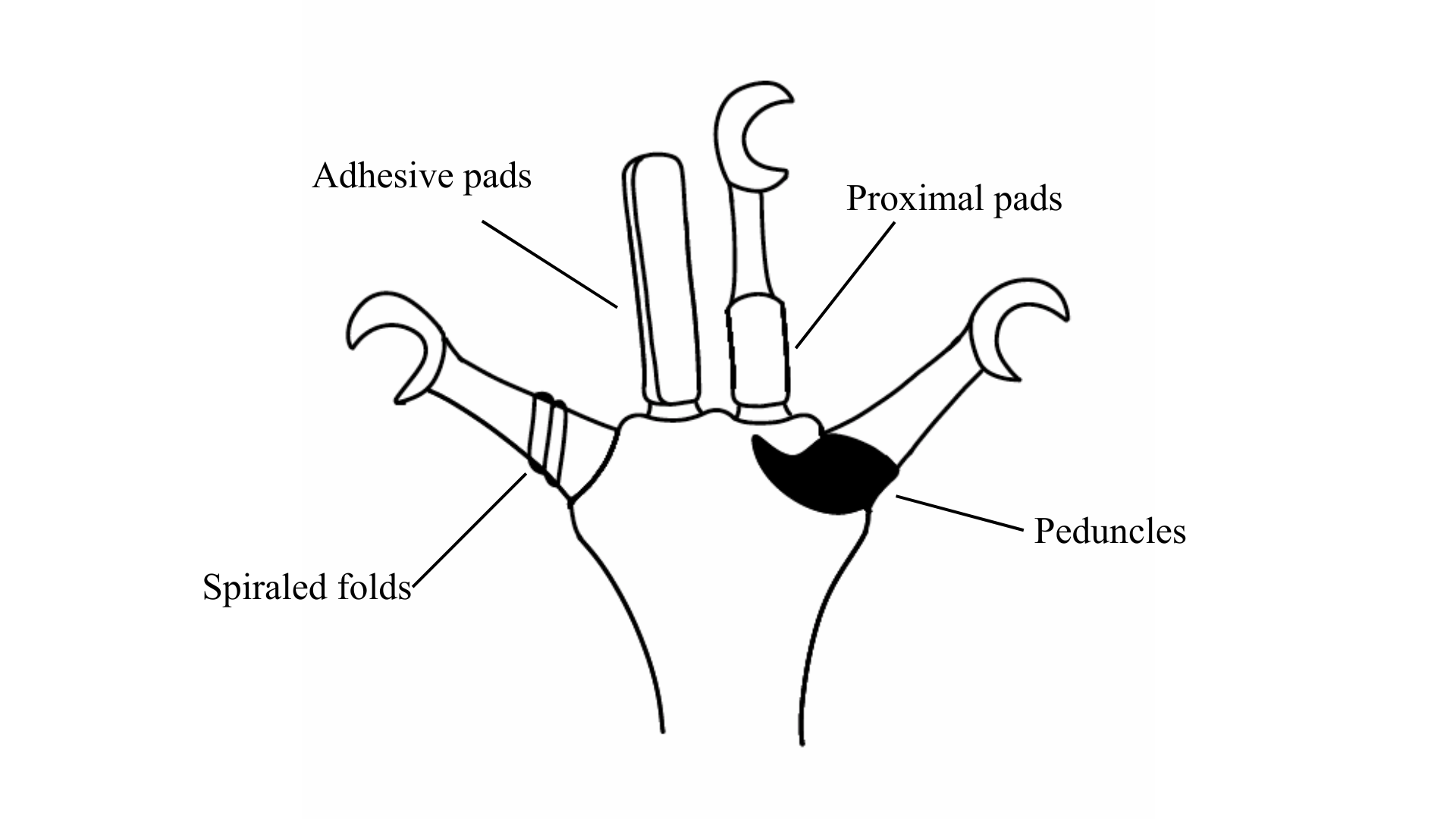
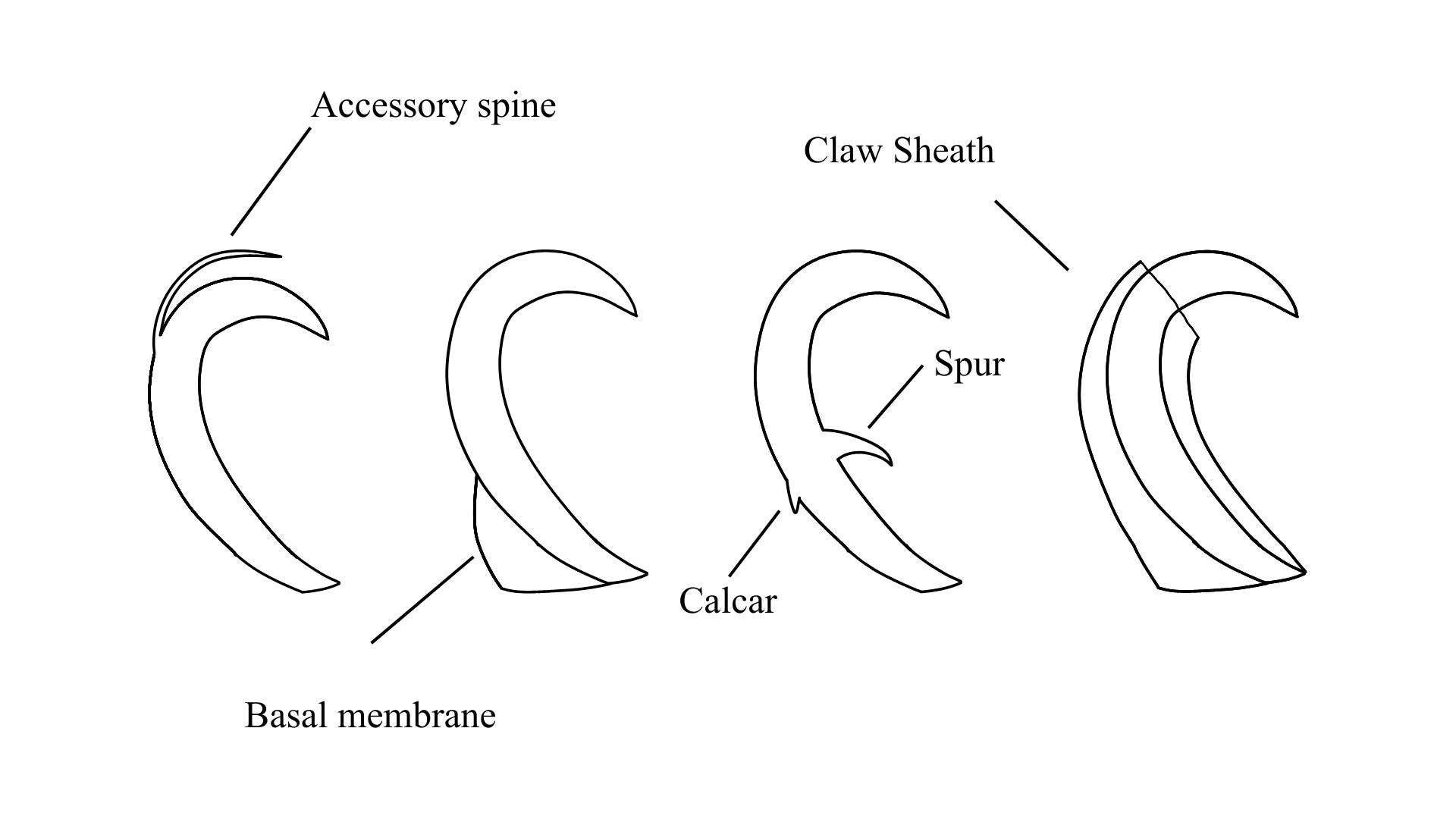
Genus description from Kristensen 1984: “Alae present in all stages except for Halechiniscus-type two-clawed larvae, without procuticular hooks or expansions. Unci simple or with a calcar externum; uncus externus formed from a single piece; uncus internus with accessory spine. Hook-shaped pedunculae present on digitus externus. With three or no cephalic vesicles. Seminal receptacles and spermatoozoa […]
Ligiarctus

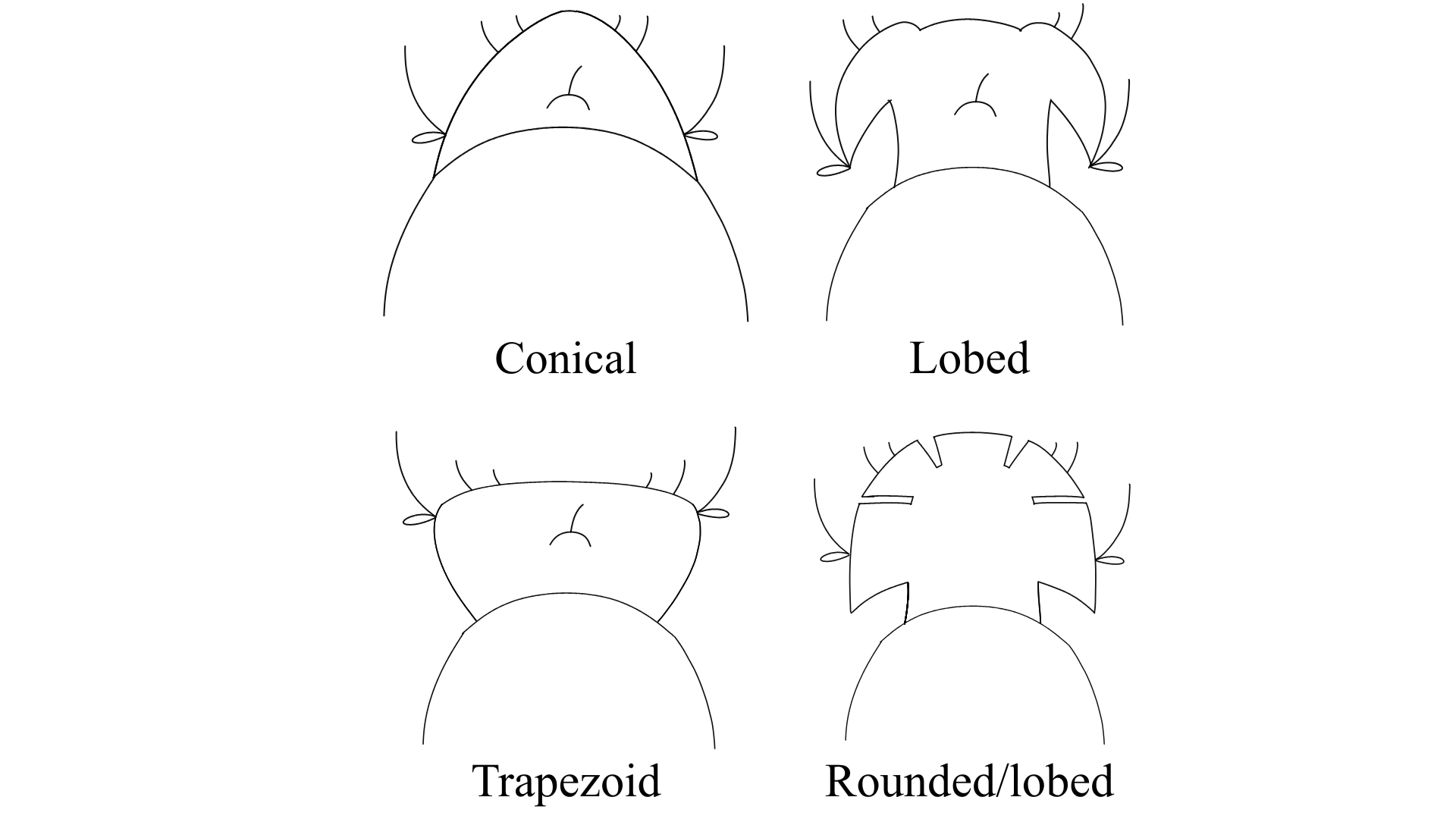
Genus description from Renaud-Mornant 1982: “Florarctinae à tête étroite : large implantation des clavas occupant des bords latéraux réduits. Griffes des doigts externes avec encoche distale sur la face interne. Expansion aliforme caudale seule présente.” (Translation from Fontoura et al. 2017: “Florarctinae with narrow head. Wide implantation of the primary clavae occupying the reduced lateral […]
Florarctus

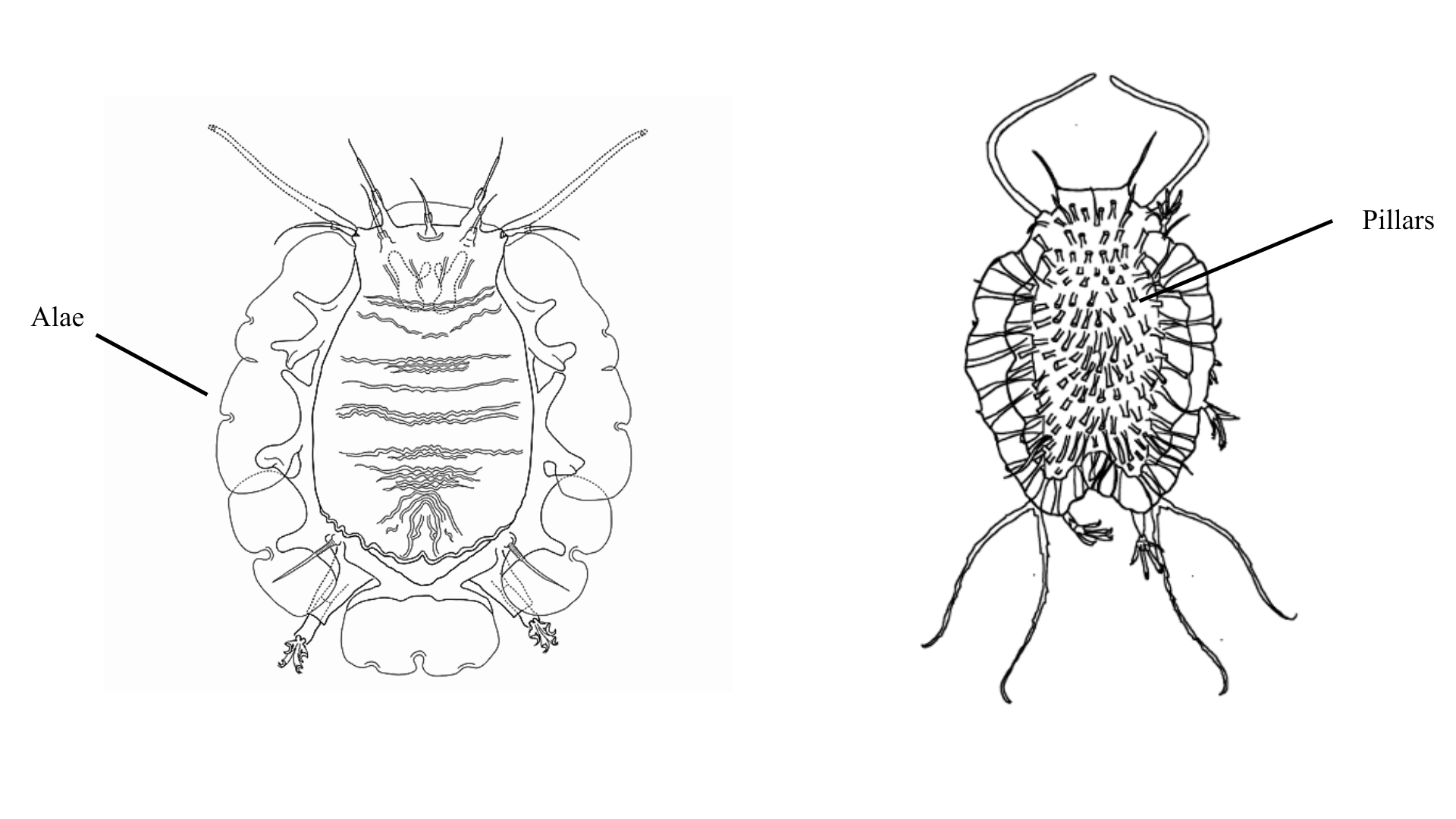
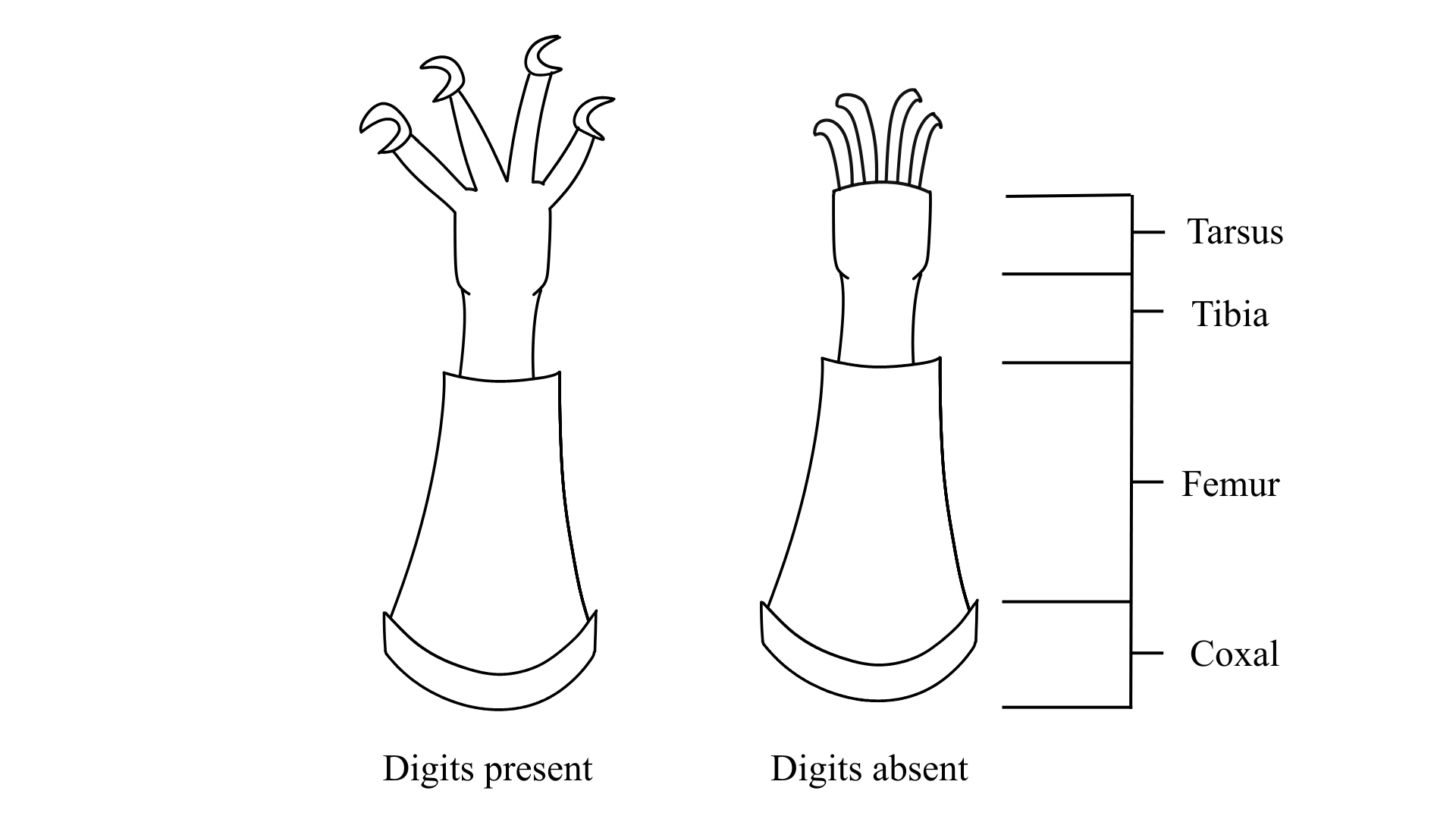
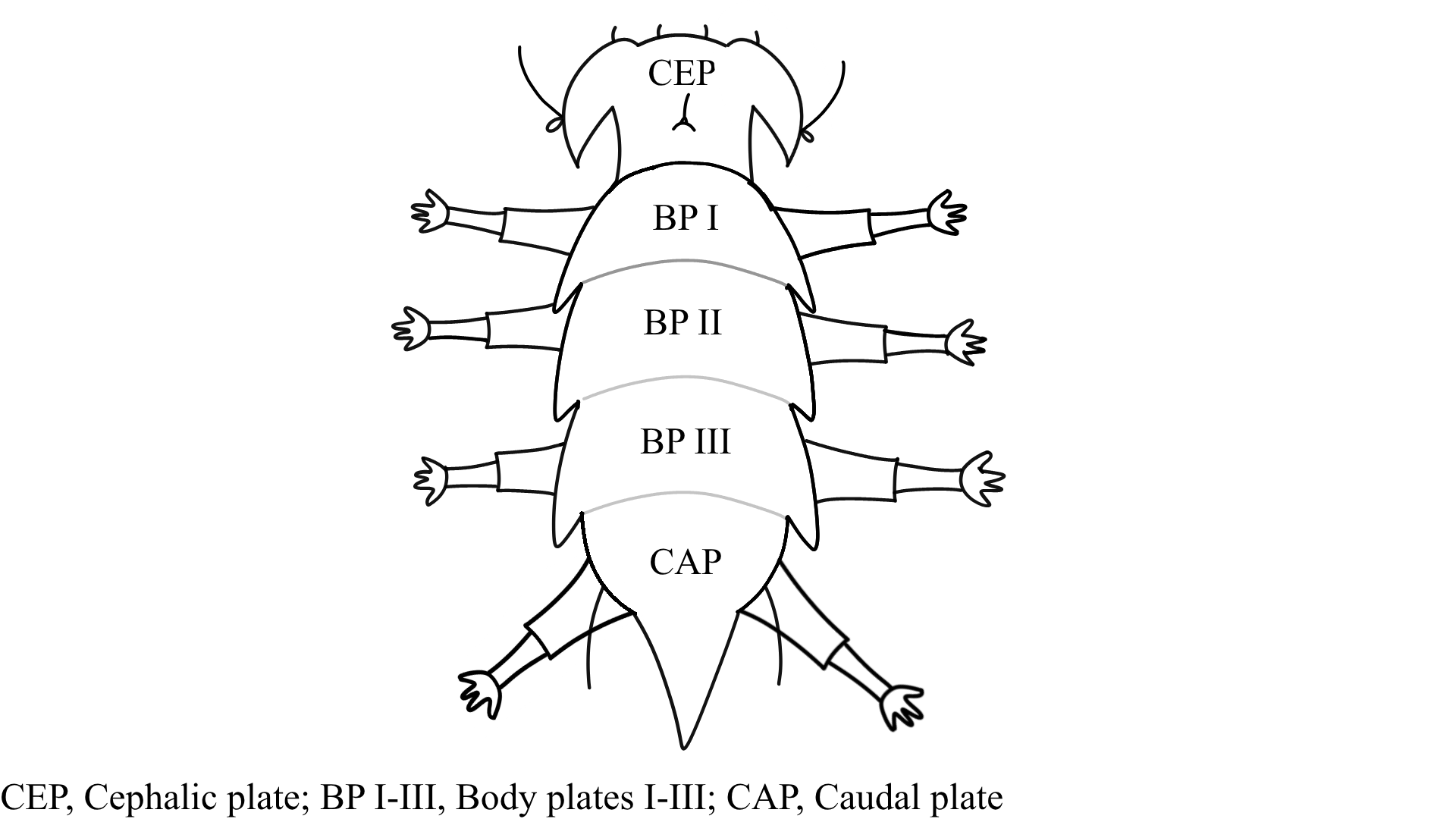
Genus description from Deboutteville & Renaud-Mornant 1965: “Halechiniscidé dont le corps porte de larges expansions aliformes lobées, latérales et postérieures, recouvrant plus ou moins les pattes. Pattes rétractiles portant quatre doigts pouvus de griffes bifides et d’éperons de soutien. L’appartenance familiale confirme la totalité des caractères de la famille.” Genus description from de Zio Grimaldi […]
Proclavarctus

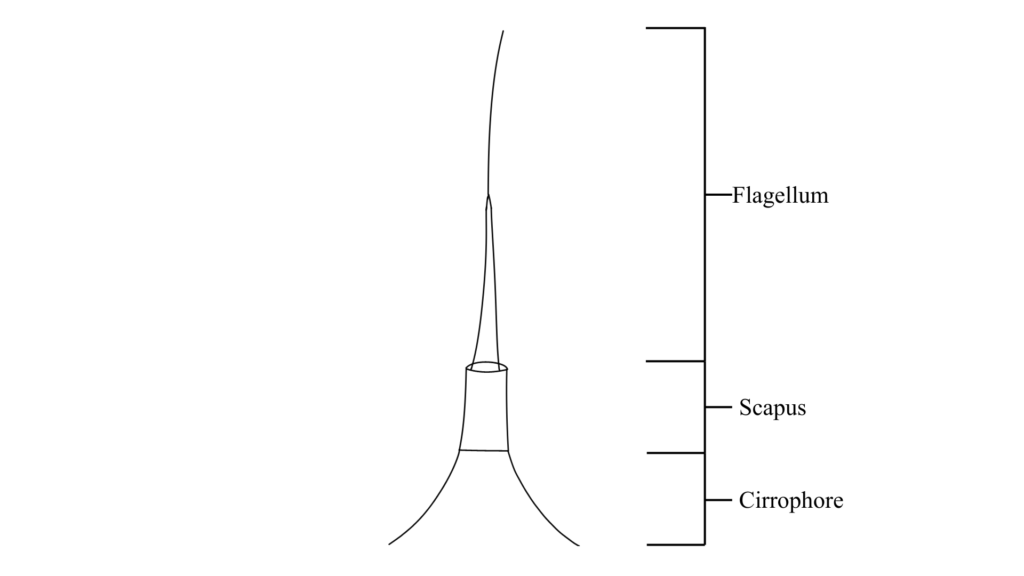
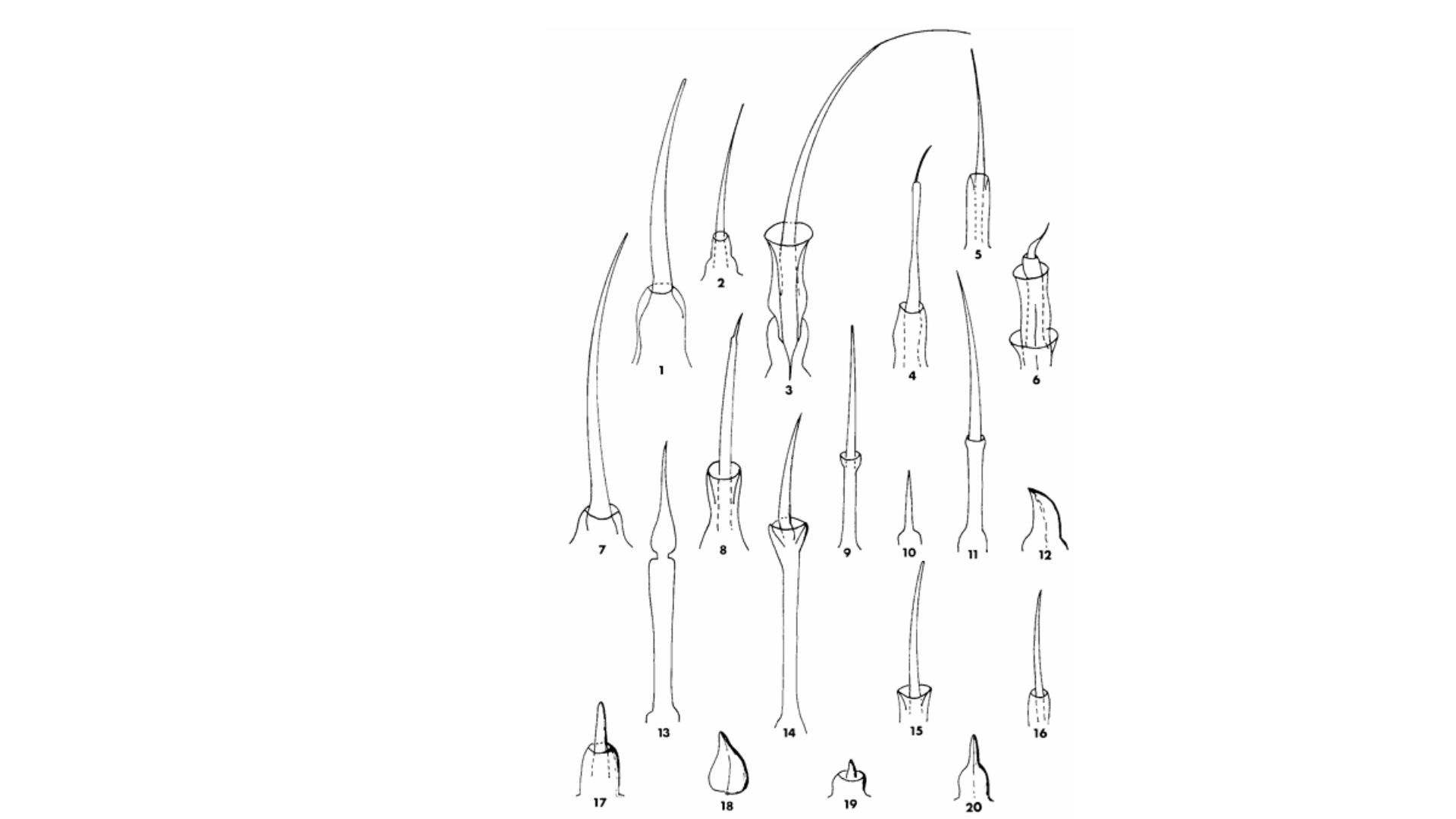
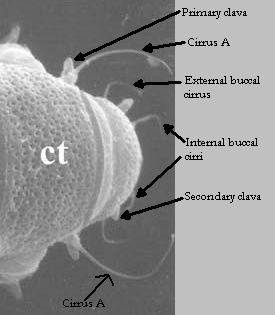
Genus description from Renaud-Mornant 1983 translated from French by Fontoura et al. 2017: “Euclavarctinae with cephalic cirri composed of three parts: a cirrophore forming a narrow sheath, an elongated scapus with annulated base, and a short flagellum narrowed by a proximal notch; median cirrus and cirri A larger than the external and the internal cephalic […]
Parmursa

Genus description by Renaud-Mornant 1984, emended by Hansen 2007, in Fontoura et al. 2017: “Euclavarctinae with cuticular aliform expansions supported externally by dorsal cuticular ribs. Trapezoid head, completely proportionate to the arrangement of the cephalic sense organs. Cephalic cirri with a funnel-shaped scapus. Erect secondary clavae. Stylet supports absent.” Citations: Fontoura, P., Bartels, P.J., Jørgensen, […]
Higginsarctus

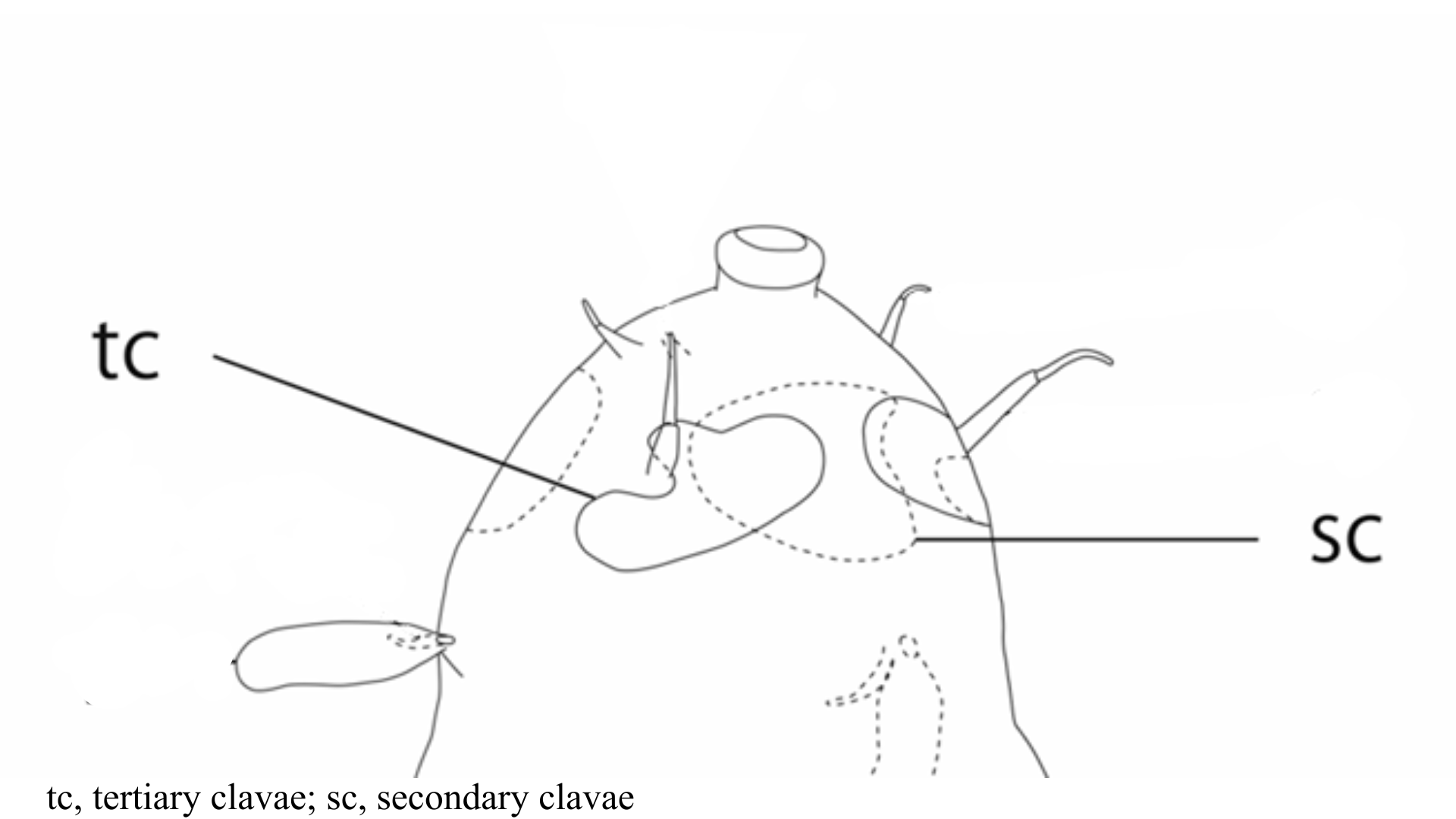
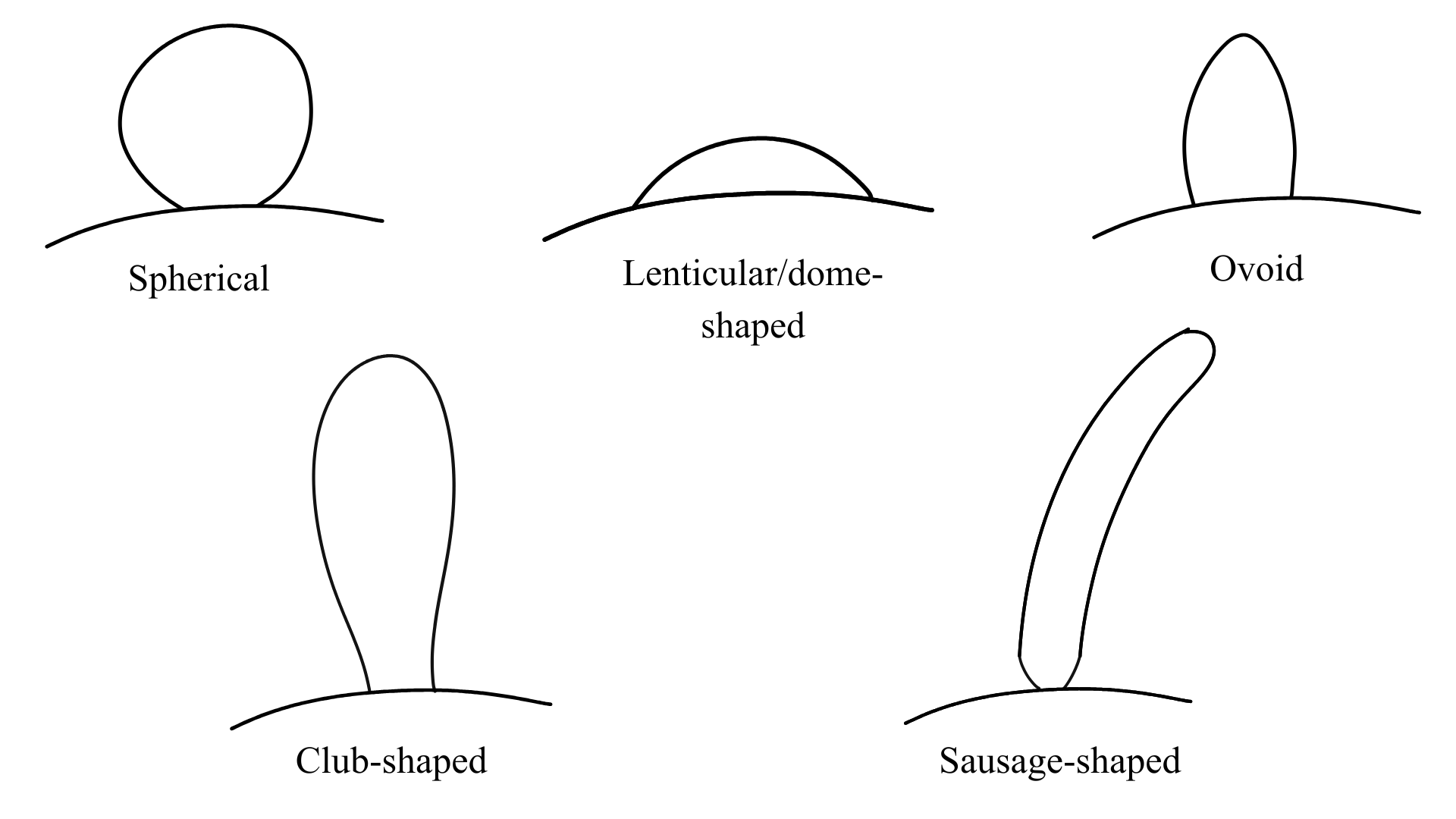
Genus description from Hansen & Kristensen 2021: “A genus of Florarctinae characterized by large, rigid and backwards bending primary clavae (shared with Ligiarctus) supported by strong internal cuticular structures at their bases. Secondary clavae occurring as papillae (dome-shaped or spherical) or as flat sacs (round, rectangular or bilobed). Frontal ala, six lateral alae and a […]
Florarctinae

Florarctinae from Renaud-Mornant 1982: “Halechiniscidae avec pattes portant un tibia cylindrique évasé en un tarse peu renflé dans lequel s’incurvent en boucle complète les ligaments digitaux. Griffes des doigts externes avec partie distale entaillée d’une encoche ou formant pince. Expansions cuticulaires aliformes en lame.” Florarctinae from Kristensen 1984: “Arthrotardigrade of the family Halechiniscidae Thulin, 1928, […]
Moebjergarctus

Genus description from Bussau 1992: “Halechiniscidae without dorsal segmental plates. Eleven cephalic sense organs present. Primary clavae club-shaped, bent forward. Secondary clavae spherical. Cephalic cirri separated into three parts: short cirrophore, long segmented scapus and short flagellum. Spines on the first three pairs of legs I, 11, 111. Small clavoid papillae on legs IV. Long […]
Exoclavarctus

Genus description from Renaud-Mornant 1983, translated from French by Fontoura et al. 2017: “Euclavarctinae with cephalic cirri showing a marked dimorphism; median cirrus and cirri A having a long flagellum; internal and external cephalic cirri with a very short flagellum. The cirrophore and the base of the scapus indistinguishable from one another forming a bulbous […]
Euclavarctus

Genus description from Renaud-Mornant 1975: “Halechiniscidae with compound cephalic cirri: including a funnel-like cirrophorus, a basal sheath, a large mean portion and a thin distal part. Two sets of unequally shaped clavae. Toes bearing an unspurred claw.” Genus description from Renaud-Mornant 1983, translated from French by Fontoura et al. 2017: “Euclavarctinae with cephalic cirri similar […]