Clavarctus

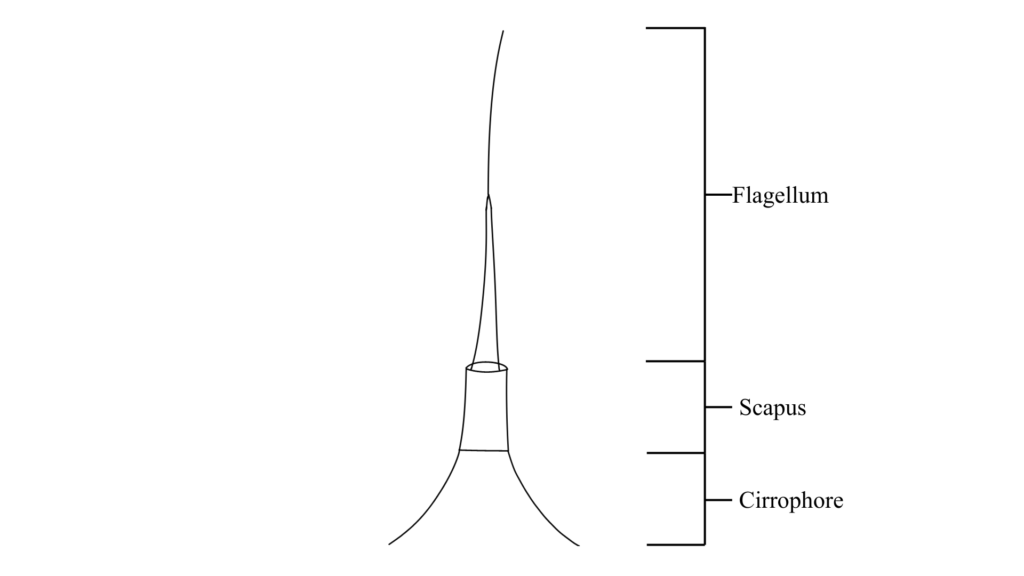
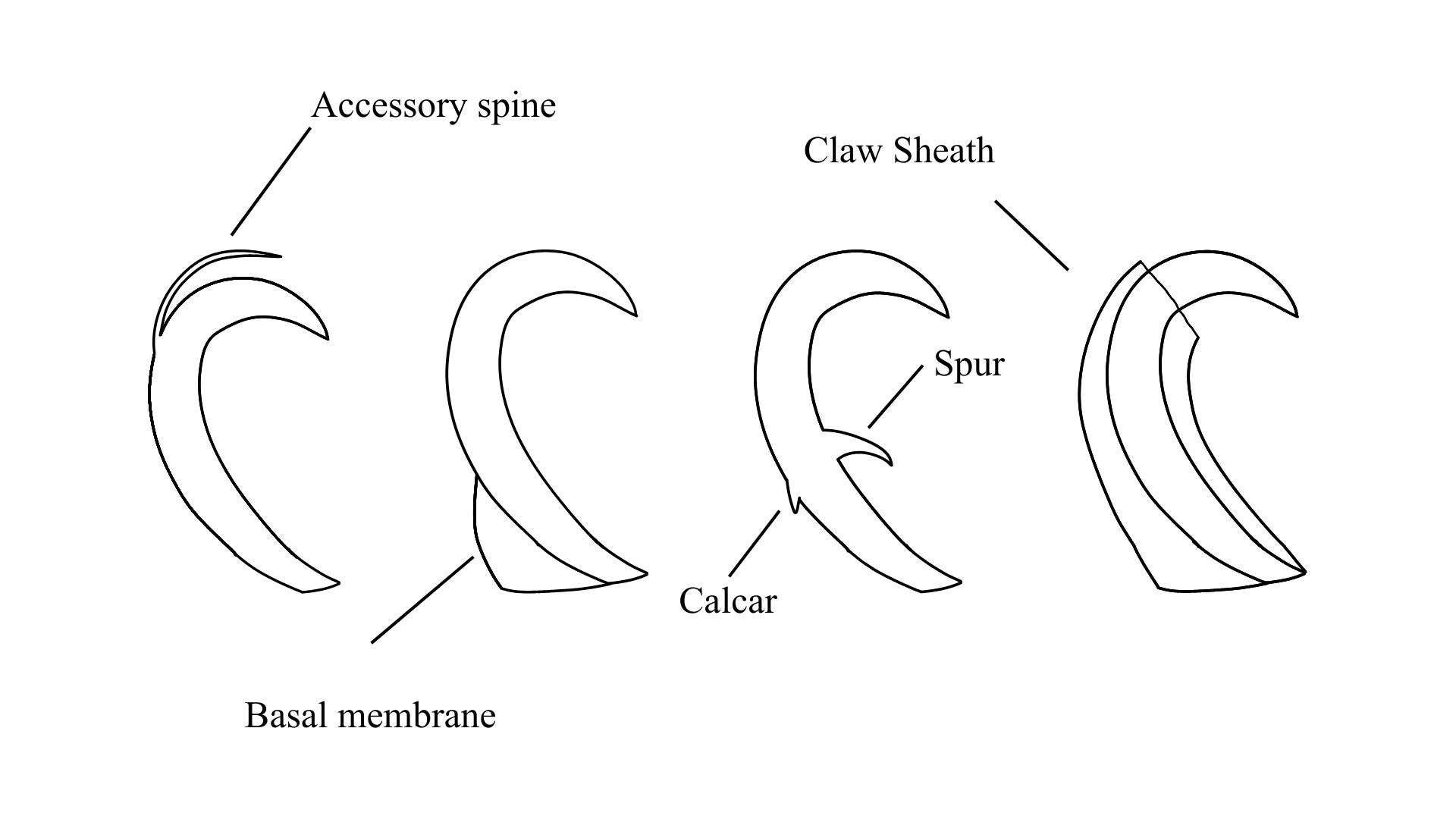
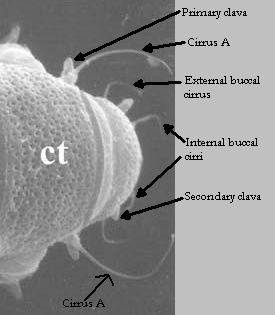
Genus description from Renaud-Mornant 1983, translated from French by Fontoura et al. 2017: “Euclavarctinae with reduced cephalic cirri having a short bulbous scapus and a short beveled flagellum. Cirrophore absent. Internal claws chelate-like due to the presence of a robust and elongate accessory spine.” Citations: Fontoura, P., Bartels, P.J., Jørgensen, A., Kristensen, R.M. & Hansen, […]
Euclavarctinae

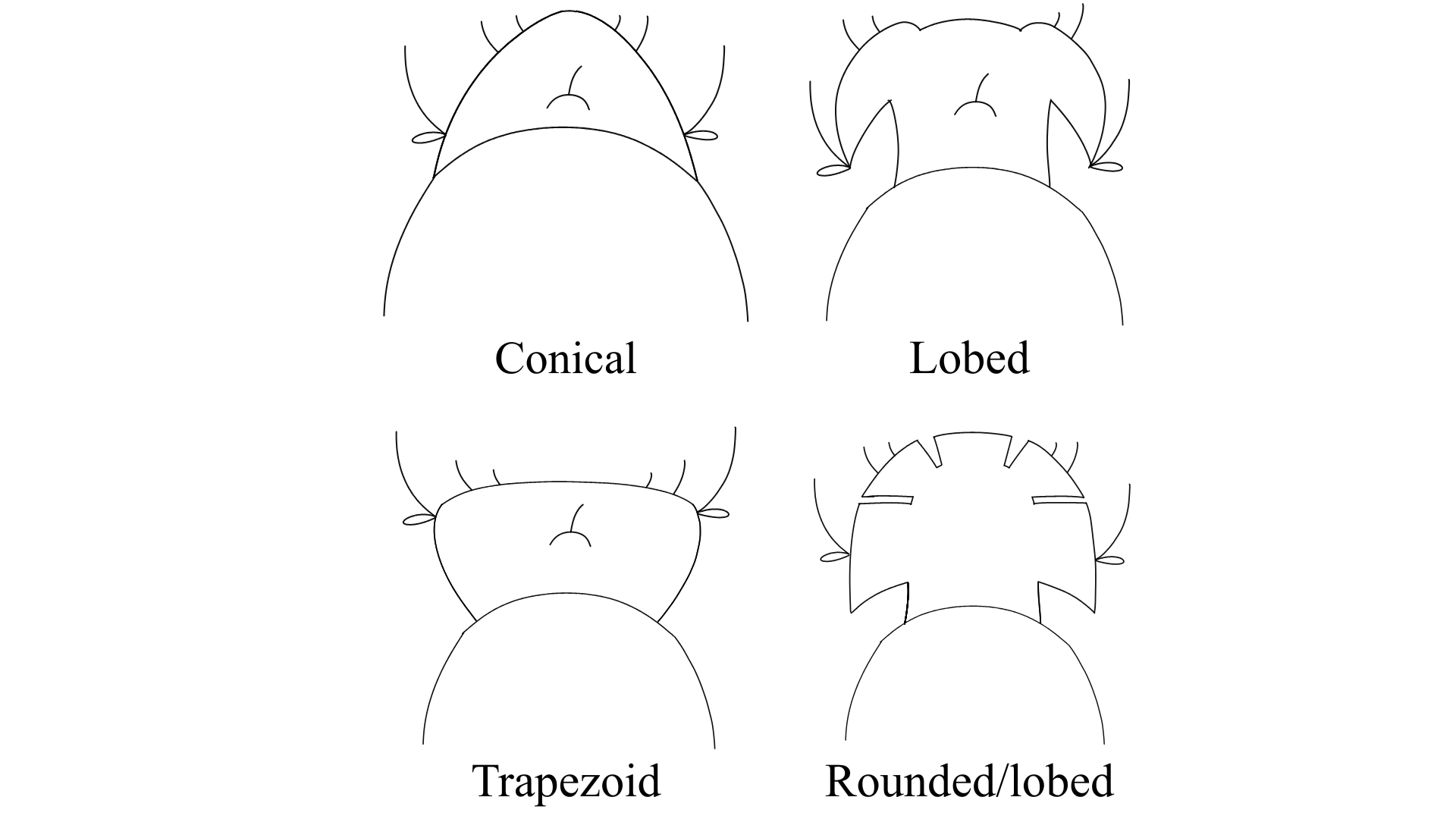
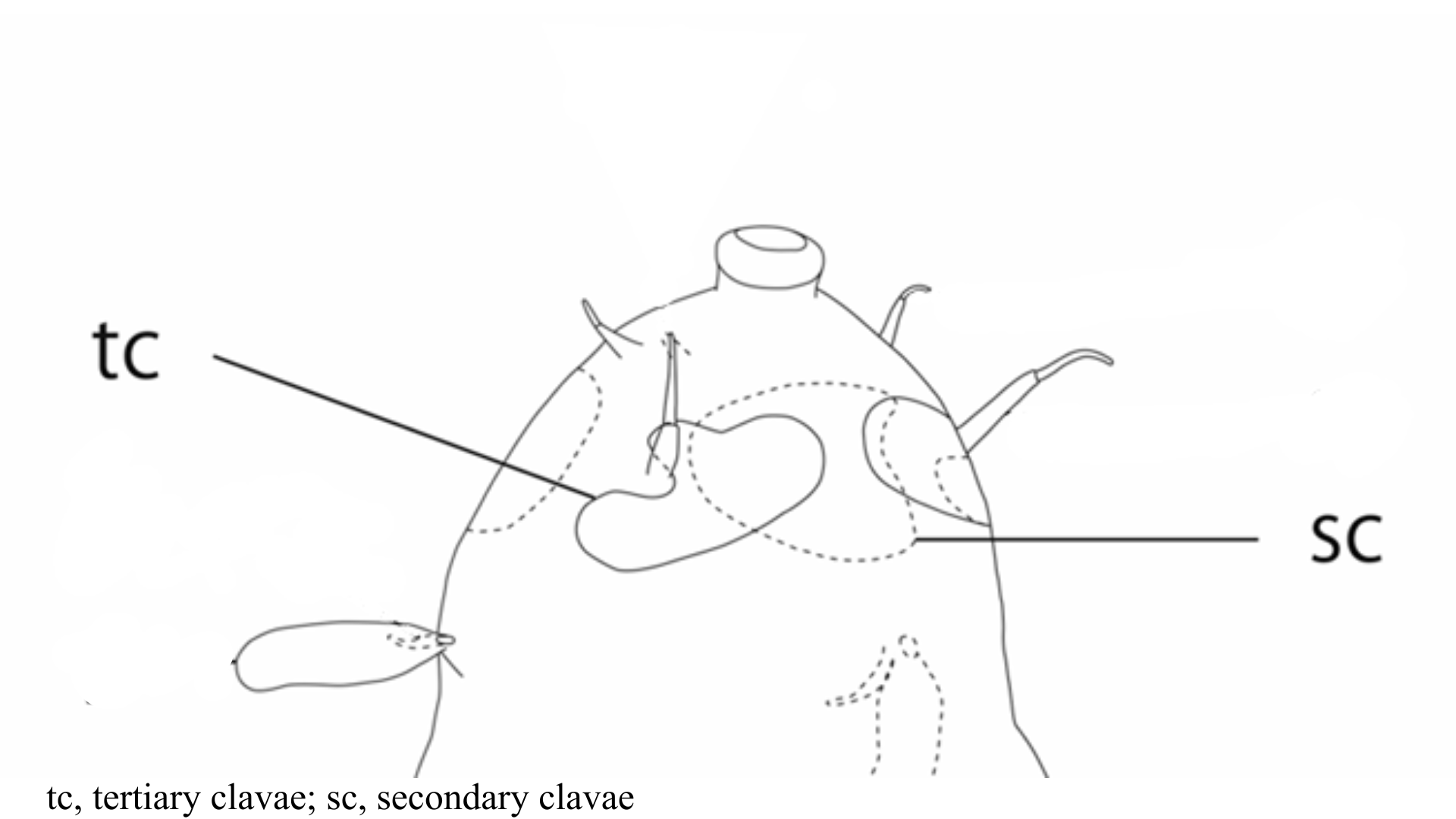
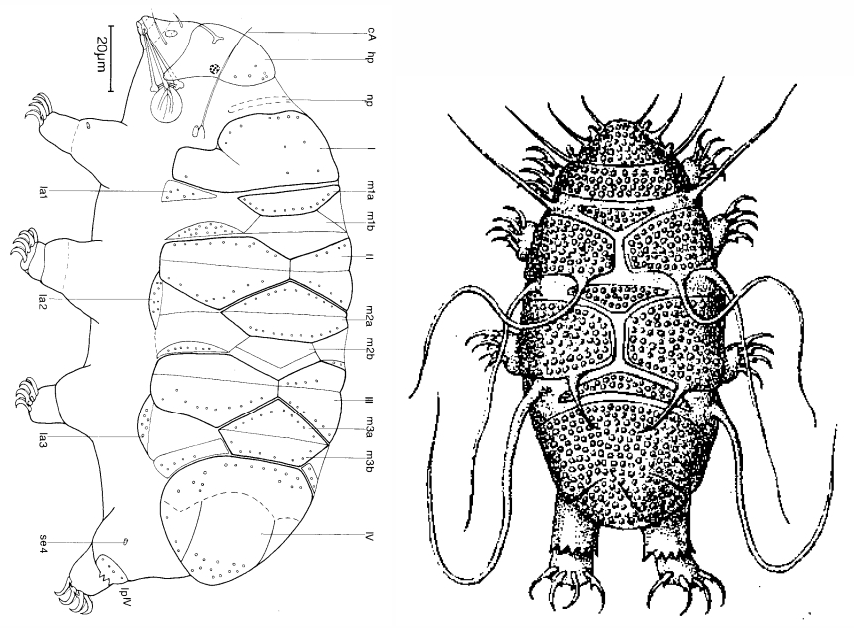
Euclavarctinae from Renaud-Mornant 1983 translated from French by Fontoura et al. 2017: “Halechiniscidae with unplated body without expansions. Conical head bearing two sets of unequally shaped clavae. Cirri A and primary clavae inserted separately. Tarsus weakly individualized. The claws are simple or internal claws with a dorsal accessory spur.” Citations: Fontoura, P., Bartels, P.J., Jørgensen, […]
Dipodarctus
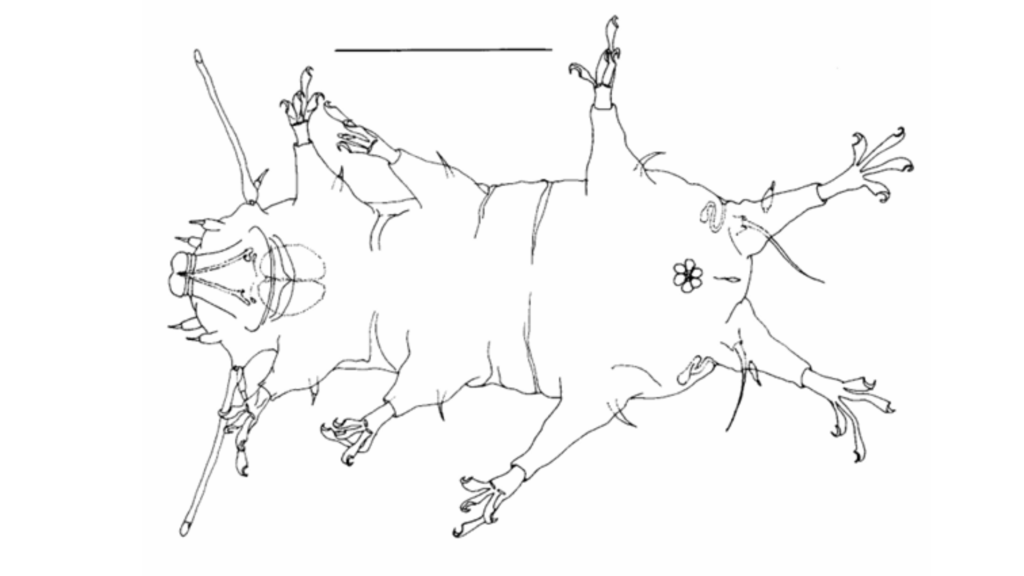
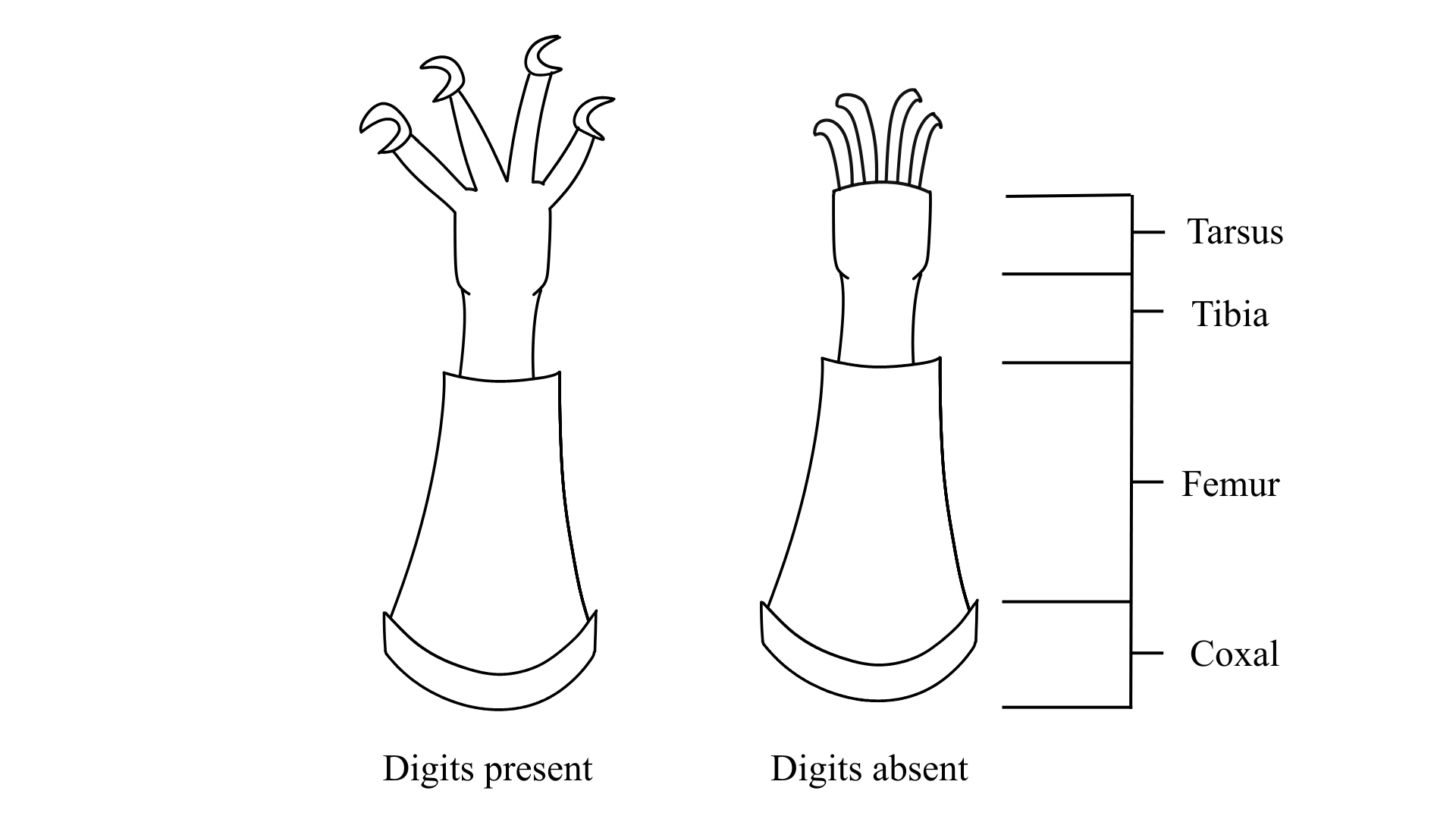
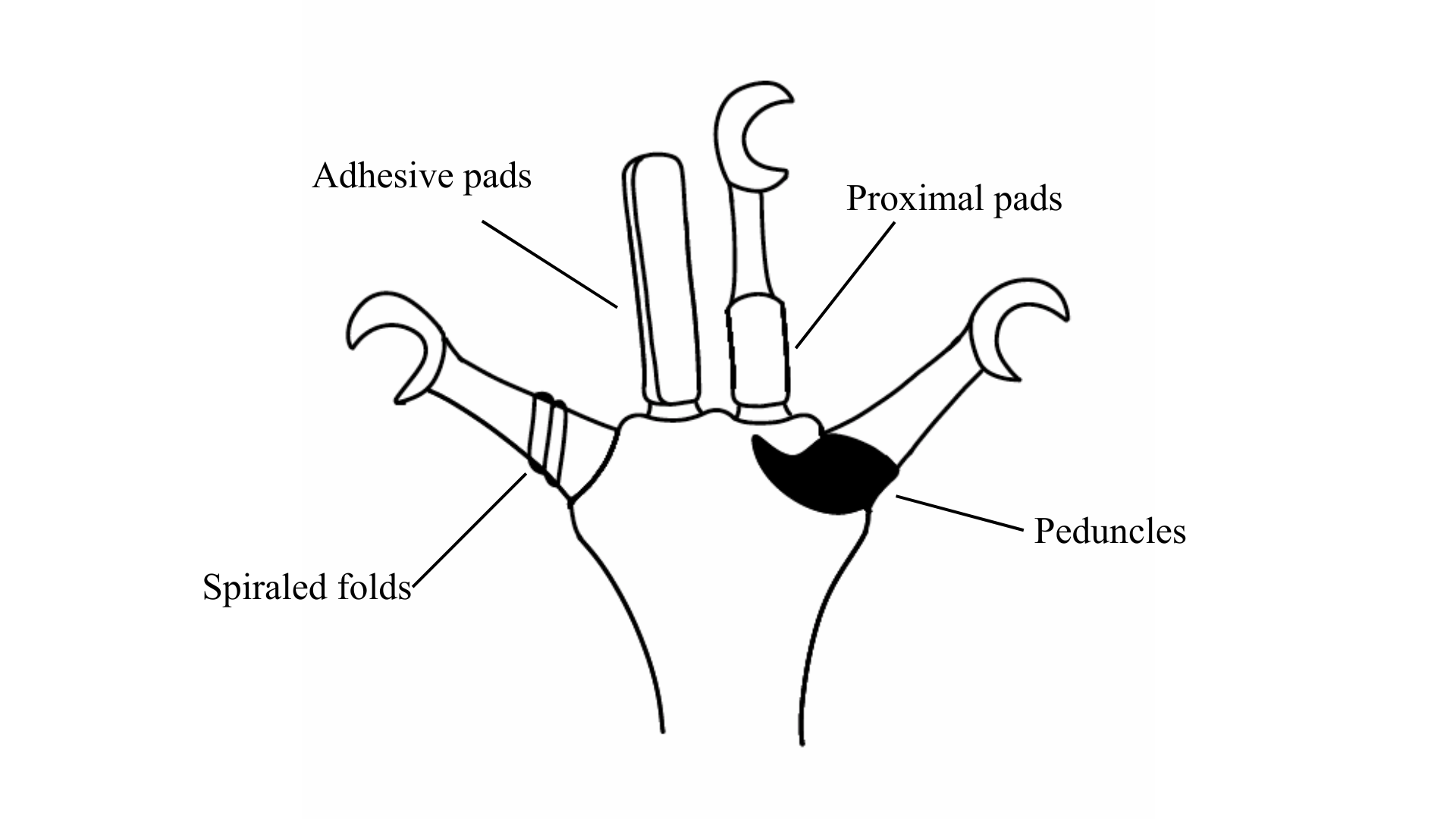
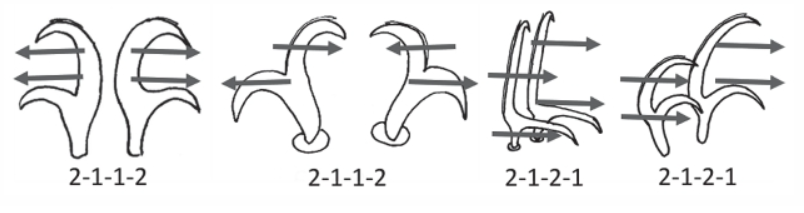
Genus description from Jørgensen et al. 2014: “Dipodarctinae with lanceolate tibia and triangular tarsus of the Tanarctus-type. Digits on the first 3 pairs of legs (I-III) are of different shape than those of fourth leg pair. Three ventral digits are of equal length, claws with calcar and one long dorsal digit with a simple claw. […]
Dipodarctinae
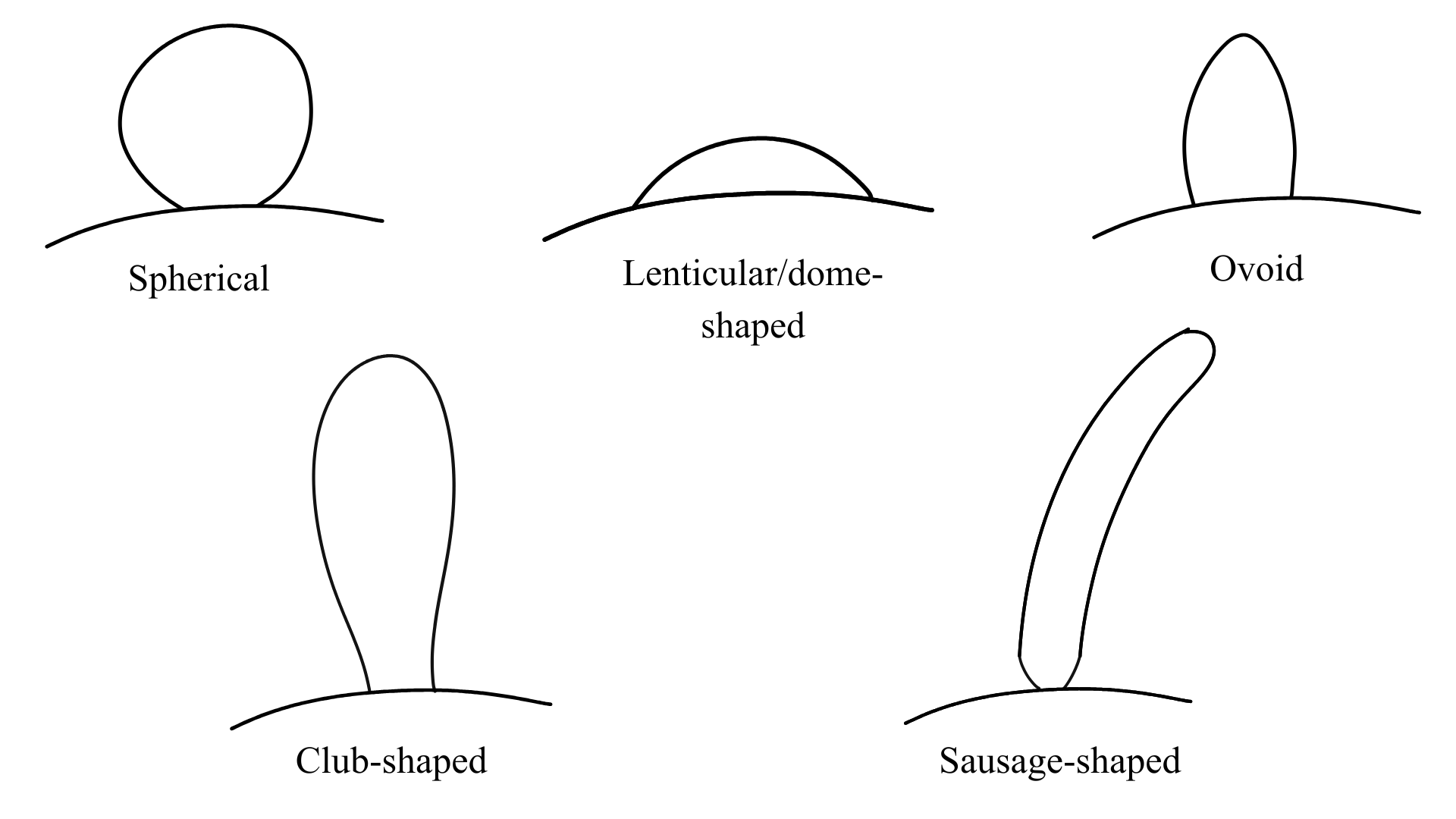
Dipodarctinae from Jørgensen et al. 2014: “Halechiniscids with primary clavae much longer than, and ventral to, the lateral cirri; indistinct secondary clavae present as kidney- or sausage-shaped elevations between internal and external cephalic cirri. Feet on legs I-III with at least three (digits I-III) of the four digits short and of equal length; digit IV […]
Halechiniscidae
Halechiniscidae from Fujimoto et al. 2017: “Heterotardigrada without sclerotized cuticular plates. Cephalic appendages usually consist of unpaired median cirrus, three pairs of cirri and two pairs of clavae, buccal clavae may be indistinguishable or consist of fused secondary and tertiary clavae. Unmodified papillate sensory organs on leg IV. Adult legs terminate in either four digits […]