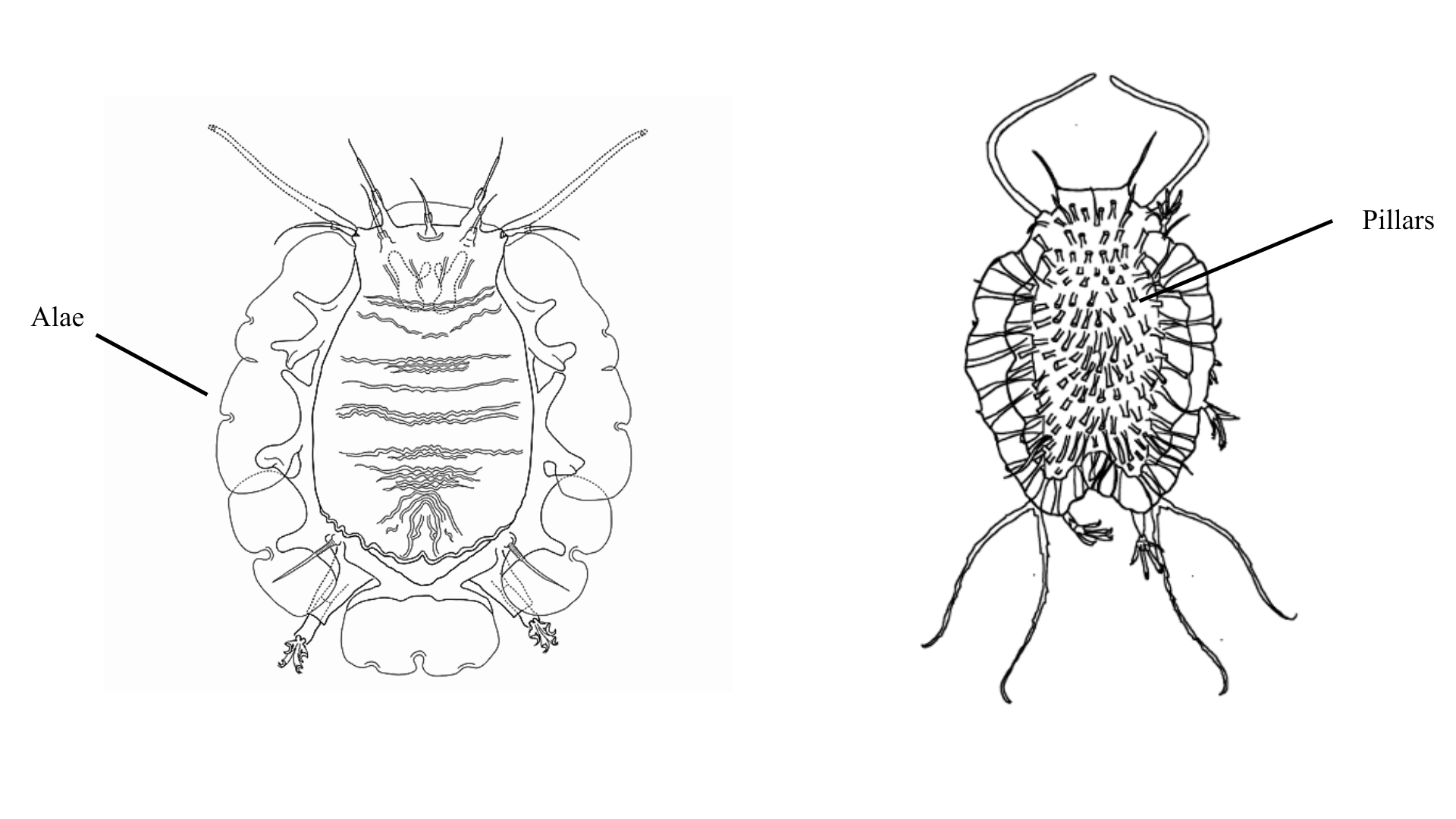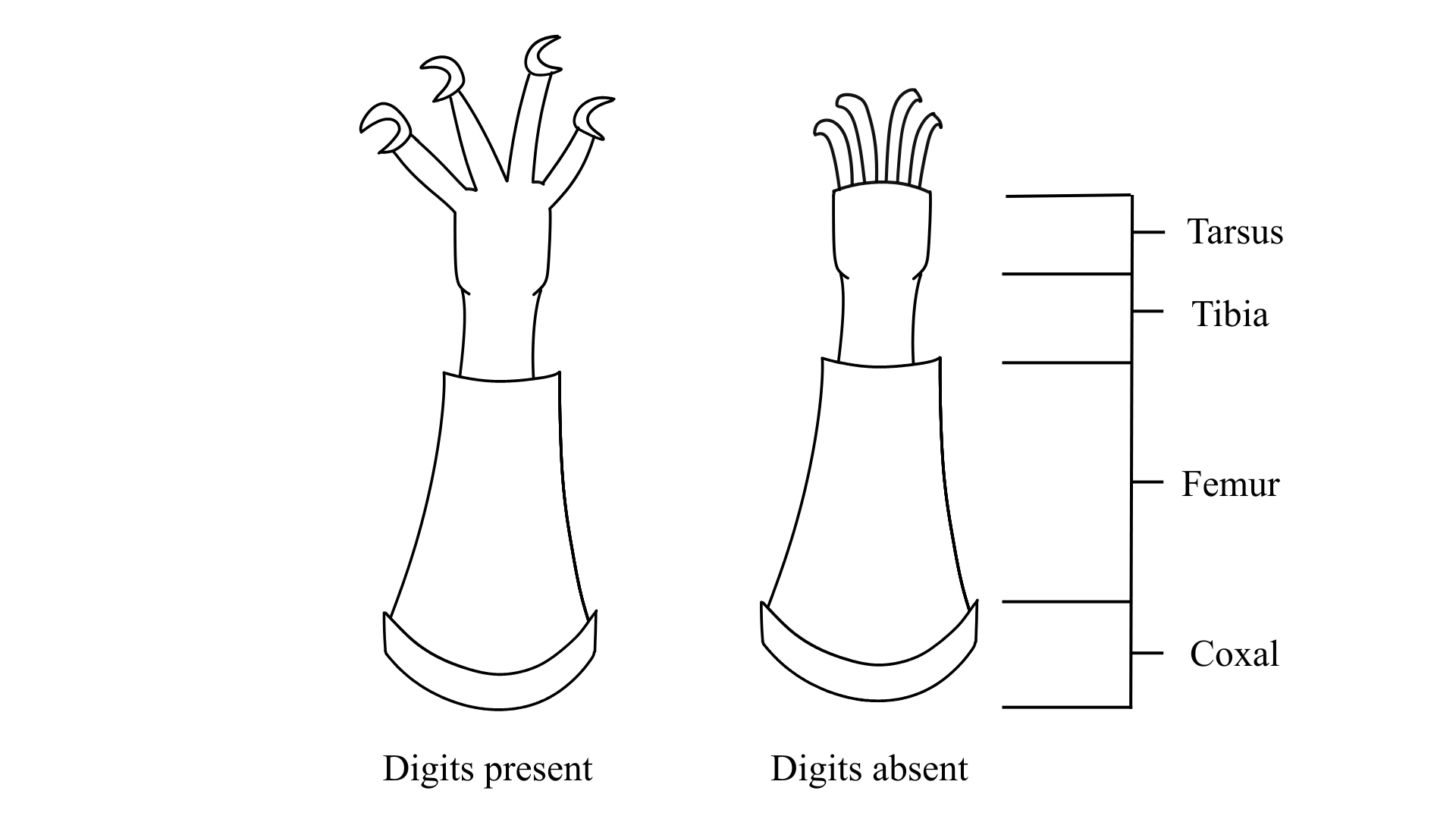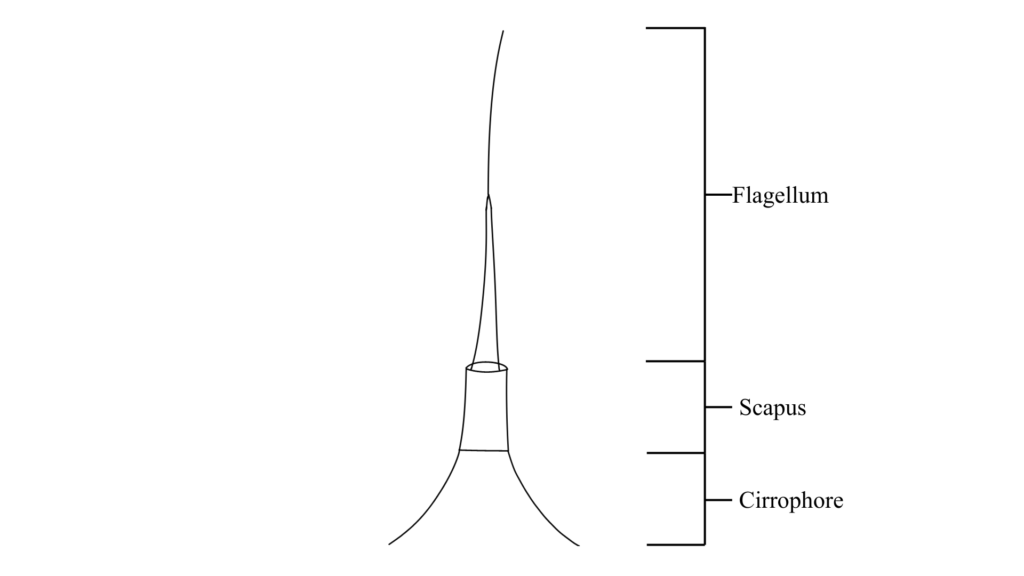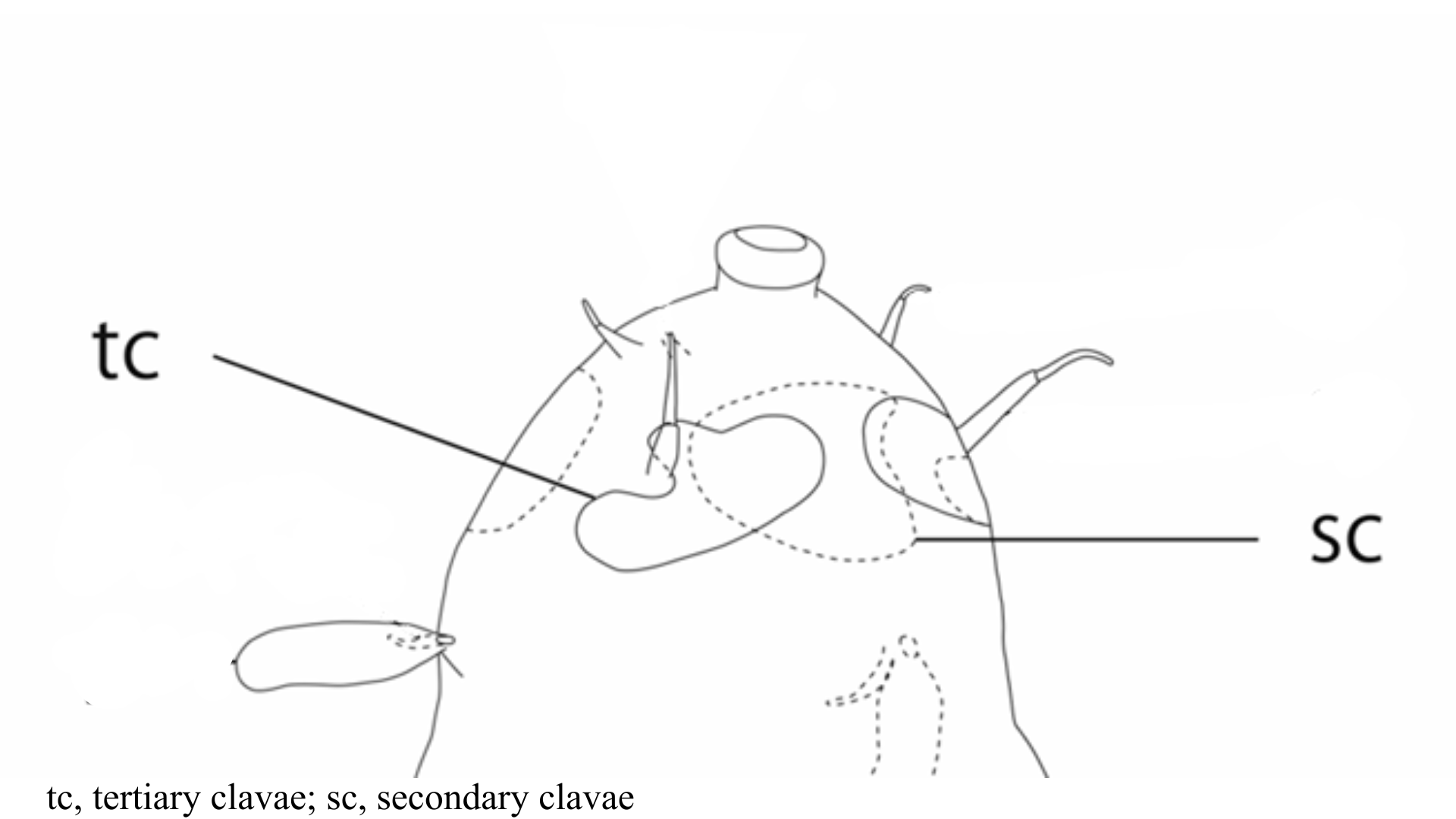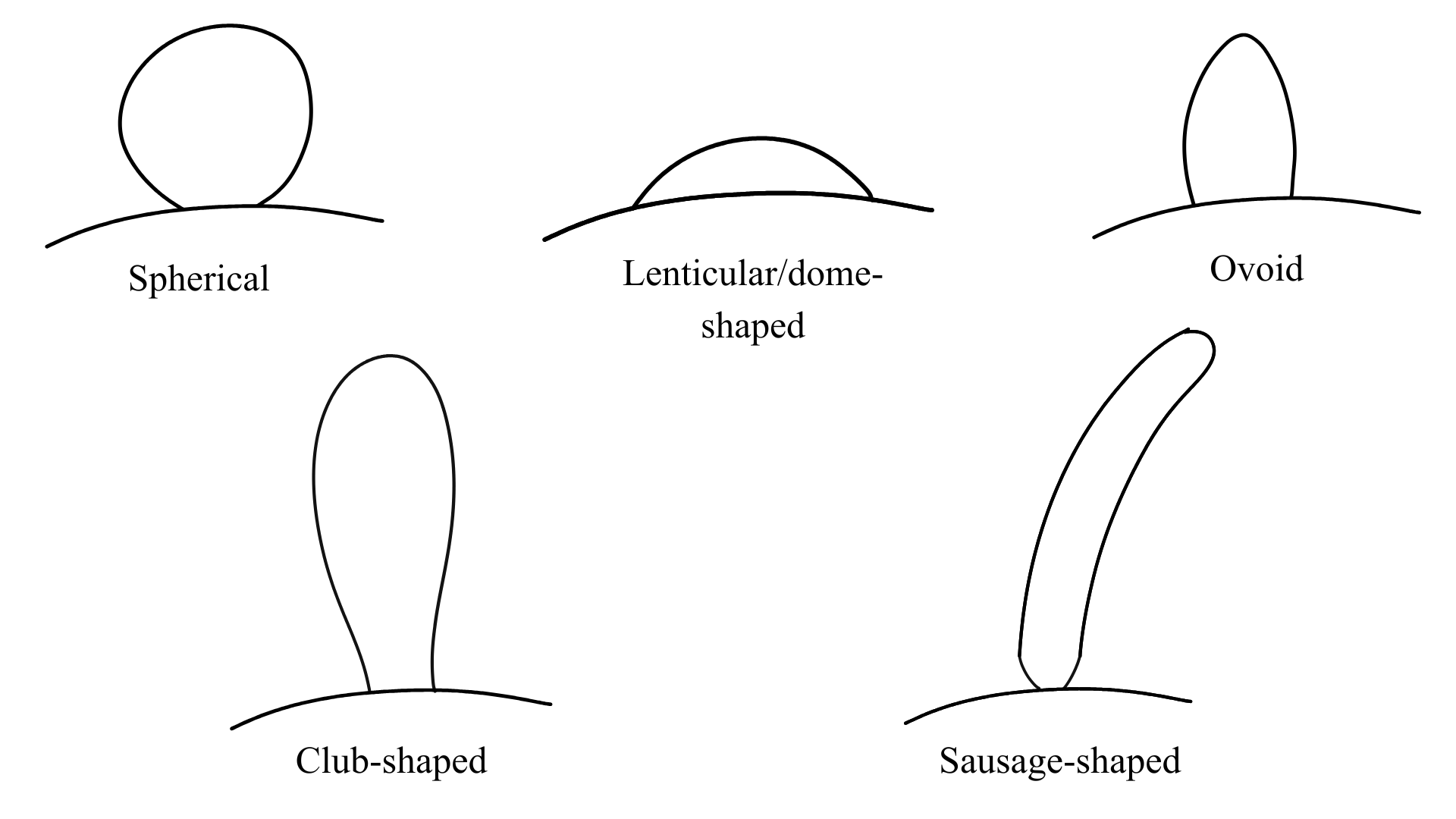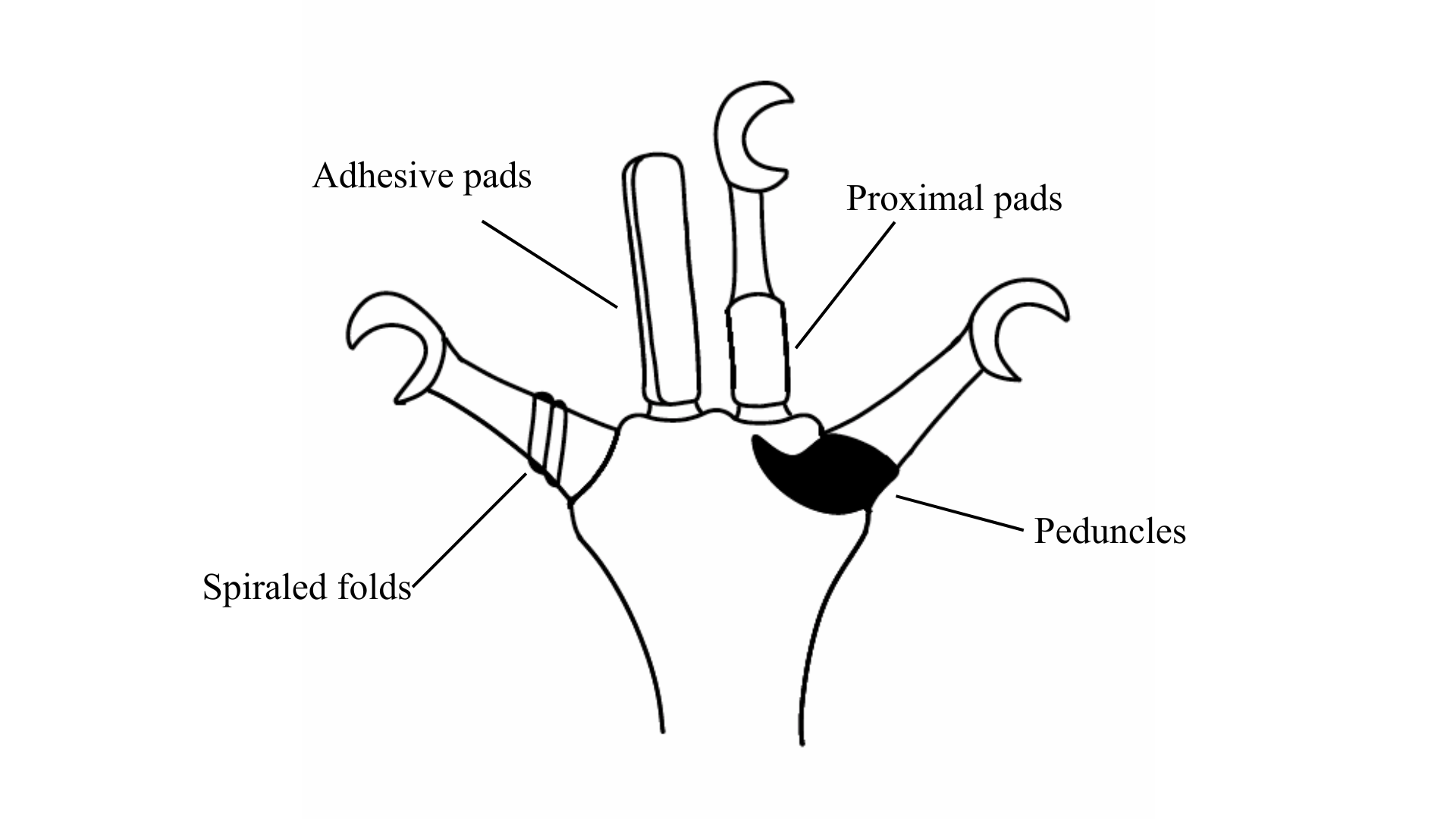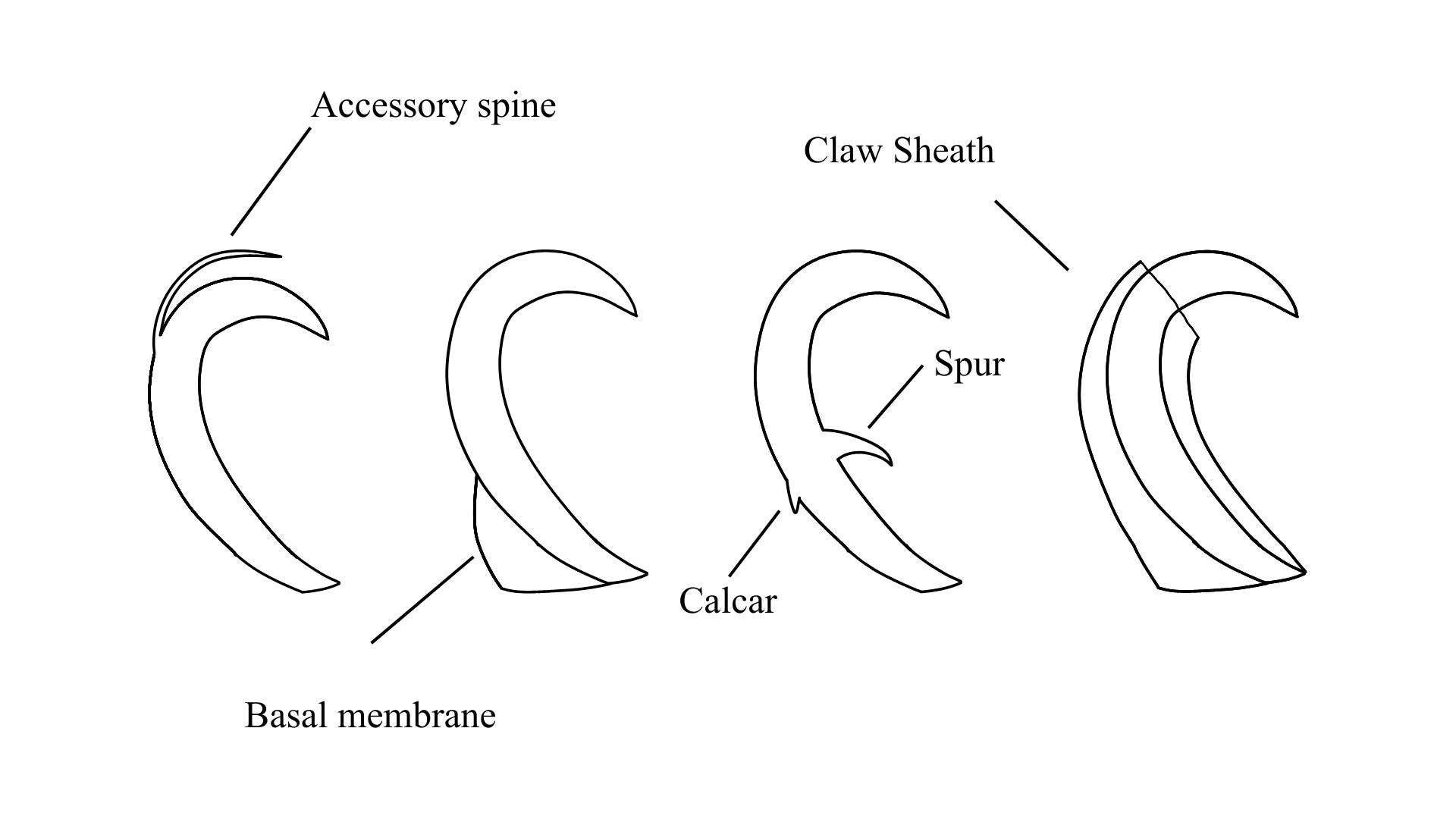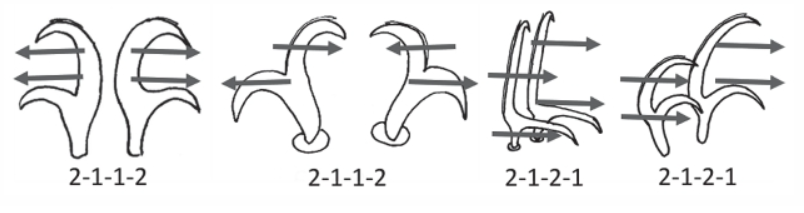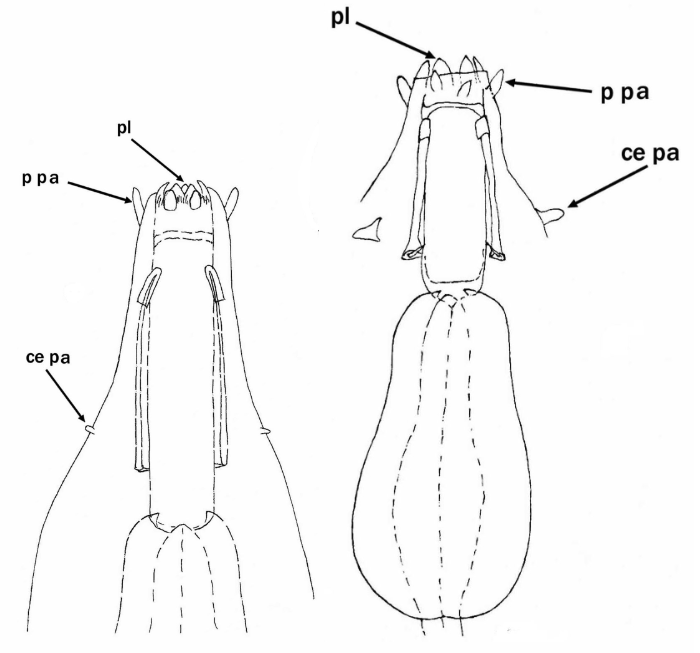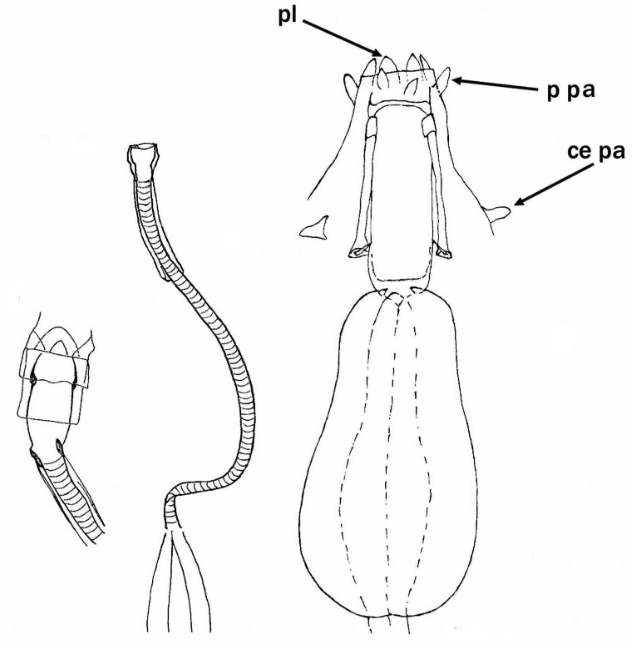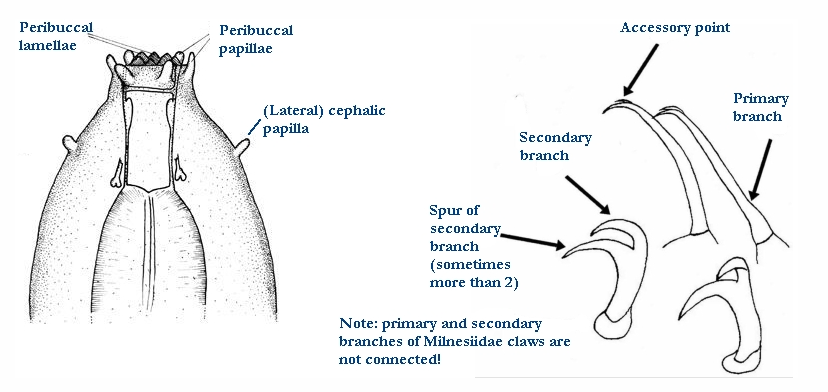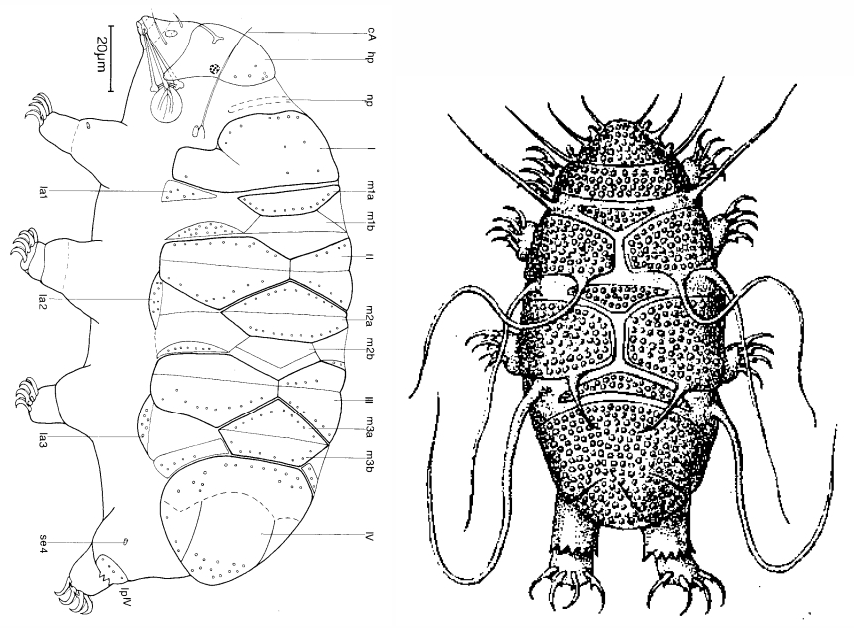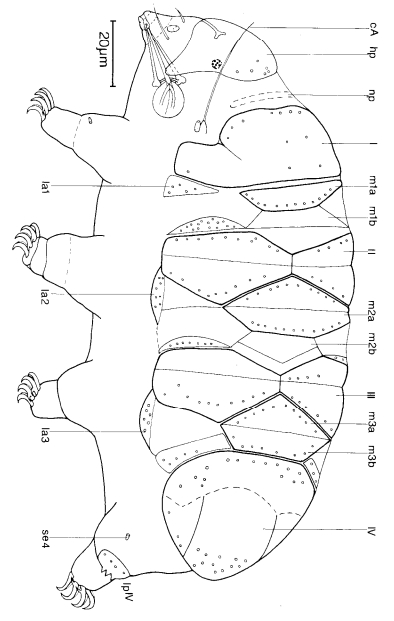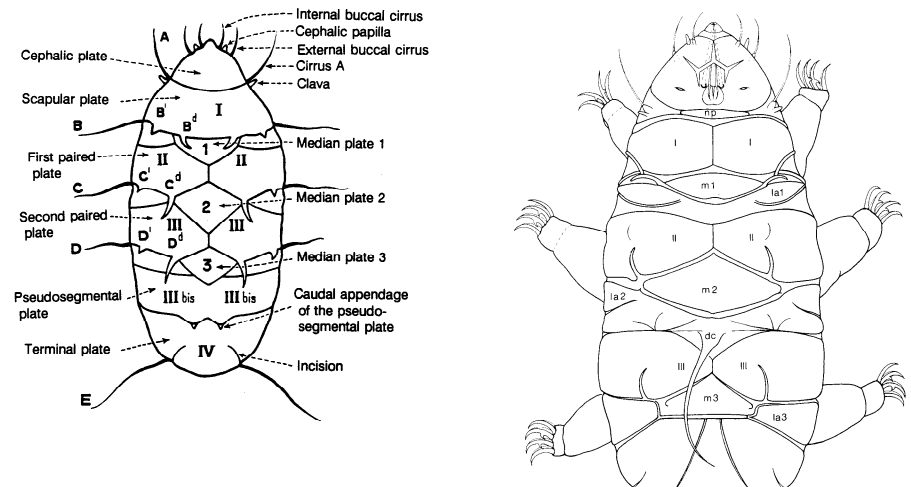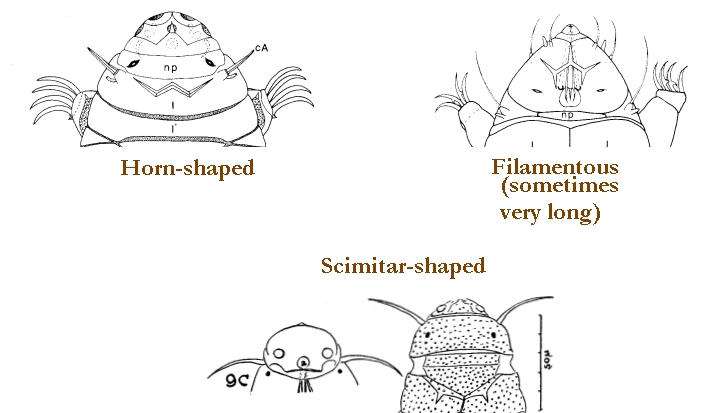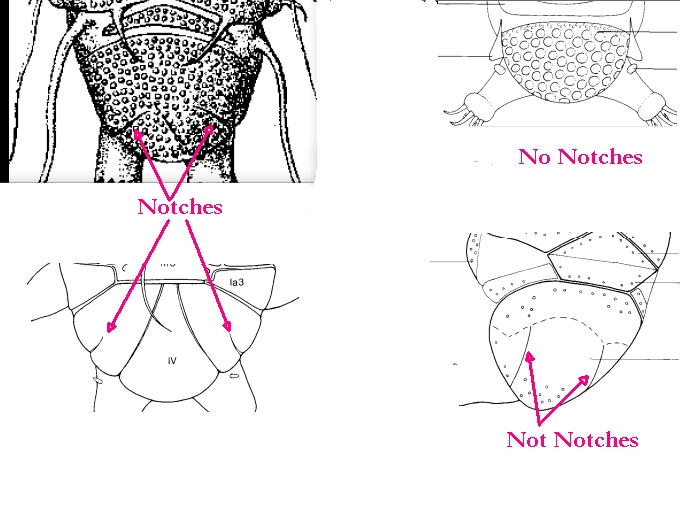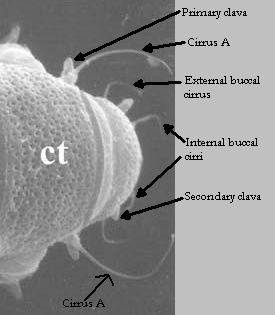
Dipodarctinae from Jørgensen et al. 2014: “Halechiniscids with primary clavae much longer than, and ventral to, the lateral cirri; indistinct secondary clavae present as kidney- or sausage-shaped elevations between internal and external cephalic cirri. Feet on legs I-III with at least three (digits I-III) of the four digits short and of equal length; digit IV is more dorsal and can be very long. Two short horizontal strengthening bars (peduncles) inside the tarsus. Foot on leg IV differs strongly from feet of leg I-III. It is of Tanarctus-type, i.e., with two long, thin, flexible medial digits (digits II and III) with small crescent claws with accessory spines, and two shorter lateral digits (digits I and IV) without accessory spines. Calcar can be present in all claws. Leg IV sensory organ differ from the spines of legs I-III. The leg IV sense organ is an ovoid to club-shaped papilla with a terminal spine.”
Citations:
Jørgensen A, Boesgaard TM, Møbjerg N, Kristensen RM. 2014. The tardigrade fauna of Australian marine caves: With descriptions of nine new species of Arthrotardigrada. Zootaxa. 3802(4): 401-443.