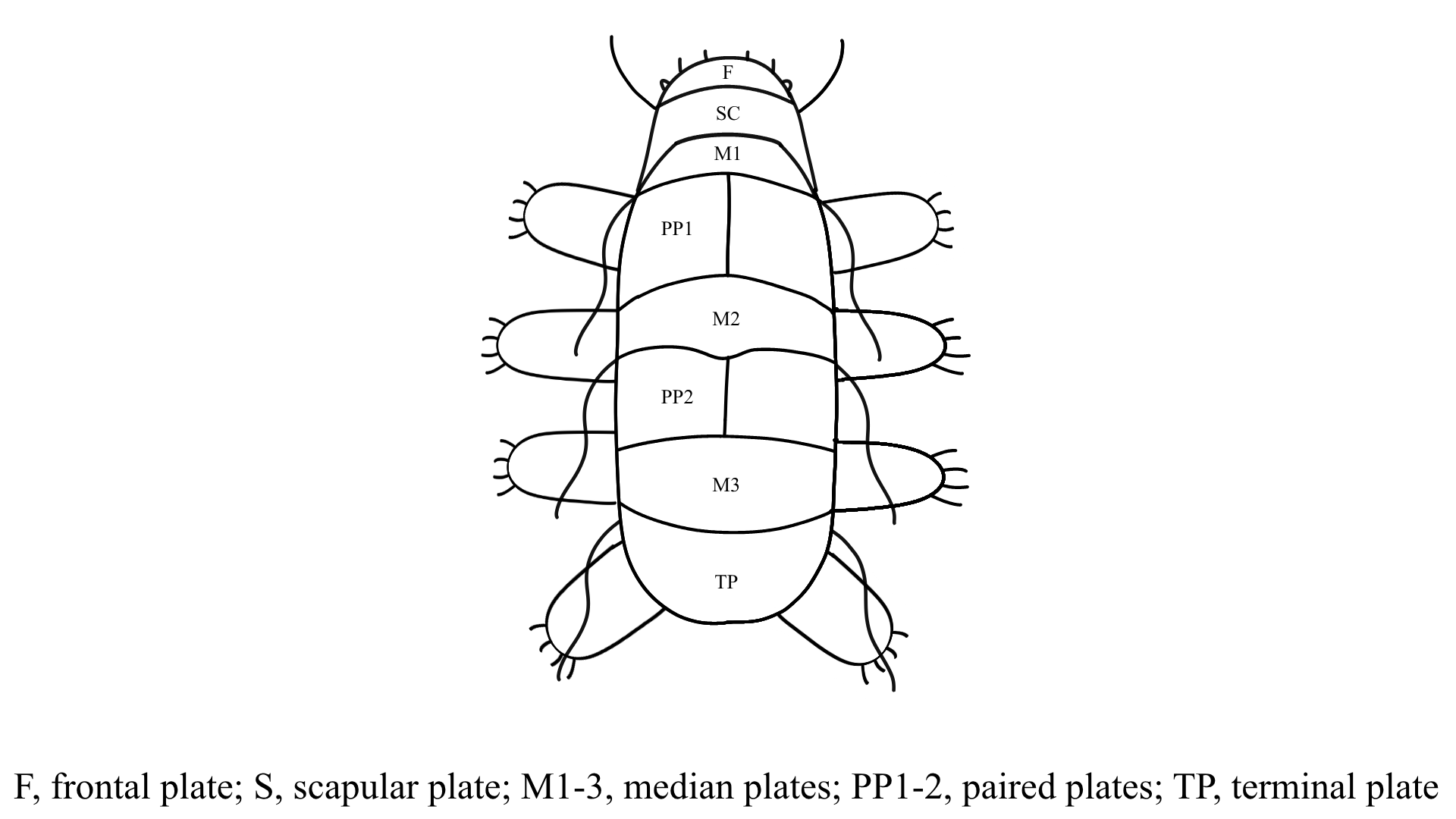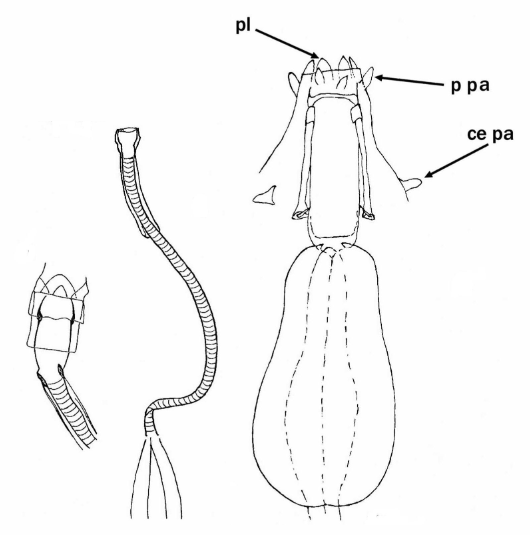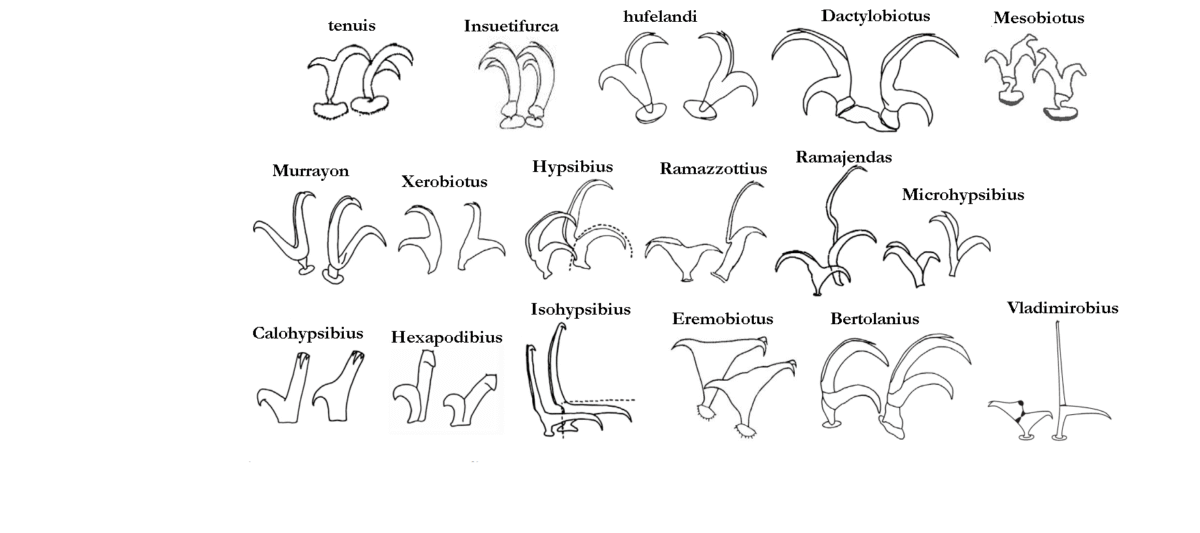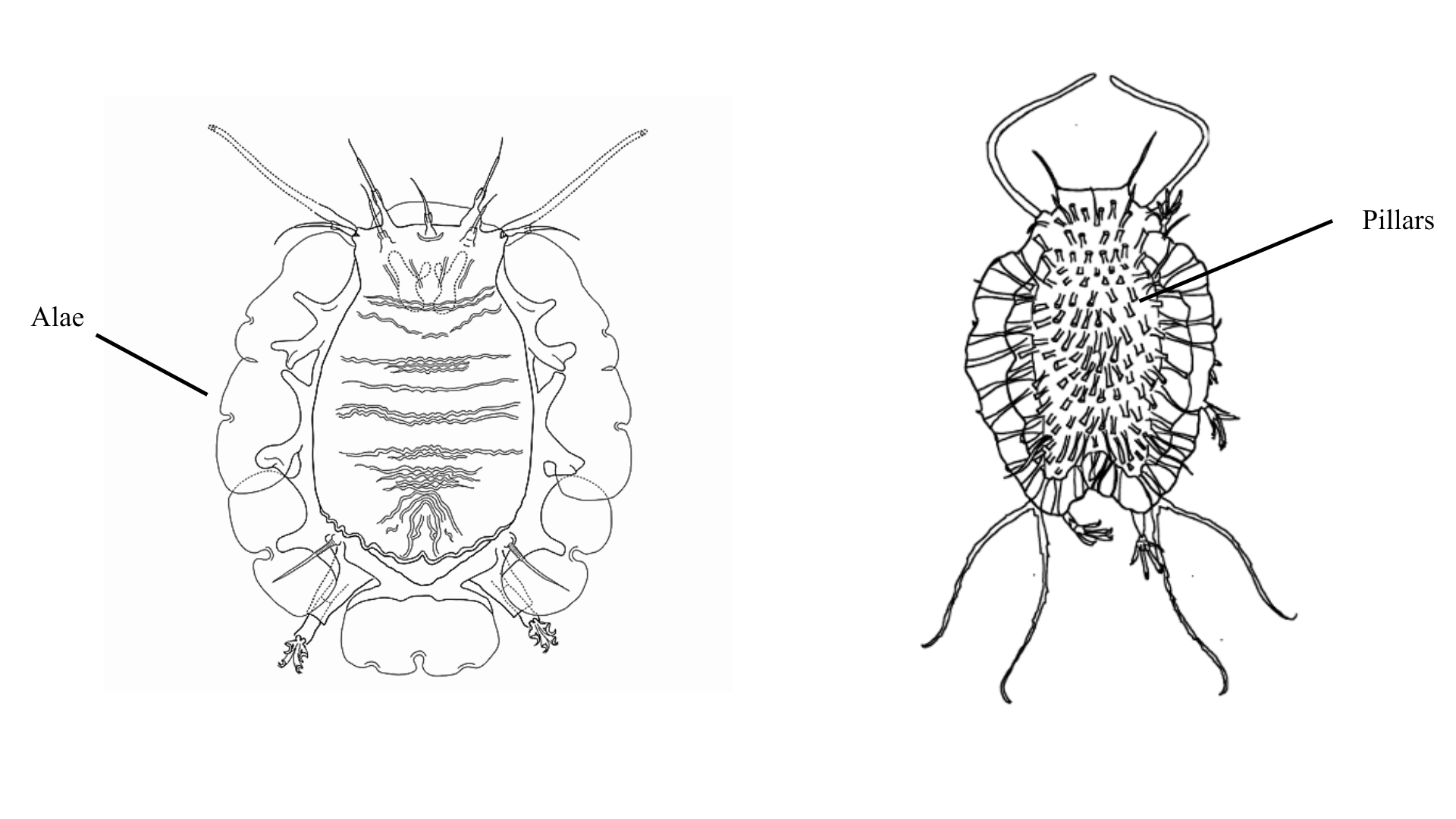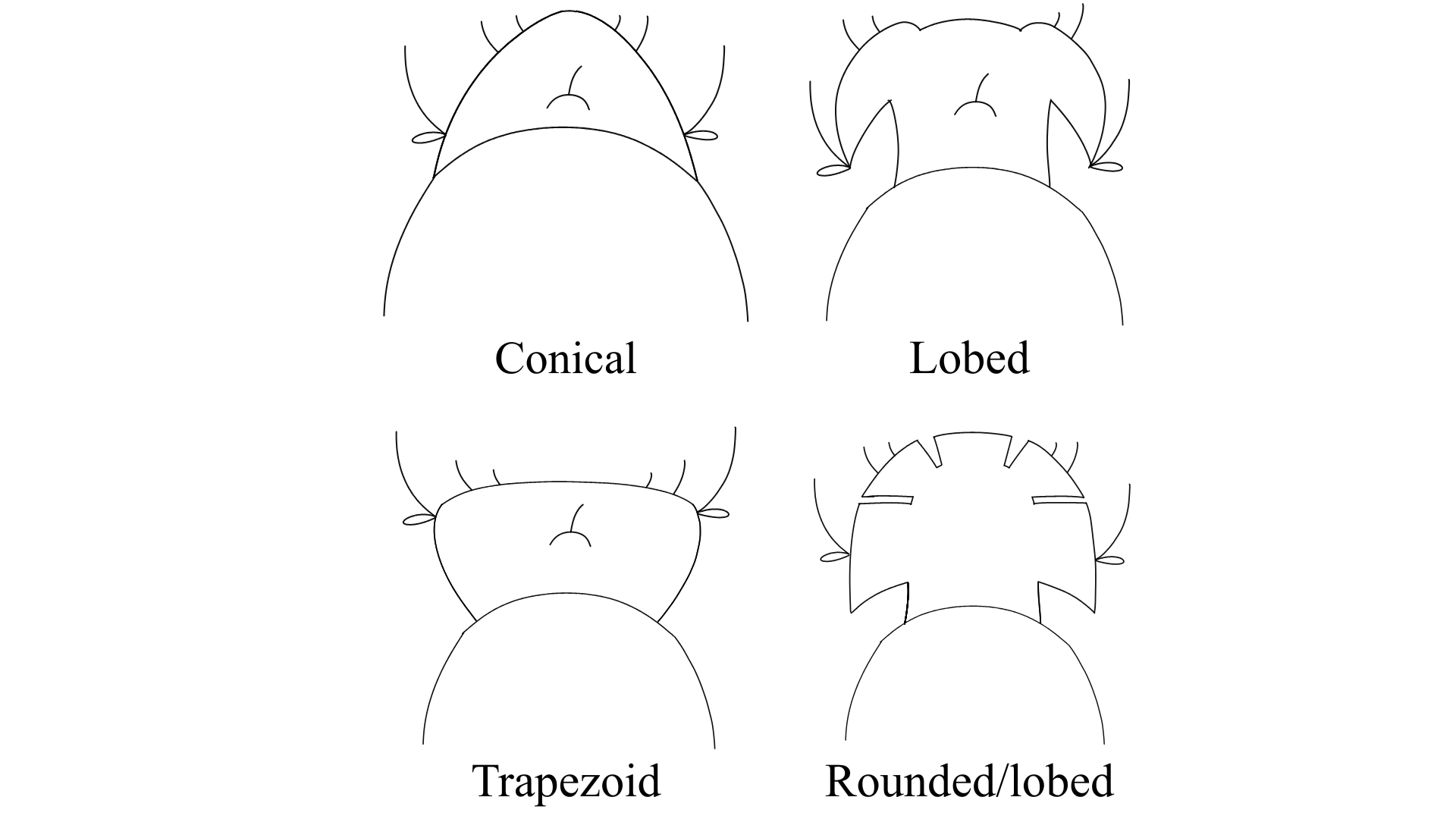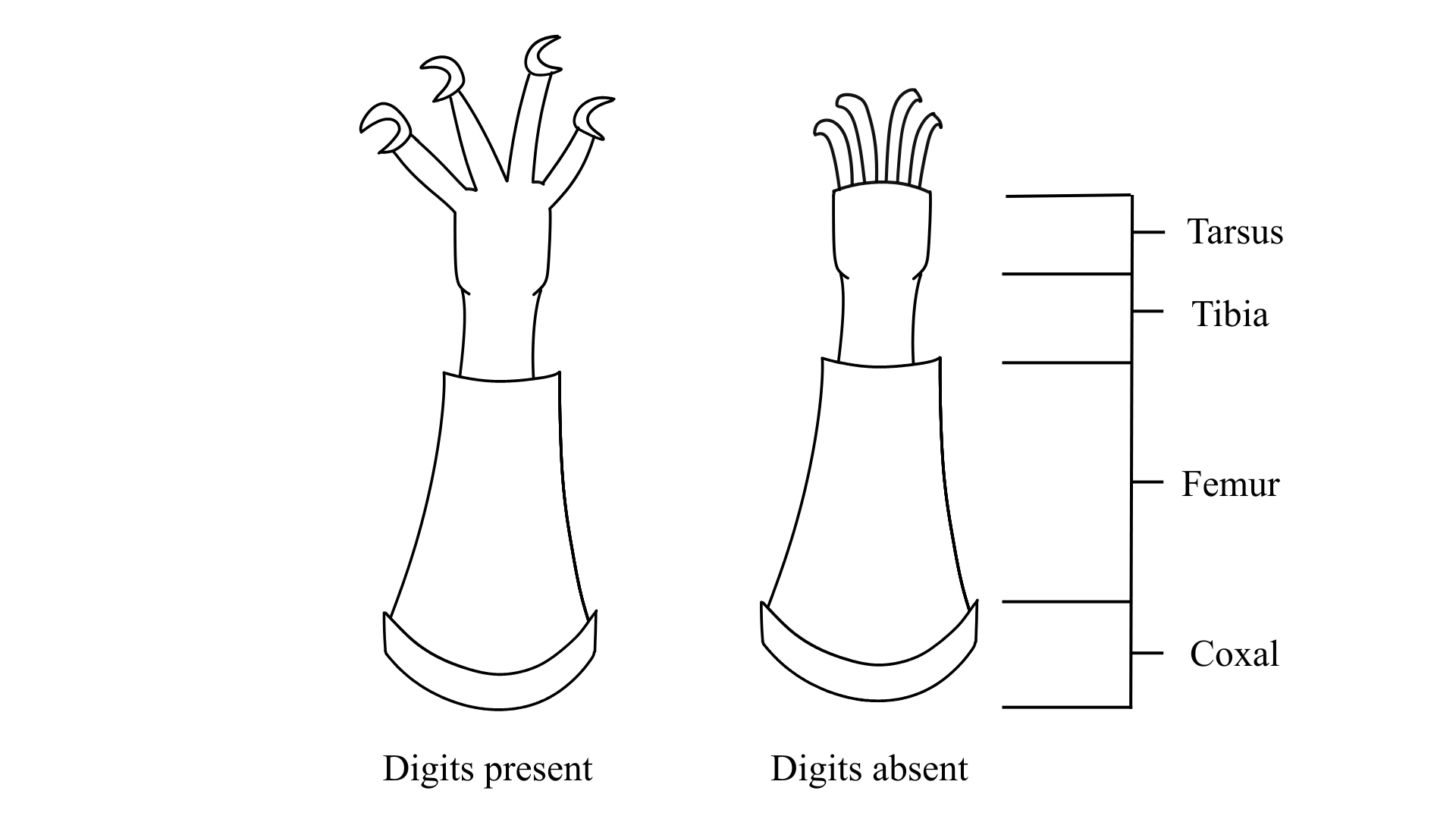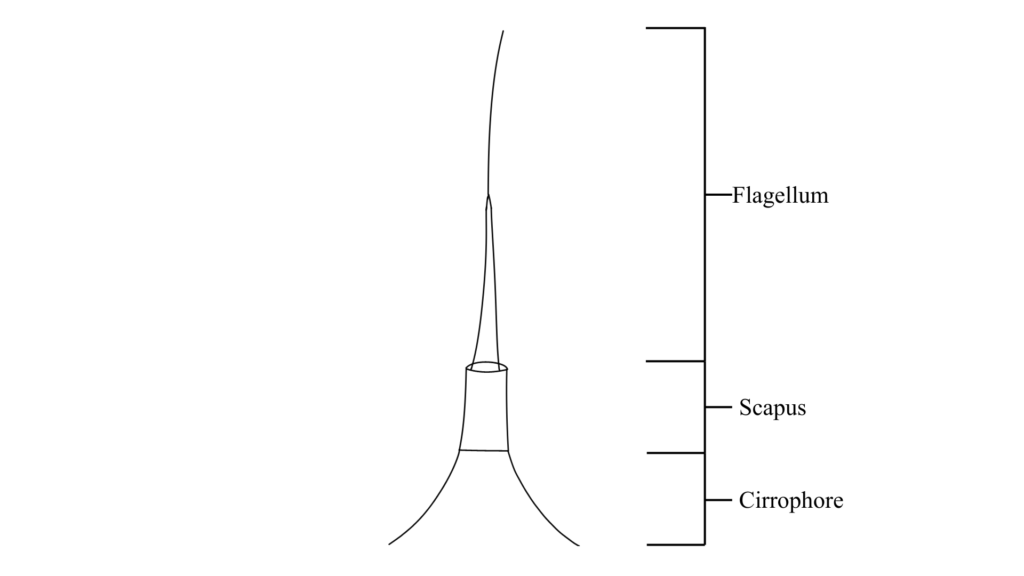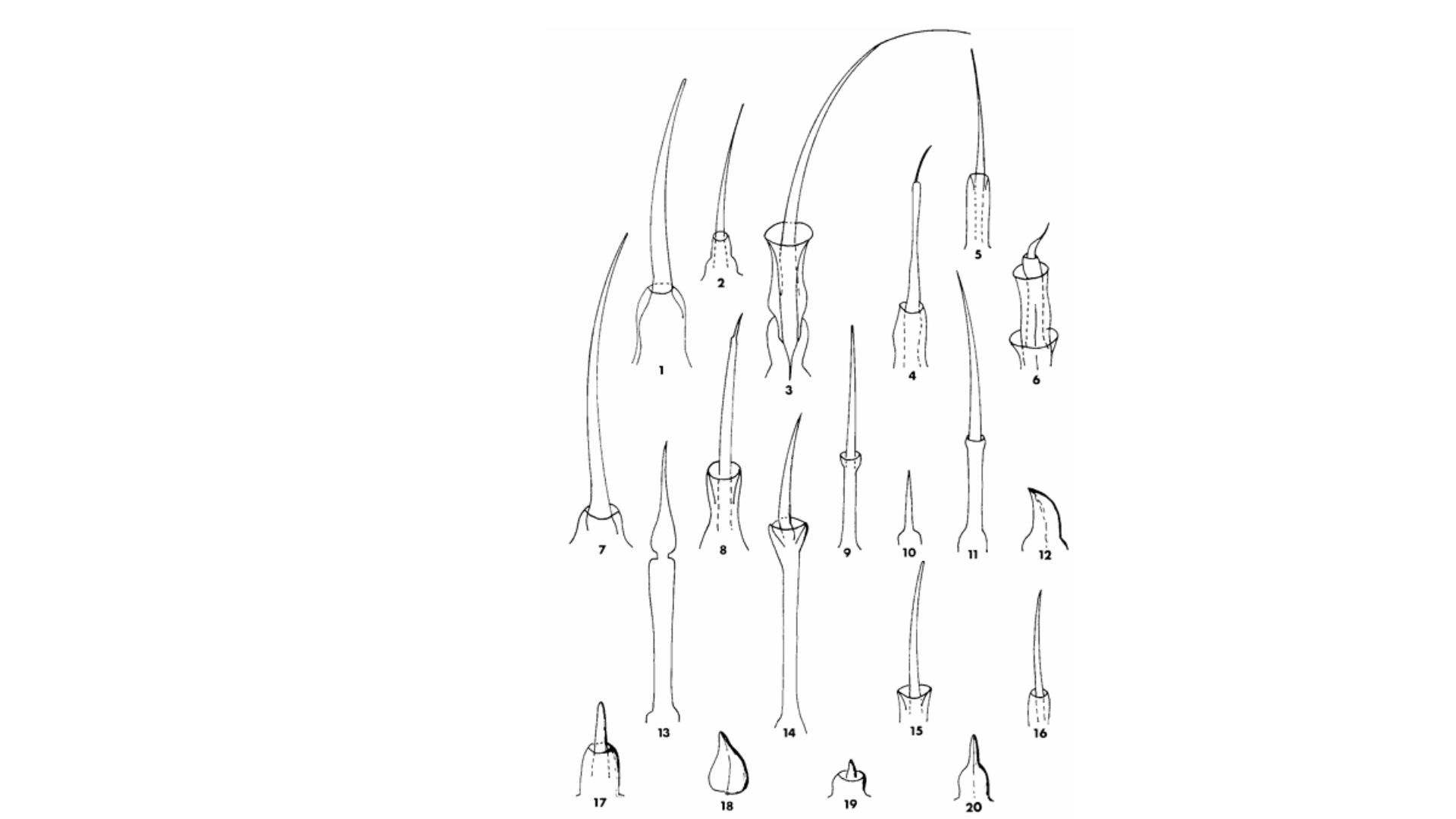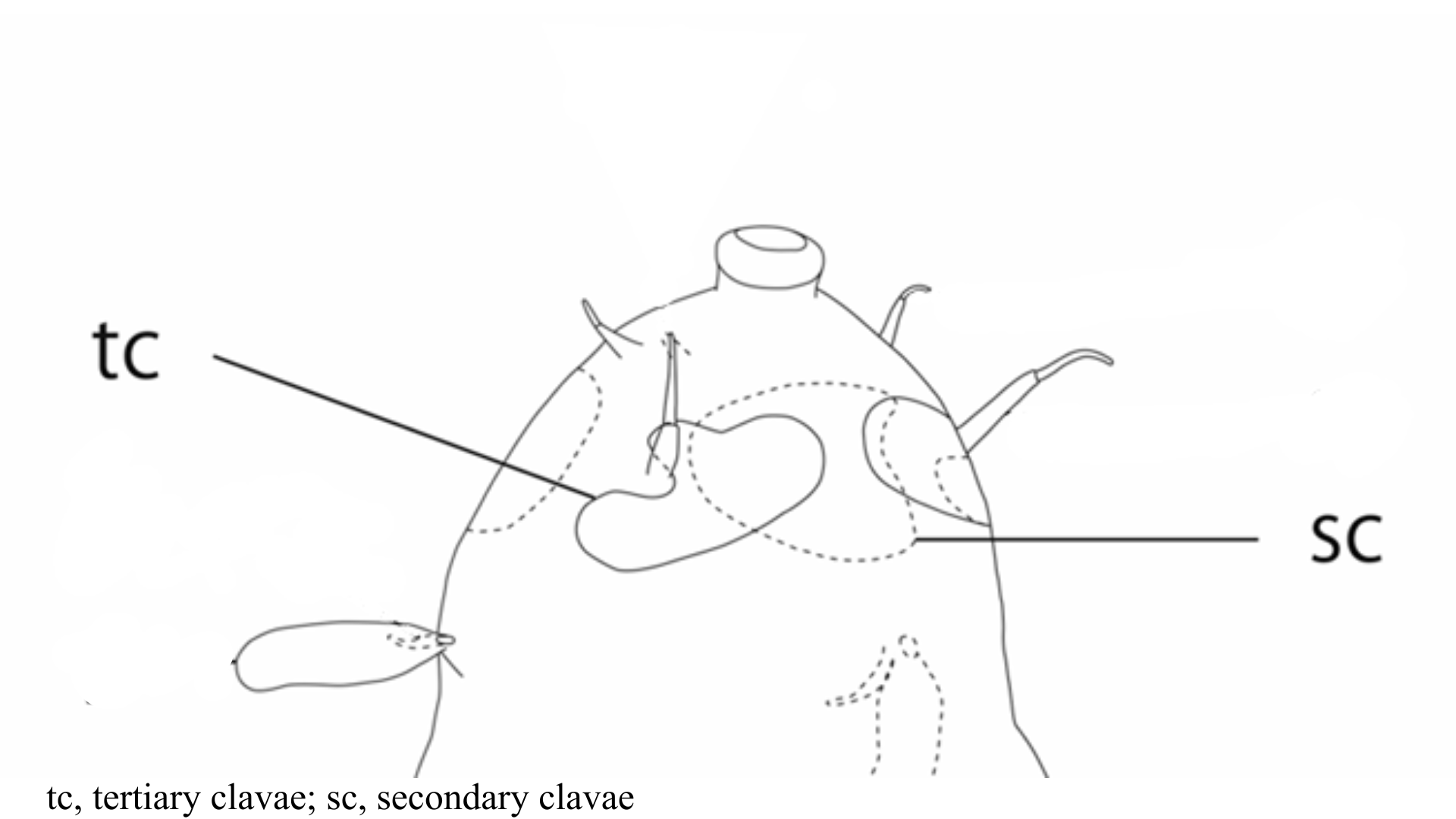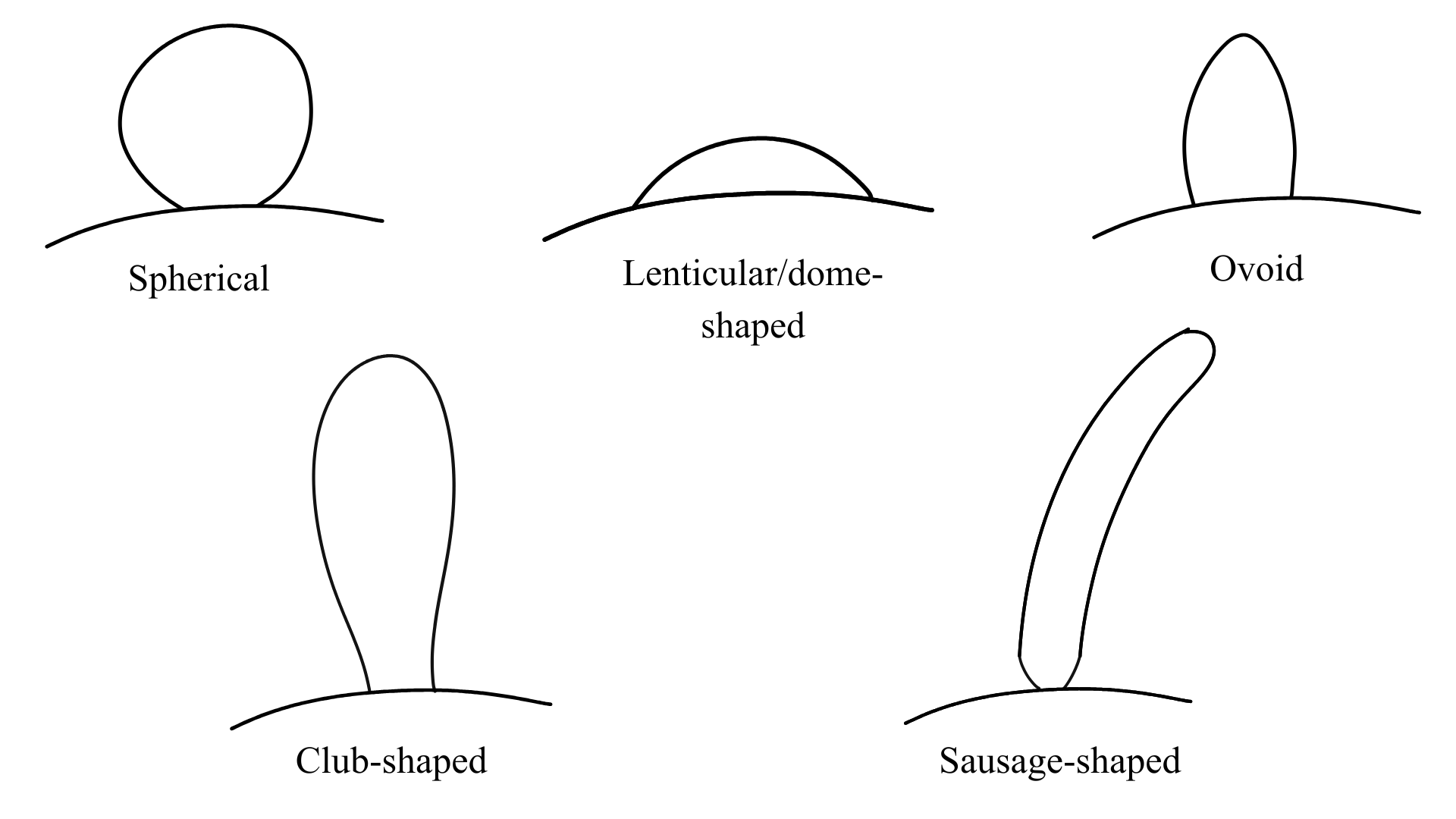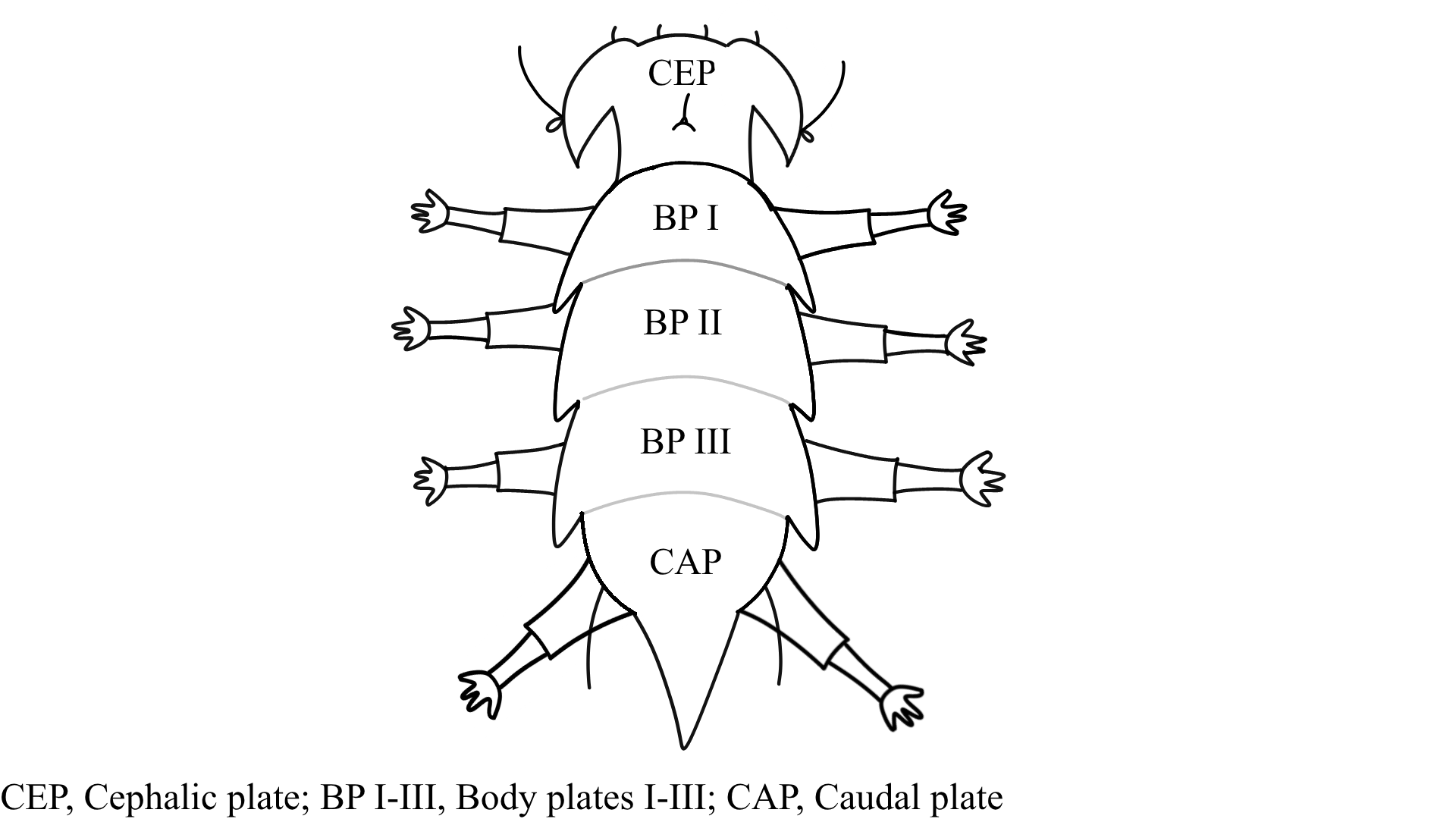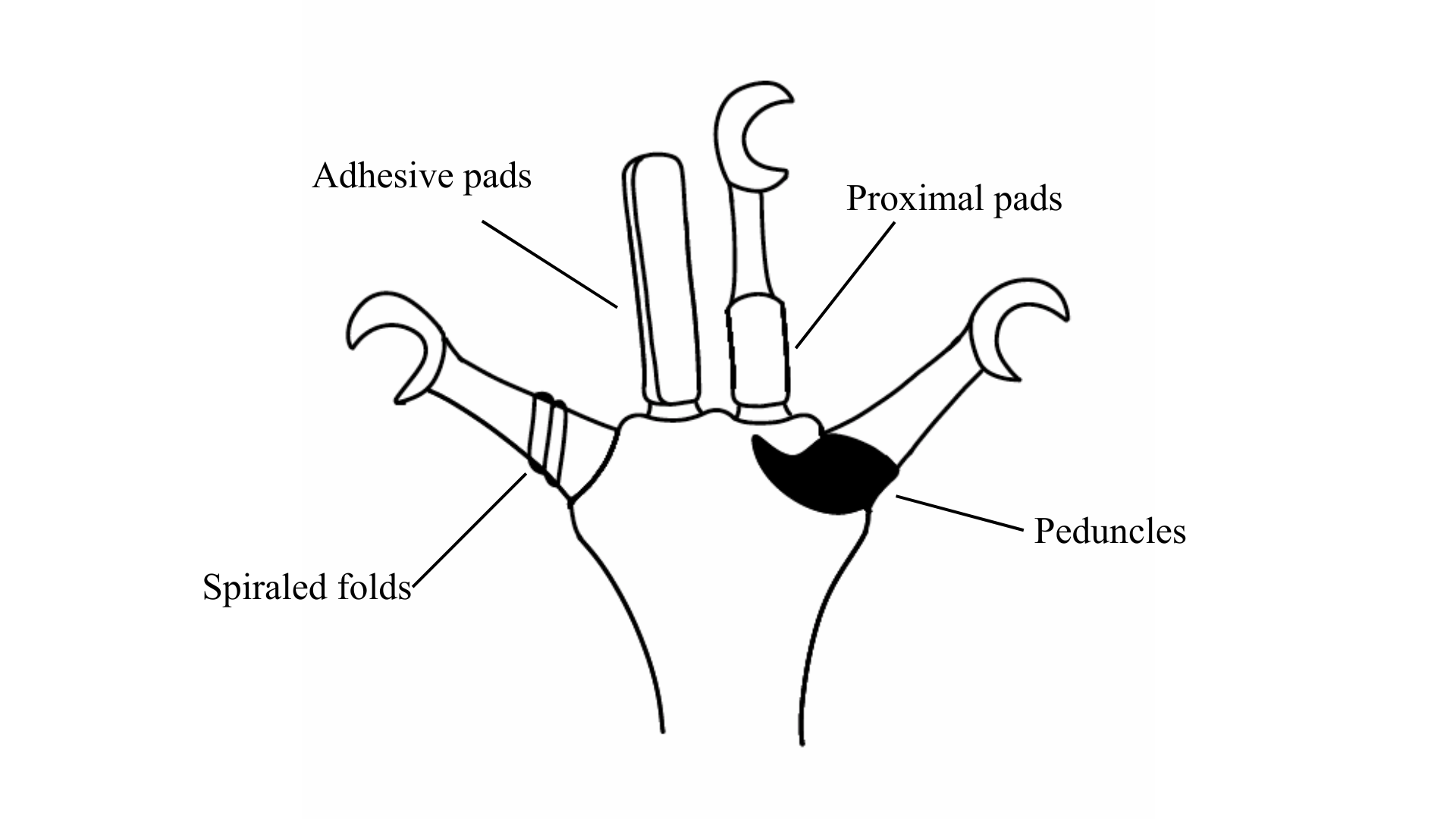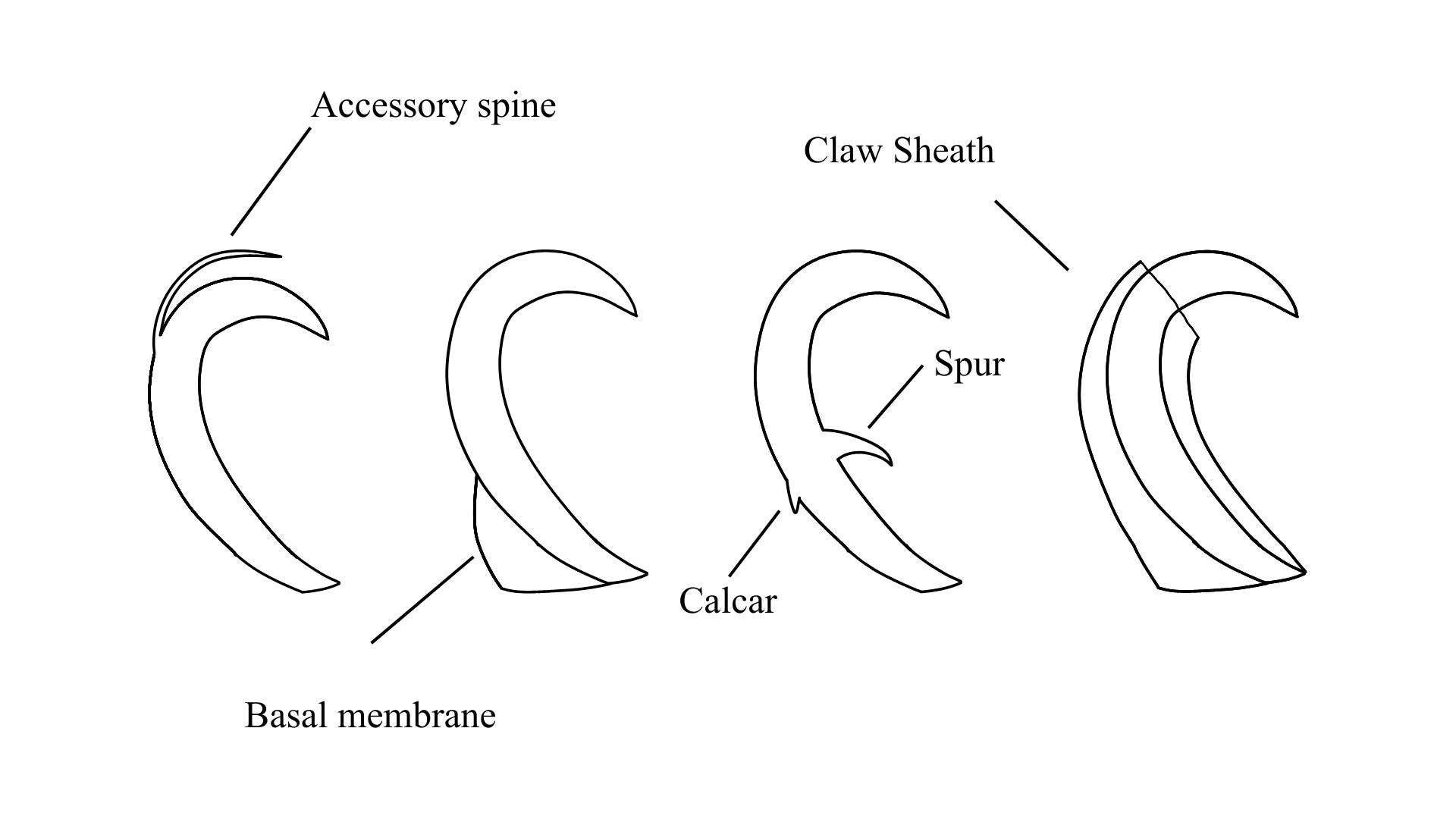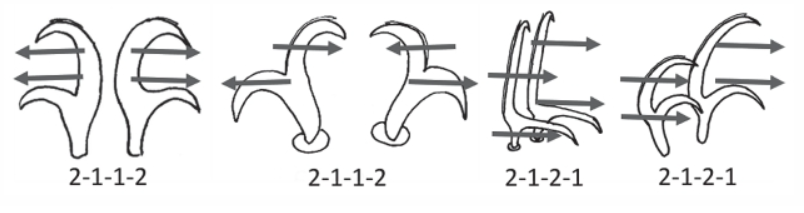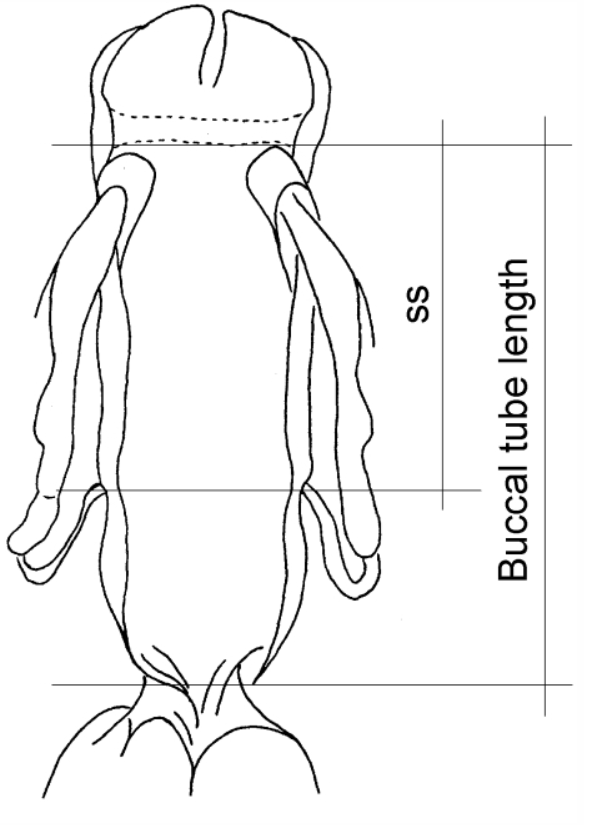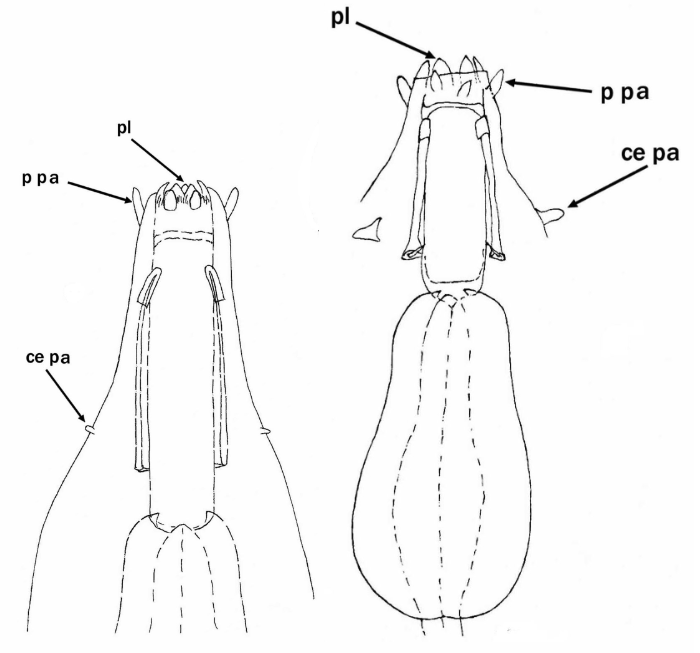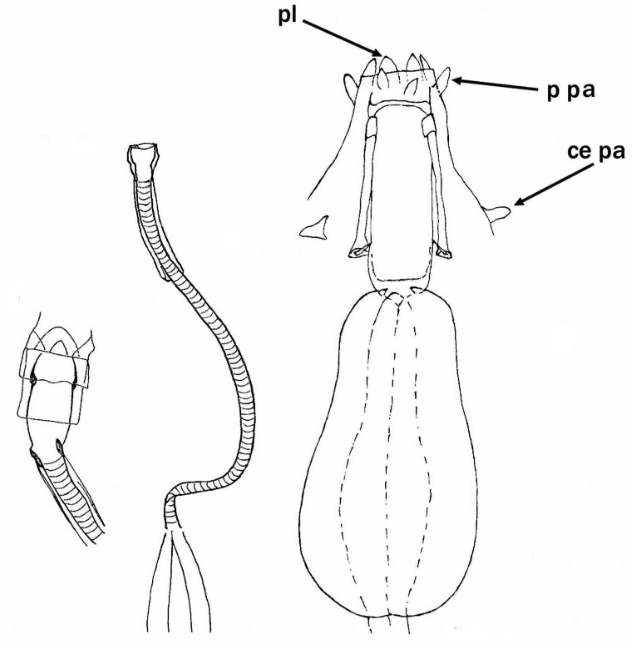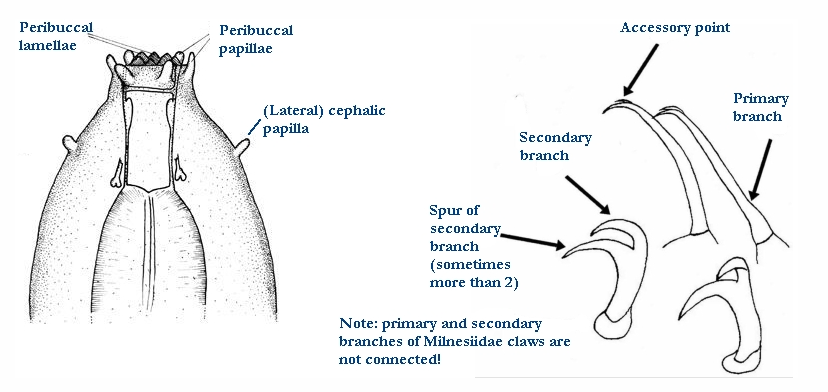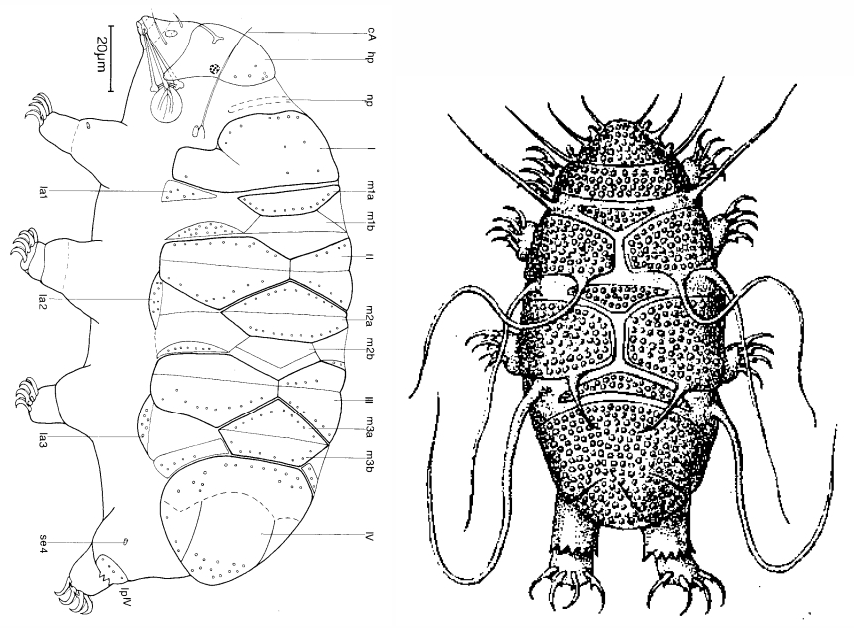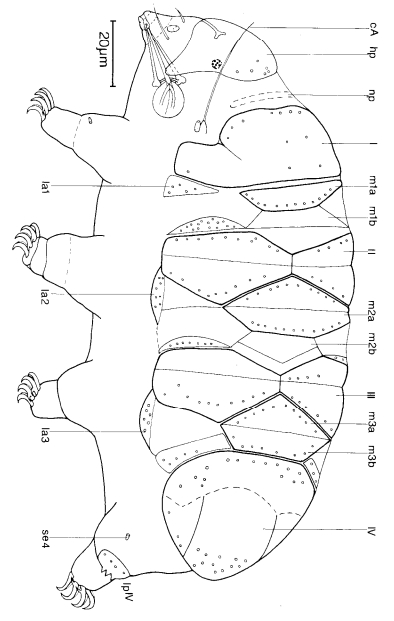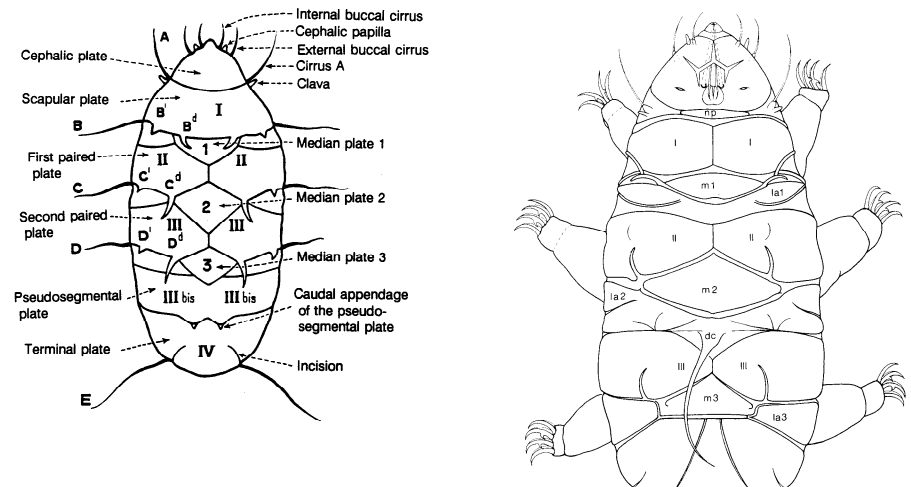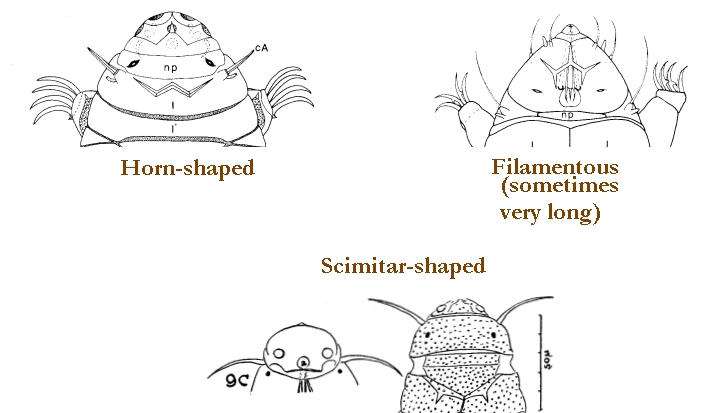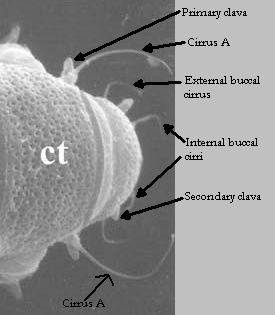
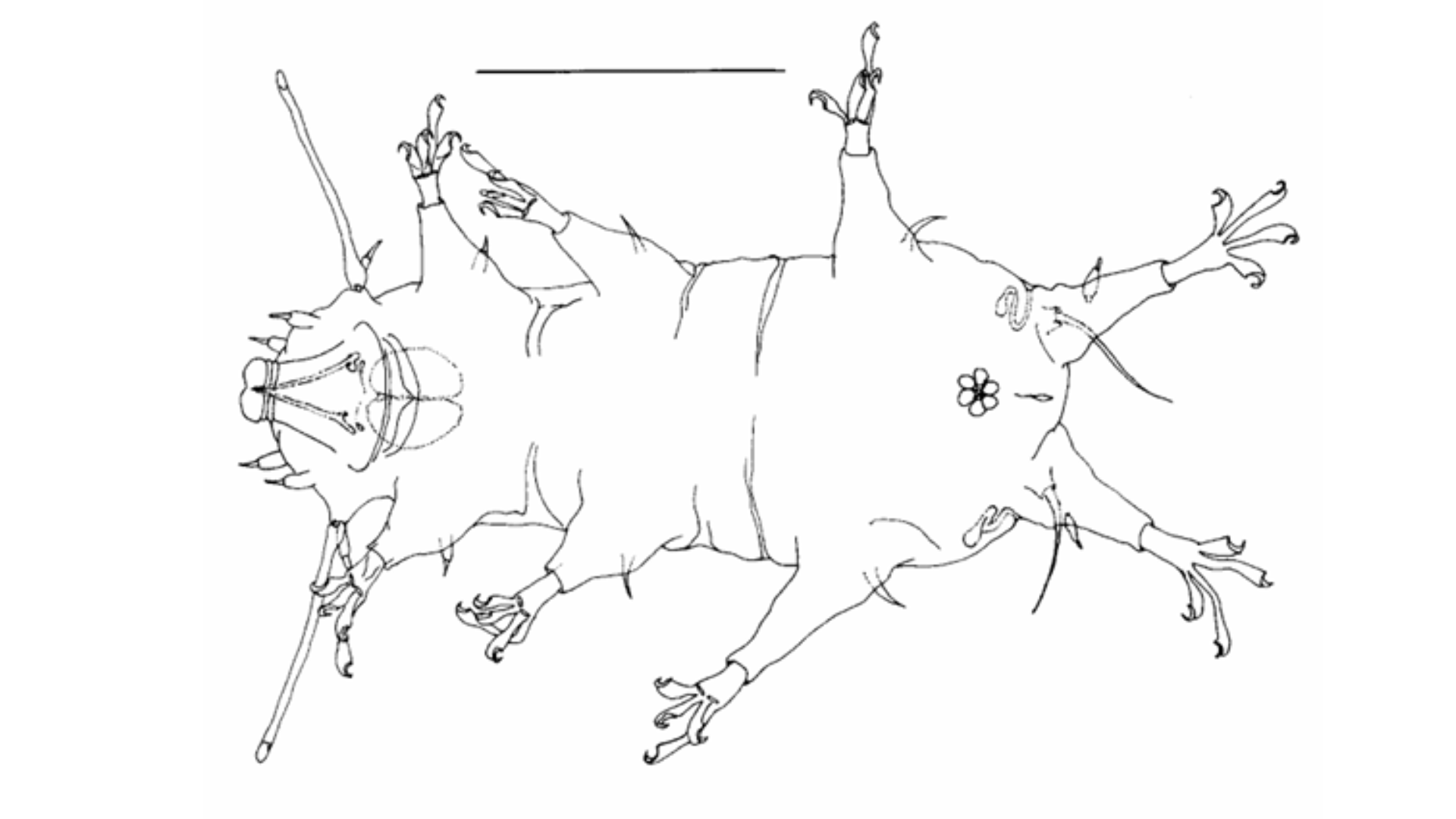
Genus description from Jørgensen et al. 2014: “Dipodarctinae with lanceolate tibia and triangular tarsus of the Tanarctus-type. Digits on the first 3 pairs of legs (I-III) are of different shape than those of fourth leg pair. Three ventral digits are of equal length, claws with calcar and one long dorsal digit with a simple claw. Claws can be covered by a membranous sheath. At the base of the digits, horizontal peduncles are present. Peduncles can be absent in the fourth leg pair in which the two external digits are shorter than the two internal ones. Digits on all legs can be simple or with joint-like folds. Digits with parallel folds or spiraled digits. Cephalic appendages are long primary and indistinct secondary clavae, a robust medial cirrus, external, internal and lateral cirri. The cirri may consist of three segments (cirrophorus, scapus and flagellum). Sense organs on the first three pairs of legs can be simple or more complex, formed by a more or less visible cirrophorus, a scapus and a flagellum. The sense organ of the fourth leg pair consist of ovoid papilla or the elongated Halechiniscus-type papilla with a terminal spine. Pharyngeal bulb is of variable size with straight to horn-shaped placoids. Body is with or without Halechiniscus-type lateral processes. The ducts of seminal receptacles open laterally and close to the insertion of the coxa of leg IV.”
Citations:
Jørgensen A, Boesgaard TM, Møbjerg N, Kristensen RM. 2014. The tardigrade fauna of Australian marine caves: With descriptions of nine new species of Arthrotardigrada. Zootaxa. 3802(4): 401-443.