Acanthechiniscus

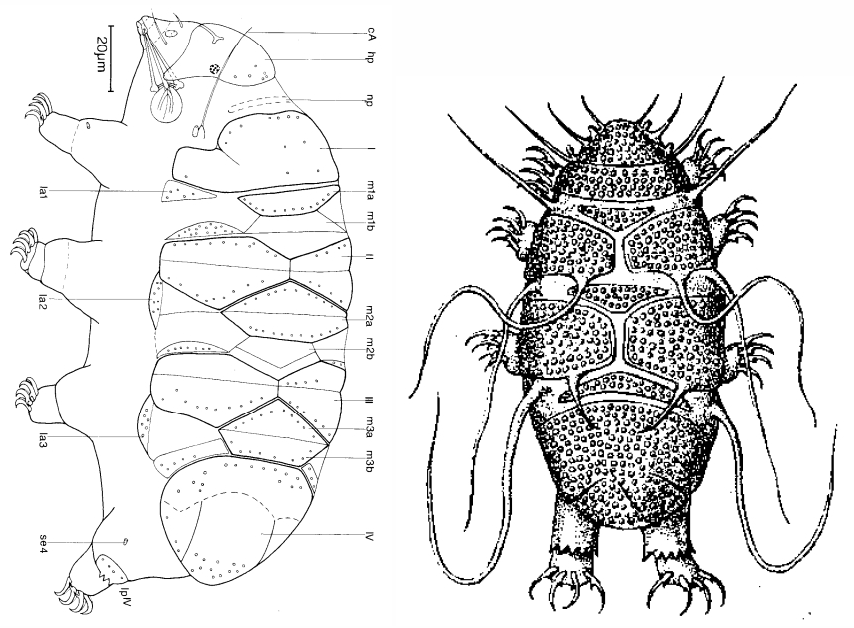
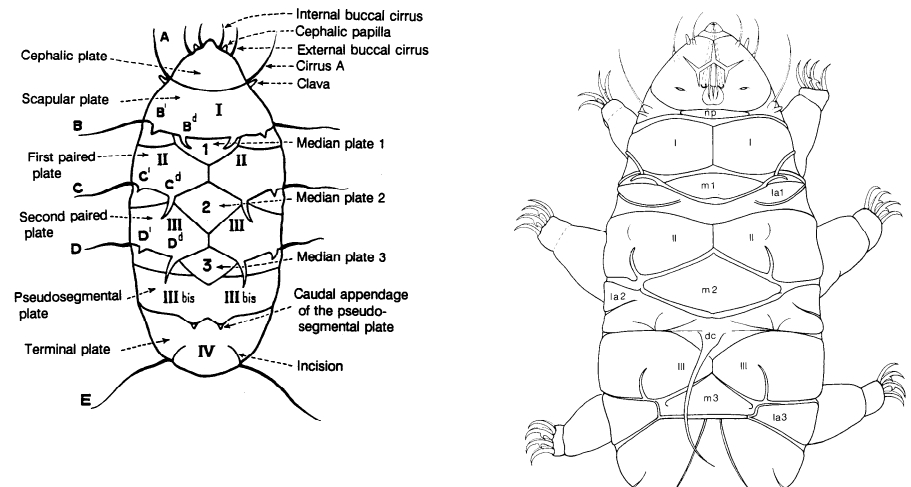
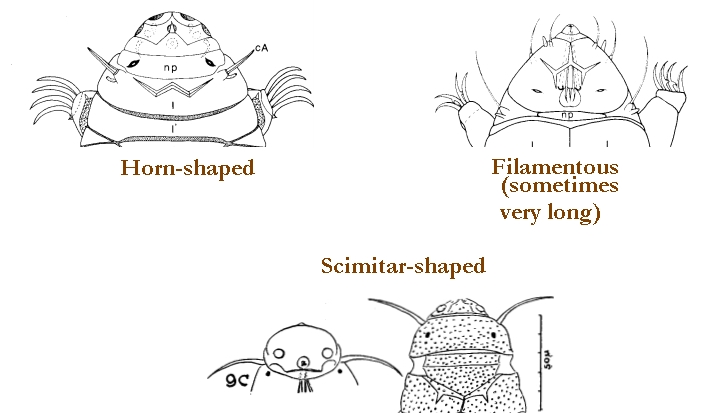
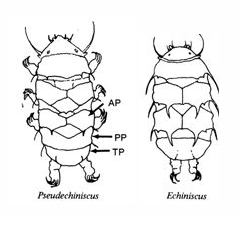
Acanthechiniscus, from Vecchi et al. 2016: “Echiniscid with pseudosegmental cuticular plate. Black eyes. Buccal cirri present, Filamentous cirri A present. Rigid buccal tube. Filaments and/or spines (may be small) present, generally in all lateral positions (B, C, D, E). Dorsal spines present. Notched collar (or spine fringe) on hind legs present.” Very similar to Pseudechiniscus, but notched cuff […]
Bryodelphax

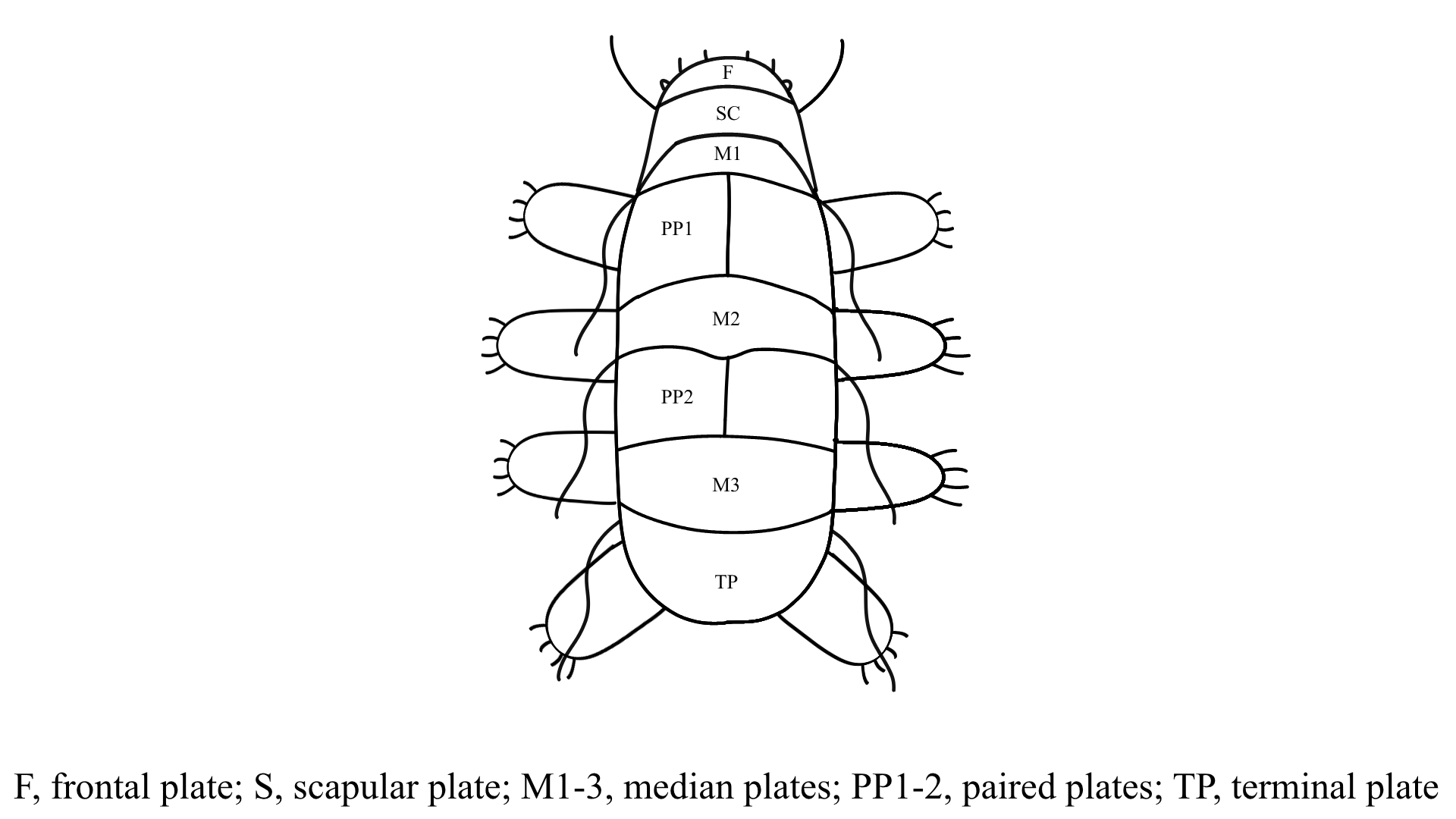
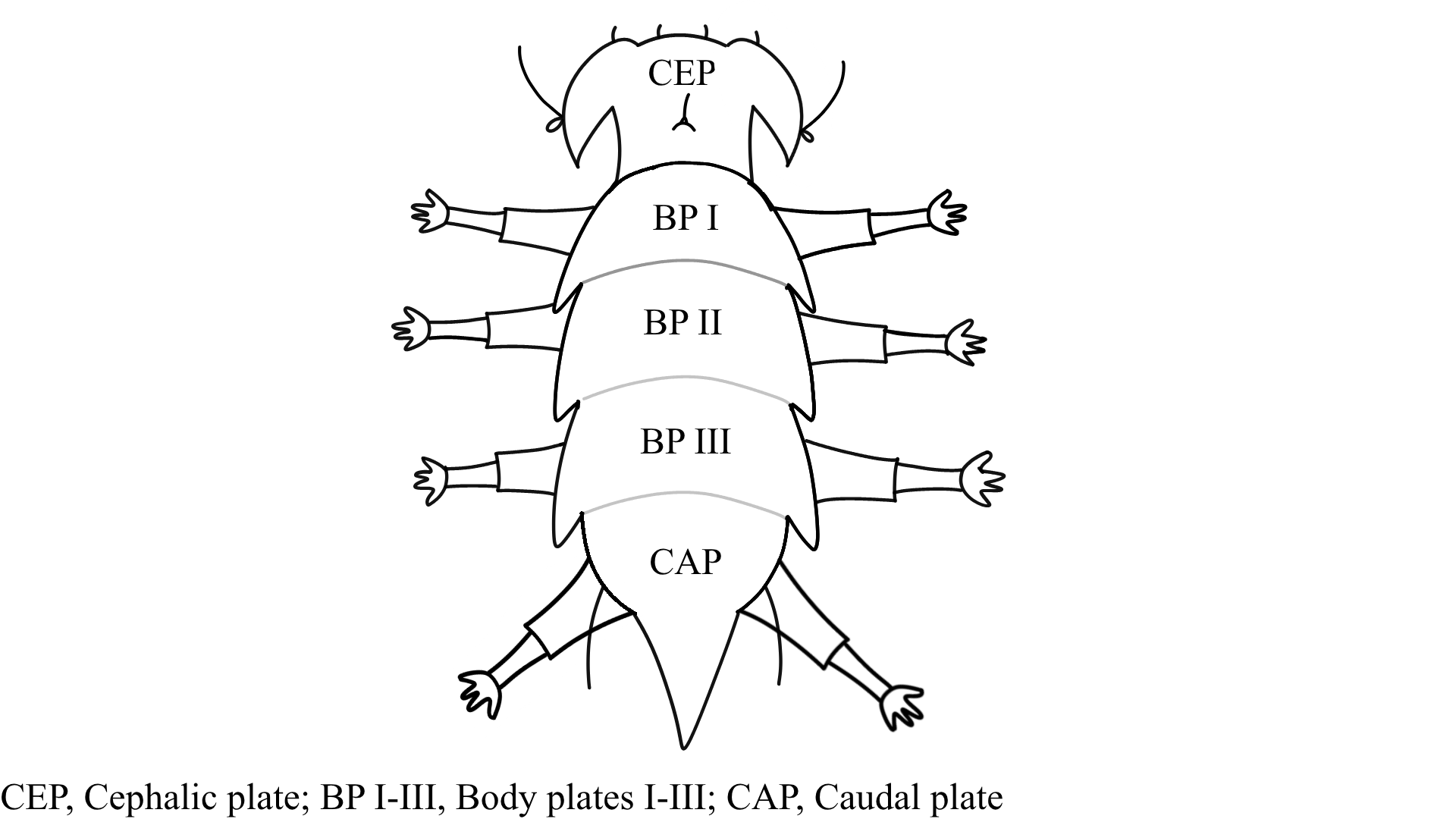
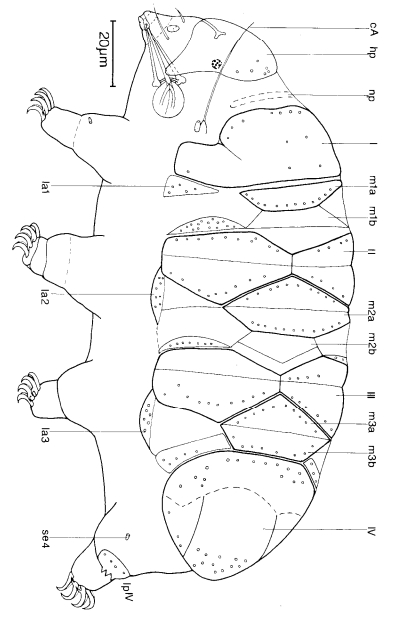
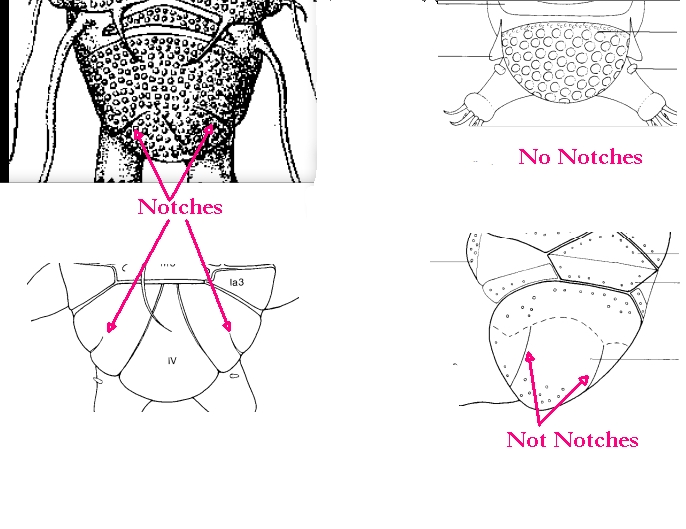
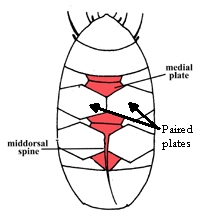
From Ramazzotti & Maucci 1983 (tr. Beasley 1995): The median plates 1 and 2 are divided, not 3, so that there are visible total 5 median plates; lacking the notches on the terminal plate. From Kristensen 1987: “Sparsely pigmented Echiniscidae with red granulae eyes, unflexible buccal tube with CaCO3 encrusted stylet supports. Median plates 1 […]
Bryochoerus

From Ramazzotti & Maucci 1983 (tr. Beasley 1995): Median plates 1, 2,3 divided transversely, so that total of 6 median plates visible. From Kristensen 1987: “Unpigmented to rose coloured Echiniscidae with red eyes, short inflexible buccal tube, with CaCO3 encrusted stylet supports. All median plates 1,2,3 divided, without pseudosegmental plates, with small lateral intersegmental plate […]
Testechiniscus

From Kristensen 1987: “Echiniscidae with black/brownish or ‘lipoid’ granular eyes; rigid buccal tube, large cuticular stylet supports, seven rows of sculptured ventral plates. Pseudosegmental plates absent. Paired segmental plates II and III with thinner anterior part. Caudal plate IV with a terminal indentation. Median plates 1 and 2 large, plate 3 small and reduced. Colour […]
Hypechiniscus

From Thulin 1928: “Echiniscidae with armor containing five median plates. End plate adjacent to the last median plate. Terminal notches present. Echiniscus gladiator MURRAY var. exarmatus MURR leads to this genus. The exarmatus form (from the Faroe Islands) that I have examined differs in some aspects from MURRAYS description: The animals are colorless with black […]
Echiniscus

From Schultze 1840: “The body ovate-elongated, with armor plates, in nine distinct segments, eight feet affixed to alternate segments from the third to the ninth. The head with four thorn-like antennae, eyes simple and two.” Untranslated: “Corpus ovato-elongatum, scutatum, spinosum, in novem segmenta distinctum, pedes octo alternis segmentis a tertio ad nonum affixi. Caput antennis […]
Diploechiniscus

From Vicente et al. 2013: “Echiniscids with dorsal plates I, II, III, IV (II and III paired), transversally subdivided median plates m1 and m2 and undivided plate m3 present; double sculpture in the dorsal plates, represented (under phase contrast) by dark polygonal and white circular grains; ventral plates present, especially evident in the anterior, head […]
Parechiniscus

From Ramazzotti & Maucci: “The plates are not well defined in the rostral part of the dorsum, better defined in the caudal part.” From Kristensen 1987: “Echiniscidae with small black eyes, rigid buccal tube, stylet supports absent, 8-9 dorsal plates, unpaired and more or less indistinct; secondary clavae dome shaped; uncoloured to grey. Emended description: […]
Novechiniscus

From Kristensen 1987: “Echiniscidae with flexible buccal tube, pharyngeal bulb with a drop- shaped structure located on the placoids. Eyes possibly black, but nearly disappeared during the preparation. All four segmental plates I-IV unpaired with two bar-shaped median plates 1 and a distinct bar-shaped median plate 2; primary and secondary clavae with ring shaped annulus […]
Multipseudechiniscus

From Miller, Schulte, Johansson 2012: “Echiniscidae with dorsal segmental plates, pseudosegmental plates, and without ventral plates. Each segmental plate divided into two or more pieces, one or more piece paired. Anterior piece of cephalic and scapular plates paired. Posterior piece of trunk segment plates I, II, and III paired, forming pseudosegmental plates. Terminal plate divided […]