Thulyphoribius

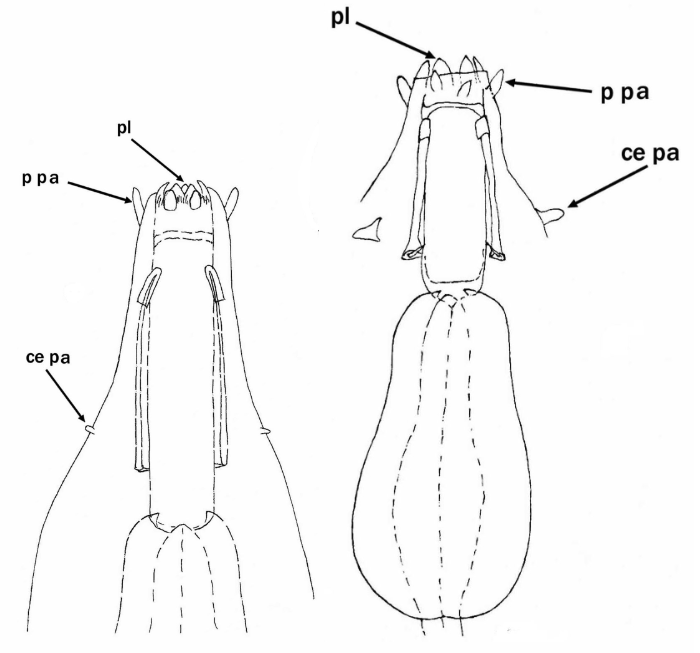
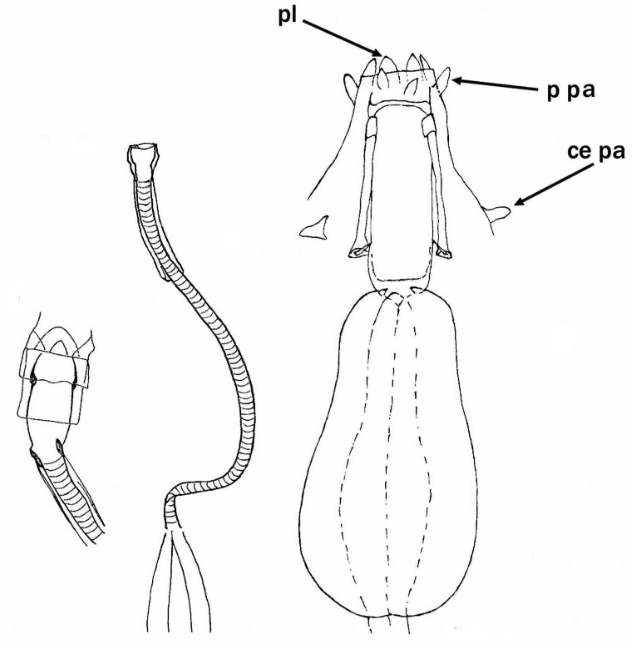
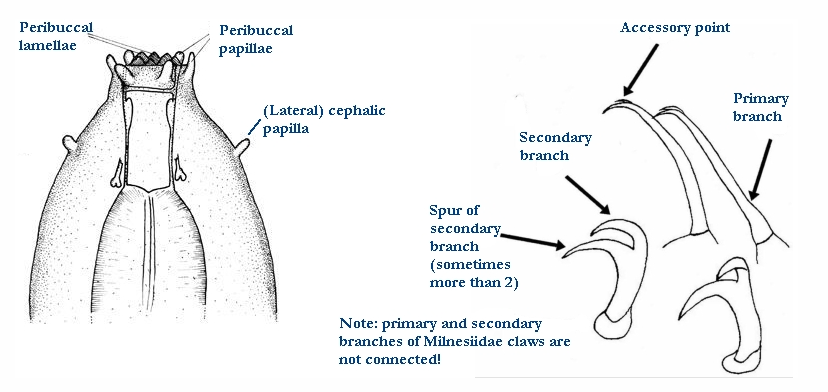
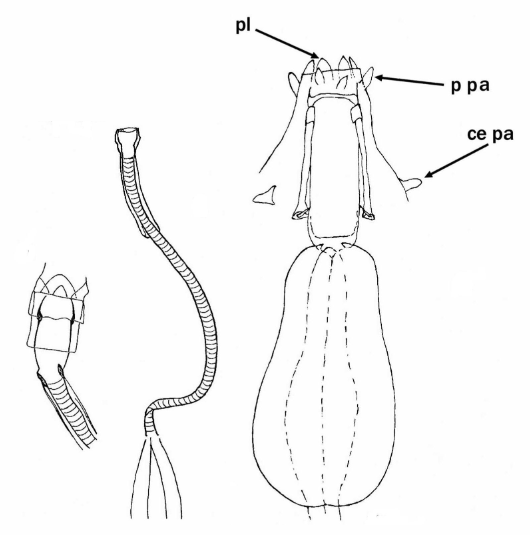
Genus description from Camarda et al. 2025: “Peribuccal lamellae or papulae absent, although in PCM, sometimes, internal septa in the buccal ring are visible giving the appearance of the presence of lamellae or papular lamellae. Buccal cone with 6 papular peribuccal lobes visible only under SEM and only when the buccal cone is fully extended. […]
Cucumibius

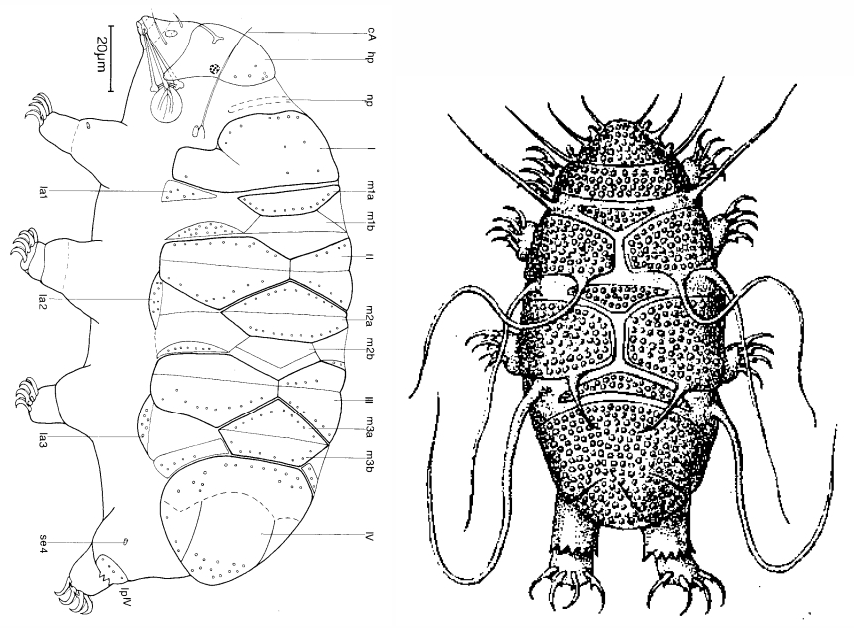
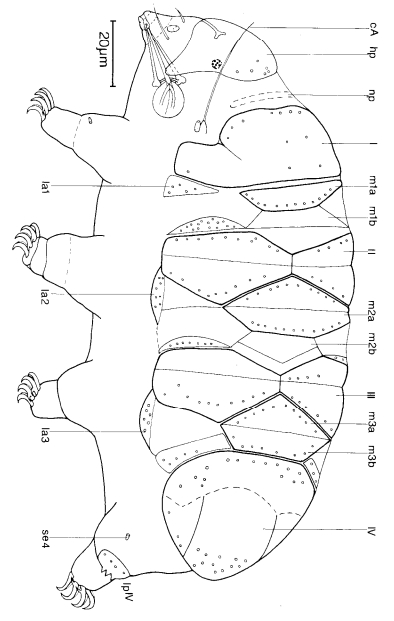
Genus description from Tumanov et al. 2024 (supplement): “Body surface with numerous tubercles formed by protrusions of procuticle and covered by epicuticle with intracuticular pillars. Peribuccal structures consisted of six peribuccal lobes. AISM in the shape of crests, asymmetrical with respect to the frontal plane. The dorsal apophysis consists of the following parts: (i) a relatively massive […]
Chilibius

Genus description (of Hypsibius (Isohypsibius) sculptus, with minor edits) from Ramazzotti 1962: “Lunghezza circa 200 µm. La cuticola è scolpita e presenta una granulazione estremamente fine, diffusa ovunque, anche sulla superficie ventrale. Il tubo boccale è stretto ed il suo diametro esterno è di circa 2.5 µm in un Tardigrado di 200 µm. Sempre per […]
Ramajendidae
Ramajendidae from Tumanov 2022: “Same as for the type genus (Pilato & Binda, 1990). Claws of each leg very different from each other: external claw of the Hypsibius type with extremely long and slender primary branch; internal claw of the Isohypsibius type. Bucco-pharyngeal apparatus of the Isohypsibius type, Ramajendas variant. Pharyngeal apophyses and placoids present. […]
Weglarskobius

Genus description from Kaczmarek et al. 2020: “Legs short and robust. Internal and external claws on legs I–III different in size and shape. Internal claws I–III similar to Isohypsibius type, but with long basal part (as in the genus thulinius Bertolani, 2003), and lacking accessory points (or not visible under light microscopy). External claws I–III […]
Vladimirobius

Genus description from Kaczmarek et al. 2020: “Legs long and slender. Claws of Vladimirobius type—internal claws at least two times shorter than the external claws (measured from the base of the claw), very wide at the junction of primary and secondary branches, short and thin basal part, primary branches with a very prominent gibbosity-like projection […]
Ursulinius

Genus description from Gąsiorek et al. 2019: “Cuticle covered with large, mamillose, and sculptured gibbosities. Claw bases with well-developed pseudolunulae. Double cuticular bars under claws.” Citations: Gąsiorek, P., Stec, D., Morek, W. & Michalczyk, Ł. (2019) Deceptive conservatism of claws: distinct phyletic lineages concealed within Isohypsibioidea (Eutardigrada) revealed by molecular and morphological evidence. Contributions to […]
Dianea

Genus description from Gąsiorek et al. 2019: “Cuticle with numerous small but distinct, pointy gibbosities covered with reticulum. Claw branches forking at a wide angle; claw bases without pseudolunulae. No cuticular bars under claws.” Citations: Gąsiorek, P., Stec, D., Morek, W. & Michalczyk, Ł. (2019) Deceptive conservatism of claws: distinct phyletic lineages concealed within Isohypsibioidea […]
Halobiotidae
Halobiotidae from Gąsiorek et al. 2019: “Marine eutardigrades with six peribuccal lobes equipped with chemosensory organs. Two large, dome-shaped cephalic papillae present. Mouth opening surrounded by the peribuccal lamina. No ventral lamina on the buccal tube. AISM symmetrical, divided into the anterior semilunar hook and the posterior slight thickening. Claws with pseudolunulae.” Citations: Gąsiorek, P., […]
Grevenius

Genus description from Gasiorek et al. 2019: “Aquatic (limnic or intertidal) or hygrophilic. Cuticle smooth or rough, covered with evident protuberances or wrinkles, sometimes forming reticulum. Claw bases with pseudolunulae. Single bars or no cuticular bars under claws. Two rows of teeth in the oral cavity. Stylet furcae of the Hypsibius type.” Genus description excerpted […]