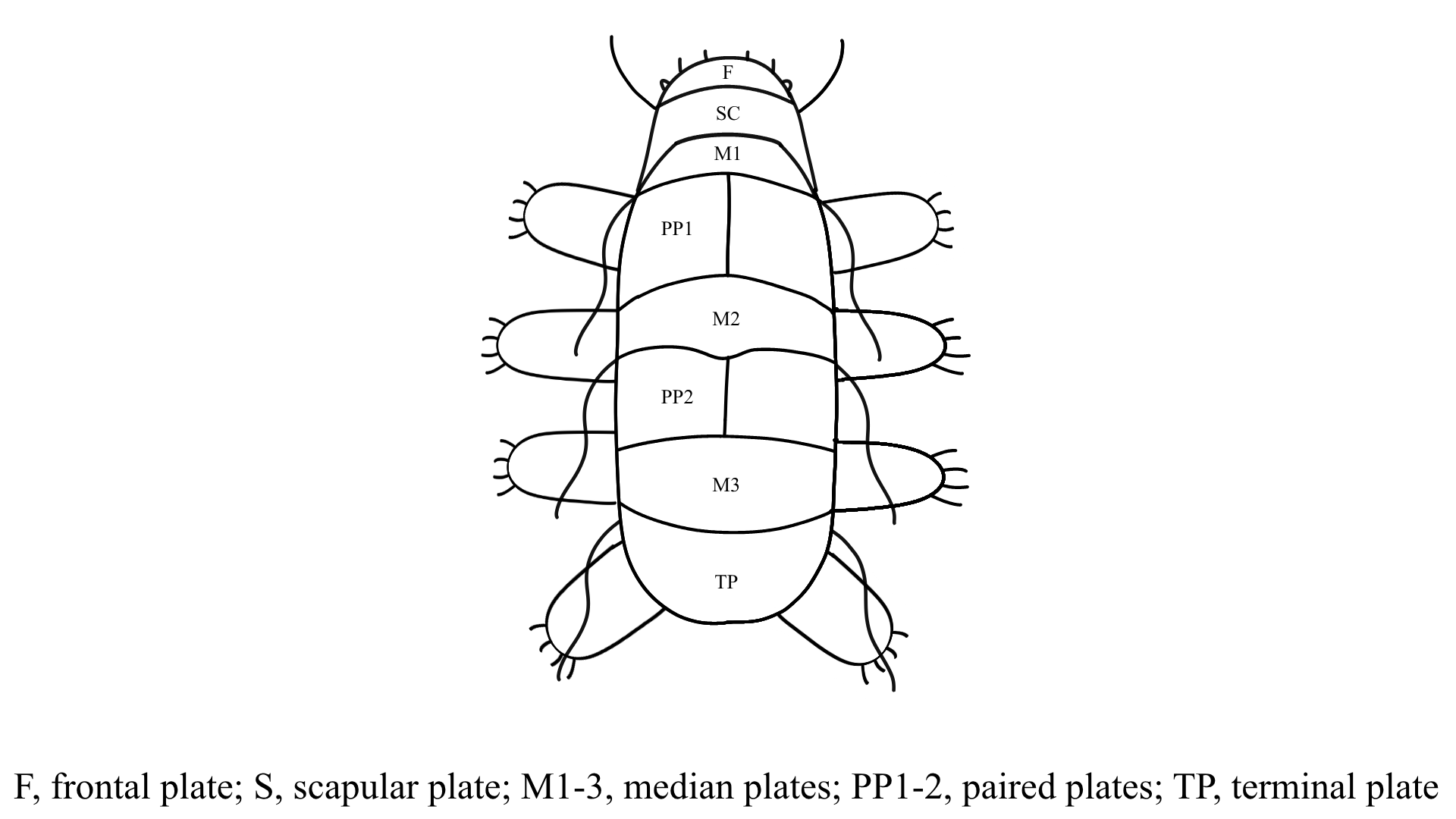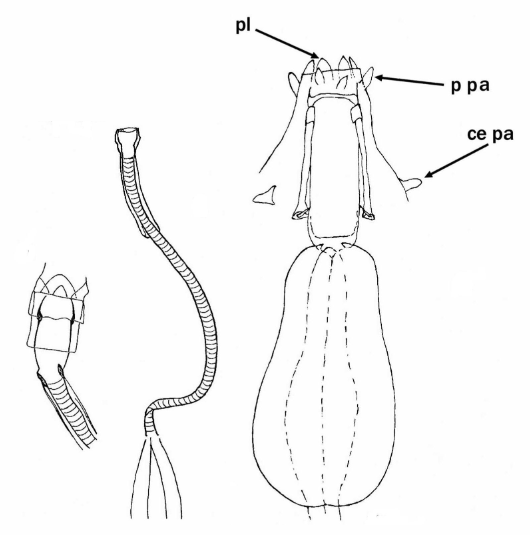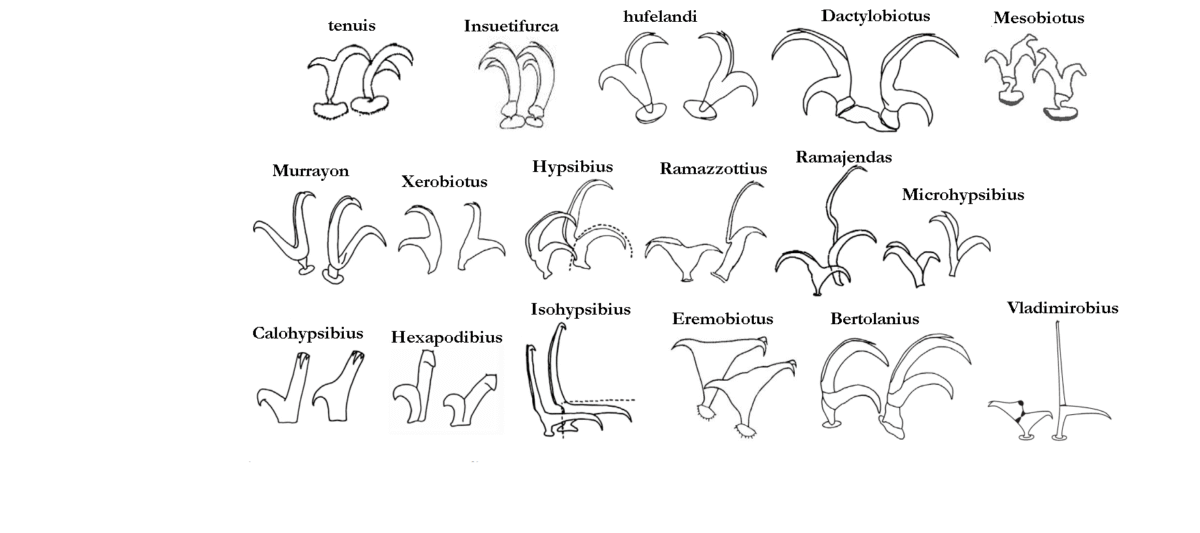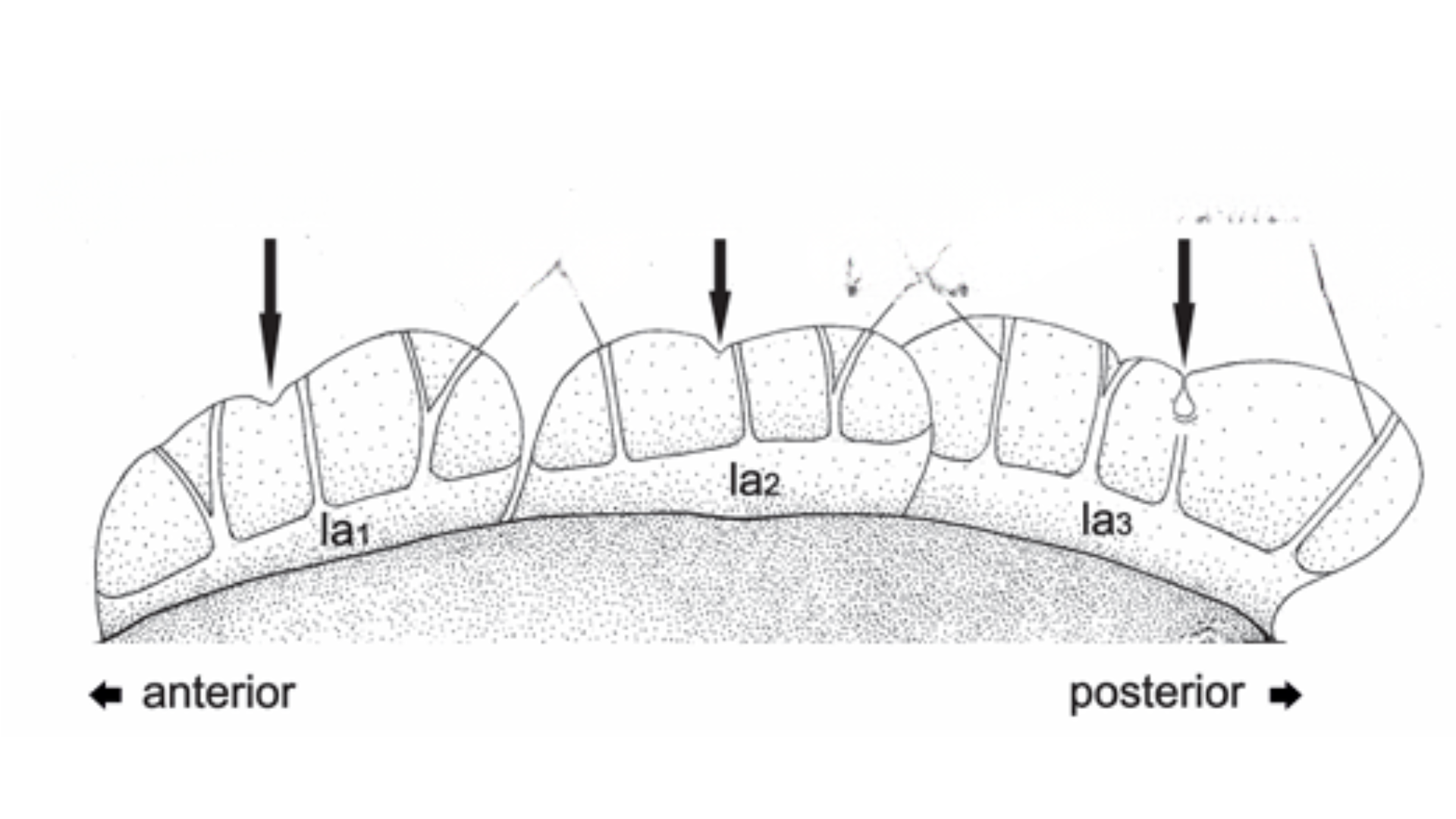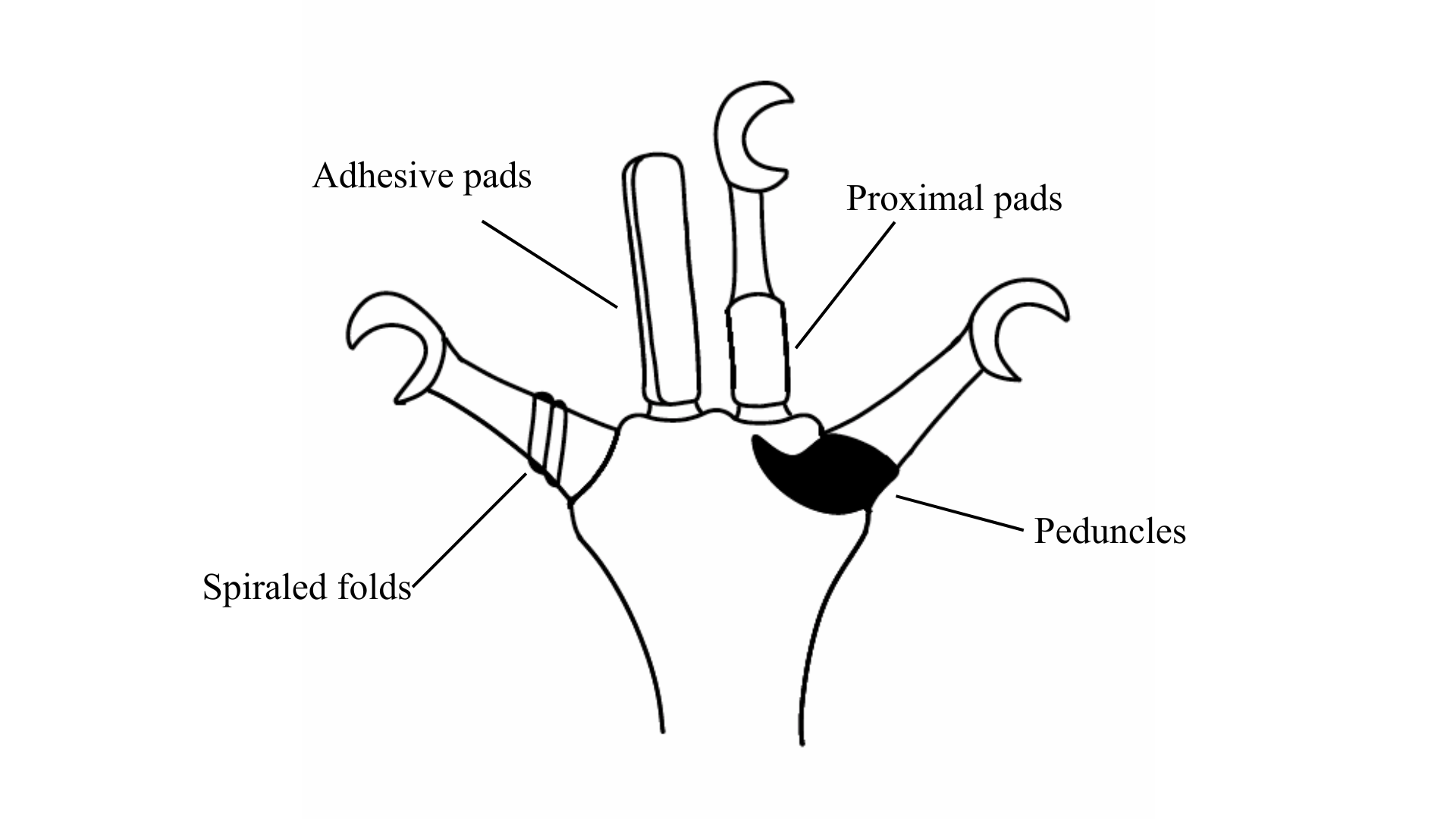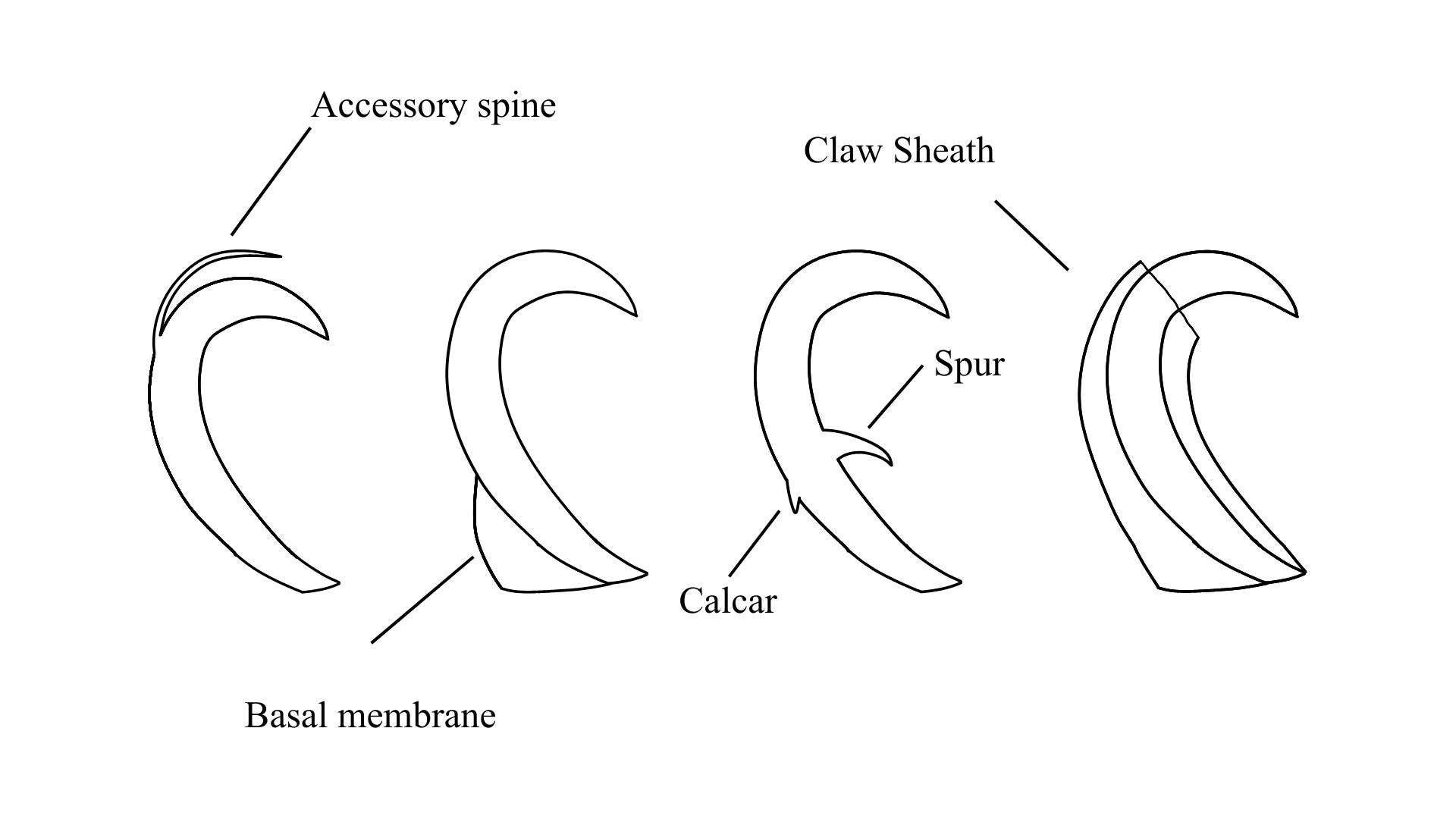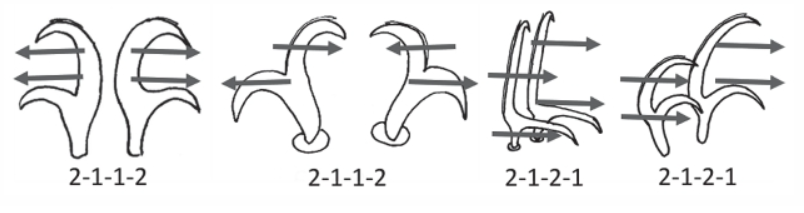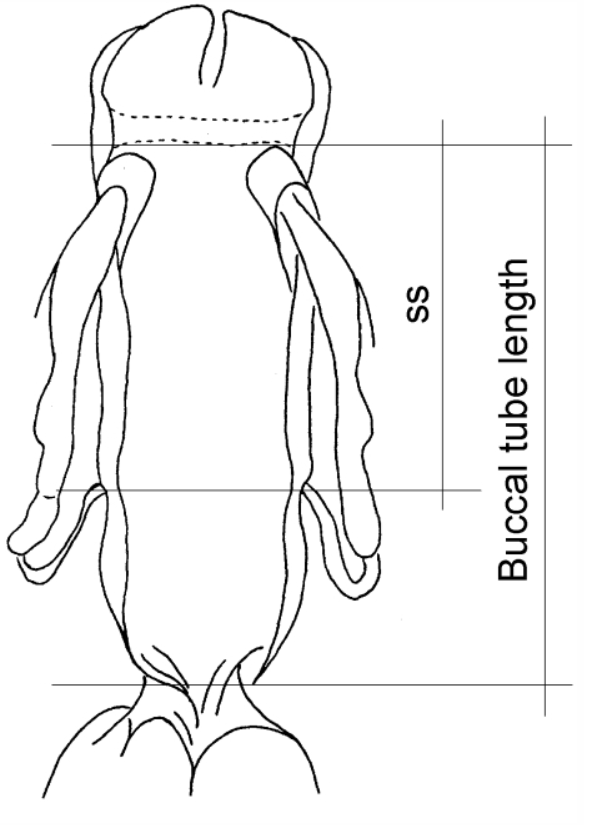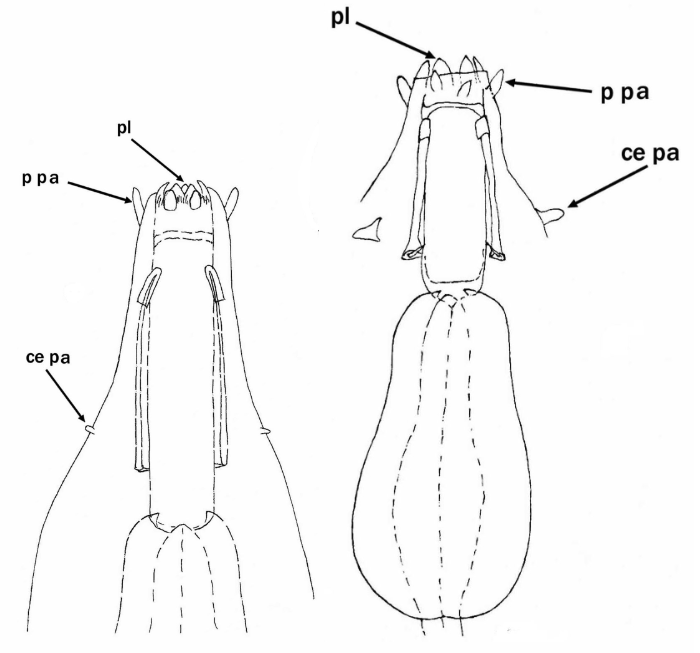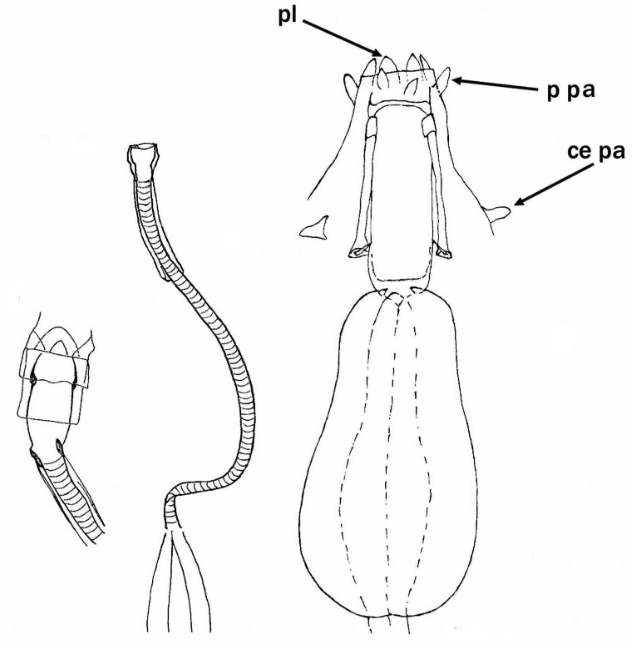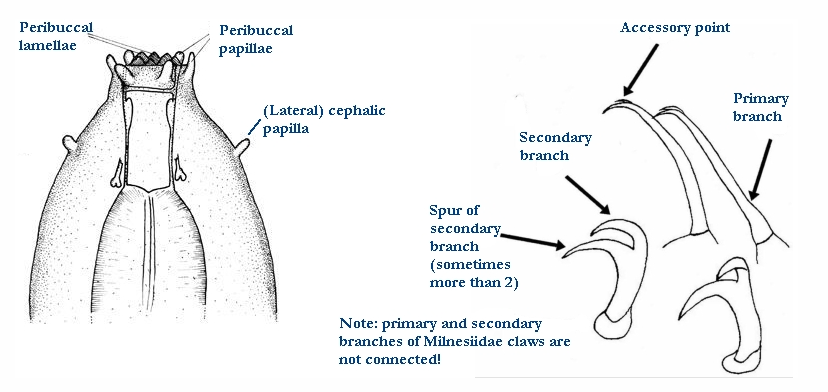

Genus description from Camarda et al. 2025: “Peribuccal lamellae or papulae absent, although in PCM, sometimes, internal septa in the buccal ring are visible giving the appearance of the presence of lamellae or papular lamellae. Buccal cone with 6 papular peribuccal lobes visible only under SEM and only when the buccal cone is fully extended. When observed laterally, the buccal tube appears to have two bends: the first, more pronounced, at the beginning of the anterior portion of the buccal tube, in correspondence with the area bearing the ventral lamina; the second, less pronounced, approximately halfway along the tube. A very short, protruding ventral strengthening lamina (similar to a large, well protruding crest) is present. The lamina has a modest notch approximately one-third along its length: the first third is nearly straight,with a smooth margin, the central portion (from 1/3rd to 2/3rd of the lamina length) has a convex, more thickened, and slightly serrated (more visible in bigger specimens) margin; the final portion of the posterior segment appears straight and smooth. Three macroplacoids (length sequence 2<3<1), with the first being very long and rod-shaped (more than twice the length of the second), showing a slight median incision; the second macroplacoid has granular shape; the third macroplacoid is elongated and nearly twice the length of the second. Pseudobiotus morphotype of the Isohypsibius-type claws, resembling those found in the genus Thulinius and Pseudobiotus, i.e., claws elongated, with a clear hump on the primary branch and with relatively elongated secondary branches br > 70%. Lunulae or pseudolunulae absent, but claw bases in all legs with internal septa clearly visible under LM, giving the impression of a “duck’s foot” shape; this particular structure showed to be more visible in specimens mounted in Hoyer’s than in specimens mounted in Polyvinyl Lactophenol, probably due to a stronger clearing effect of the former mounting medium.”


Citations:
Camarda D, Lisi O, Stec D, Vecchi M. 2025. Description of a new genus and species of Isohypsibioidea (Tardigrada), together with its mitochondrial genome sequence. Arthropod Systematics and Phylogeny. 83: 427-445. https://doi.org/10.3897/asp.83.e150460