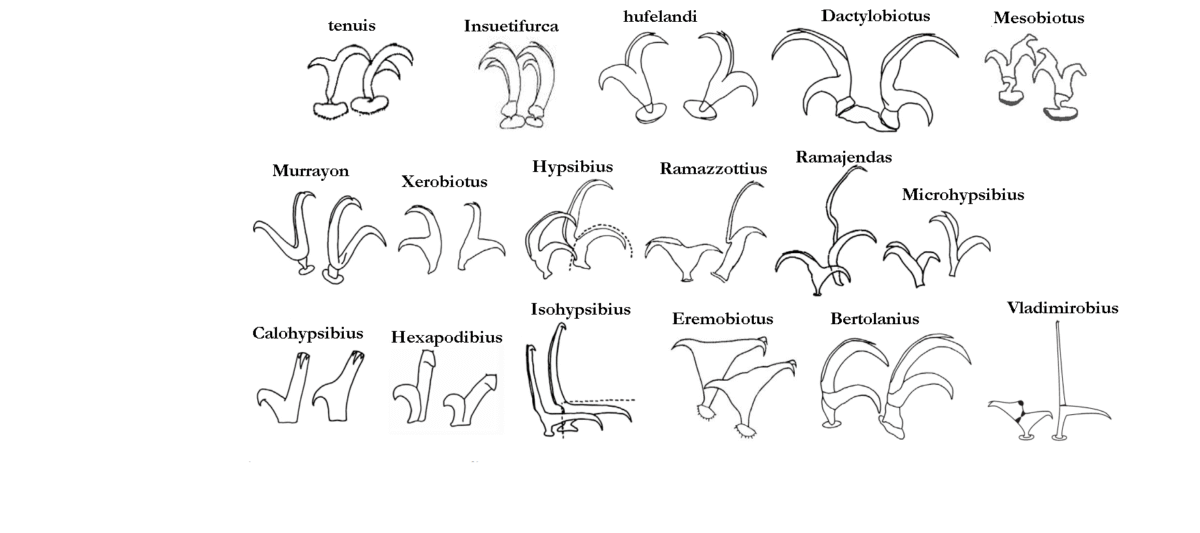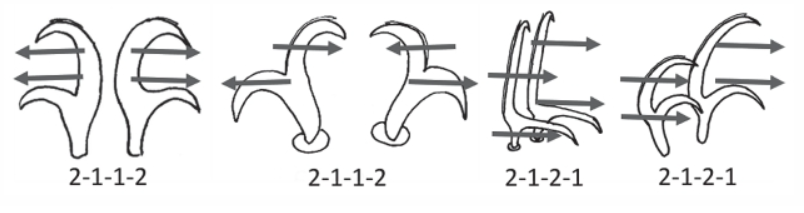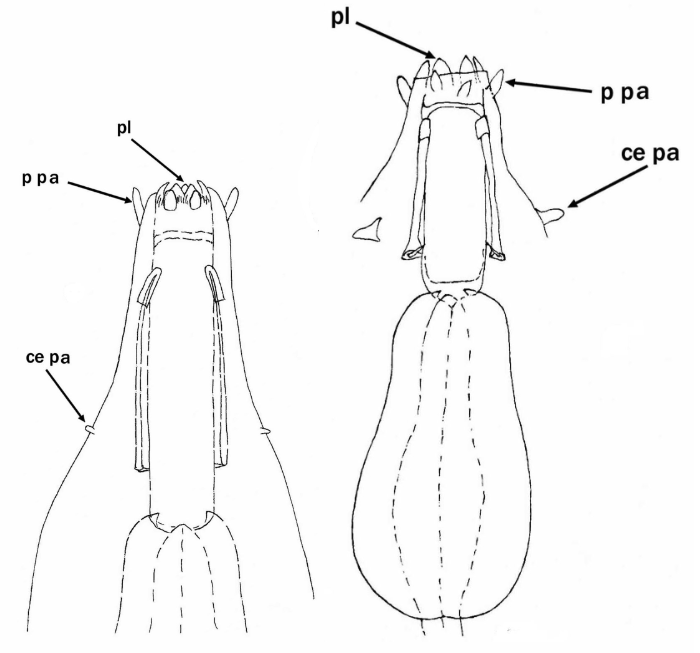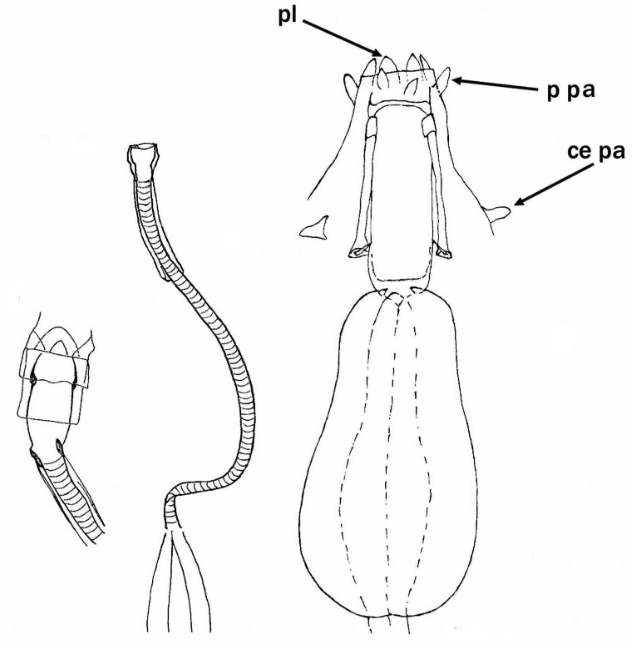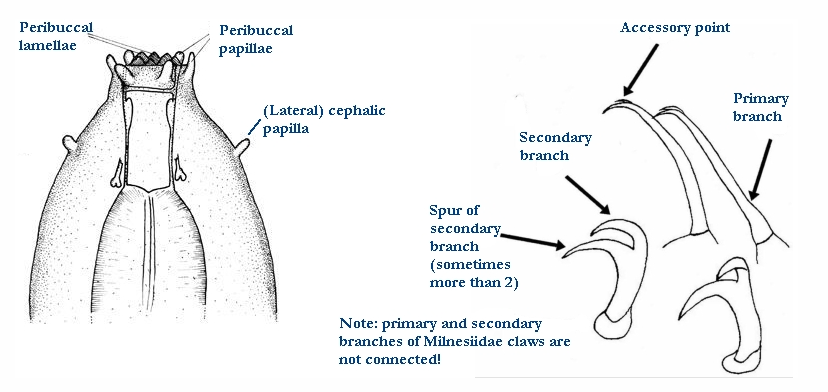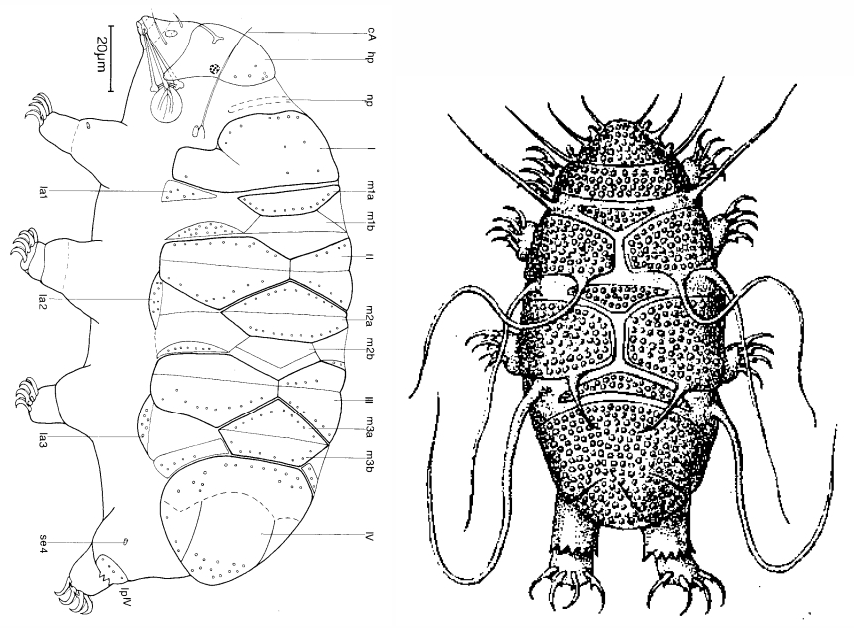
Isohypsibioidea from Marley et al. 2011: “Parachela. Claws asymmetrical (2121); Isohypsibius-type claw pairs; AISM ridged.”
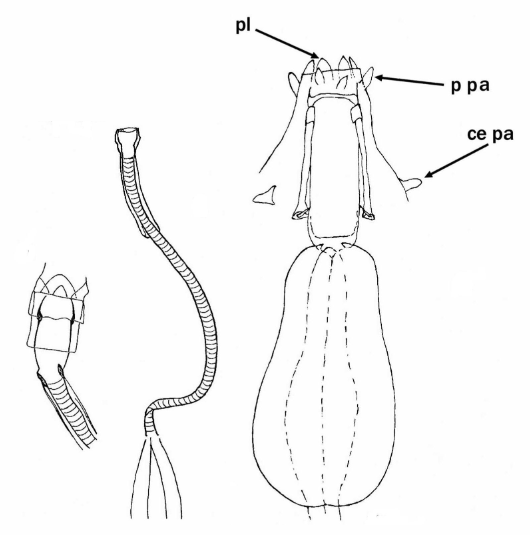
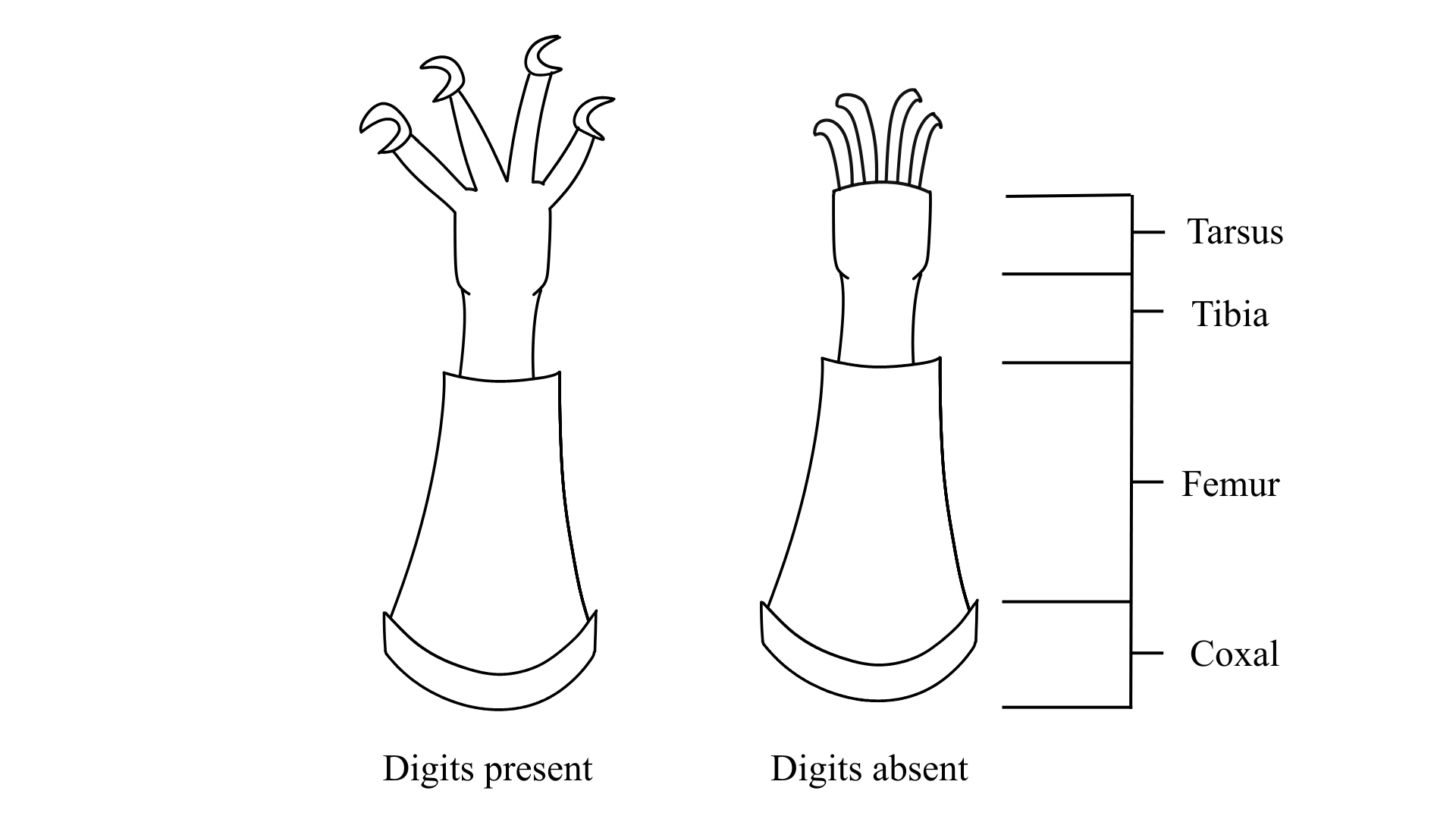
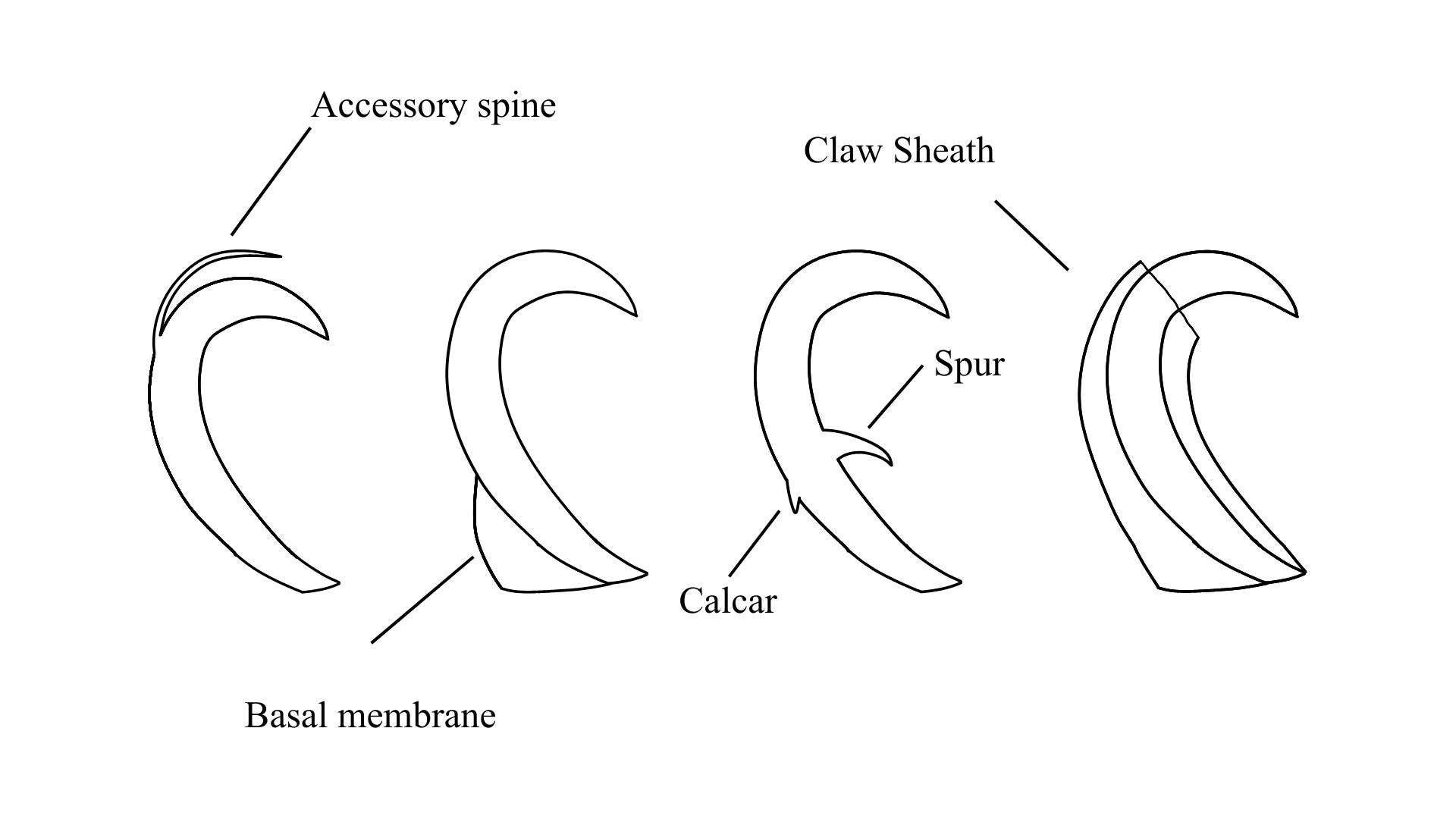
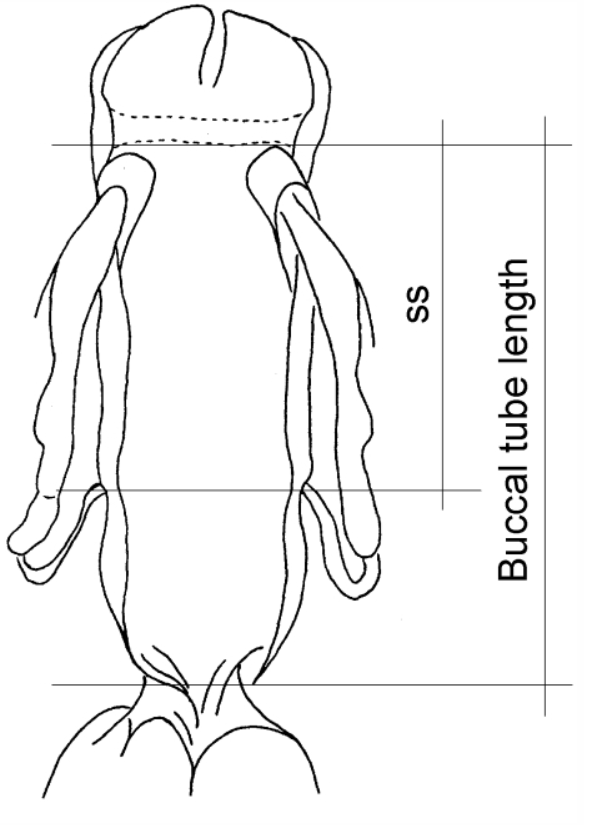
Isohypsibioidea from Bertolani et al. 2014: “Double claws asymmetrical with respect to the median plane of the leg (2121), normally with similar shape and size on each leg; double claws of the Isohypsibius type (secondary branch of the external claw inserted perpendicularly on the claw basal tract), or reduced from it: Hexapodibius type (very short, without common basal tract, with a base as large as the sum of the primary and secondary branch widths, and with an evident suture between primary and secondary branch); Haplomacrobiotus type (one branch only); completely absent (Apodibius). Buccal tube completely rigid (apart Paradiphascon; see below) and often relatively large, without (Dastychius, Eremobiotus, Halobiotus, Isohypsibius, Paradiphascon, Pseudobiotus, Thulinius) or with (Apodibius, Doryphoribius, Haplomacrobiotus, Haplohexapodibius, Hexapodibius, Parhexapodibius) ventral lamina. Eggs with smooth shell laid within the exuvium.”
Superfamily redescription from Gąsiorek et al. 2019: “Double claws asymmetrical with respect to the median plane of the leg (2121), normally with a similar shape and size on each leg; double claws with the external secondary branches inserted perpendicularly on the claw basal tract, or partly reduced (very short, without the common basal tract, with a base as large as the sum of the primary and secondary branch widths, and with an evident suture between the primary and the secondary branch), or elsewhere absent. Buccal tube rigid (apart Paradiphascon) and often relatively large […] . Pharyngeal apophyses and placoids present. Smooth eggs laid in exuviae.”
family & generic key: Gąsiorek P, Stec D, Morek W, Michalczyk Ł. 2019. Deceptive conservatism of claws: distinct phyletic lineages concealed within Isohypsibioidea (Eutardigrada) revealed by molecular and morphological evidence. Contributions to Zoology. 88(1): 78-132.
Citations:
Bertolani R, Guidetti R, Marchioro T, Altiero T, Rebecchi L, Cesari M. 2014. Phyloeny of Eutardigrada: New molecular data and their morphological support lead to the identification of new evolutionary lineages. Molecular Phylogenetics and Evolution. 76: 110-126.
Gąsiorek P, Stec D, Morek W, Michalczyk Ł. 2019. Deceptive conservatism of claws: distinct phyletic lineages concealed within Isohypsibioidea (Eutardigrada) revealed by molecular and morphological evidence. Contributions to Zoology. 88(1): 78-132.
Marley NJ, McInnes SJ, Sands CJ. 2011. Phylum Tardigrada: A re-evaluation of the Parachela. Zootaxa. 2819: 51-64.