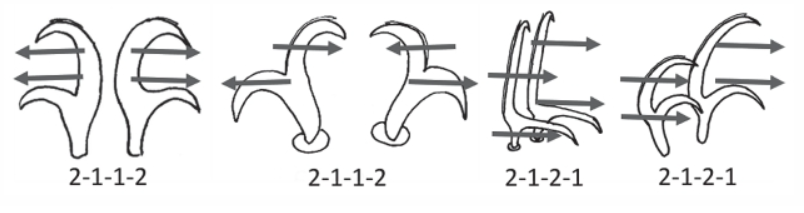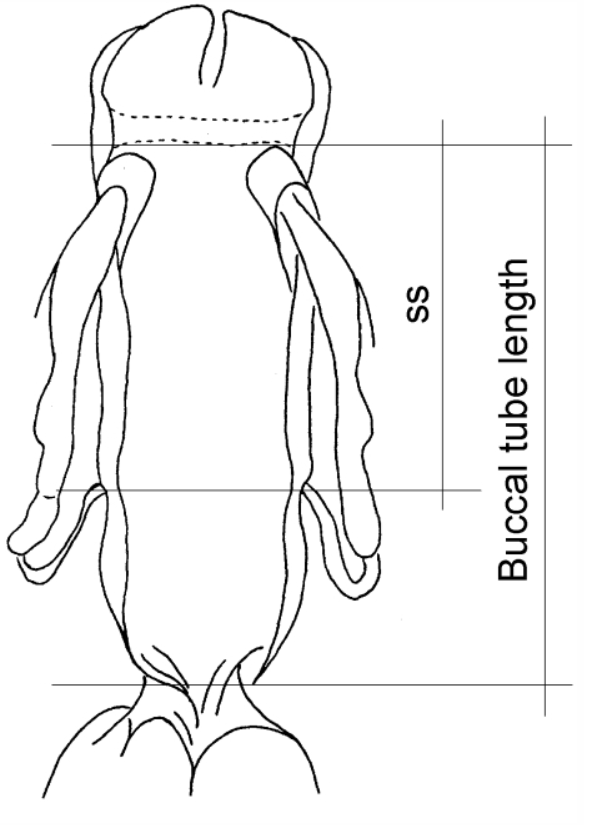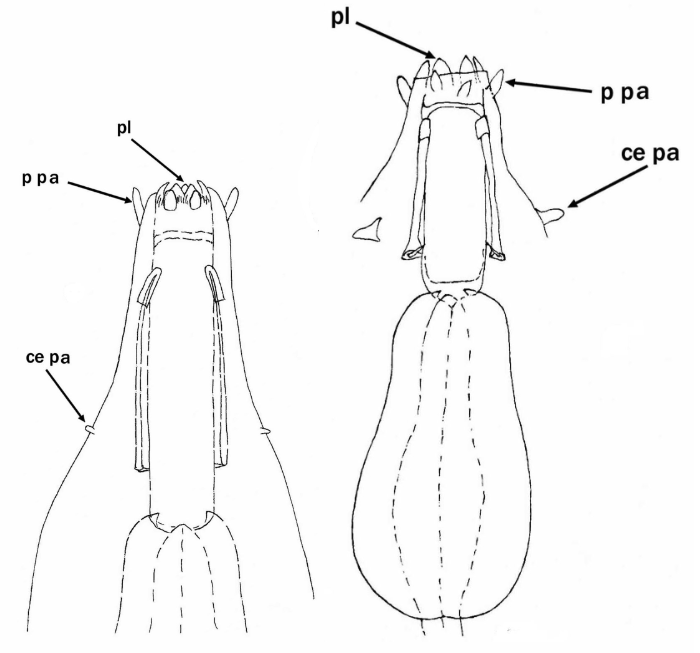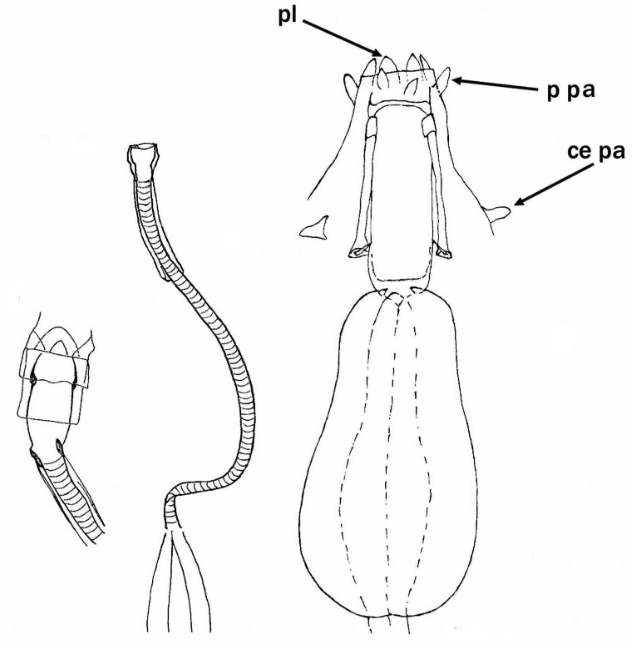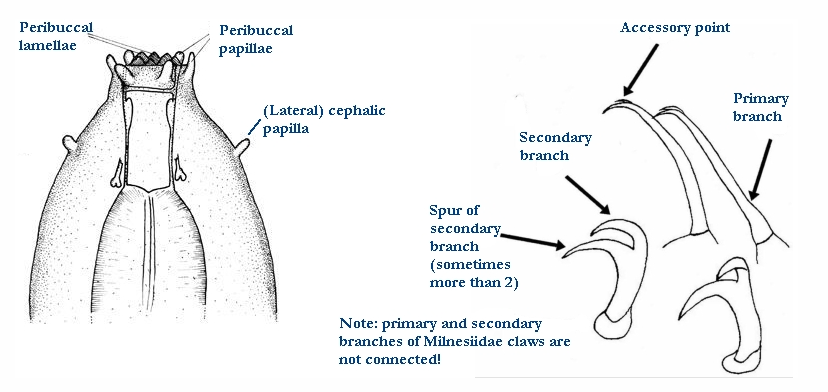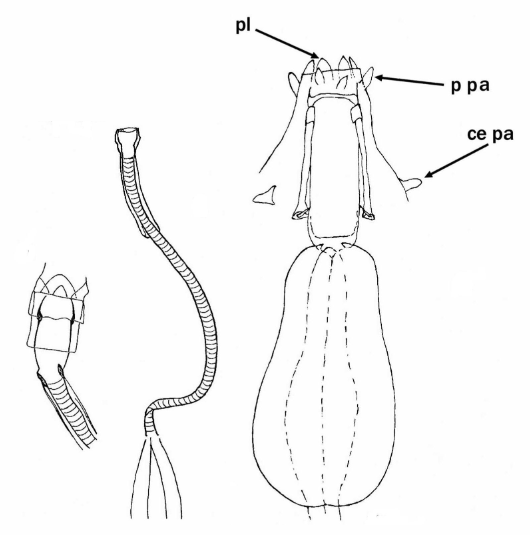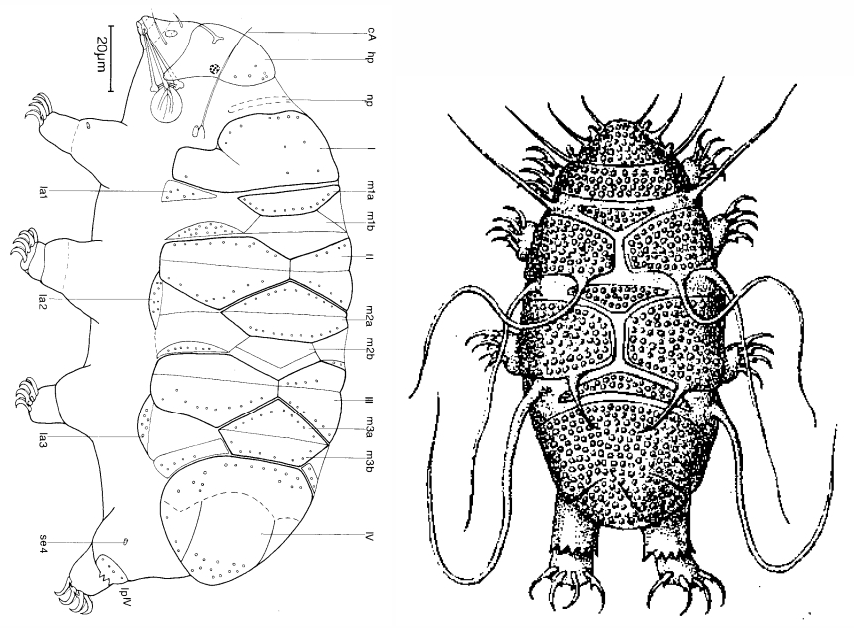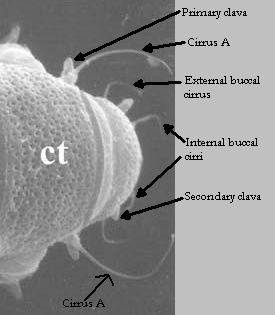

Genus description from Tumanov et al. 2024 (supplement): “Body surface with numerous tubercles formed by protrusions of procuticle and covered by epicuticle with intracuticular pillars. Peribuccal structures consisted of six peribuccal lobes. AISM in the shape of crests, asymmetrical with respect to the frontal plane. The dorsal apophysis consists of the following parts: (i) a relatively massive anterior part followed by (ii) a broad and flat ridge with oblique latero-caudal processes equipped with a bulge (slightly transverse or sometimes bilobate) located above the bifurcation point, and (iii) a weakly developed flat ridge behind the bifurcation point. The ventral apophysis has the shape of thin crest, slightly thickened anteriorly and possessing two oblique latero-caudal processes. The buccal tube is rigid. Pharynx spherical with two elongate macroplacoids. Microplacoids or septula are absent. Claws of Isohypsibius-type. Eggs smooth, laid in exuviae. Female carries an exuvium with laid eggs attached to the dorsal surface of the cephalic region.”


Citations:
Tumanov DV, Shunatova NN, Fedyuk KA. 2024. Integrative description of Grevenius annulatus (Eutardigrada, Isohypsibioidea) from North-West Russia with new data on the species cuticular structure leads to the institution of a new genus. Zoologica Scripta. 00: 1–21. https://doi.org/10.1111/zsc.12703