Xerobiotus

Genus description from Bertolani & Biserov 1996: “Claws of Xerobiotus-type, i.e., with a basal tract small and thin, not separated by a septum from the rest of the claw, and therefore without a distinct basal peduncle, with the secondary branch inserted on the main branch. Bucco-pharyngeal apparatus of Macrobiotus-type, with lamellae around the mouth and […]

Tenuibiotus

Genus description from Pilato & Lisi 2011: “Genus of Macrobiotidae characterised by claws of the tenuis-type, i.e. with a stalk, a long common section in which primary and secondary branches are joined, and distal free sections of both the secondary branch (shorter than the primary) and primary branch forming almost a right angle. The bucco-pharyngeal […]

Sisubiotus

Genus description from Stec et al. 2021: “Large and whitish Macrobiotidae with: (i) poreless cuticle, (ii) mouth opening surrounded by ten peribuccal lamellae, (iii) buccal apparatus of the Macrobiotus type, with a wide rigid buccal tube and a well-developed oral cavity armature (all three bands of teeth clearly visible in LCM, anterior teeth of the […]

Schusterius

Genus description from Kaczmarek & Michalczyk 2006: “Holotype (paratype): body length 235.0 (295.0). Body colourless, eyes absent. Cuticle smooth, without granulation or pores. Mouth terminal, probably with 10 peribuccal lamellae. Bucco-pharyngeal apparatus of Macrobiotus type with ventral lamina 16.0 [59.3] (19.0 [57.6]) long and with one bend in anterior part. Buccal tube 27.0 (33.0) long […]

Pseudohexapodibius

Genus description from Bertolani & Biserov 1996: “Claws on legs I-III without a distinct basal peduncle and with the sequence of secondary branch (2), main branch (1): 2-1-1-2; claws almost absent, or absent, on legs IV. Bucco-pharyngeal apparatus of Macrobiotus-type, with lamellae around the mouth and a ventral strengthening bar on the buccal tube. Eggs […]

Pseudodiphascon

Genus description from Ramazzotti 1965, in Schuster et al. 1980: “Ten buccal lamellae present; without peribuccal papulae. Buccal tube elongated, flexible, posterior portion with spiraled thickenings. Mucrones probably present, buccal baffles unknown. Pharynx contains apophyses, macro-, and microplacoids, but no septulum. Cuticular pores present (absent in P. bindae Christenberry & Higgins). Two double claws of […]

Macrobiotidae

Macrobiotidae from Thulin 1928: “Fam. Macrobiotidae zeichnet sich dadurch aus, dass Sinnesanhänge am Kopfe fehlen. Die Krallen sind zweihakig. Die hintere an jeder Extremität kann mehr oder weniger vollständig in Basal- und Terminal-kralle aufgeteilt sein, die vordere ist dagegen niemals in dieser Weise differenziert. Die Länge und Weite der Mundröhre variiert erheblich innerhalb dieser Familie, […]

Paramacrobiotus

Genus description from Guidetti et al. 2009: “Macrobiotids with Y-type claws, cuticle smooth and without pores; mouth ring with ten evident peribuccal lamellae; buccal armature showing ventrally and dorsally a posterior crown of strong triangular or bicuspidal teeth followed (at least dorsally) by three robust transverse crests; large buccal tube; three clearly rod shaped and elongated macroplacoids; […]

Minibiotus

Genus description from Schuster et al. 1980: “Ten peribuccal papulae present; without buccal lamellae. Mucrones present; development of infrabuccal baffles unknown. Buccal tube short, rigid, without spiral thickenings. Pharynx contains apophyses, macroplacoids, and sometimes microplacoids. Cuticle with or without pores, dorsolateral spines sometimes present. Two double claws of each leg of similar size and shape; sequence 2,1,1,2; […]
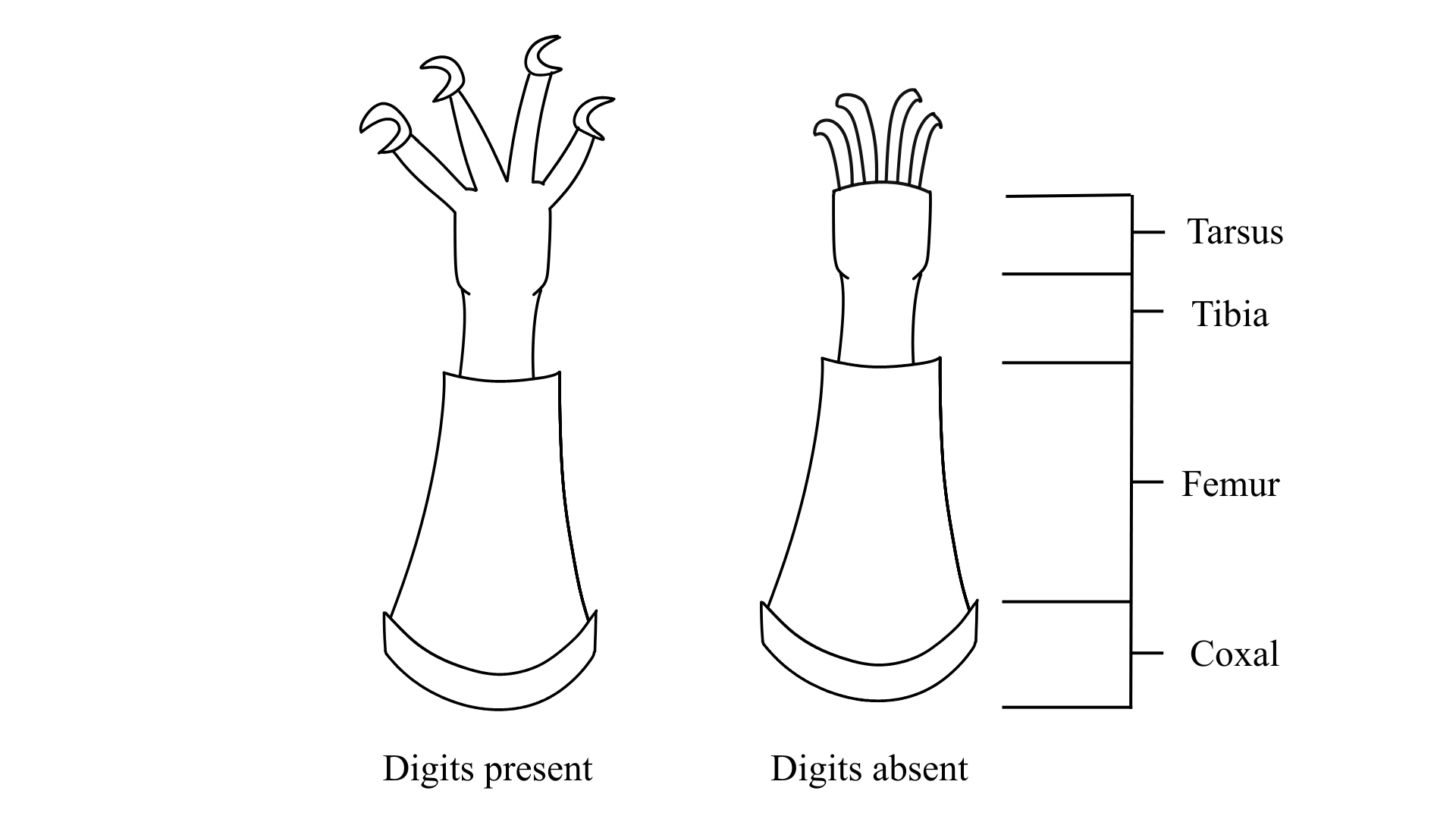
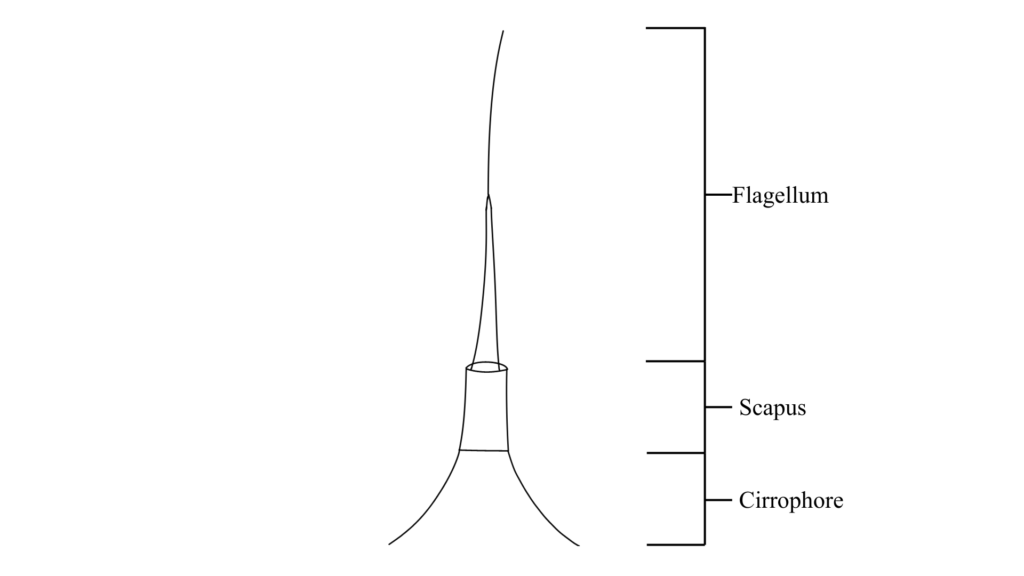
Mesobiotus

Genus description from Vecchi et al. 2016: “Macrobiotids with Y-type double-claws with a common tract characterised by an internal septum defining a distal part. Cuticle without pores. Mouth ring with 10 peribuccal lamellae; rigid buccal tube; three roundish macroplacoids arranged along a curved line; microplacoid clearly close (less than its length) to the third macroplacoid. Eggs […]

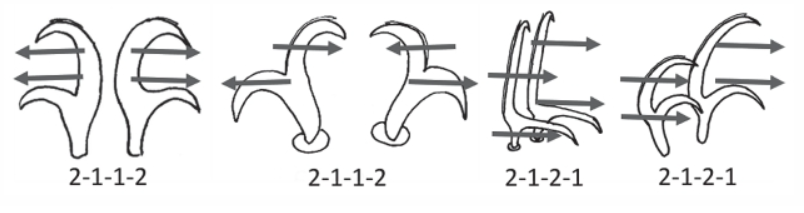
Claw Symmetry Relative To Median Plane Of Leg?

Image from Bingemer J, Hohberg K. 2017. An illustrated identification key to the eutardigrade species (Tardigrada, Eutardigrada) presently known from European soils. Soil Organisms. 89 (3): 127-149.

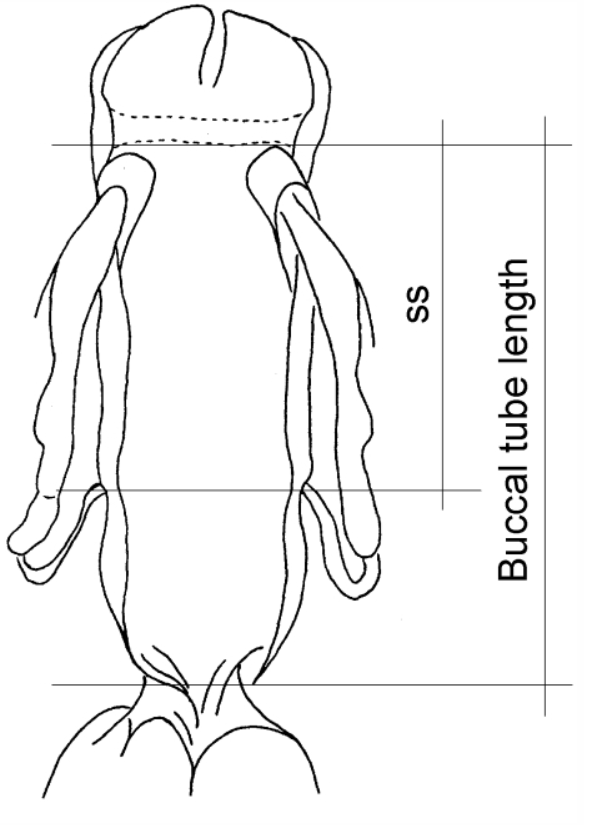
Stylet Support Insertion Point As Percentage Of Buccal Tube Length

Stylet support insertion point = ss divided by Buccal tube length, as %. Note anterior measurements begin at anterior margin of stylet sheaths, ss is centred where stylet supports reach buccal tube (this requires a good dorsal or lateral view for proper measurement)


Image from Tumanov DV. 2006. Five new species of the genus Milnesium (Tardigrada, Eutardigrada, Milnesiidae). Zootaxa. 1122: 1-23.

Buccal Tube Long, Mouth At Anterior Of A Protrusible Snout

Images from Pilato G, Binda MG. 2010. Definition of families, subfamilies, genera, and subgenera of the Eutardigrada, and keys to their identification. Zootaxa. 2404: 1-54.

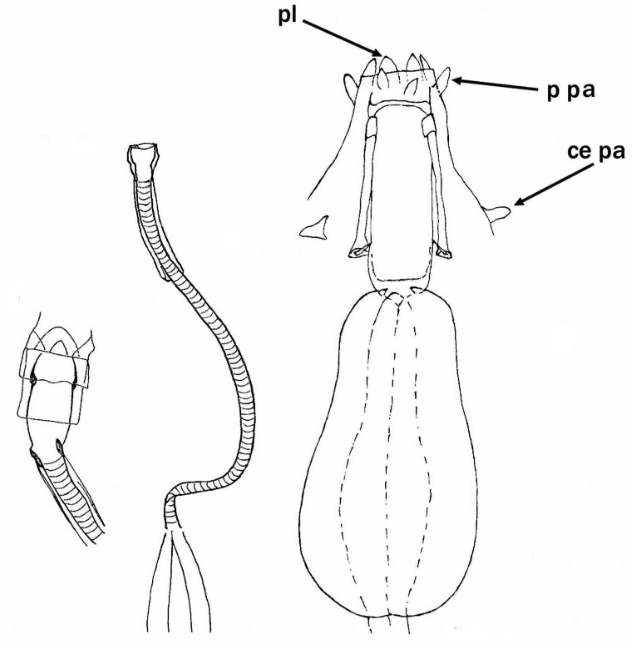
Pharyngeal Tube With Spiral Reinforcement

Images from Pilato G, Binda MG. 2010. Definition of families, subfamilies, genera, and subgenera of the Eutardigrada, and keys to their identification. Zootaxa. 2404: 1-54.

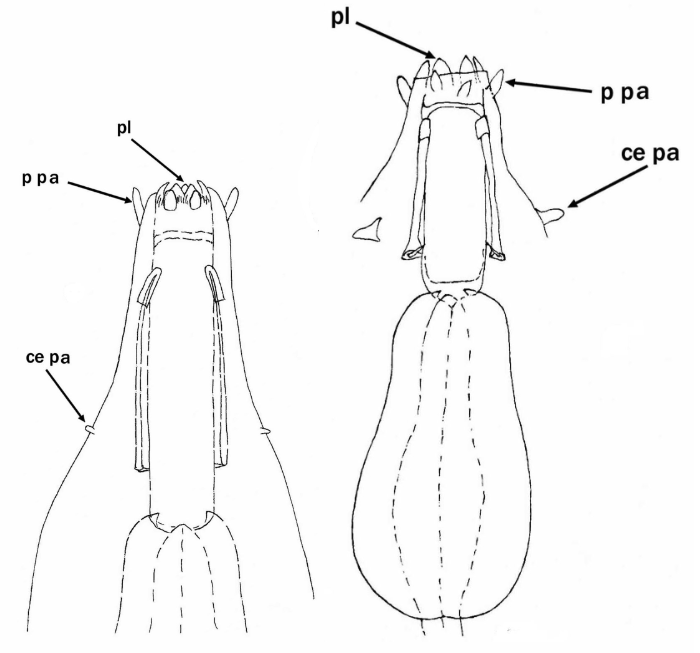
Peribuccal papillae?

Images from Pilato G, Binda MG. 2010. Definition of families, subfamilies, genera, and subgenera of the Eutardigrada, and keys to their identification. Zootaxa. 2404: 1-54.

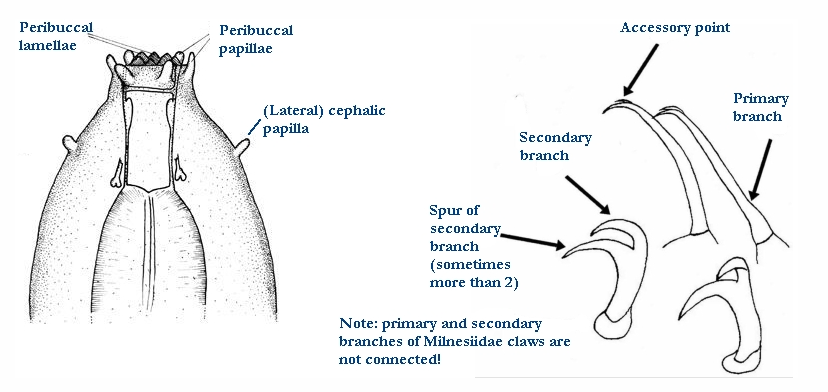
(Lateral) cephalic papillae, peribuccal papillae, Milnesiidae - type claws, exceptionally wide (and usually short) buccal tube?

Cephalic image modified from Nelson DR, Guidetti R, Rebecchi L. 2009. Tardigrada. Ch. 14 in Ecology and Classification of North American Freshwater Invertebrates, Thorp JH, Covich AP (eds.), 3rd ed.

Claw image modified from Pilato G, Binda MG. 2010. Definition of families, subfamilies, genera, and subgenera of the Eutardigrada, and keys to their identification. Zootaxa. 2404: 1-54.

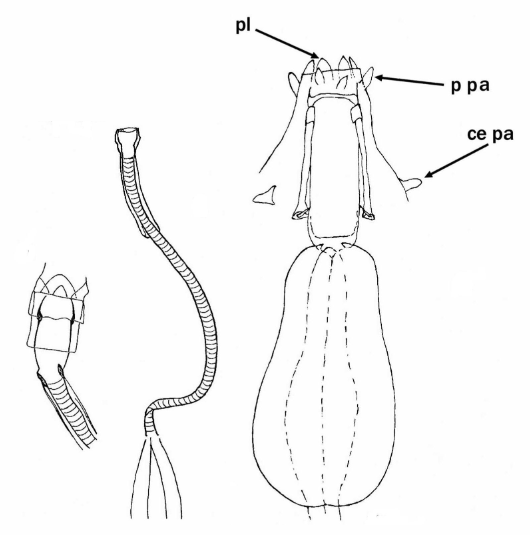
Pharyngeal tube flexible?

Note: in a tardigrade with snout extended, the flex of the pharyngeal tube may not be obvious.


Images from Pilato G, Binda MG. 2010. Definition of families, subfamilies, genera, and subgenera of the Eutardigrada, and keys to their identification. Zootaxa. 2404: 1-54.

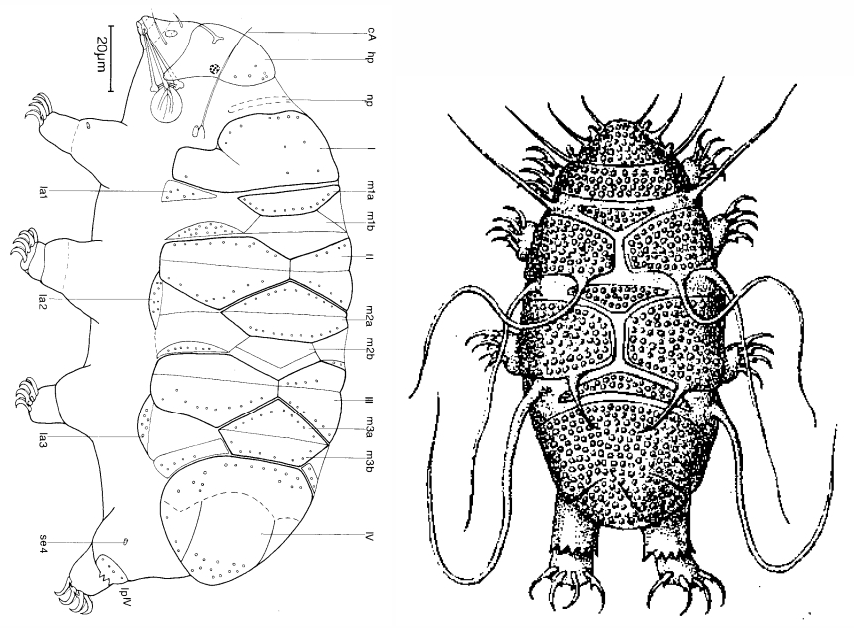
Serrated / dentate cuff / collar on legs IV

Left image from Kristensen RM. 1987. Generic revision of the Echiniscidae (Heterotardigrada), with a discussion of the origin of the family. pp. 261-335 in Bertolani R (ed). Biology of Tardigrades: Selected symposia and monographs.

Right Image from Richters F. 1926. Tardigrada. in Krumbach T. 1927. Handbuch der Zoologie, 3rd band, Walter de Gruyter & Co.

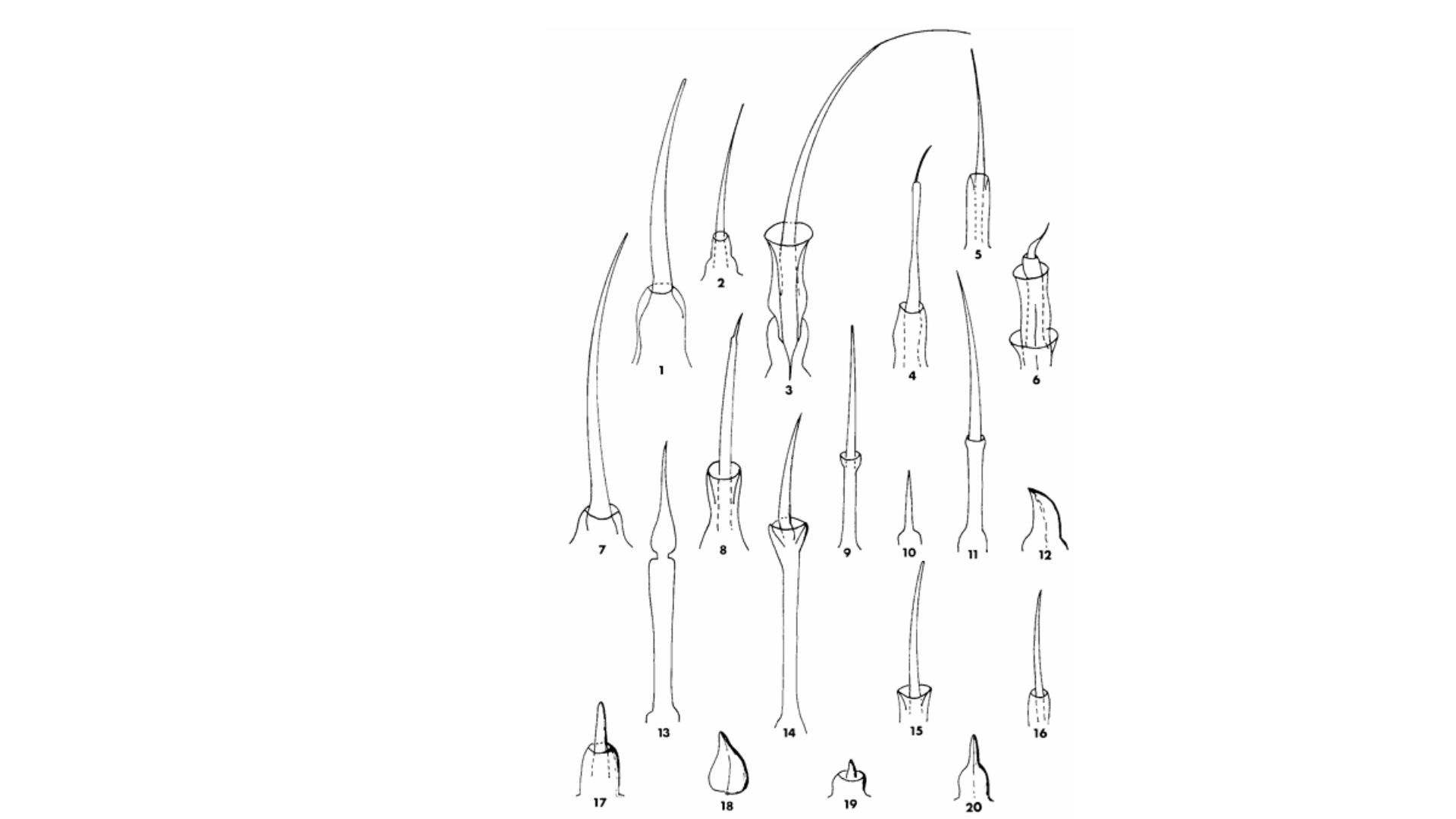
Leg sensory structures

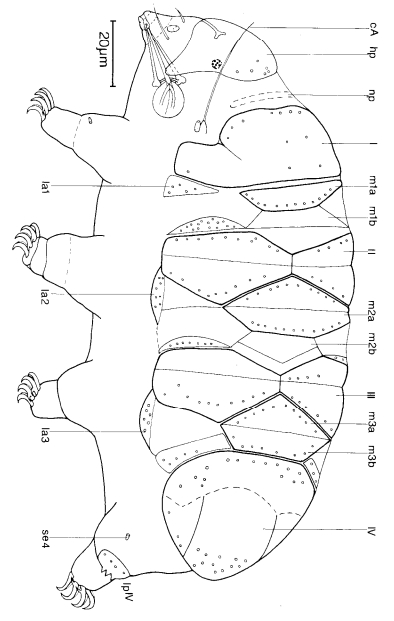
Typically papilla on leg IV (se4 in image) and variable shape on leg I


Image from Kristensen RM. 1987. Generic revision of the Echiniscidae (Heterotardigrada), with a discussion of the origin of the family. pp. 261-335 in Bertolani R (ed). Biology of Tardigrades: Selected symposia and monographs.

Trunk appendages

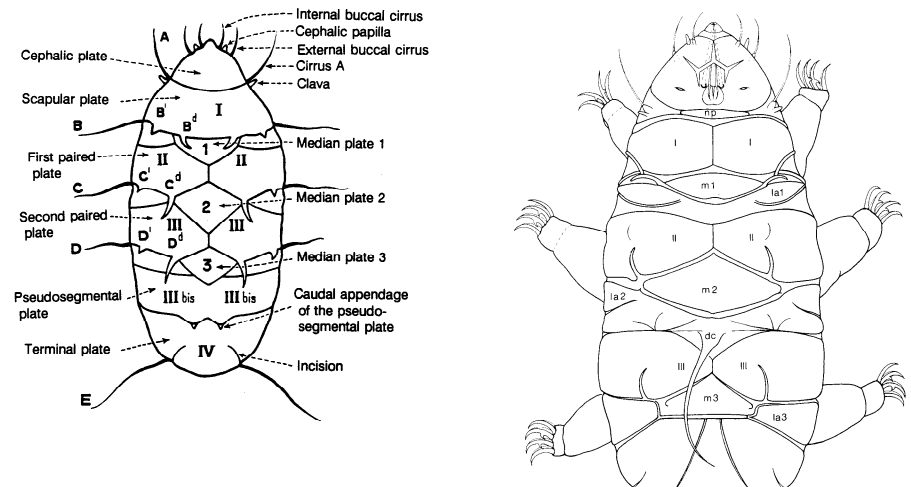
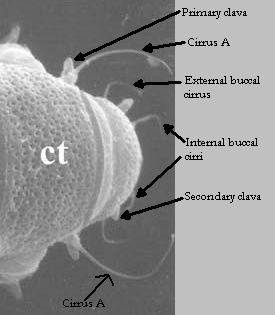
Appendages (after Cirrus A) labeled according to plate … B (Scapular plate), C (First segmental plate), D (Second segmental plate), E (terminal plate). “B” is lateral, “Bd” is dorsal

Be careful! There can be great variability within a population, with individuals (especially juveniles) lacking some appendages. When in doubt, focus on other characters first!


Left image from Ramazzotti G, Maucci W. 1983. Il phylum Tardigrada(III edizione riveduta e aggiornata). English translation by C. W. Beasley, 1995. Memorie dell’ Istituto Italiano di Idrobiologia 41: 1-1012.

Right image cropped from Kristensen RM. 1987. Generic revision of the Echiniscidae (Heterotardigrada), with a discussion of the origin of the family. pp. 261-335 in Bertolani R (ed). Biology of Tardigrades: Selected symposia and monographs.

Cirrus A form

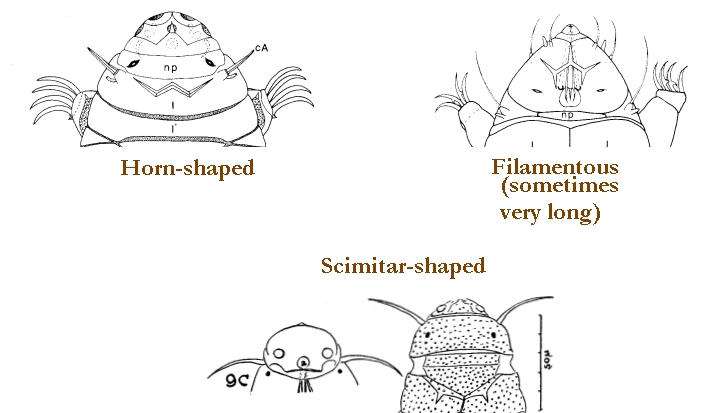
Images modified from Kristensen RM. 1987. Generic revision of the Echiniscidae (Heterotardigrada), with a discussion of the origin of the family. pp. 261-335 in Bertolani R (ed). Biology of Tardigrades: Selected symposia and monographs.

Lower image (Mopsechiniscus) modified from du Bois-Reymond Marcus E. 1944. Sobre tardigrados brasileiros. Communicaciones Zoologicas del Museo de Historia Natural de Montevideo. 1(13): 1-19 plus plates.

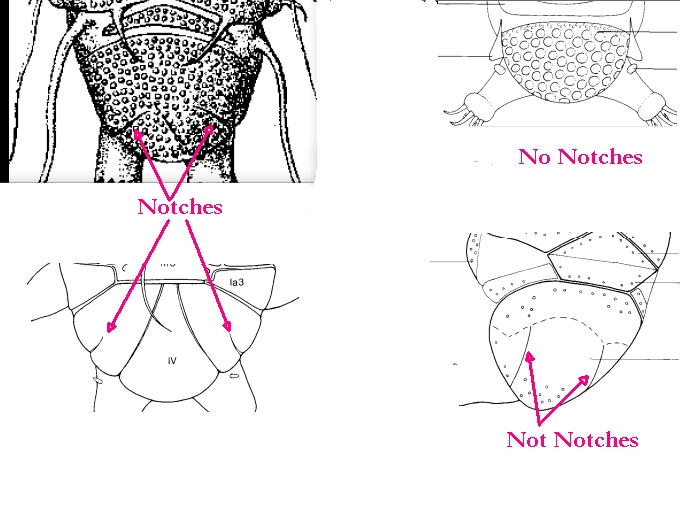
Terminal / caudal plate with two notches?

Images modified from Kristensen RM. 1987. Generic revision of the Echiniscidae (Heterotardigrada), with a discussion of the origin of the family. pp. 261-335 in Bertolani R (ed). Biology of Tardigrades: Selected symposia and monographs.

First image (Echiniscus) modified from Richters F. 1926. Tardigrada. in Krumbach T. 1927. Handbuch der Zoologie, 3rd band, Walter de Gruyter & Co.

Inner & outer buccal cirri present

Image modified from Nelson DR, Guidetti R, Rebecchi L. 2009. Tardigrada. Ch. 14 in Ecology and Classification of North American Freshwater Invertebrates, Thorp JH, Covich AP (eds.), 3rd ed.

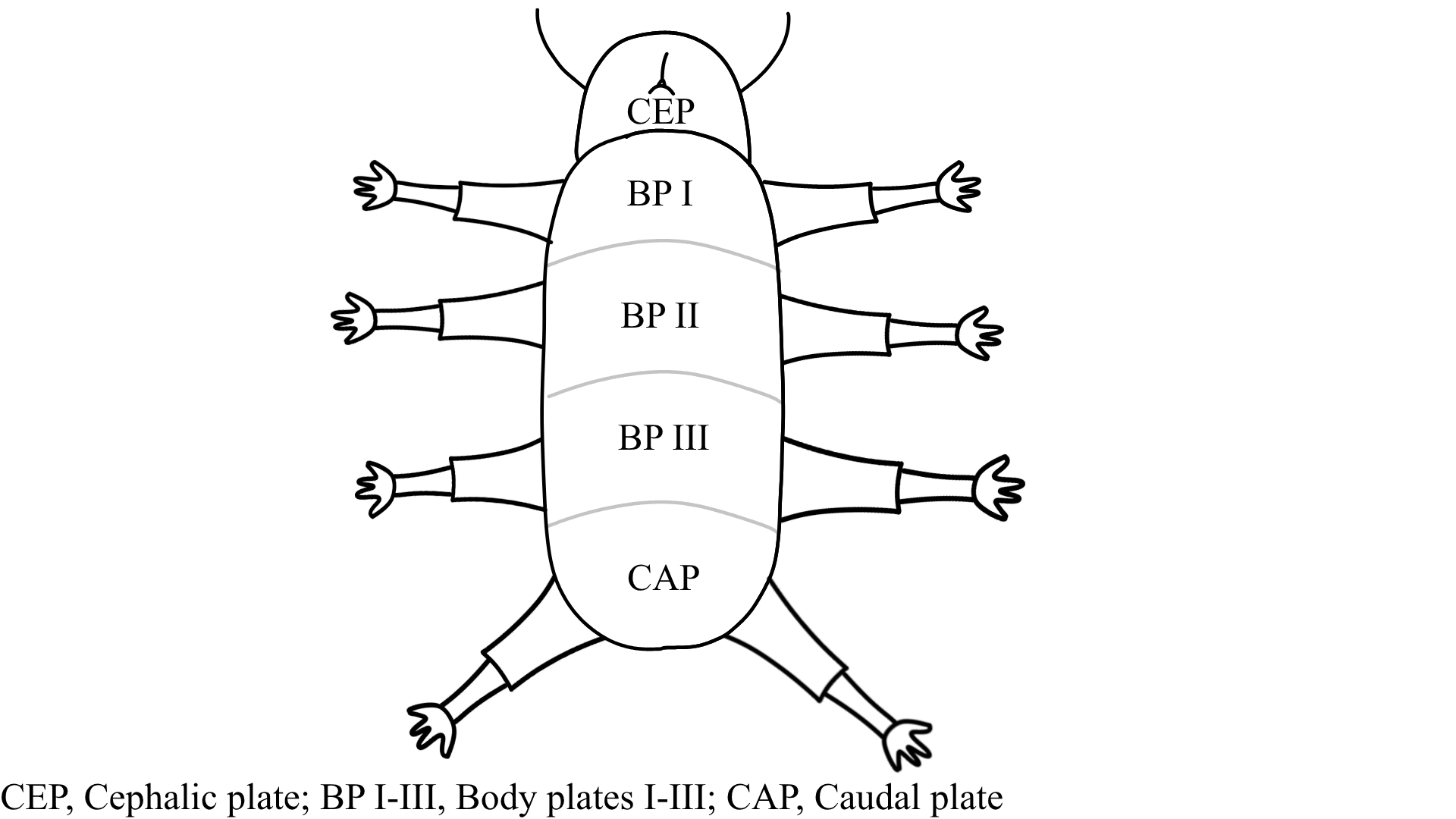
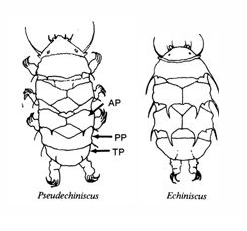
Pseudosegmental plate between last medial plate & terminal plate?

Note on 2nd image, what you see before the terminal plate is either no plate, or a full-width medial plate; don’t confuse the latter with a pseudosegmental plate!
Also, sometimes the pseudosegmental plate is paired, like segmental plates II & III. It’s still pseudosegmental!

Images from Clifford HF. 1991. Aquatic invertebrates of Alberta. University of Alberta Press, Alberta, Canada.

Segmental plates larger than intersegmental?

Image modified from Lindahl & Balser (1999), http://www.iwu.edu/~tardisdp/Keypage35.html

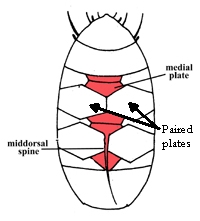
Any Paired Plates?

Modified from Lindahl K, Balser S.  1999. Key to tardigrade genera [Internet]. Available from: https://sun.iwu.edu/~tardisdp/Keypage33.html