Calcarobiotus

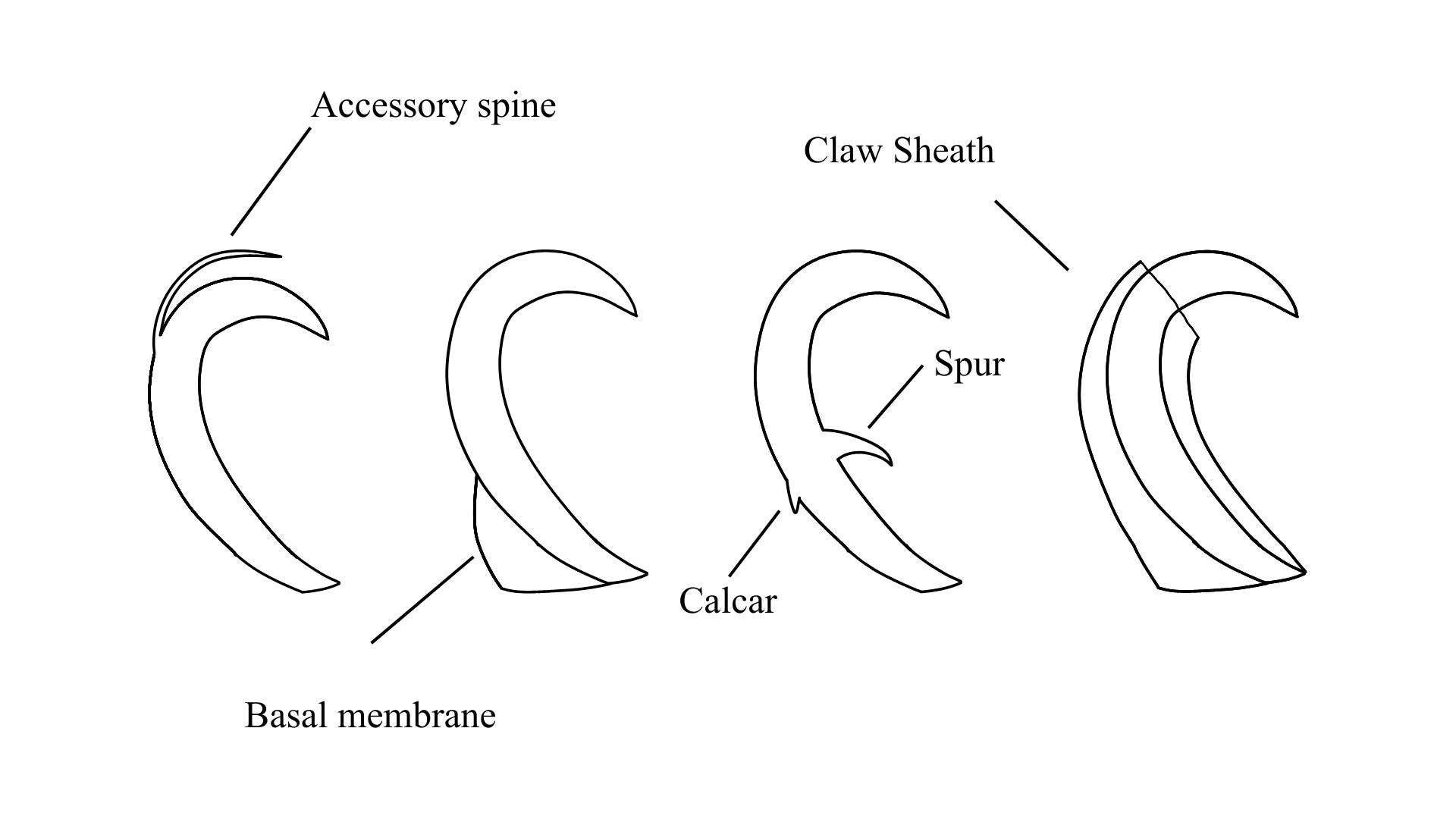
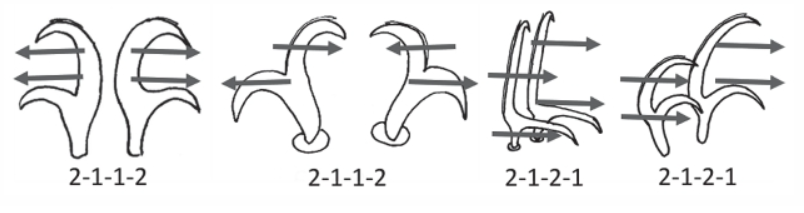
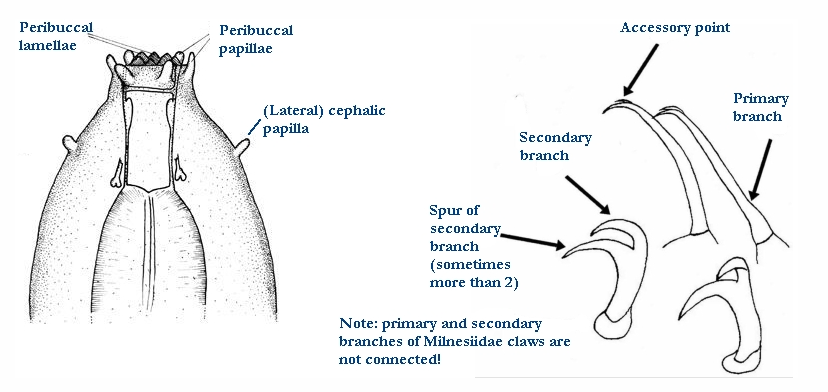
Genus description from Guidetti & Bertolani 2001: “Claws of Calcarobiotus type, with an evident thin stalk, an evident wide transverse septum dividing the basal portion from the rest of the claw, wide basal portion of the claw with a large distal part (bearing or not spurs); main and secondary branches (at least on the first three pairs […]
Biserovus

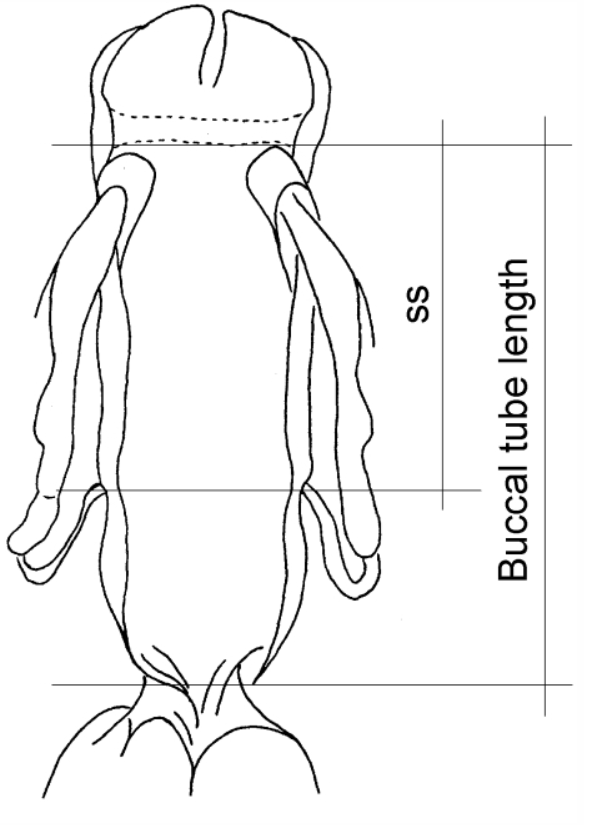
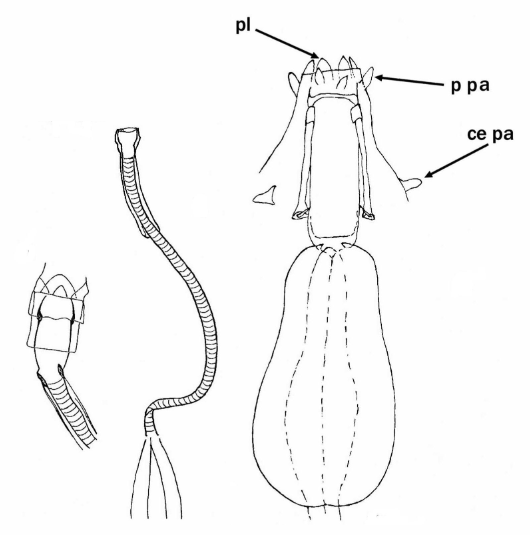
Genus description from Guidetti & Pilato 2003: “Diploclaws similar to those of Pseudohexapodibius, formed by a common tract and a main and a secondary branch. A differentiated basal portion less sclerified than the common tract is lacking. Lunules absent. The buccal-pharyngeal tube is subdivided into a rigid anterior portion with a ventral strengthening bar and a […]
Paramacrobiotus

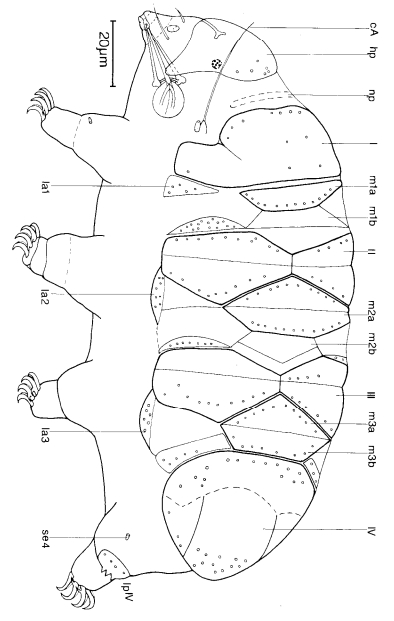
Genus description from Guidetti et al. 2009: “Macrobiotids with Y-type claws, cuticle smooth and without pores; mouth ring with ten evident peribuccal lamellae; buccal armature showing ventrally and dorsally a posterior crown of strong triangular or bicuspidal teeth followed (at least dorsally) by three robust transverse crests; large buccal tube; three clearly rod shaped and elongated macroplacoids; […]
Minilentus

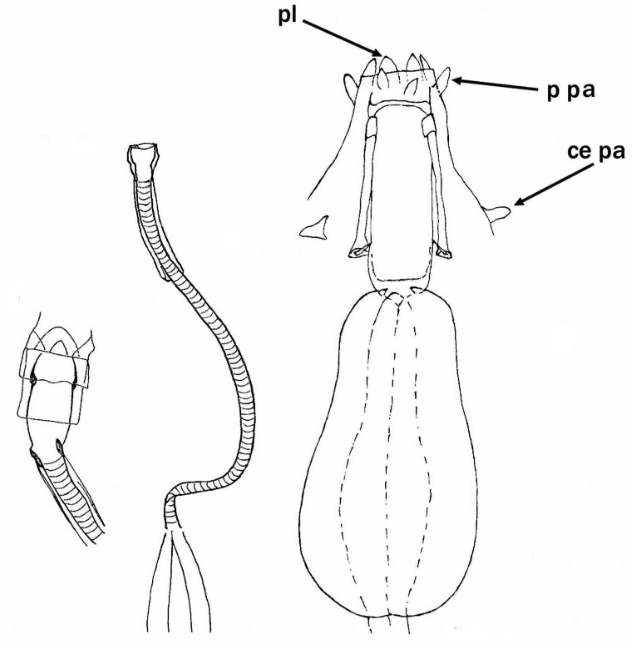
Genus description from Guidetti and Pilato 2003: “Diploclaws of the ‘hufelandi type’. Lunules present. Buccal-pharyngeal tube subdivided into a rigid anterior portion with a ventral strengthening bar, and a posterior flexible portion that is annulated because of the presence of a spiral thickening. Peribuccal lamellae absent.” Citations: Guidetti R, Pilato G. 2003. Revision of the […]
Minibiotus

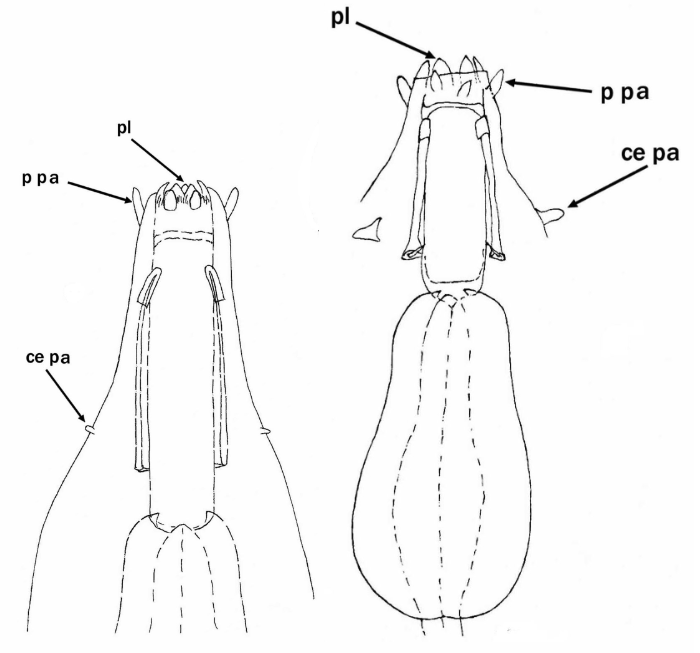
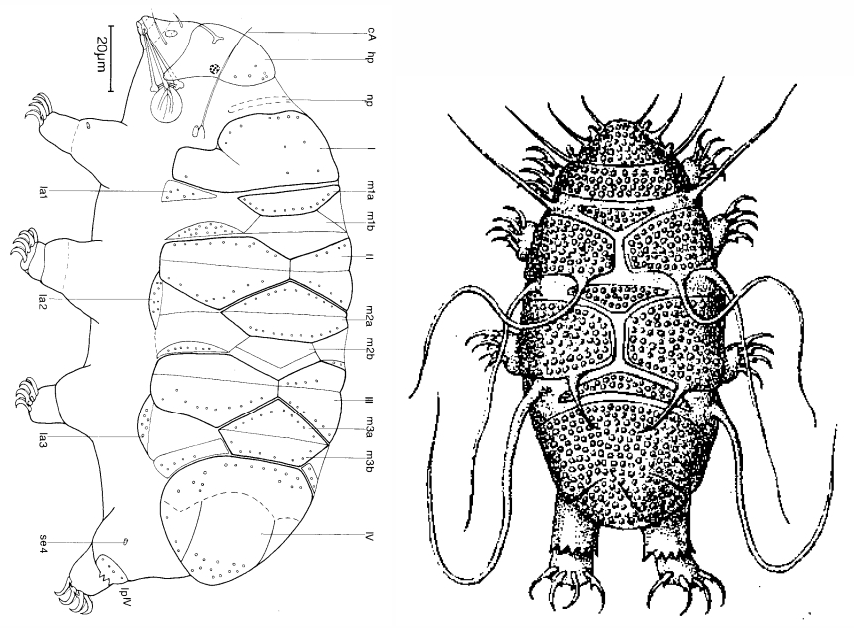
Genus description from Schuster et al. 1980: “Ten peribuccal papulae present; without buccal lamellae. Mucrones present; development of infrabuccal baffles unknown. Buccal tube short, rigid, without spiral thickenings. Pharynx contains apophyses, macroplacoids, and sometimes microplacoids. Cuticle with or without pores, dorsolateral spines sometimes present. Two double claws of each leg of similar size and shape; sequence 2,1,1,2; […]
Mesobiotus

Genus description from Vecchi et al. 2016: “Macrobiotids with Y-type double-claws with a common tract characterised by an internal septum defining a distal part. Cuticle without pores. Mouth ring with 10 peribuccal lamellae; rigid buccal tube; three roundish macroplacoids arranged along a curved line; microplacoid clearly close (less than its length) to the third macroplacoid. Eggs […]