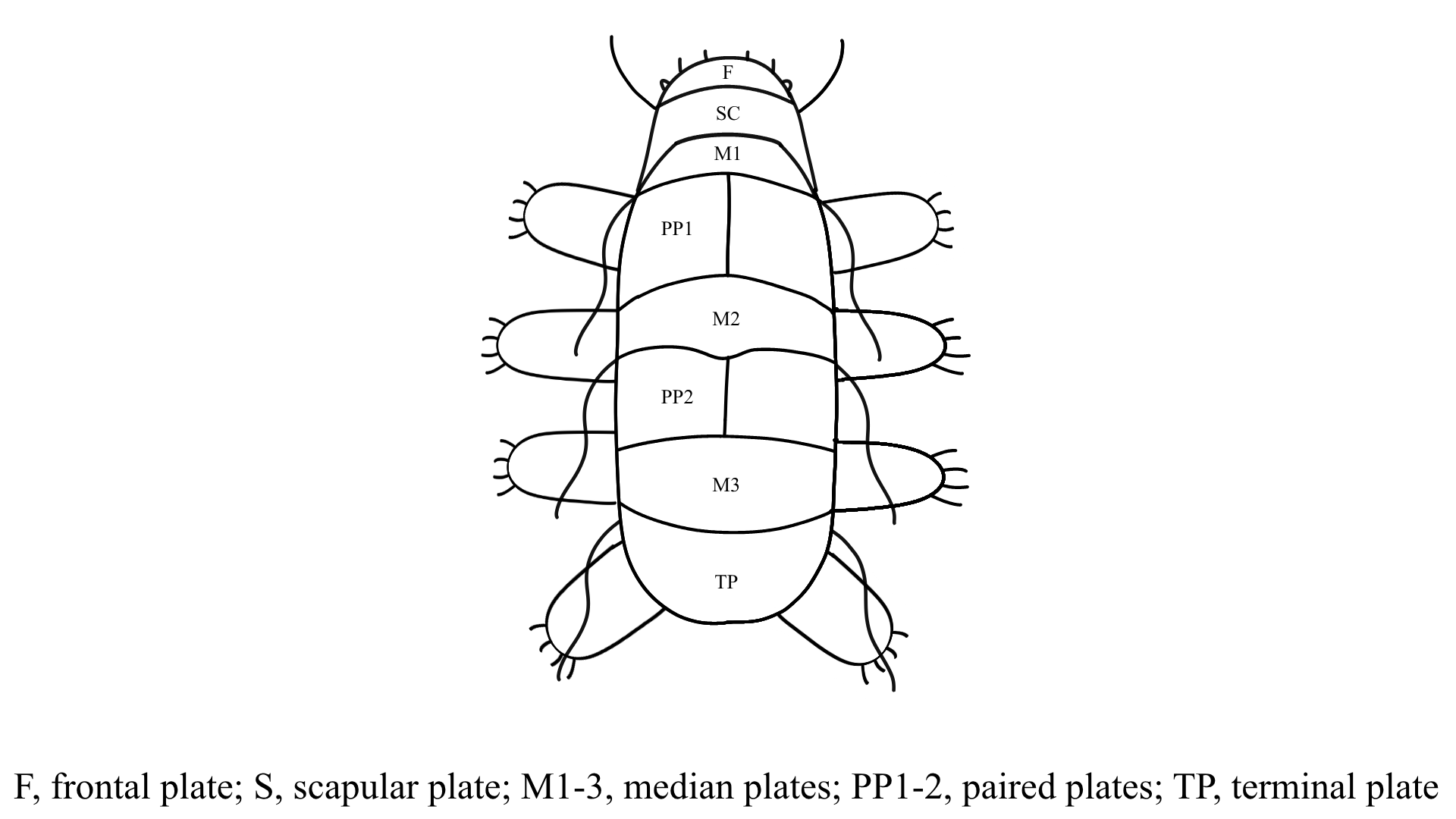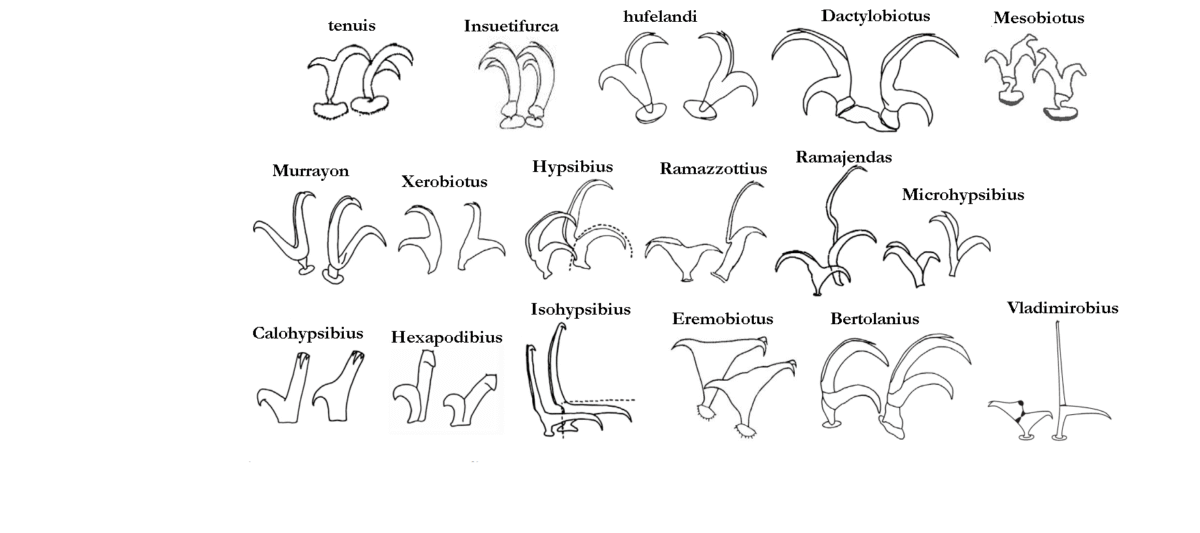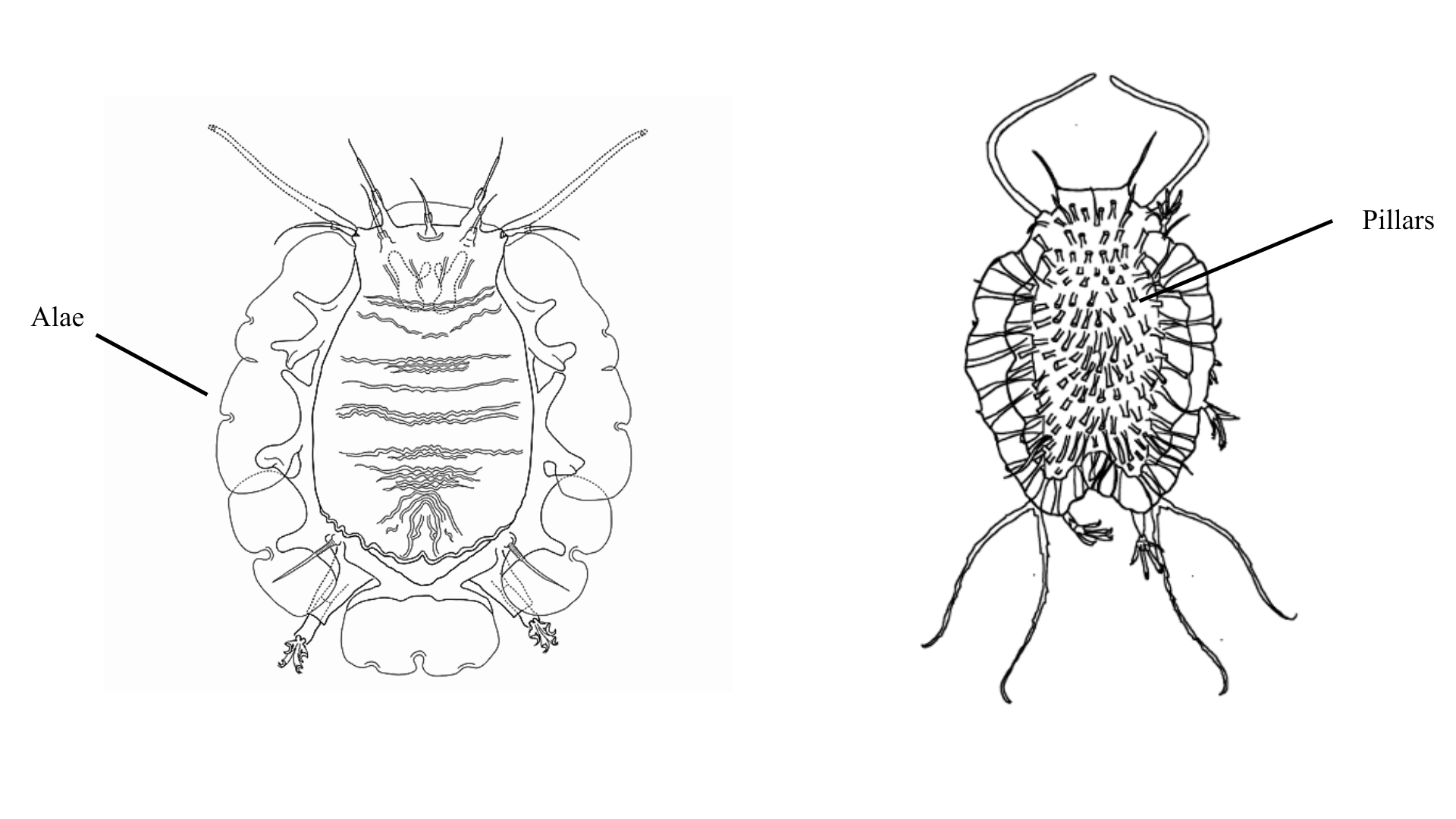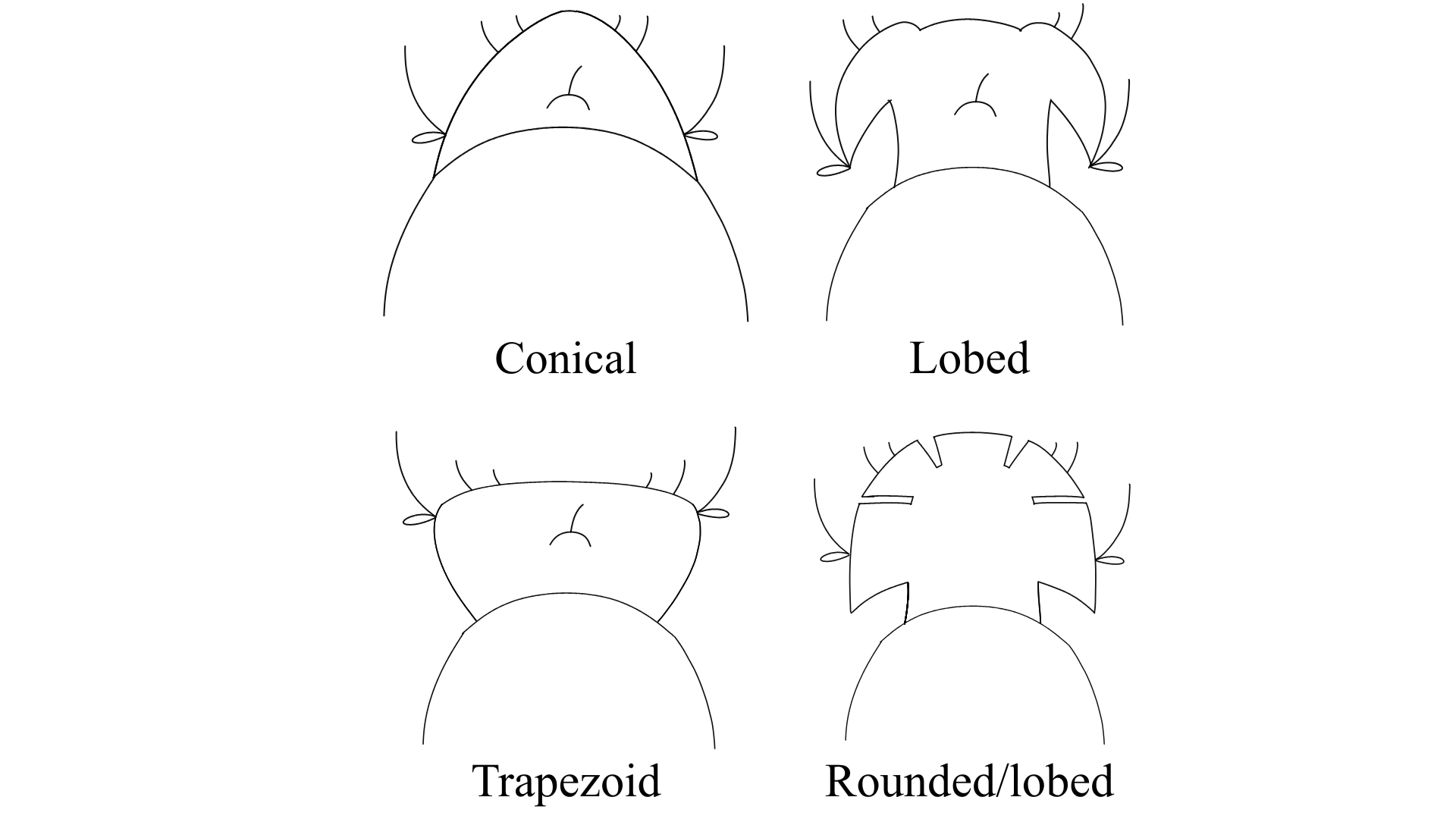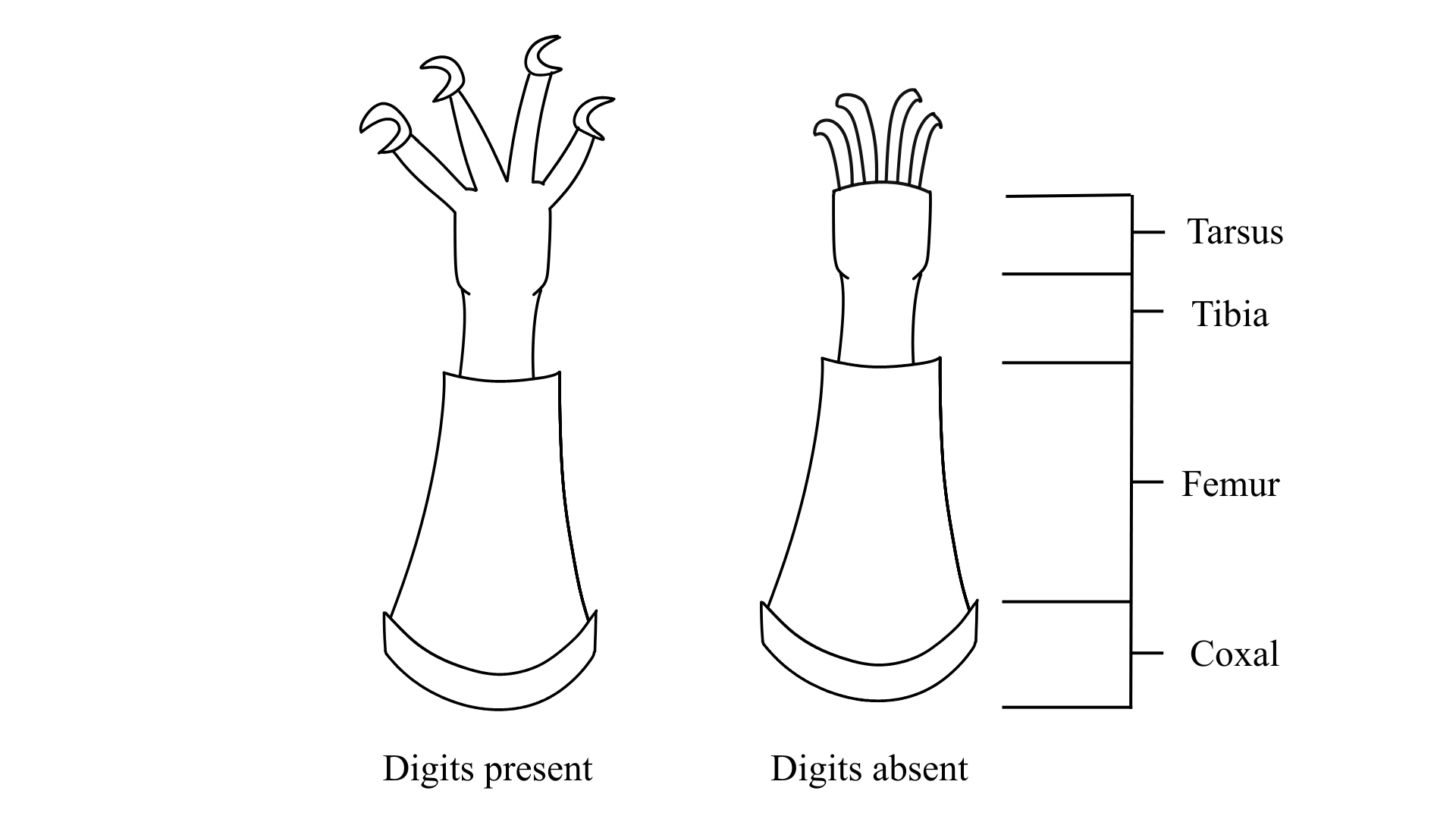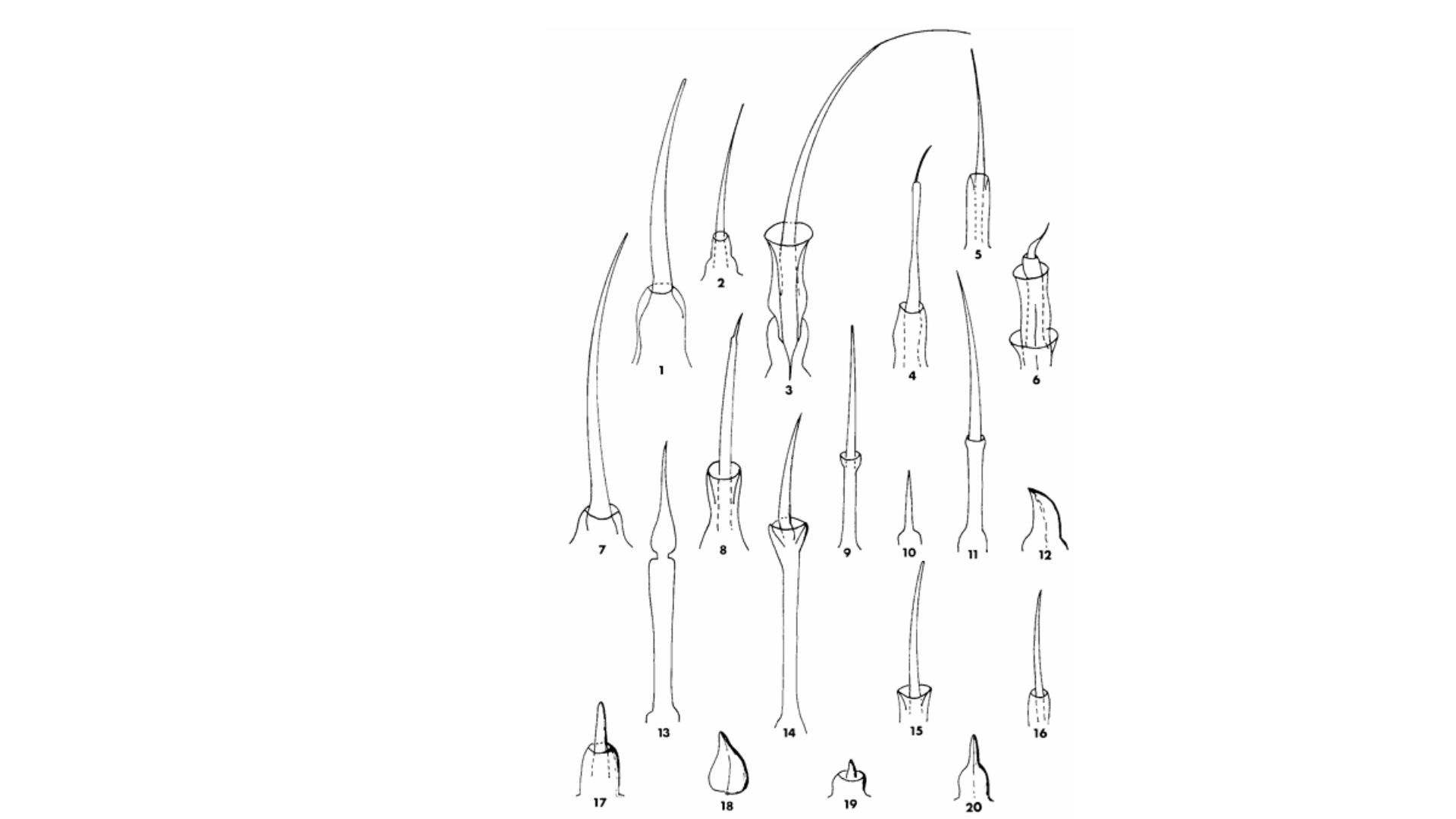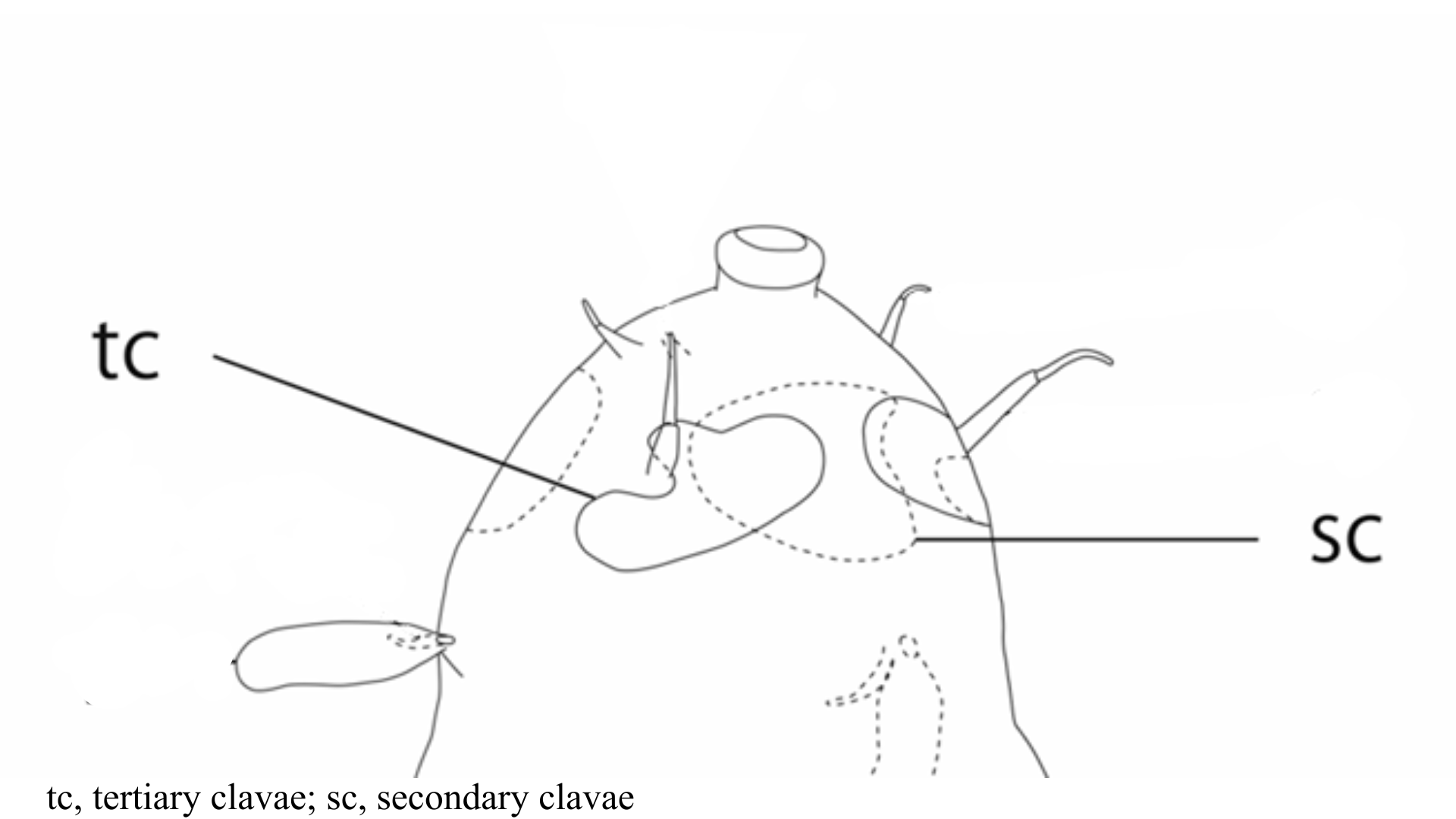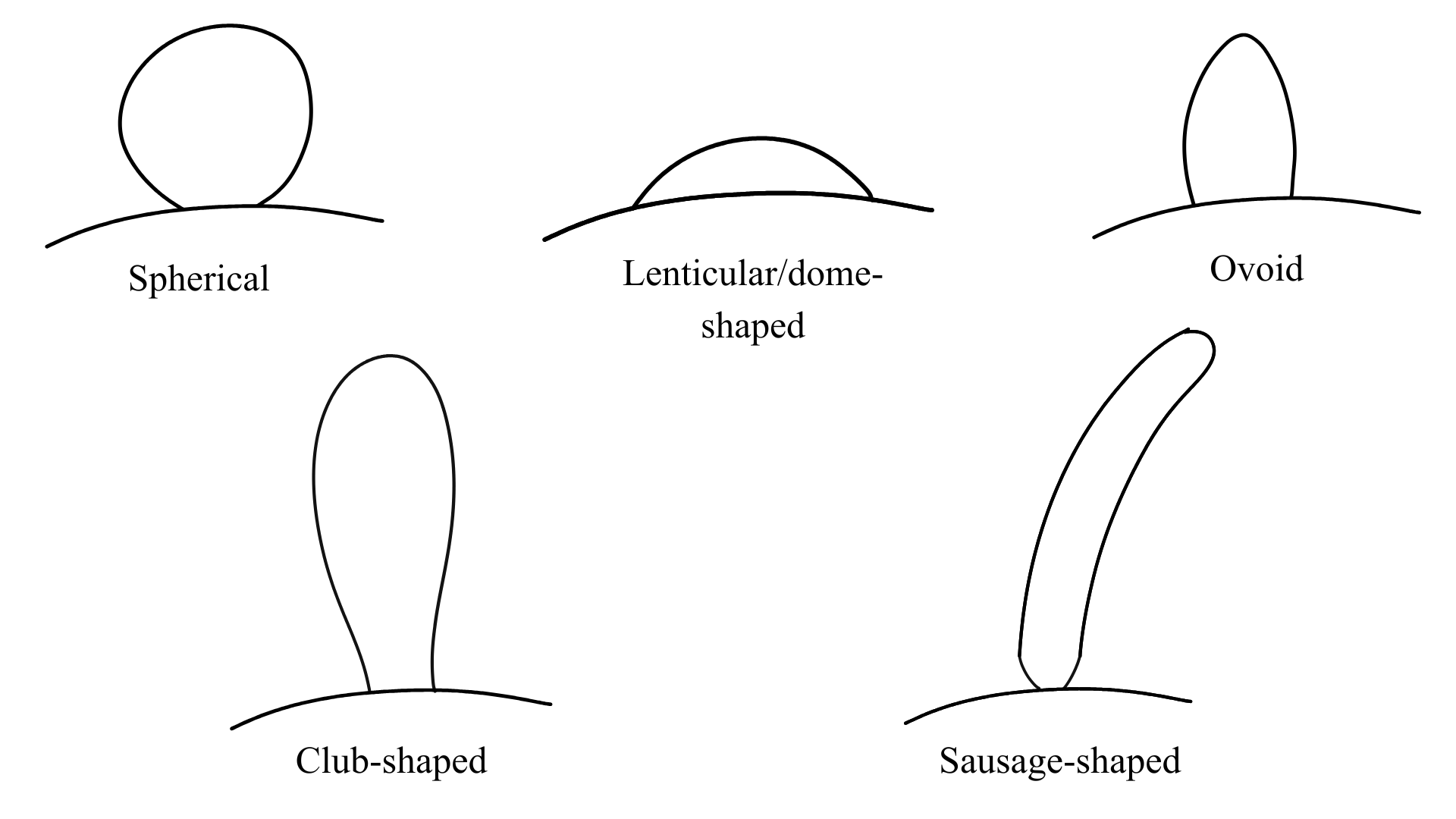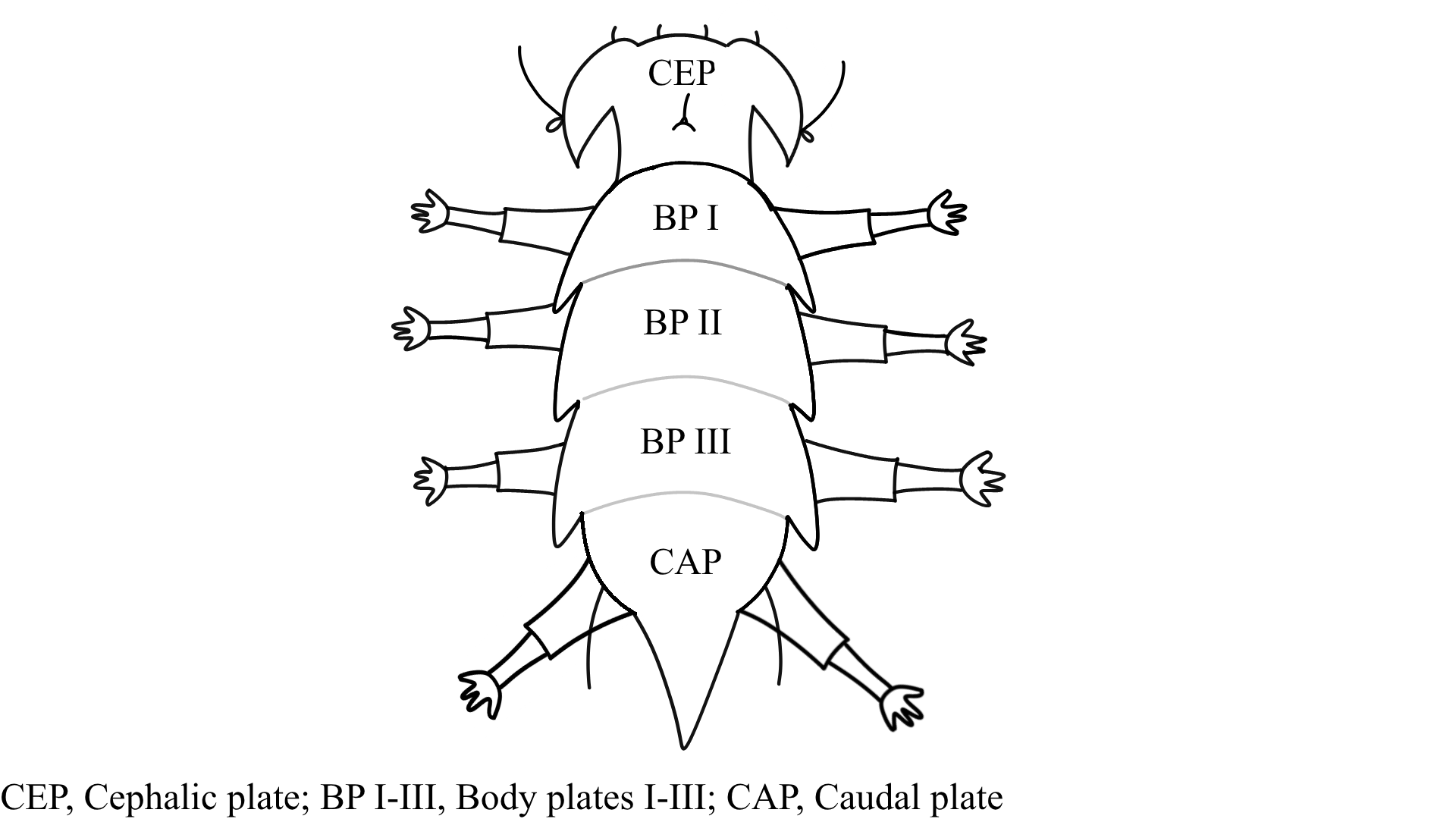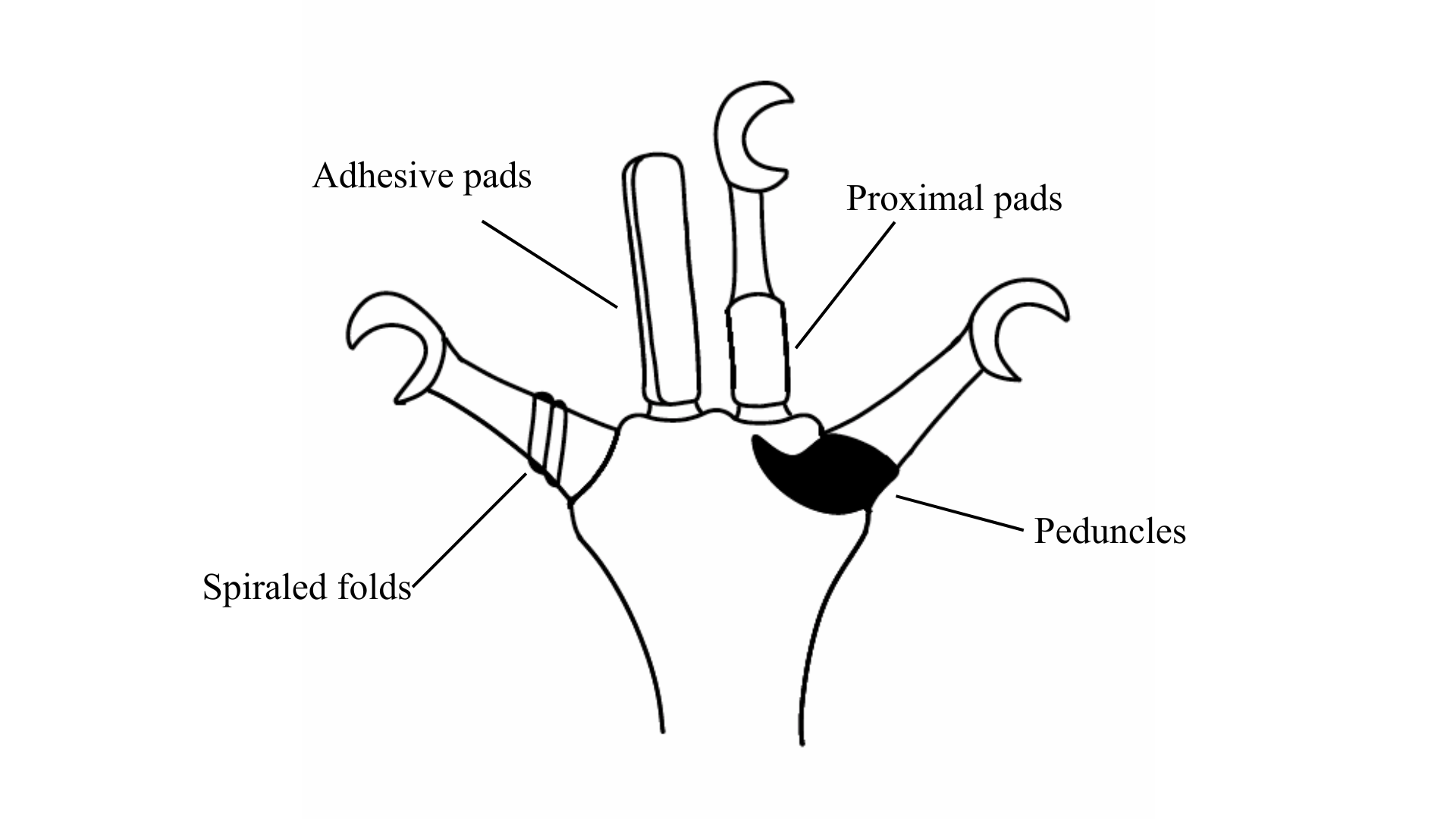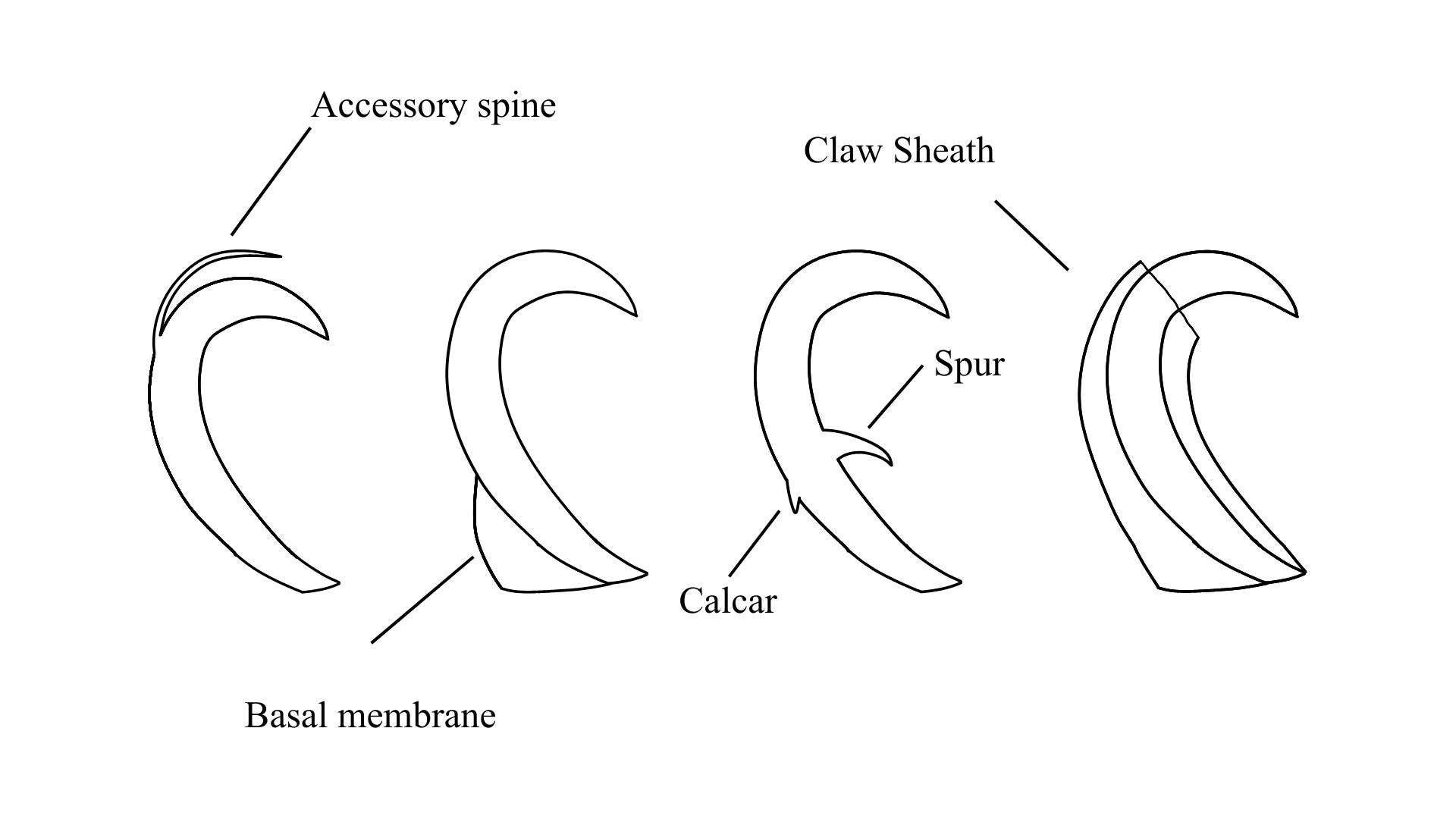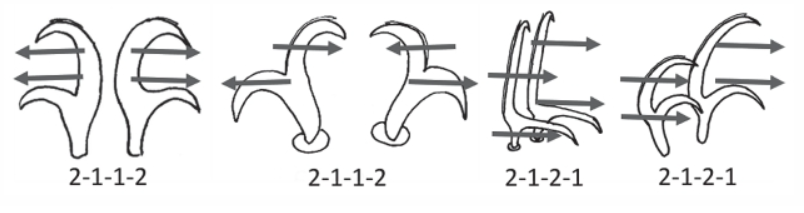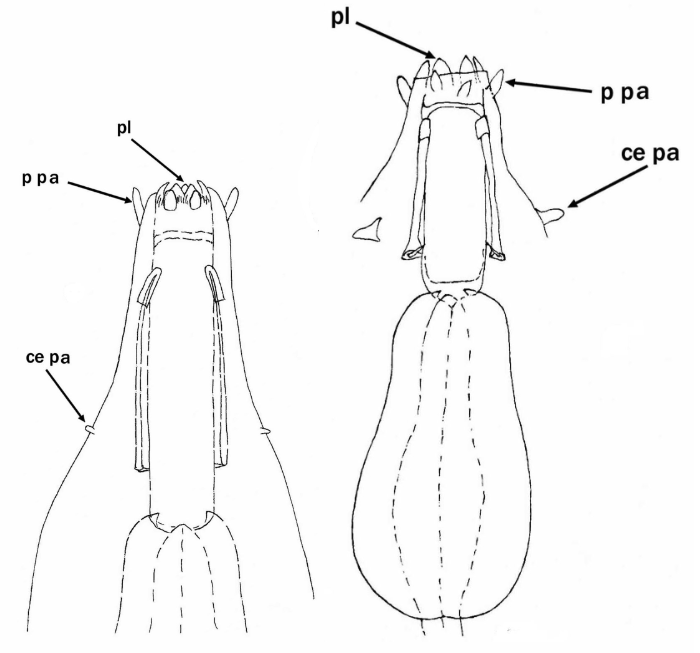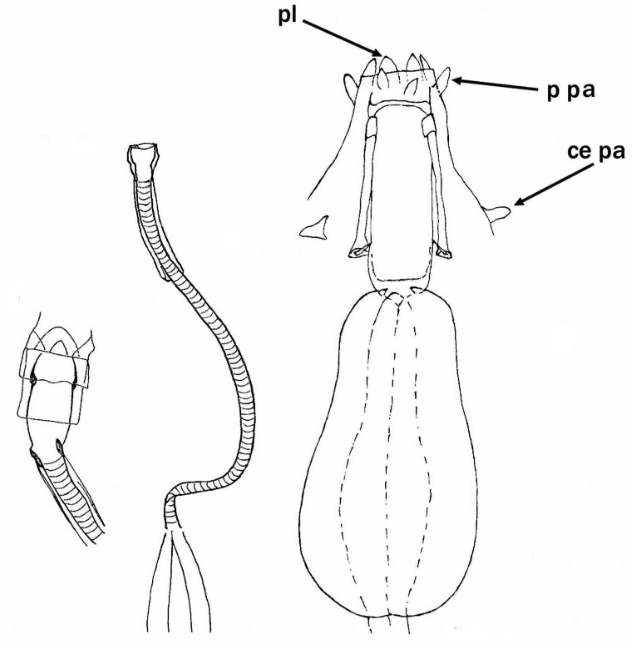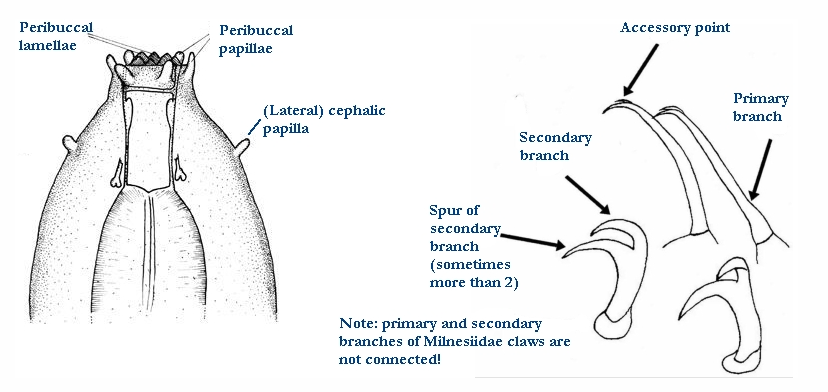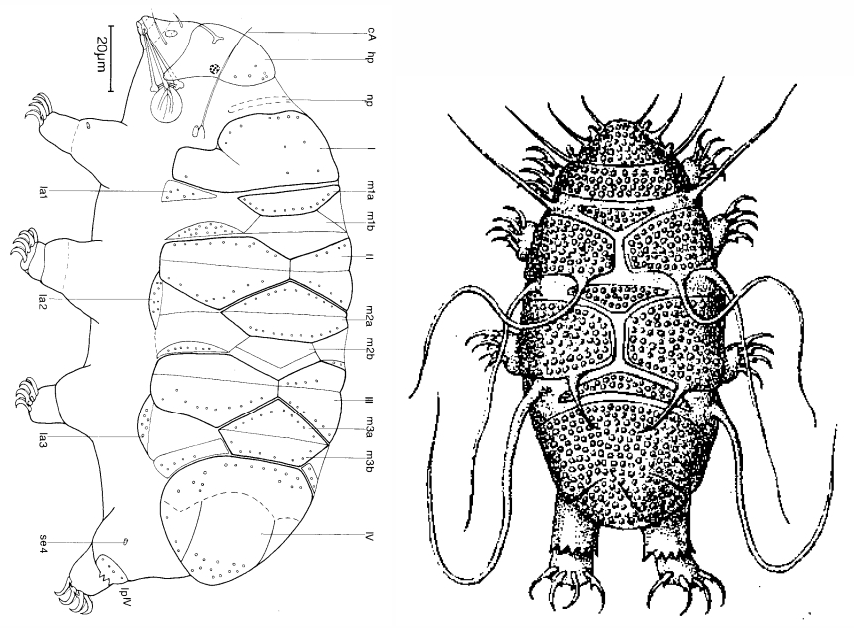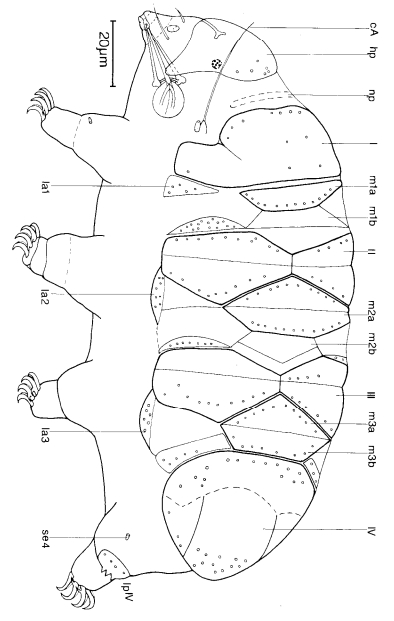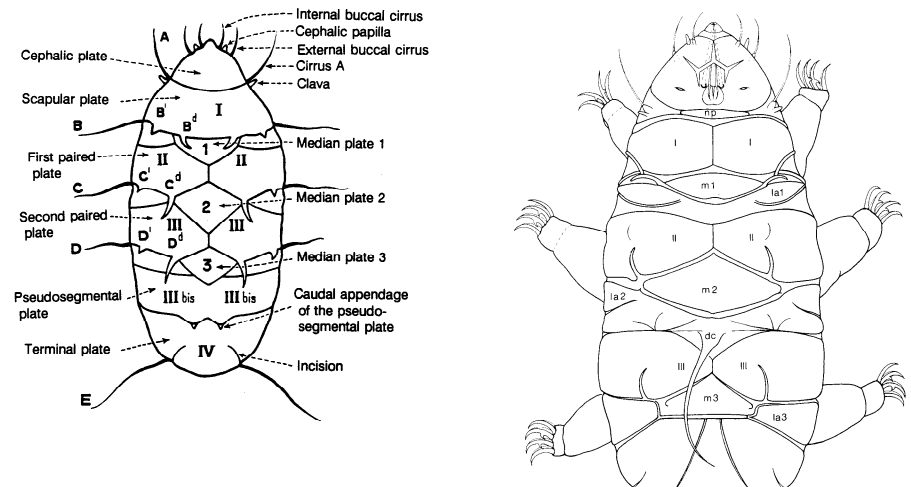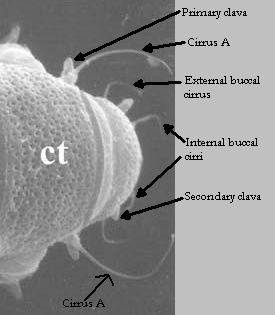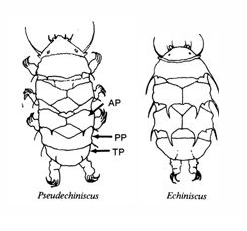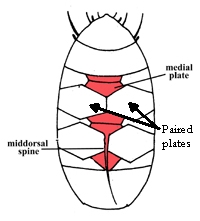

Genus description from Schulz 1951 in McKirdy et al. 1976: Stygarctidae with dorsal cuticle thickened to form three unpaired body plates between a one-piece cephalic plate and a caudal plate; prominent caudal spikes present; legs with four claws each, the central pair with long filamentous appendages; anterior clavae elongate.”
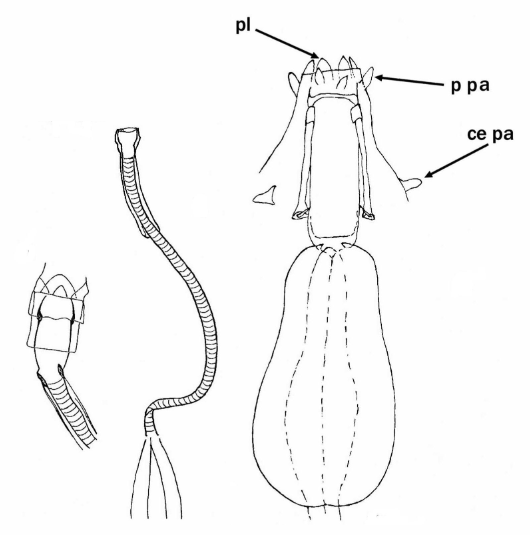
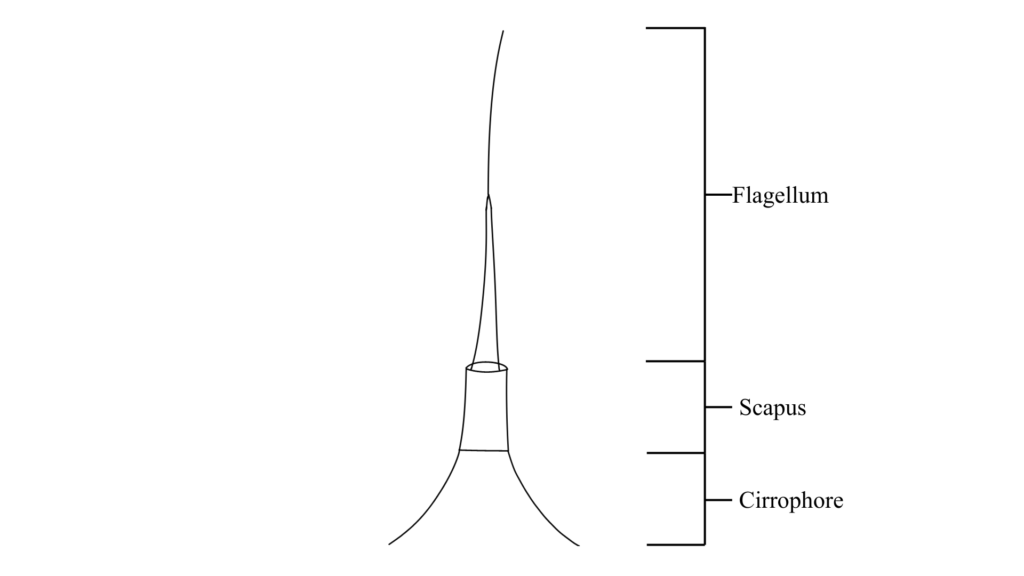
Genus description from Bello & Grimaldi de Zio 1998 and following Hansen et al. 2012, in Fontoura et al. 2017: “Stygarctinae with body plates extending laterally into funnel-shaped processes. Primary and secondary clavae frequently of the same shape, generally elongate. Intersegmental plates among body plates. Ventral plates present. Cirrus E with thin accordion-plated articulation, inserted on the lateral processes of the caudal plate. Each leg with four claws, the central pair of which with a long accessory filament. No sense organs on the first three pairs of legs. Bulb shaped papilla on the fourth leg.”

Citations:
Bello, G. & de Zio Grimaldi, S. (1998) Phylogeny of the genera of the Stygarctidae and related families (Tardigrada: Heterotardigrada). Zool Anz, 237: 171-183.
Fontoura, P., Bartels, P.J., Jørgensen, A., Kristensen, R.M. & Hansen, J.G. (2017) A dichotomous key to the genera of the marine Heterotardigrades (Tardigrada). Zootaxa, 4294: 1–45.
Hansen, J.G., Kristensen, R.M. & Jørgensen, A. (2012) The armoured marine tardigrades (Arthrotardigrada, Tardigrada). Scientia Danica, series B Biologica 2, The Royal Danish Academy of Sciences and Letters, pp. 91.
McKirdy, D., Schmidt, P. & McGinty-Bayly, M. (1976) Interstitielle Fauna von Galapagos. XVI. Tardigrada. Mikrofauna des Meeresbodens, 58: 409–449.
Schulz, E. (1951) Über Stygarctus bradypus n.g., s.p., einen Tardigraden aus dem Küstengrundwasser und seine phylogenetische Bedeutung. Kieler Meeresforschung, 8: 86–97.