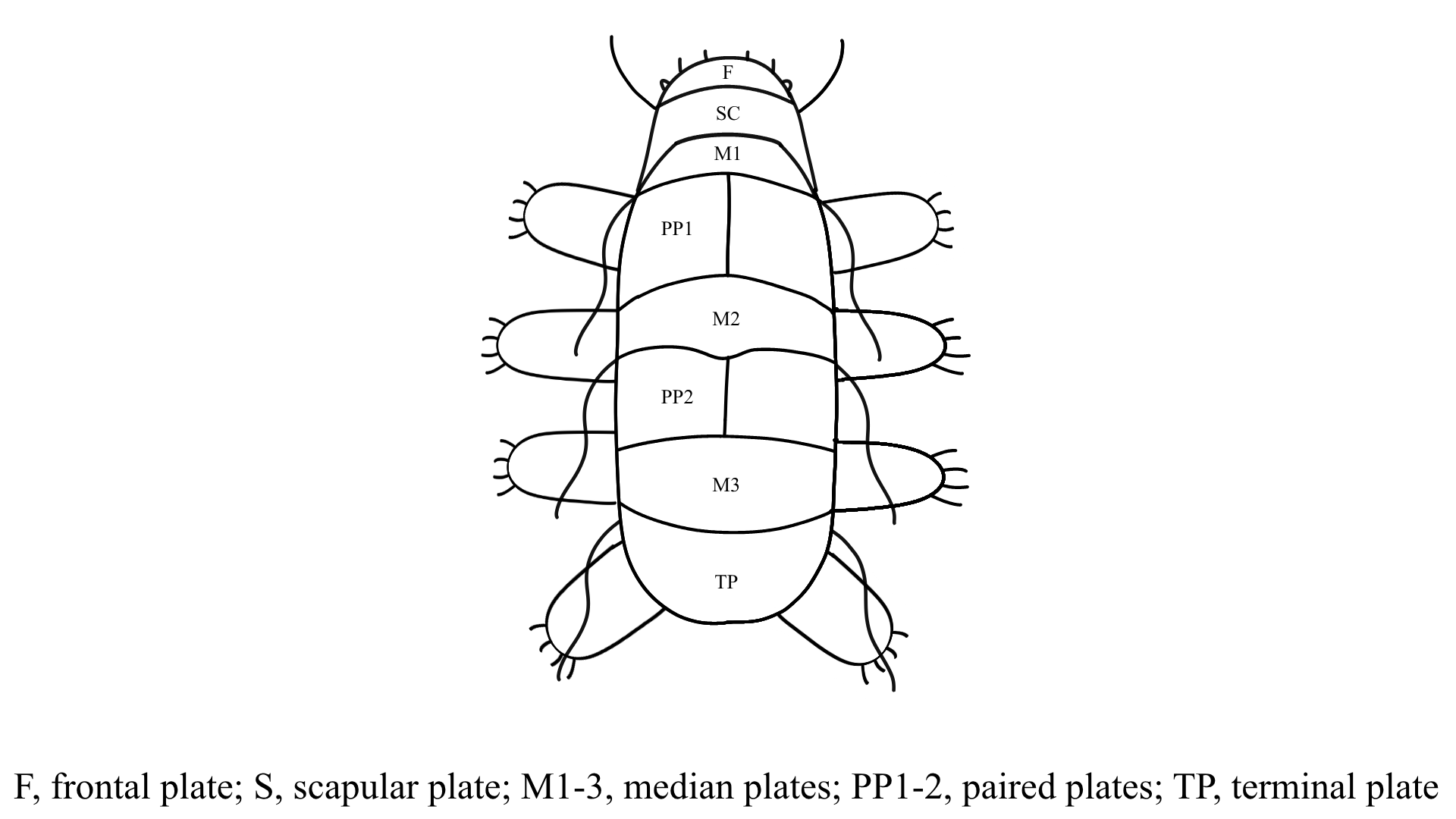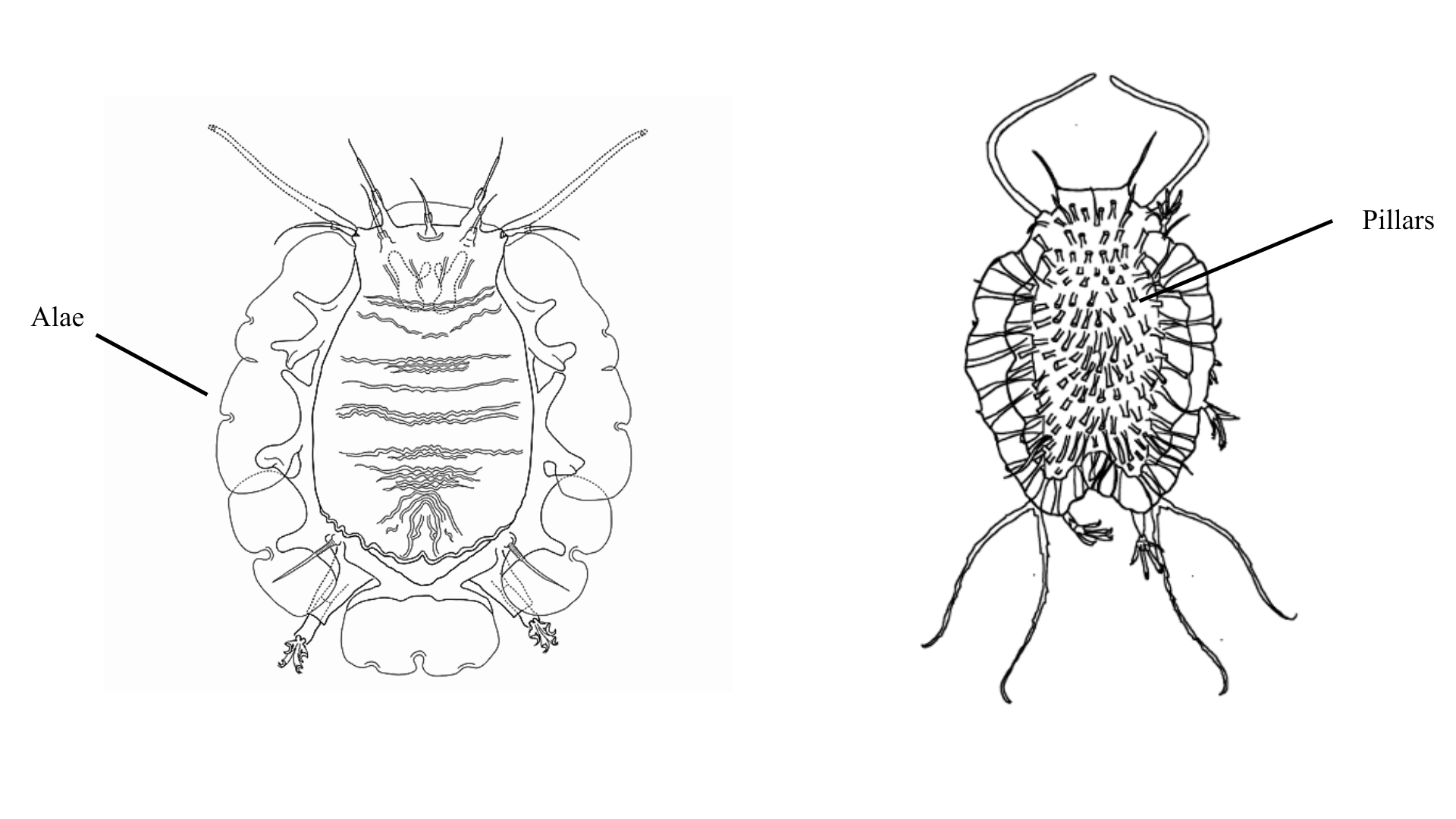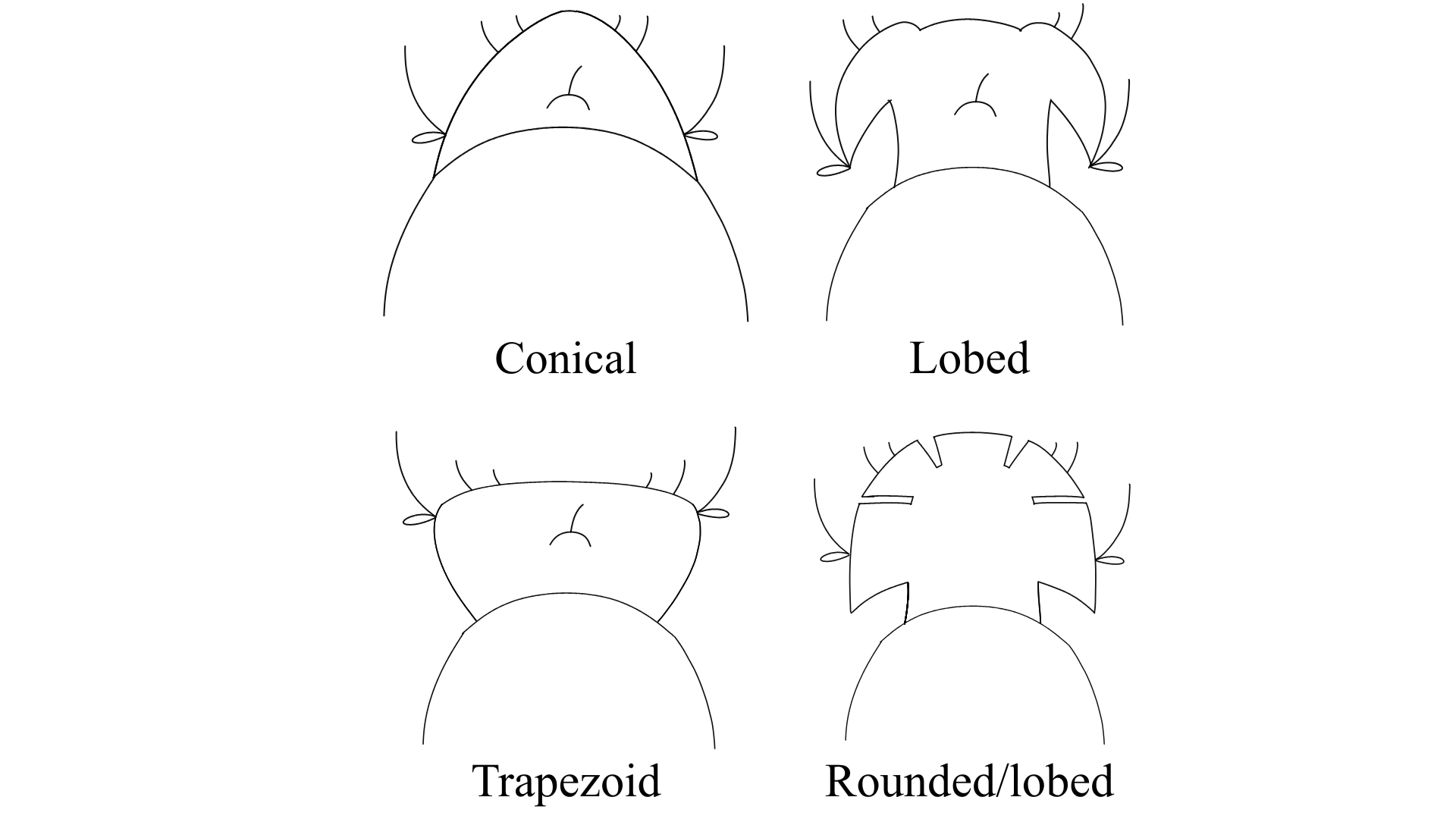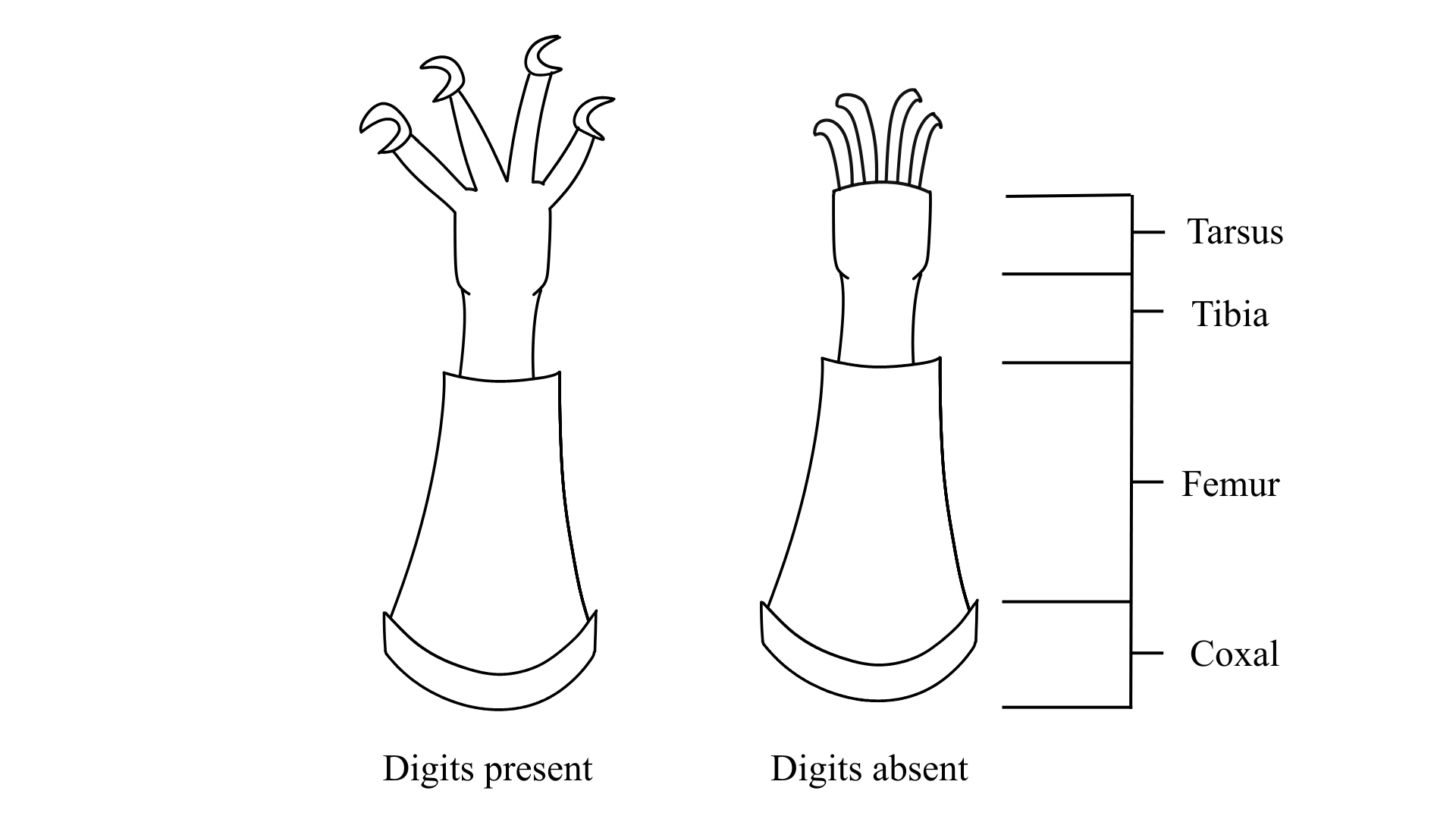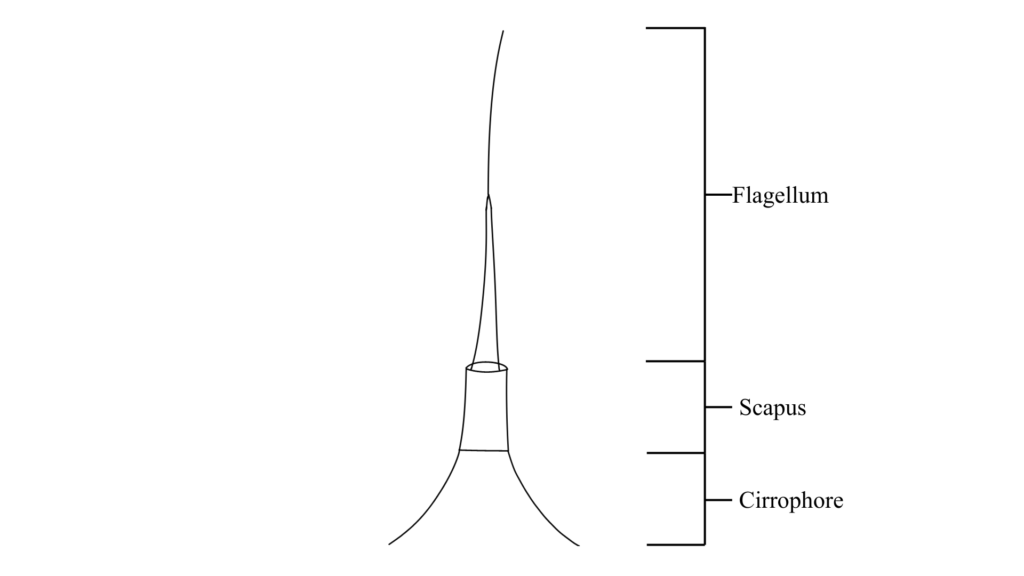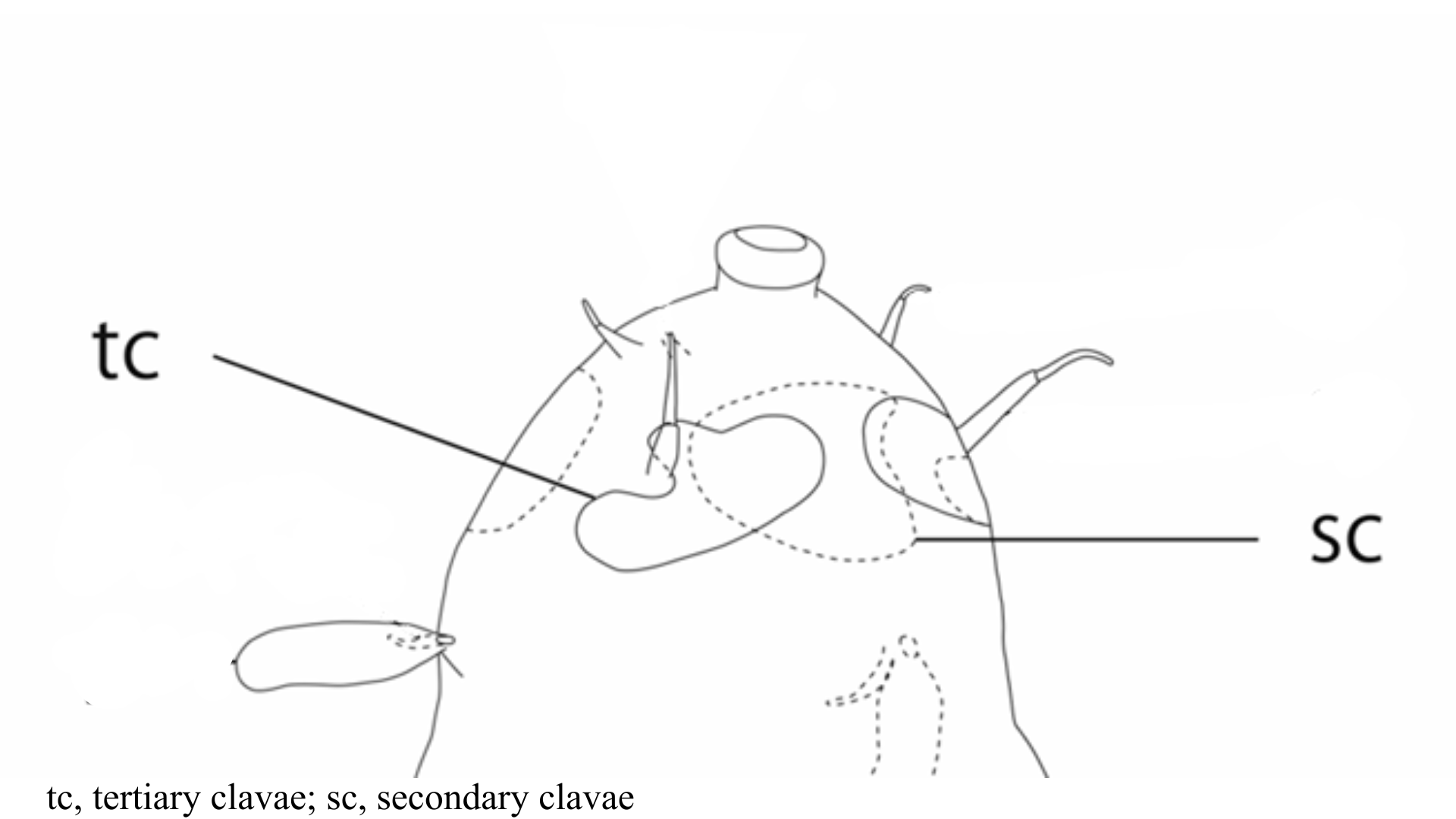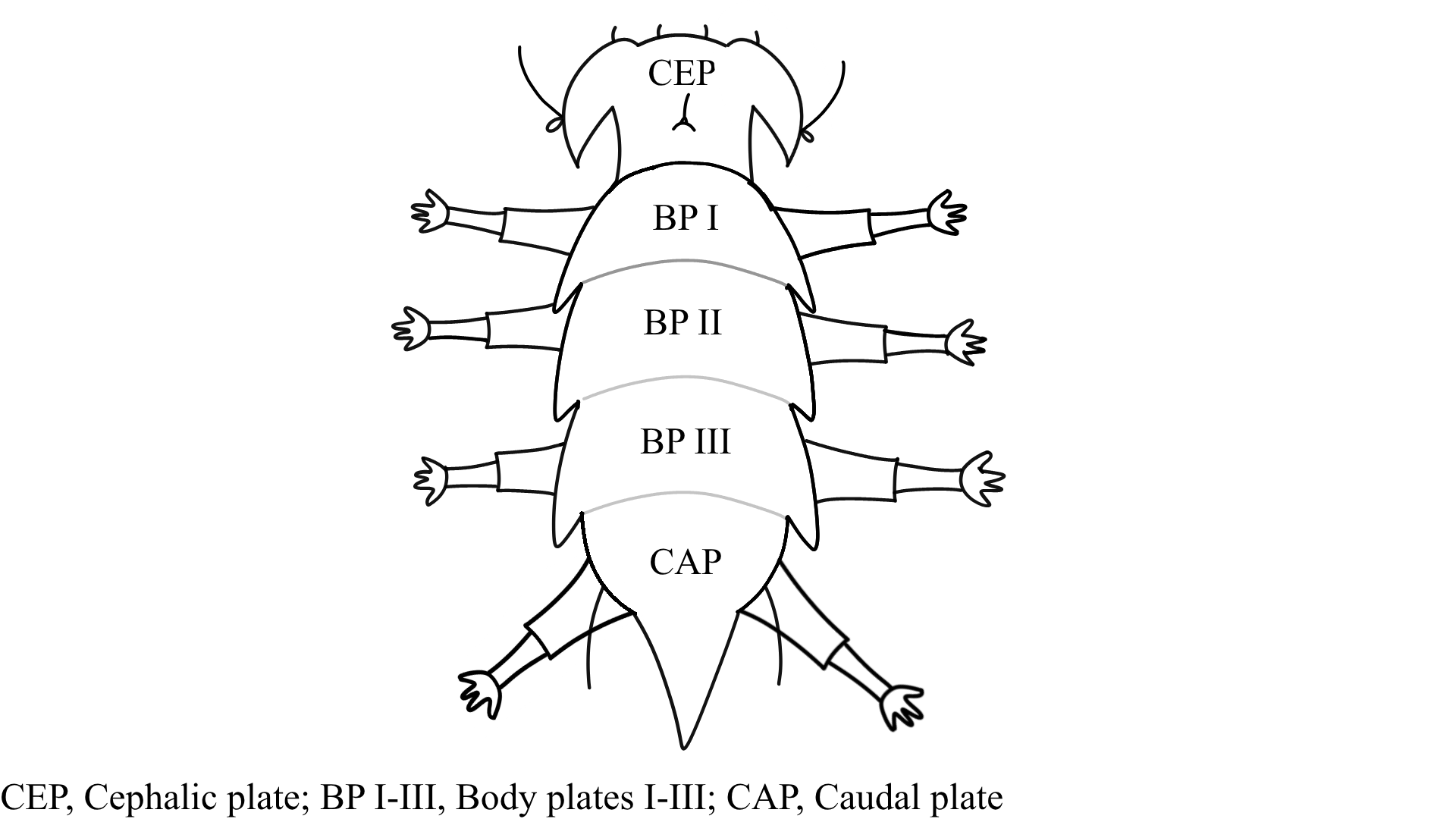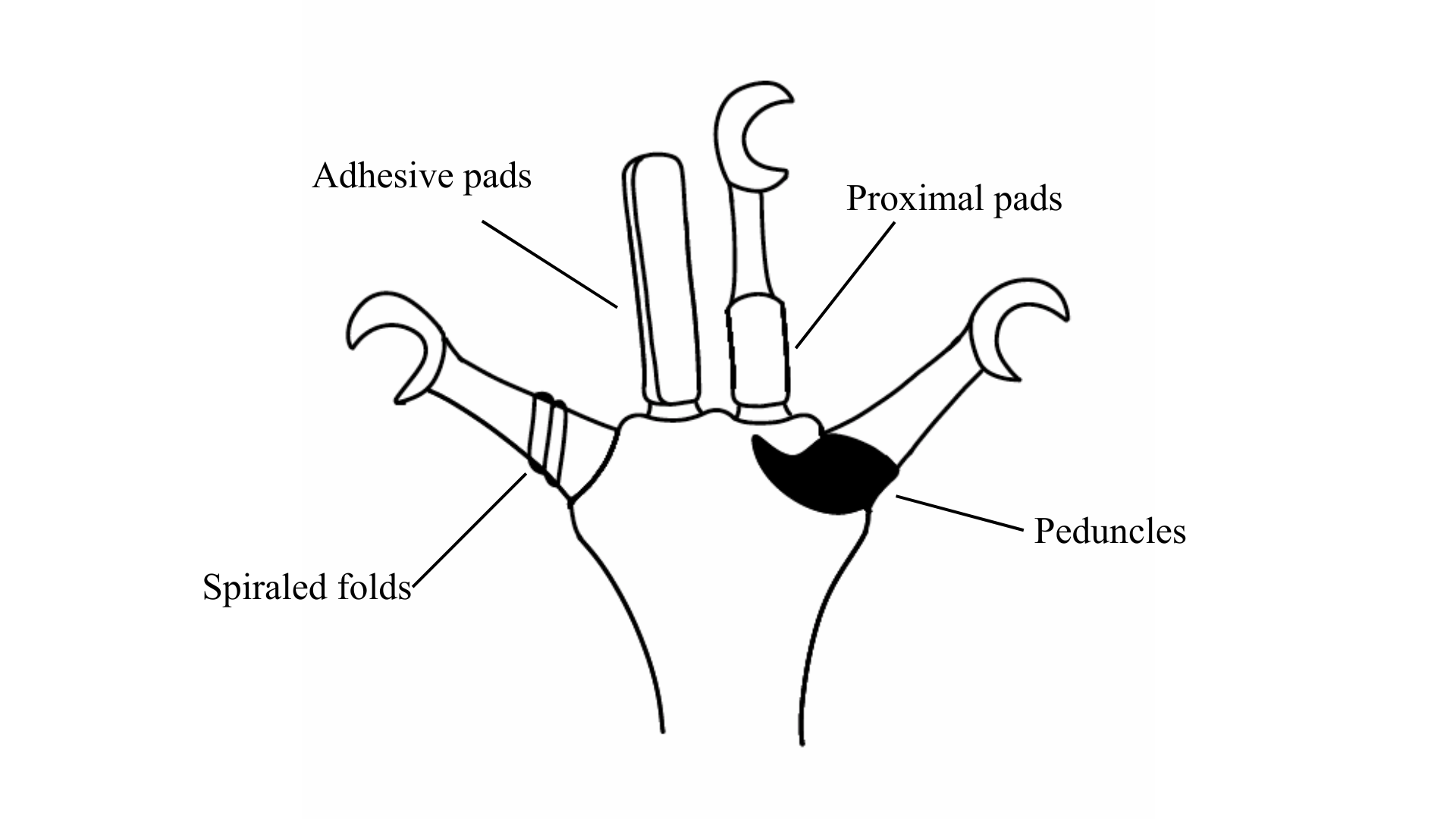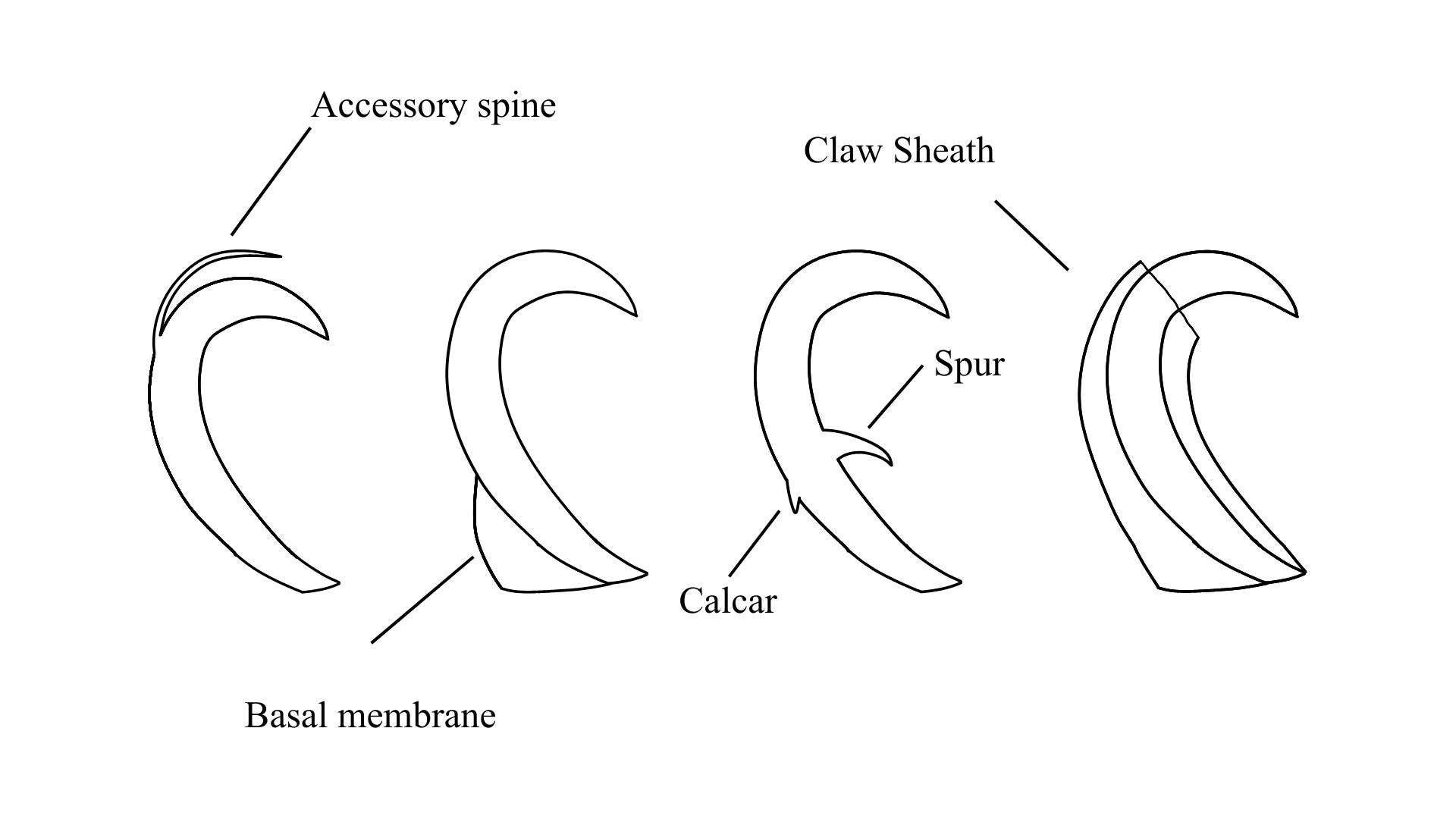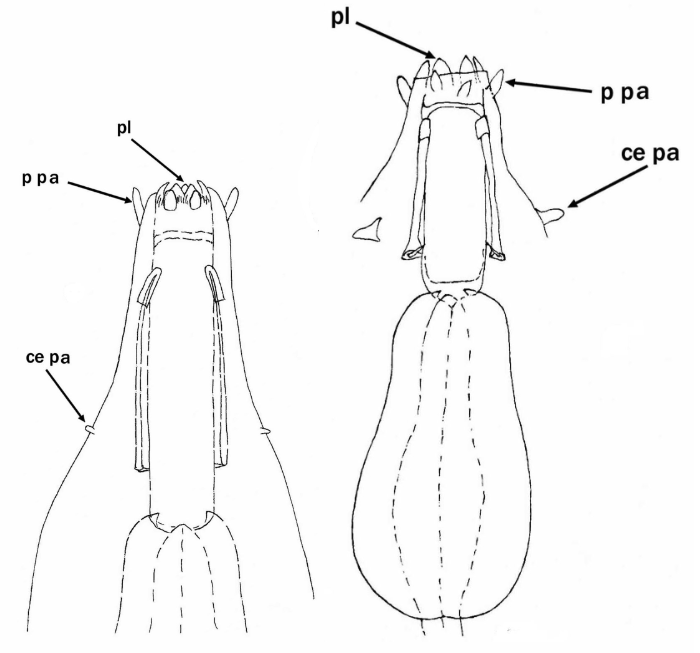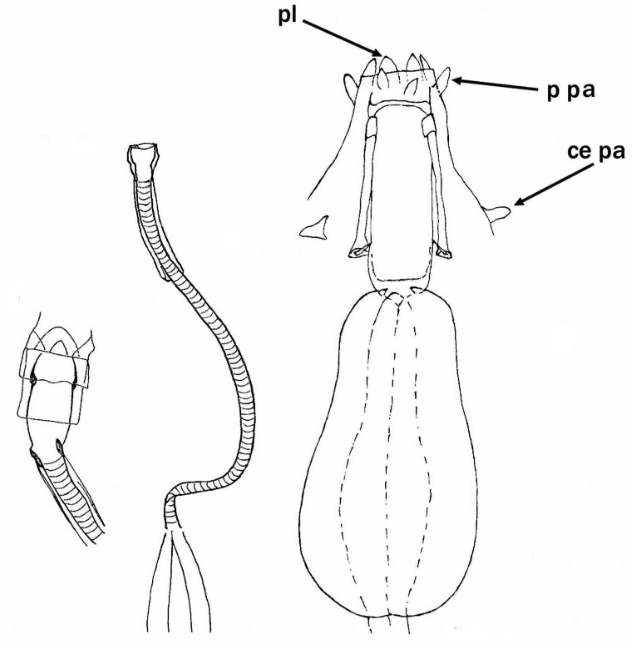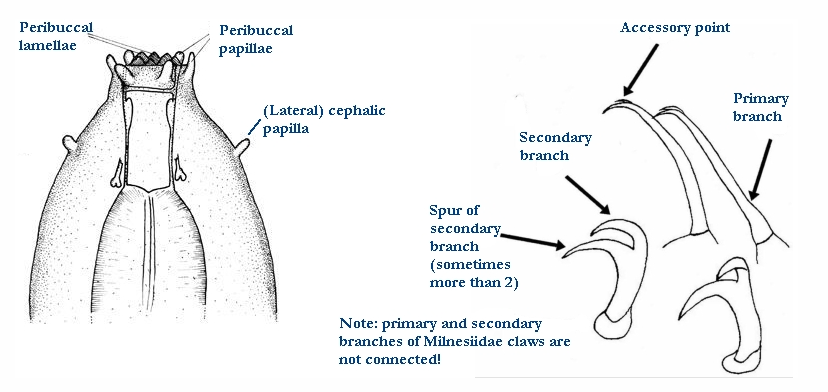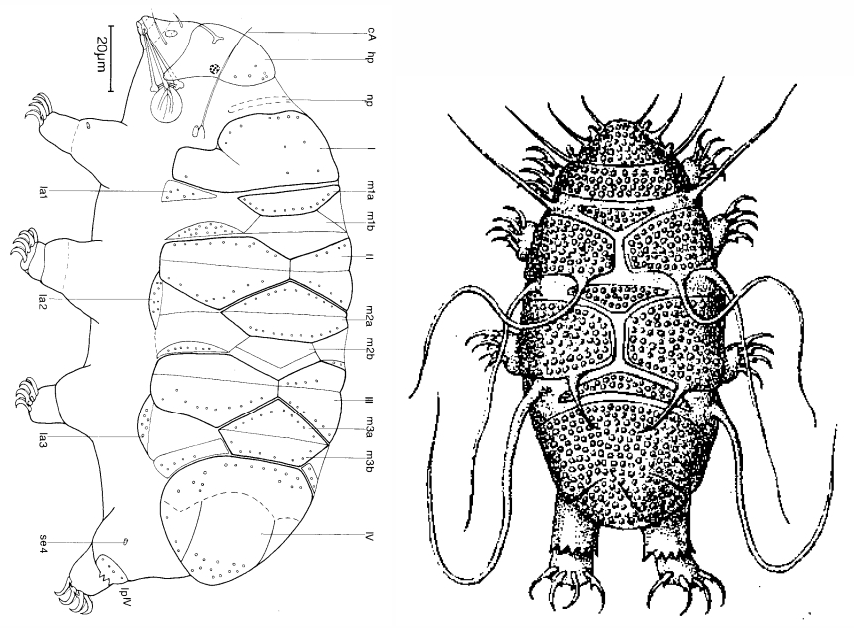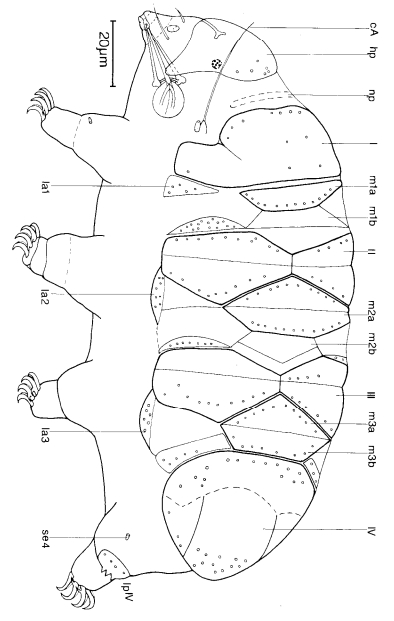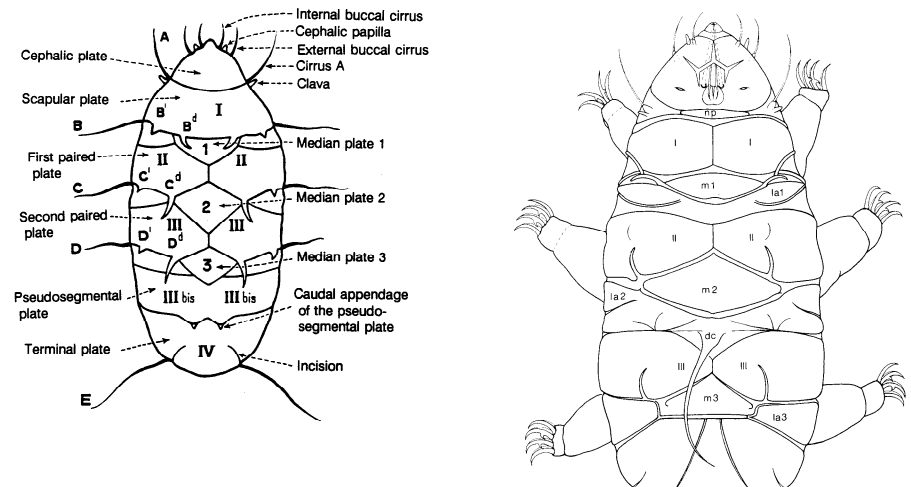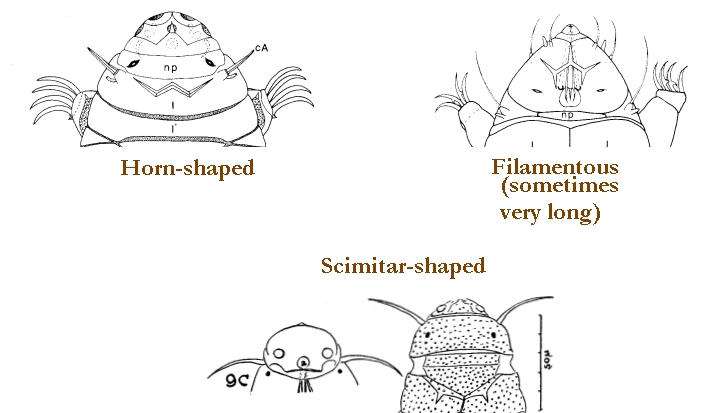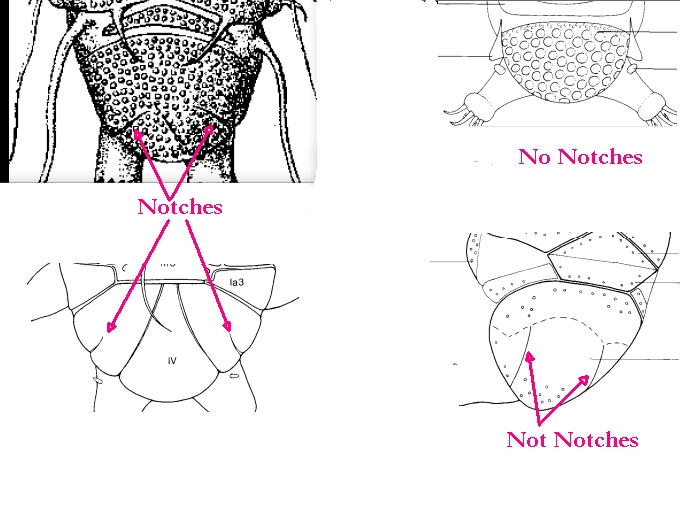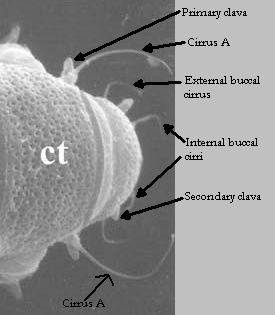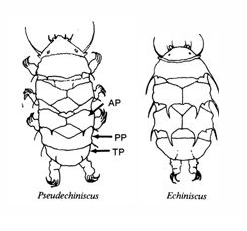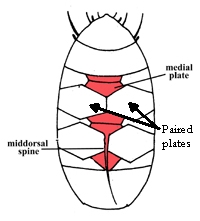
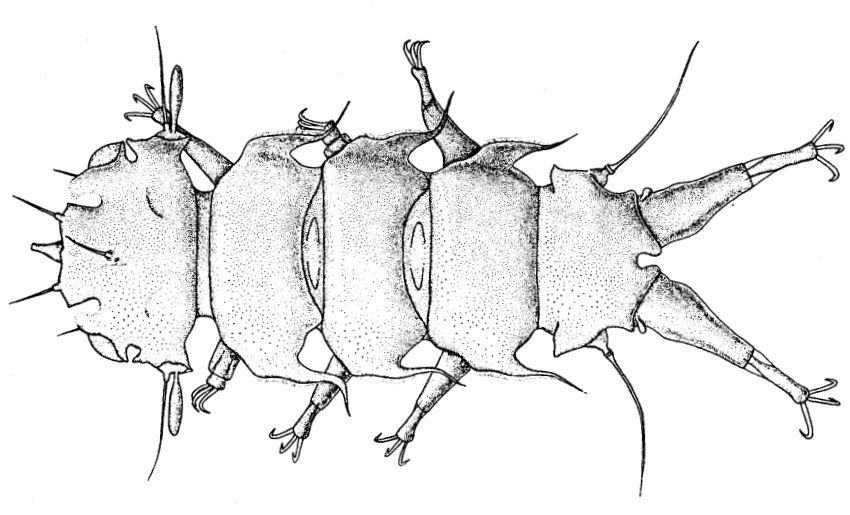
Genus description from McKirdy et al. 1976: “Stygarctidae with dorsal cuticle thickened to form semi-circular head plate, three body plates, and a caudal plate devoid of spike-like posterior processes; cephalic appendages Stygarctus-like except for anterior clavae modified as semi-globular structures; each leg terminated by three claws, each with a minute dorsal accessory spine.”
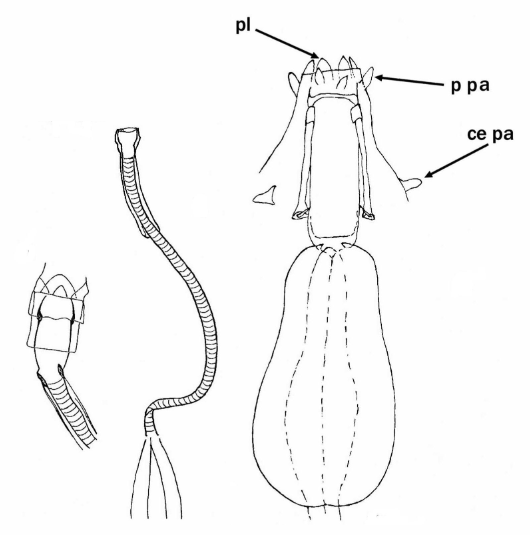
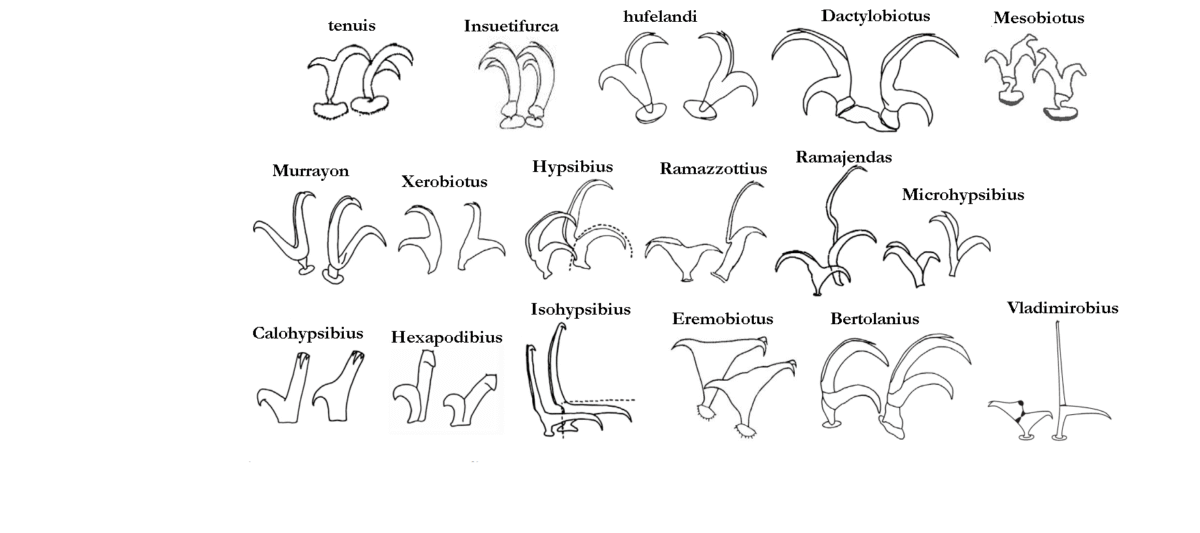
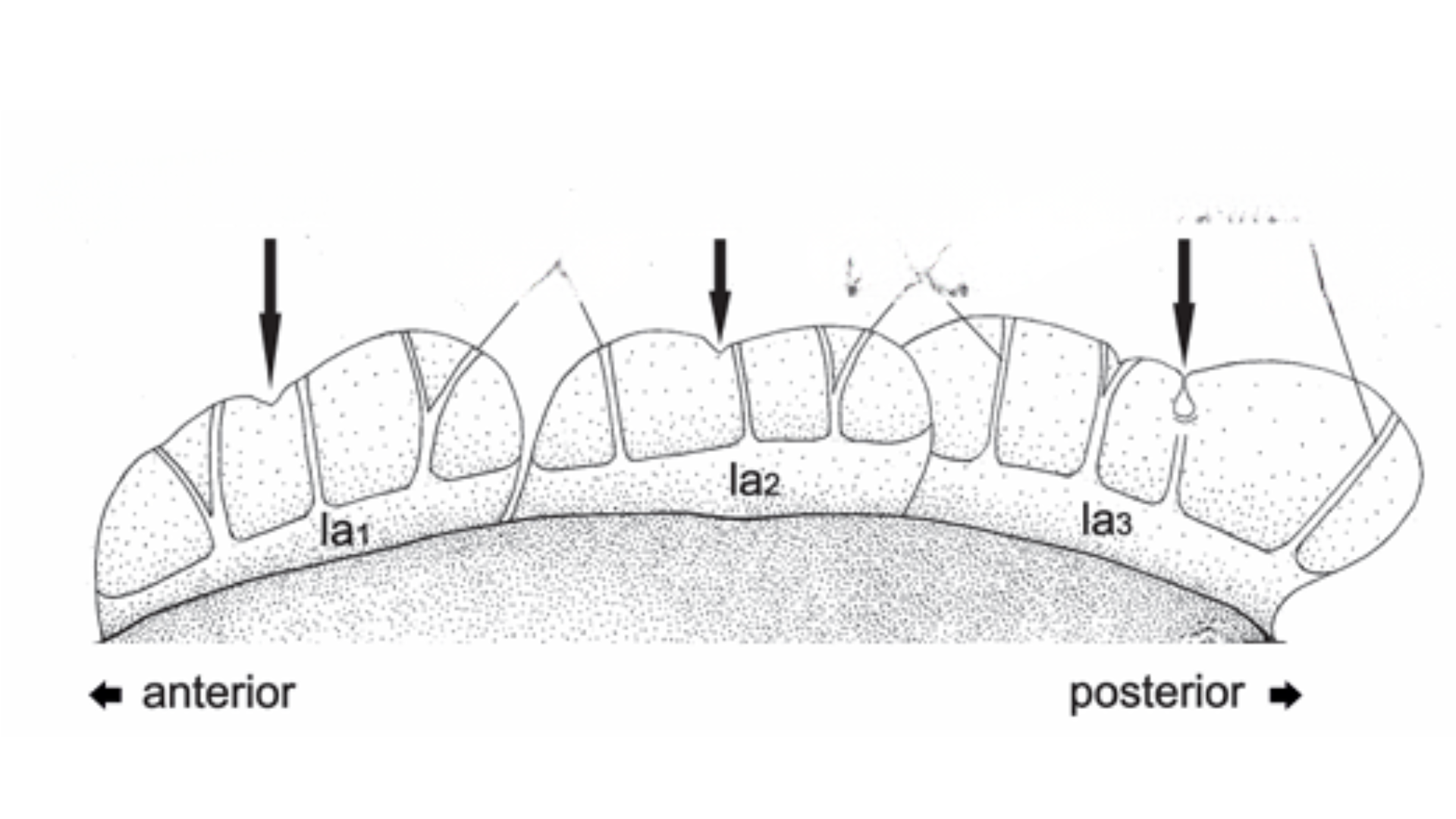
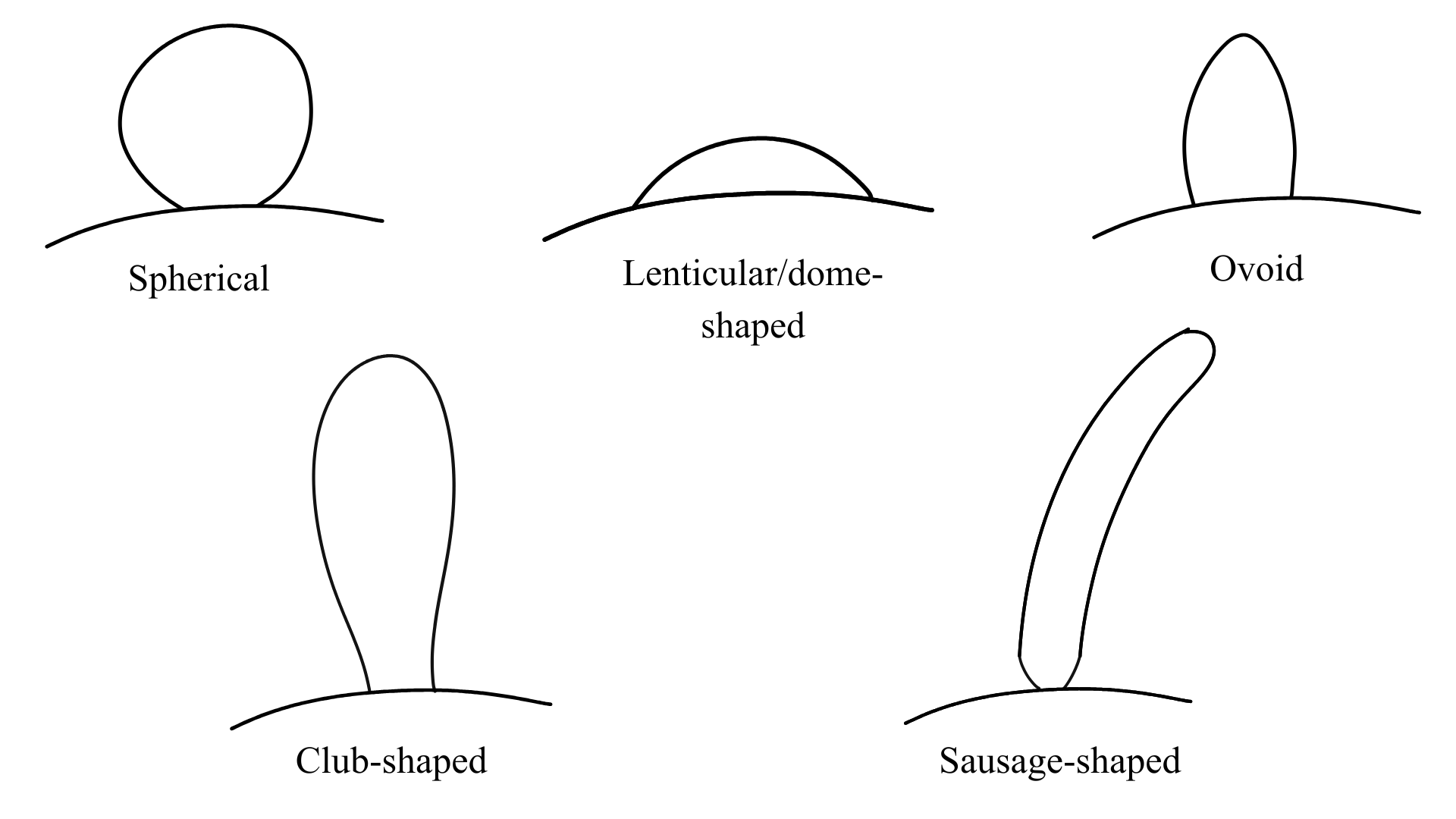
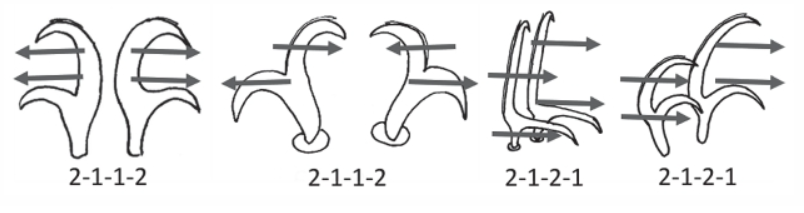
Genus description from Hansen et al. 2012: “Stygarctinae with head plate usually divided into five lobes: posterior part of the head with two lateral lobes bearing the primary clavae; anterior part of the head usually divided into five lobes by two pairs of deep indentations with cuticular membranes. Three body plates each extending laterally into two processes; lateral margin of body plates with thin cuticular membranes. Two intersegmental dorsal plates; ventral plates sometimes present. The primary clavae are elongate club-shaped and the secondary clava are semi-globular. Cirrus E with “ball and socket” articulation. Each leg with four, three or two claws; claws simple or with dorsal spurs. Seminal receptacles formed as large ventral spheroid vesicles with looped ducts close to the female gonopore. Seminal receptacle duct openings with internal cuticular bars and external cuticular pockets.”


Citations:
Hansen, J.G., Kristensen, R.M. & Jørgensen, A. (2012) The armoured marine tardigrades (Arthrotardigrada, Tardigrada). Scientia Danica, series B Biologica 2, The Royal Danish Academy of Sciences and Letters, pp. 91.
McKirdy, D., Schmidt, P. & McGinty-Bayly, M. (1976) Interstitielle Fauna von Galapagos. XVI. Tardigrada. Mikrofauna des Meeresbodens, 58: 409–449.