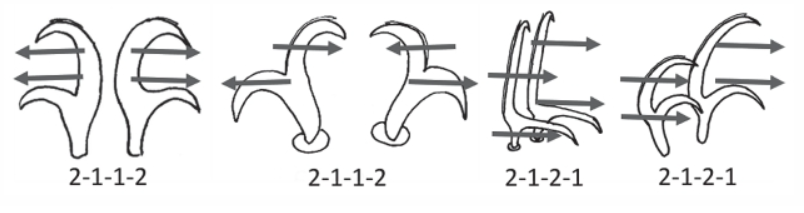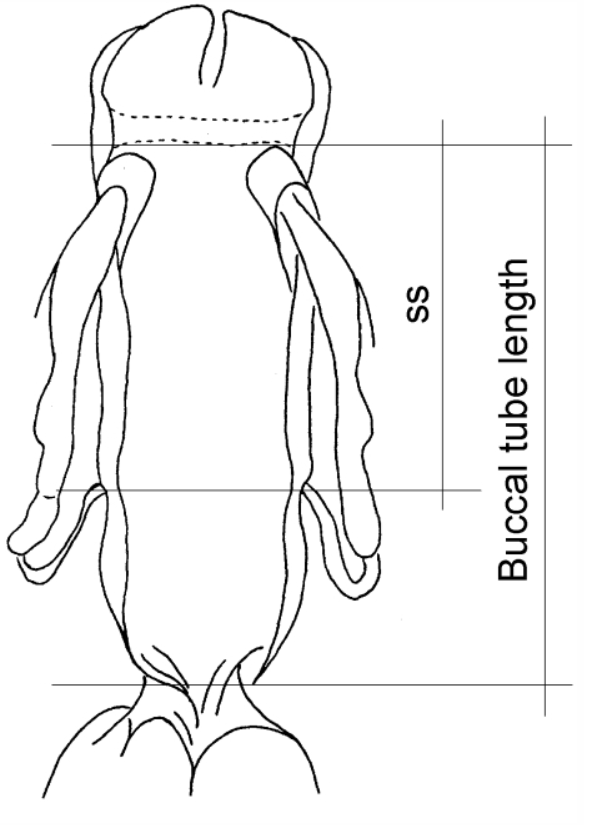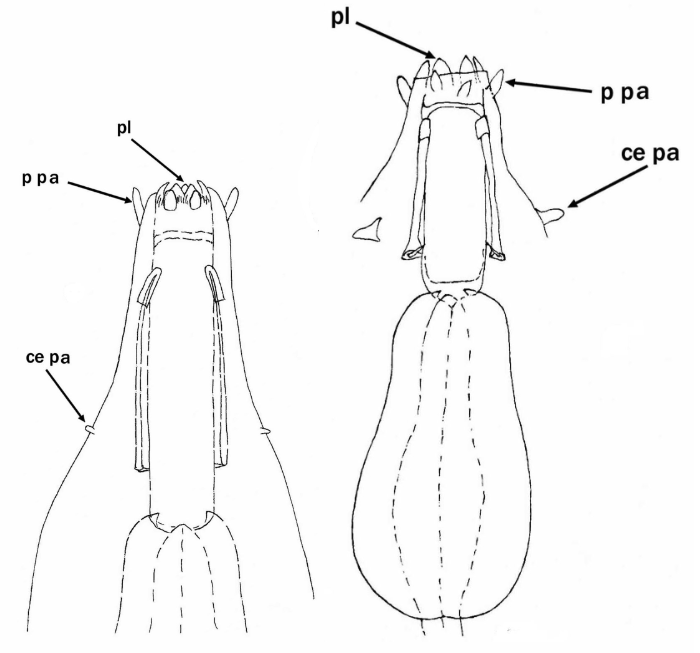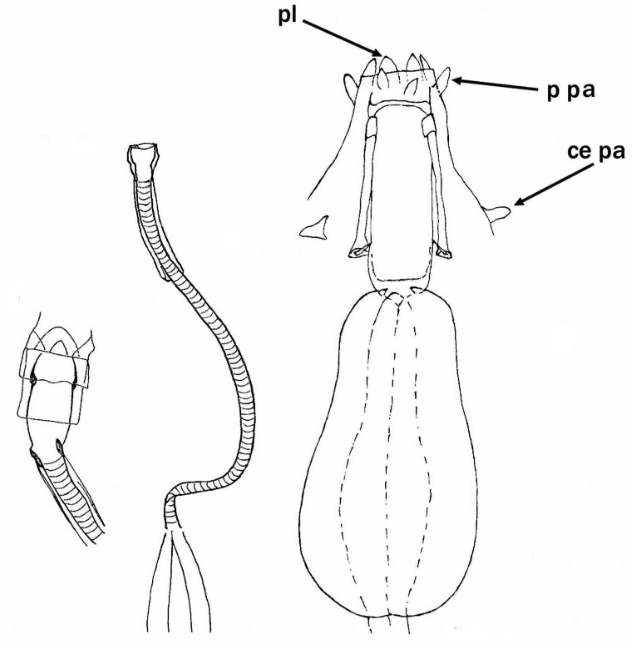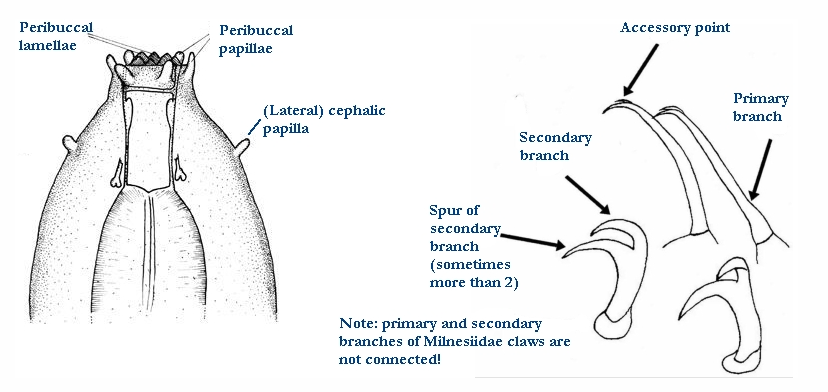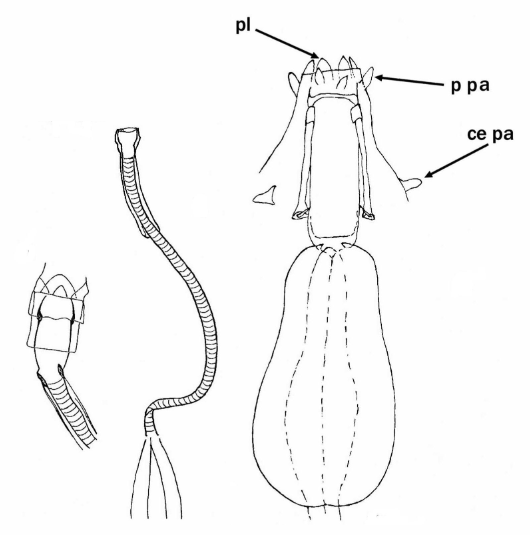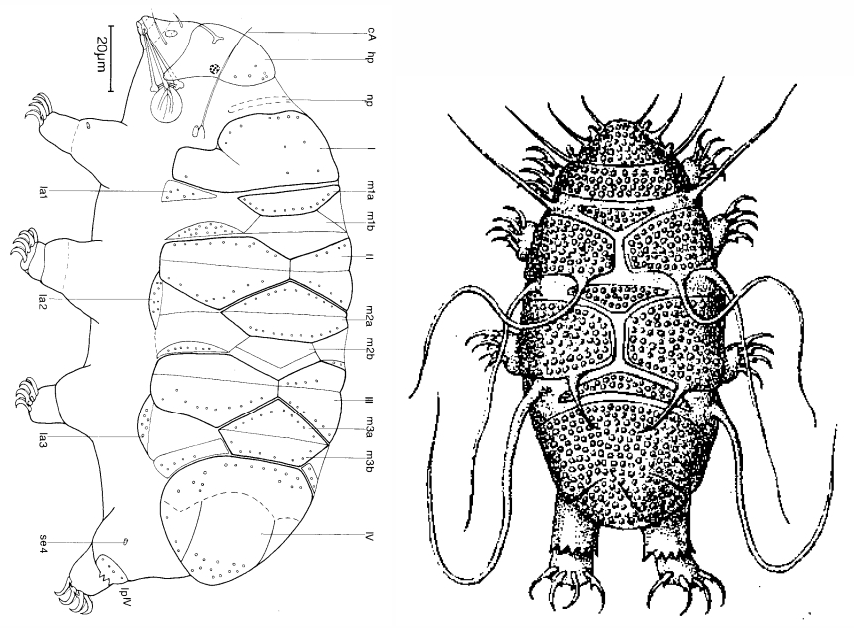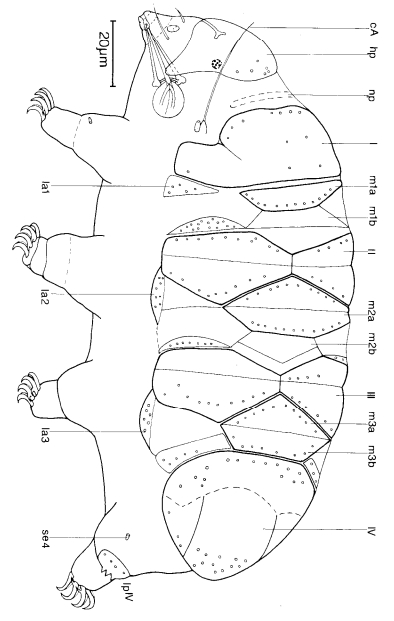
Doryphoribiidae from Gąsiorek et al. 2019: “Freshwater (limnic) or terrestrial eutardigrades with six peribuccal lobes, or with continuous peribuccal ring. Mouth opening surrounded by peribuccal lamellae, often partially or almost completely fused (Paradiphascon, Pseudobiotus, Thulinius) or by a peribuccal lamina (Apodibius, Doryphoribius, Grevenius gen. nov.). Ventral lamina on the buccal tube present (Apodibius, Doryphoribius) or absent (Grevenius gen. nov., Paradiphascon, Pseudobiotus, Thulinius). AISM ridge-like, well-developed and symmetrical in genera with no ventral lamina or greatly reduced and asymmetrical in genera exhibiting the ventral lamina. Flexible pharyngeal tube present (Paradiphascon) or absent (all remaining genera). Two claw types: the dominant type, with secondary branches being similar in [height] to the primary branches (all genera with the exception of some Doryphoribius spp.); and the second, with secondary branches being clearly shorter than the primary branches (only in some Doryphoribius spp.).”
Citations:
Gąsiorek, P., Stec, D., Morek, W. & Michalczyk, Ł. (2019) Deceptive conservatism of claws: distinct phyletic lineages concealed within Isohypsibioidea (Eutardigrada) revealed by molecular and morphological evidence. Contributions to Zoology, 88, 78–132.