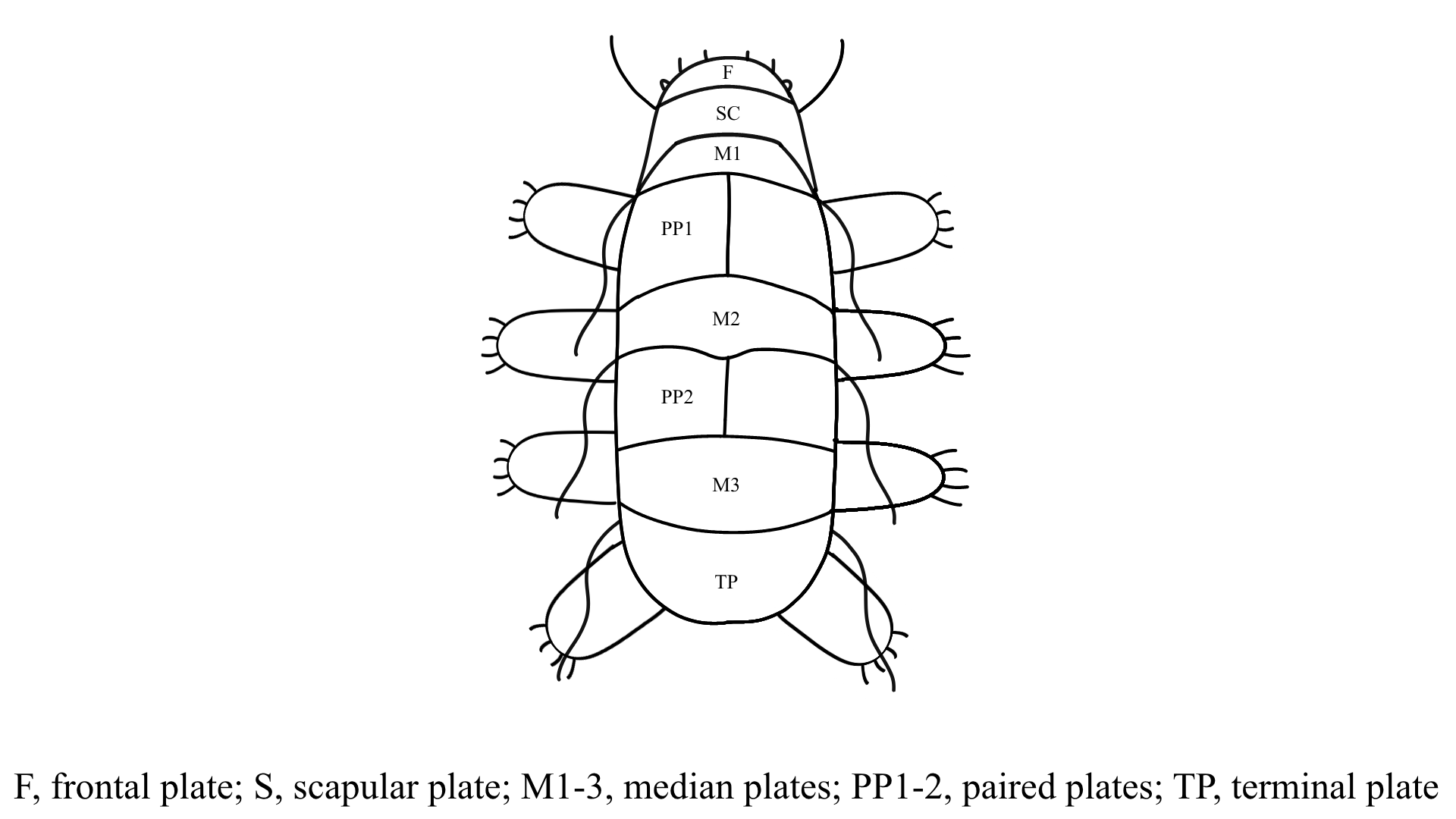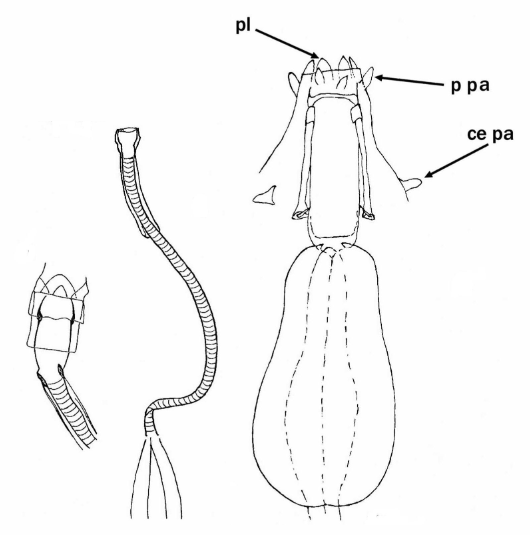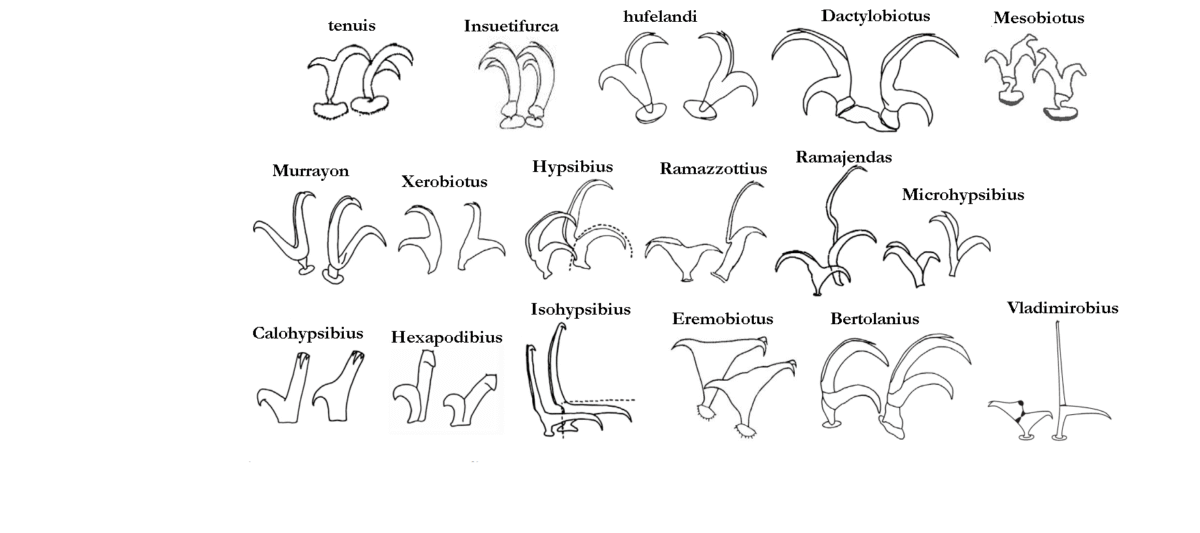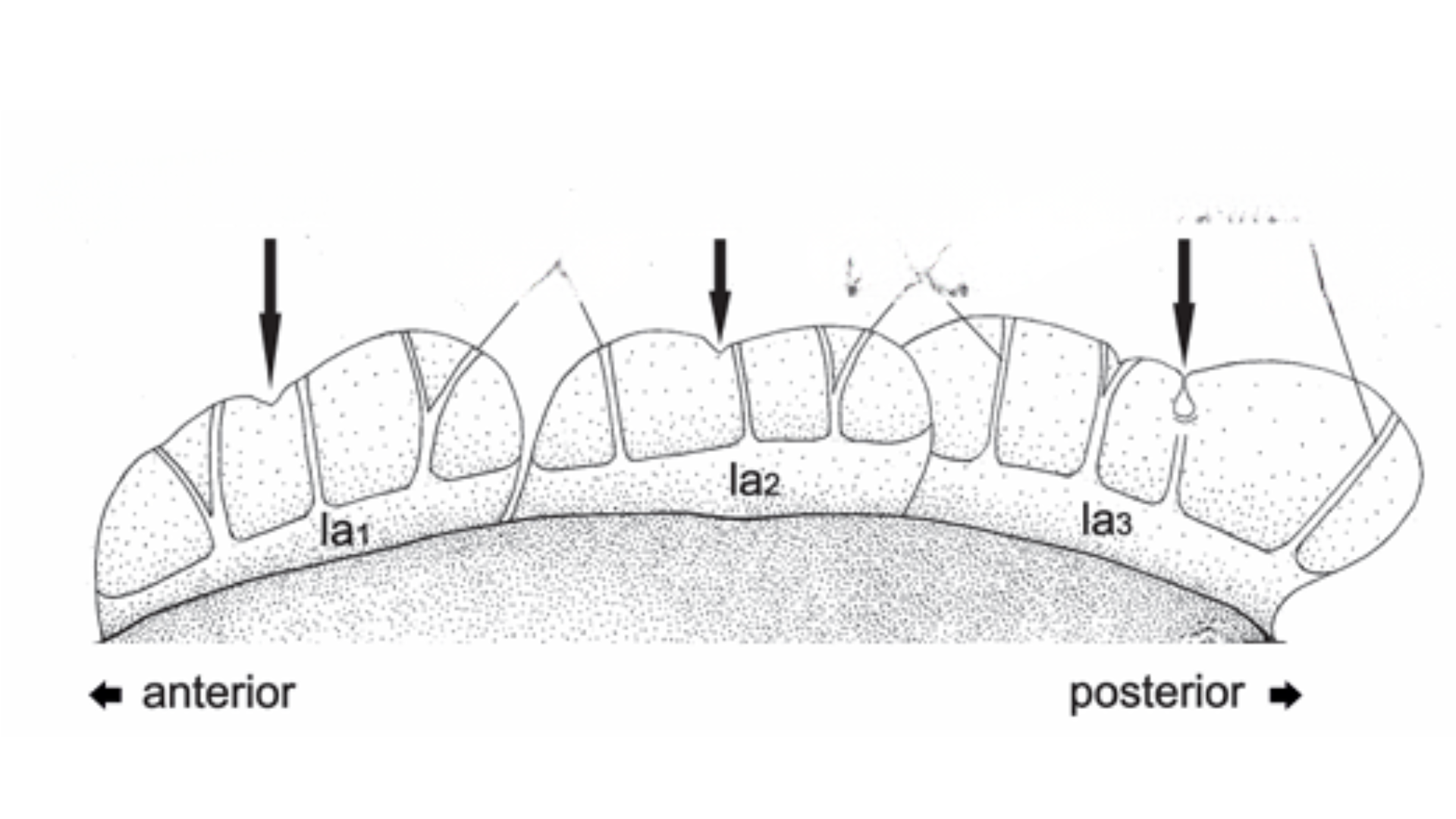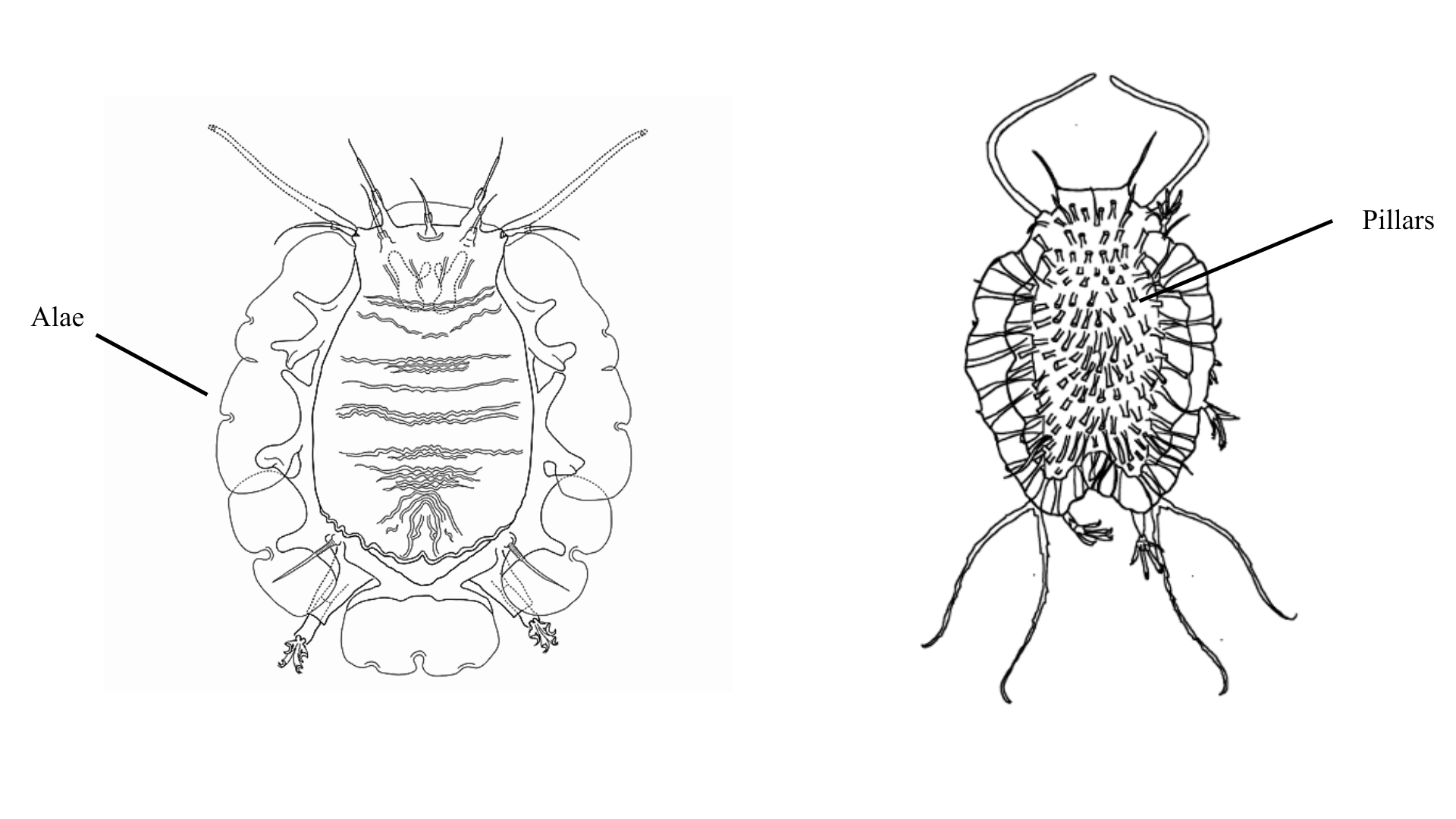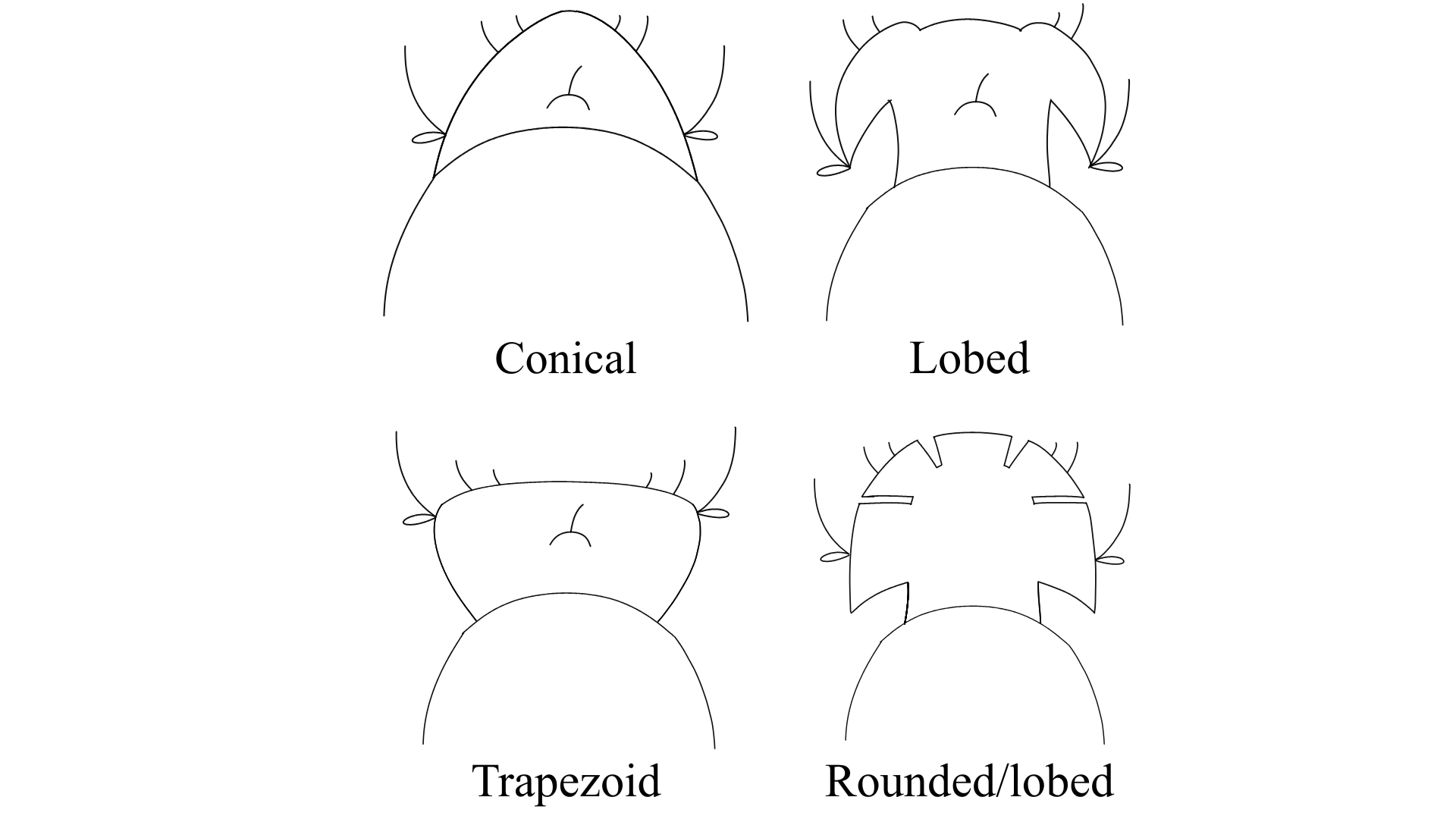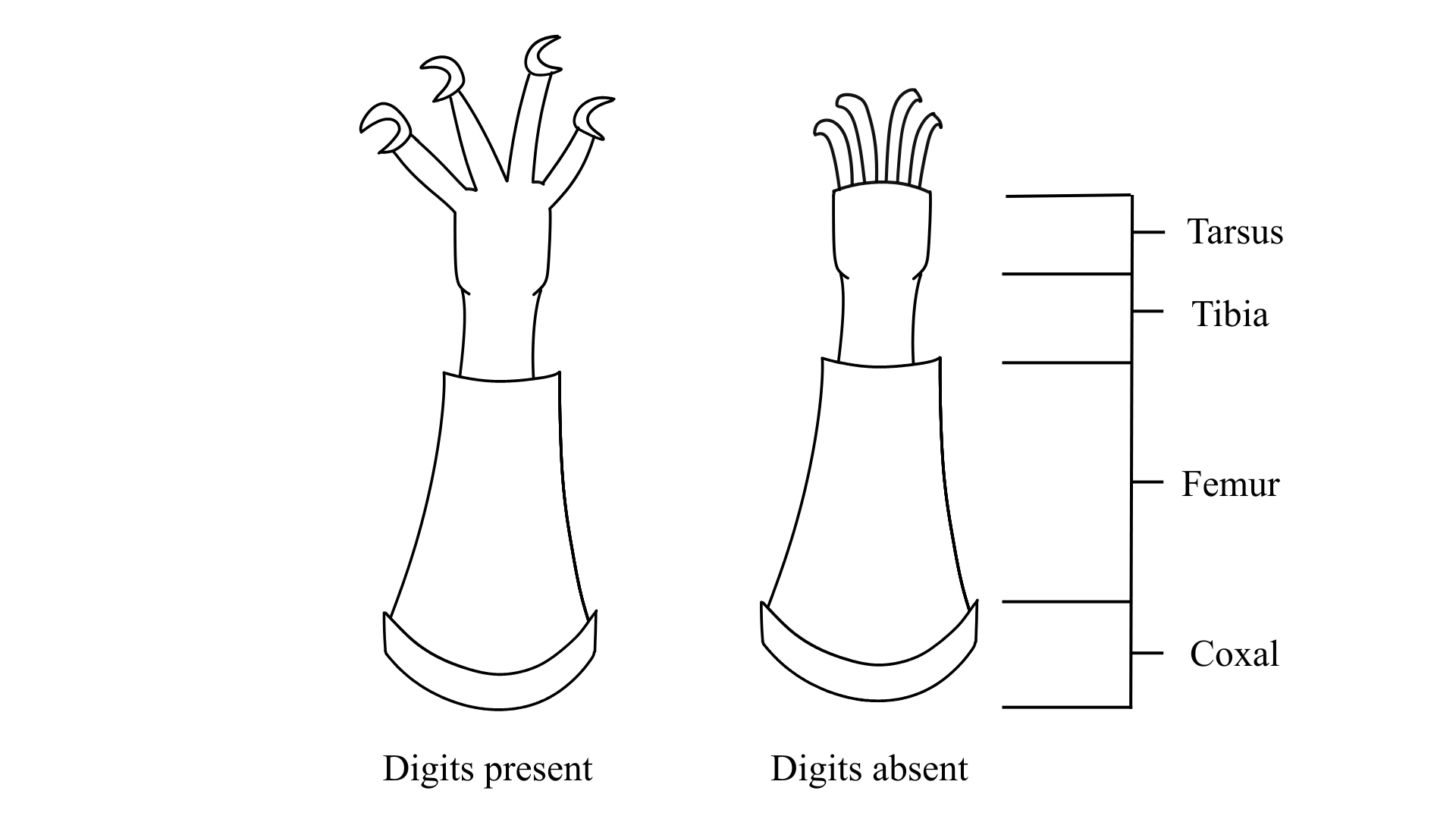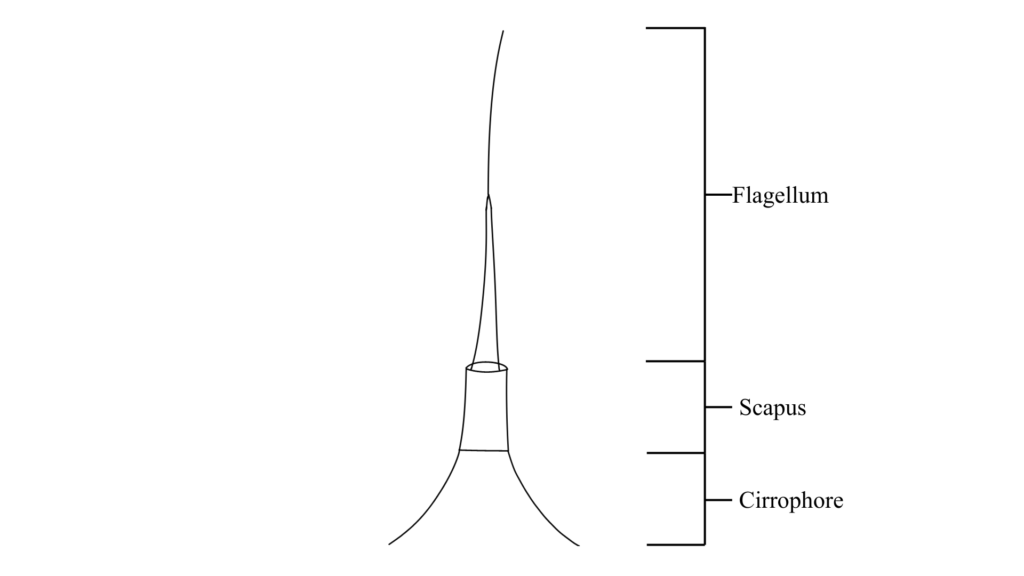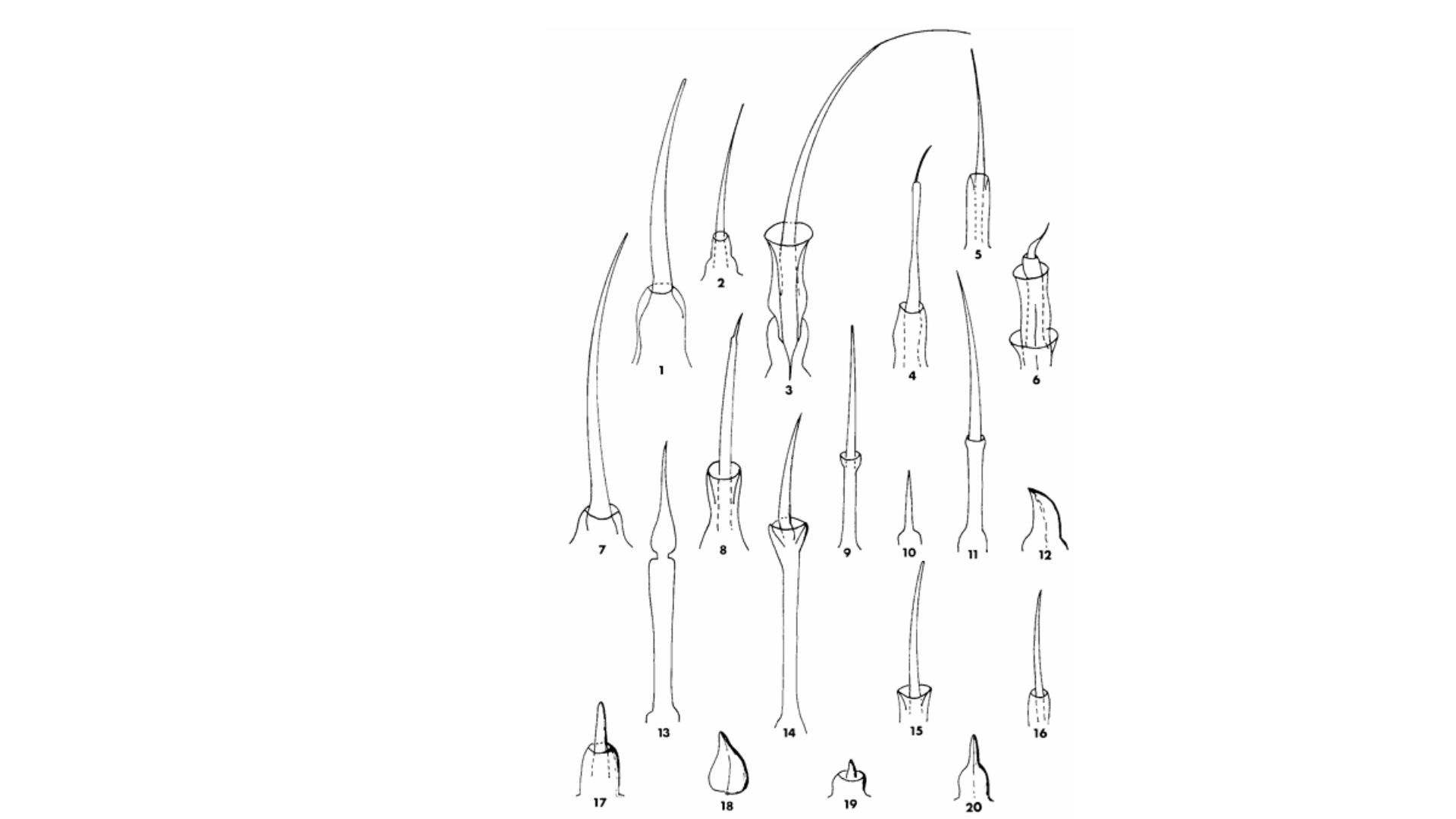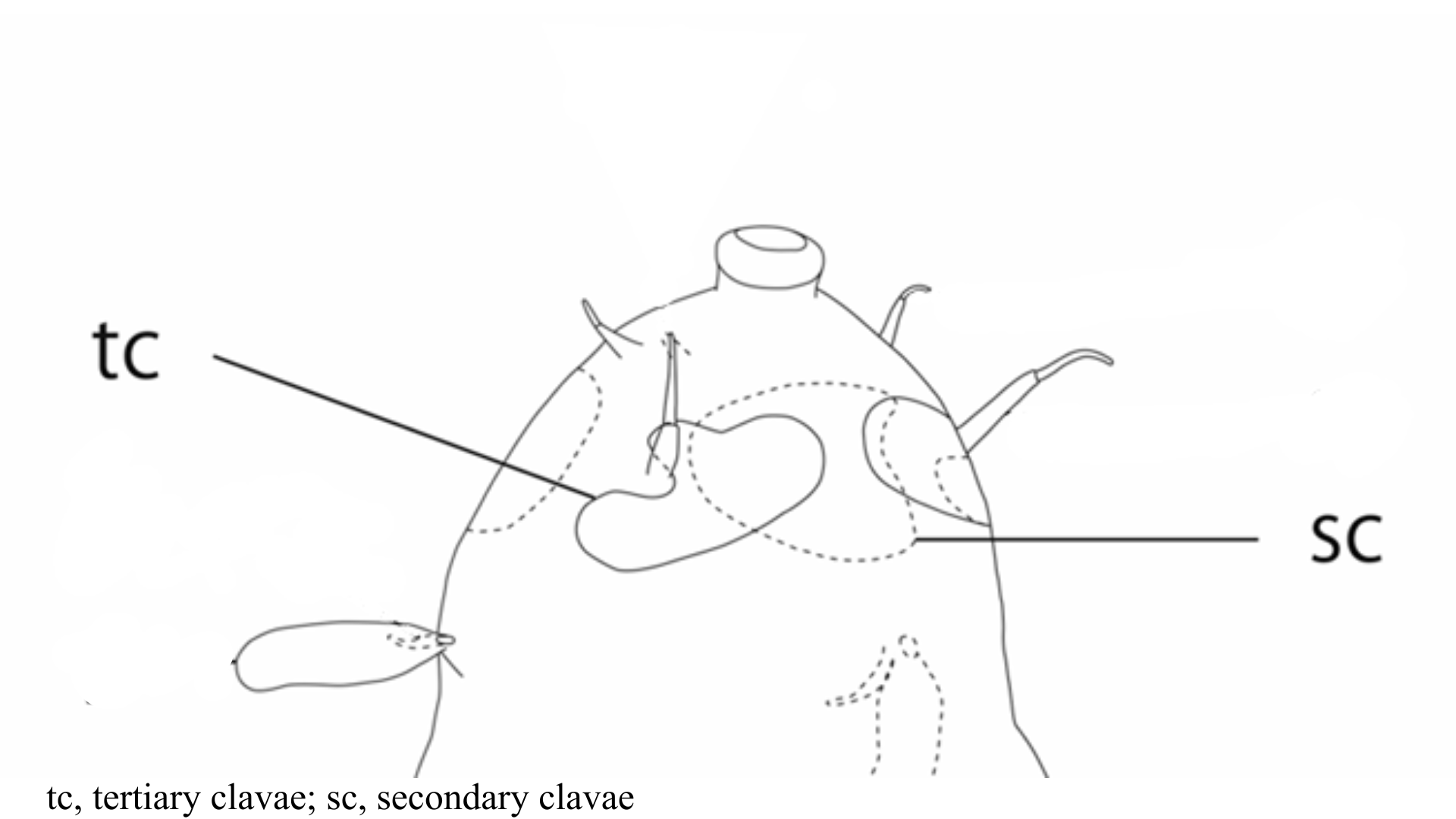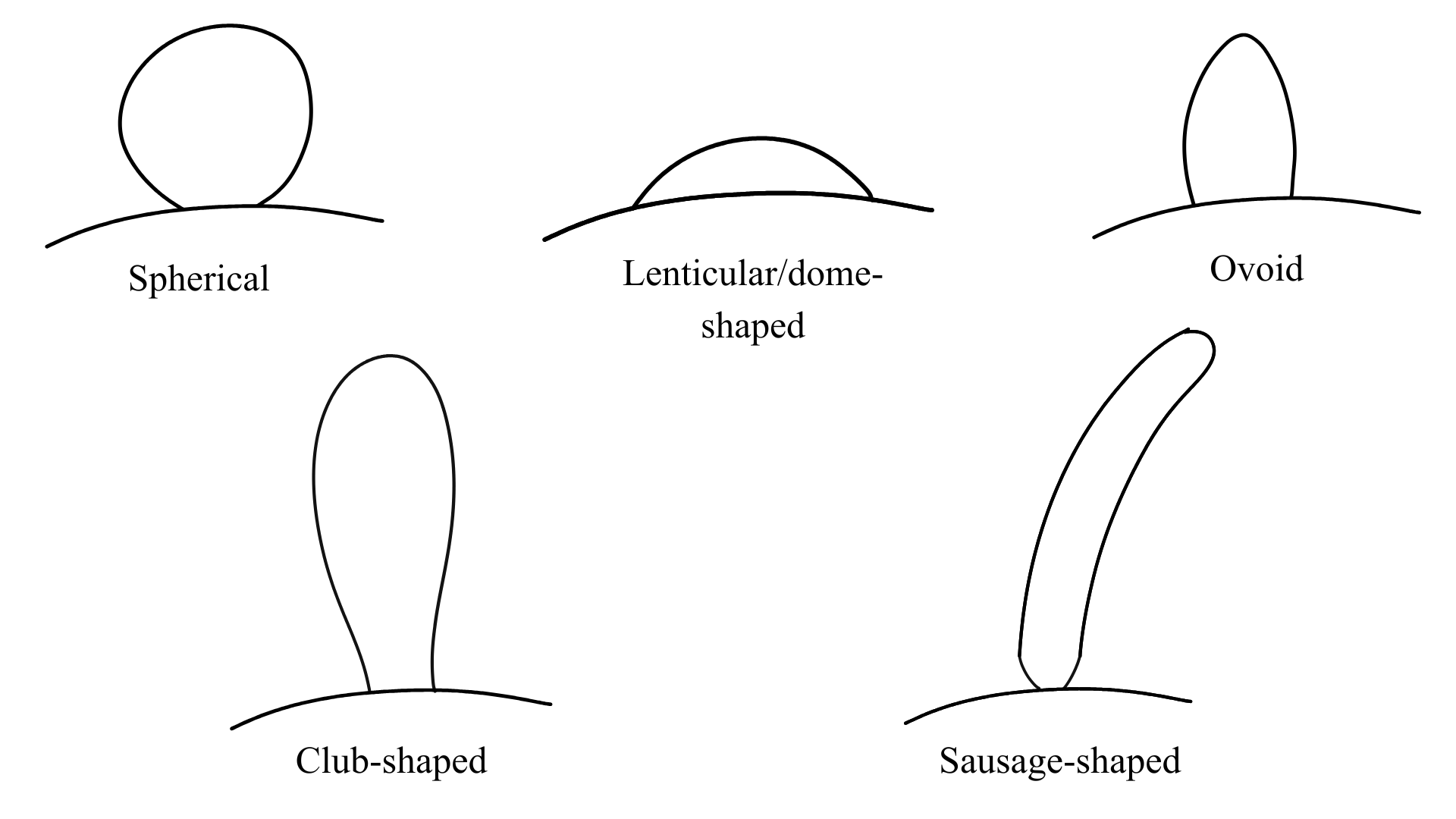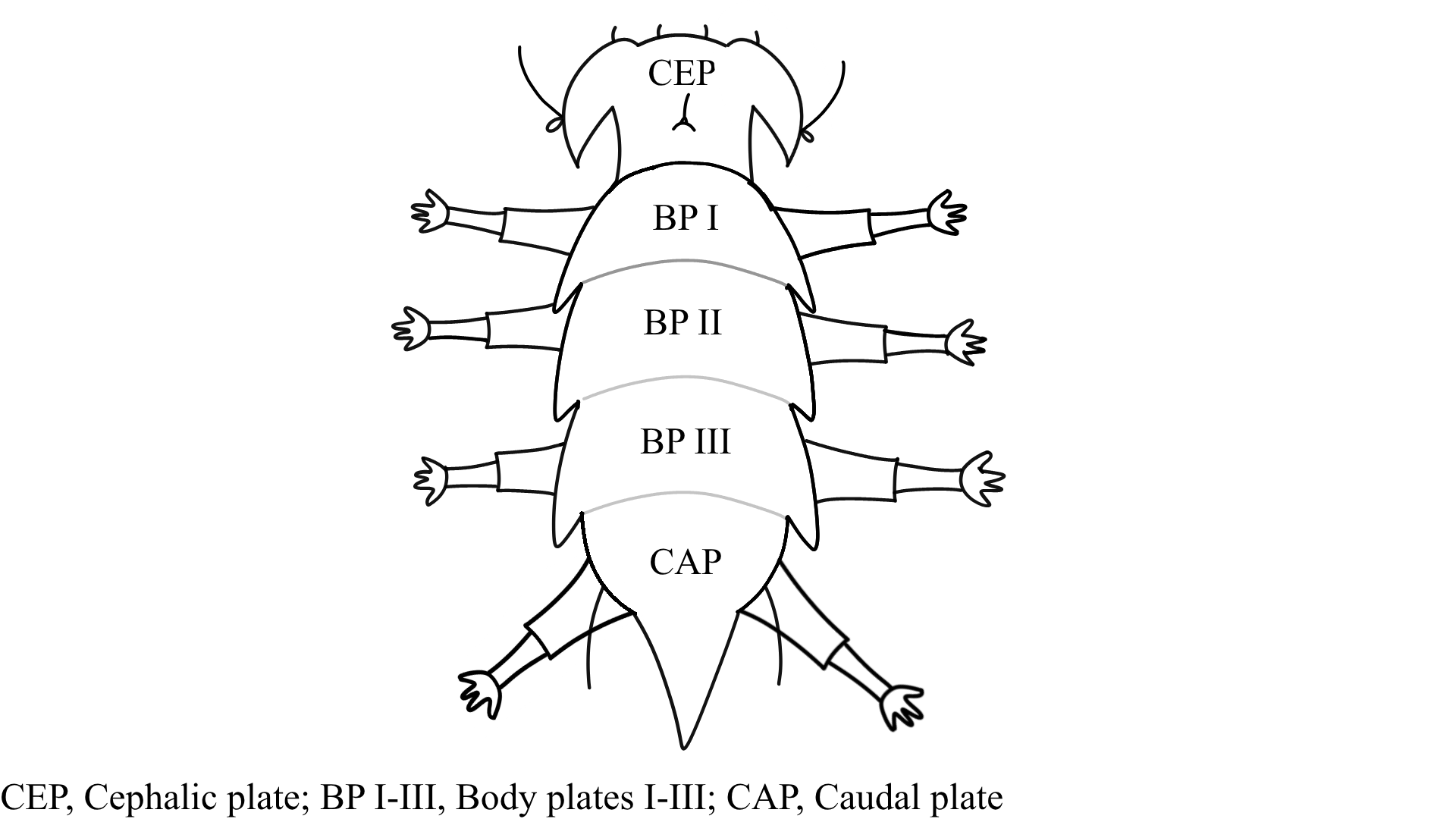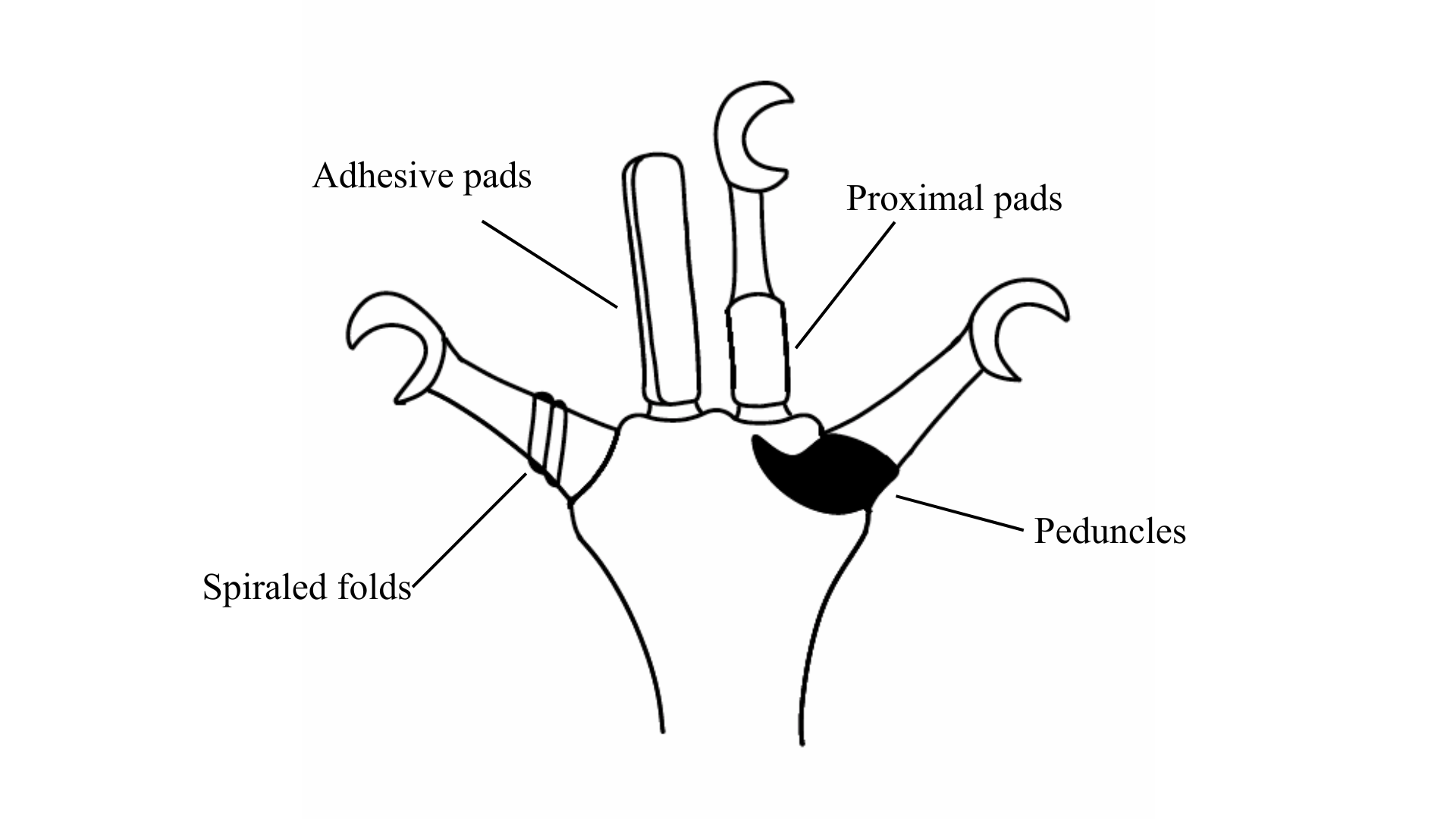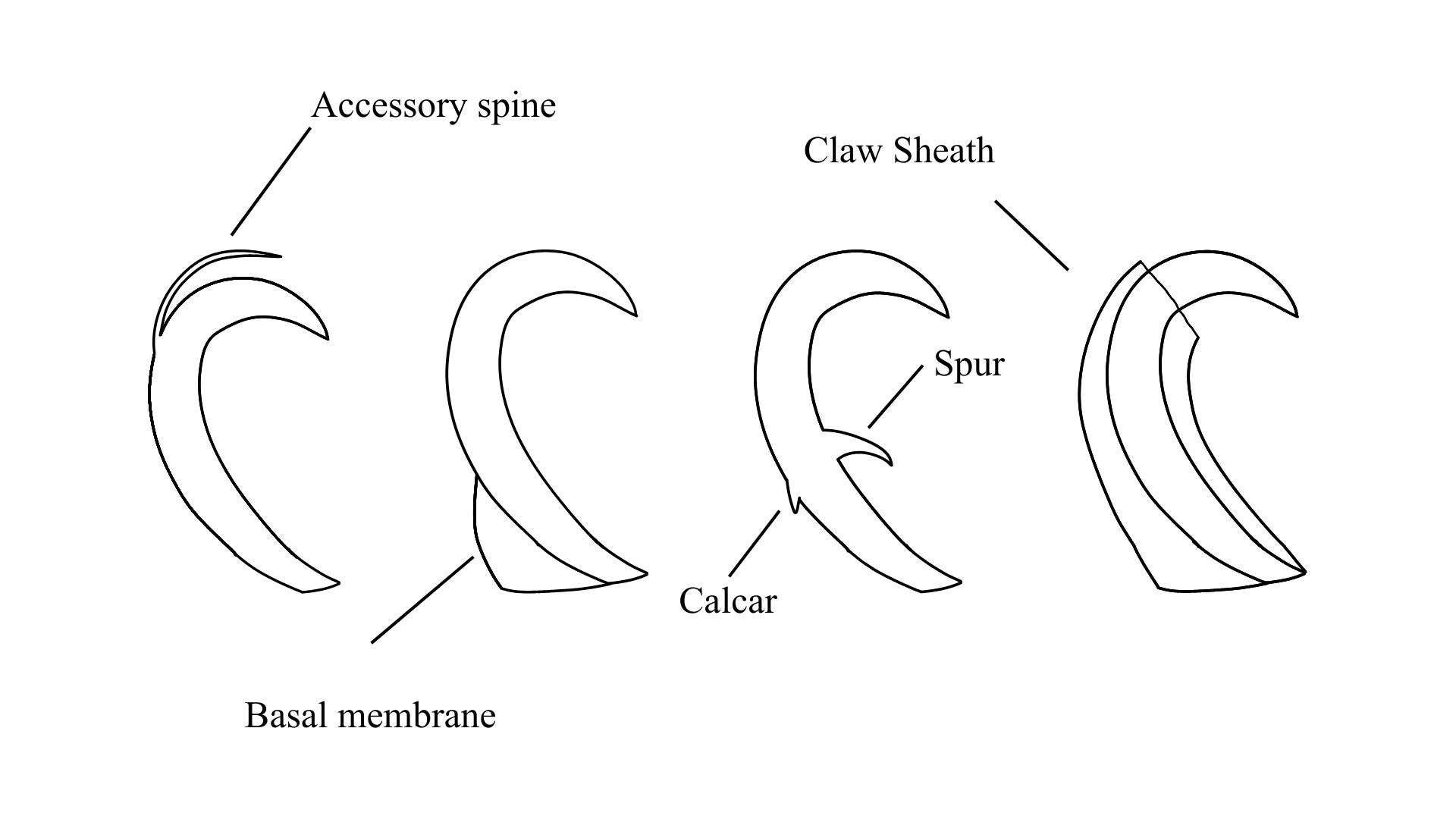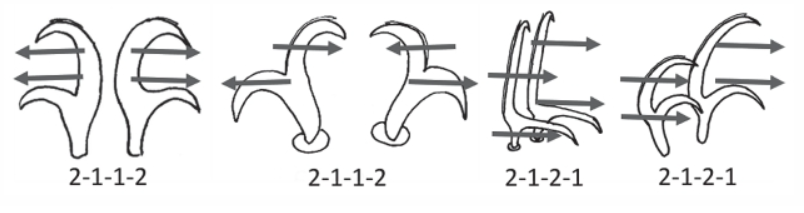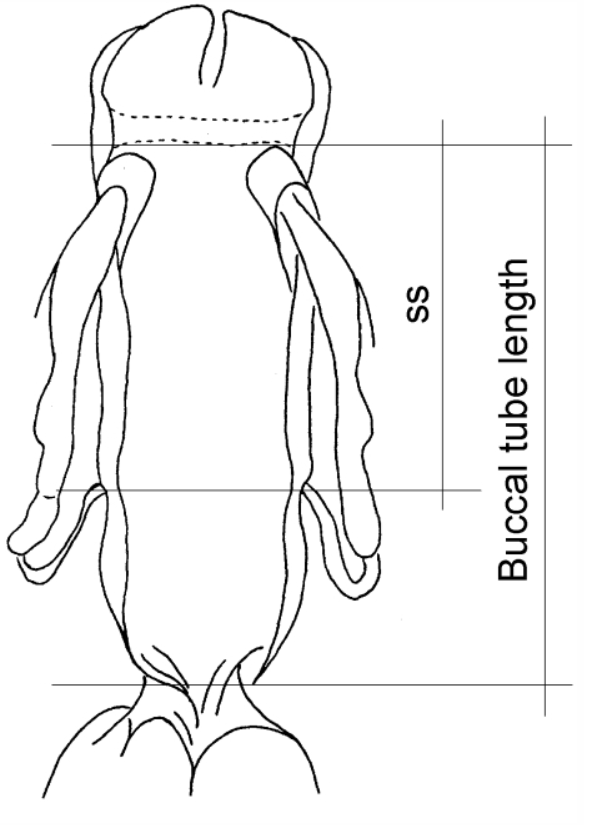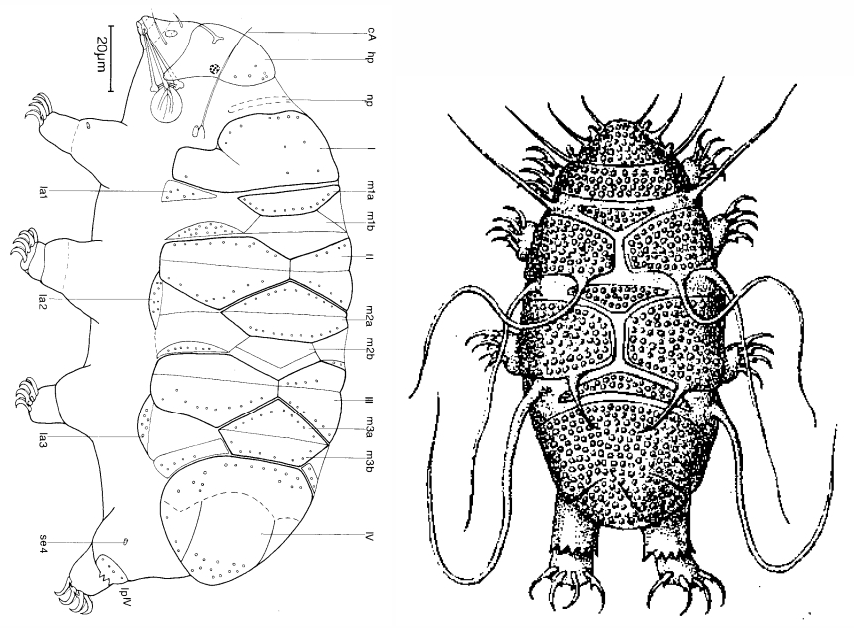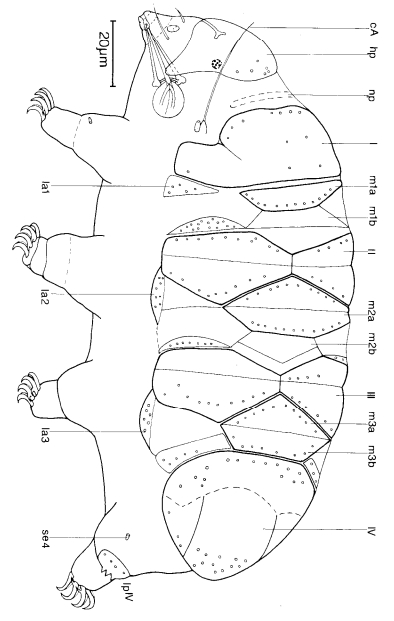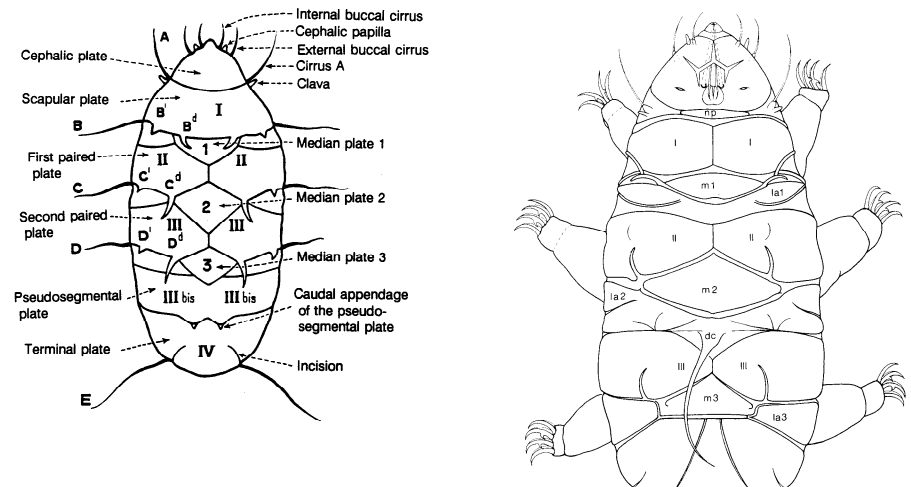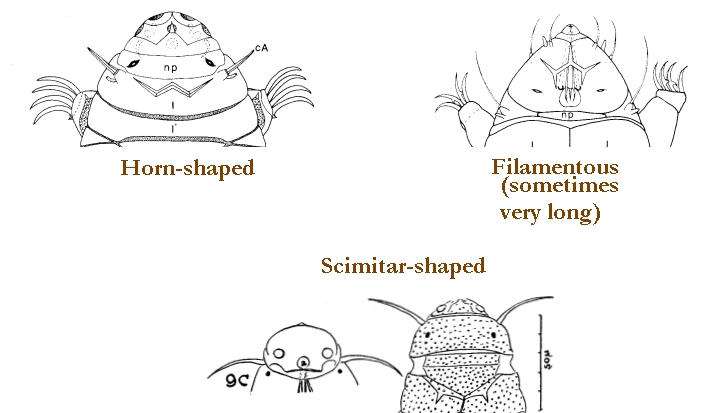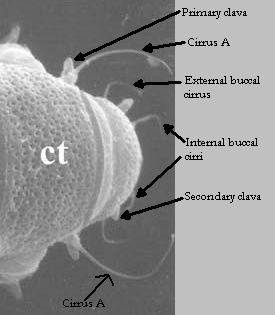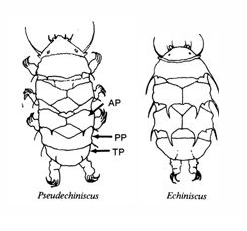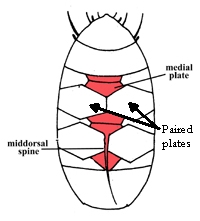

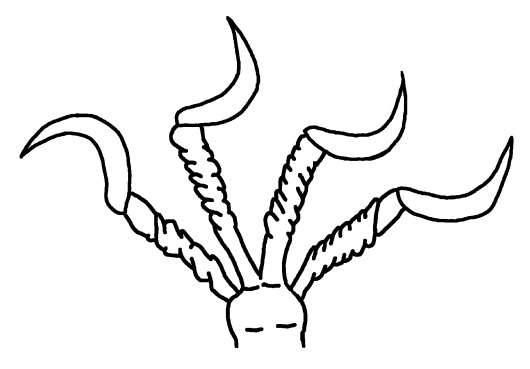
Genus description from Rubal et al. 2013 in Fontoura et al. 2017: “Stygarctinae with dorsal cuticle strongly sculptured, forming five dorsal plates (one head plate; three body plates and one caudal plate). Intersegmental dorsal plates and ventral plates present. Head plate divided into five lobes; the frontal lobe subdivided into four smaller lobes. Three body plates, each with two pairs of lateral processes; the posterior-most lateral processes tapering as flexible spines. Terminal edge of segmental and intersegmental plates with paired dorsal spines directed backwards. A ventral spine is present at the level of the third pair of legs. Caudal plate with a very long medial spine and two lateral furca-like processes. Cirrus E with ball and double-socket articulation. Complete set of cephalic cirri and two pairs of pedunculated elongated clavae: erect primary clavae and laterally bent secondary clavae juxtaposed to the frontal lobe of the head. Digitate legs with simple claws. Sense organs on legs IV as bulb-shaped papillae.”
Citations:
Fontoura, P., Bartels, P.J., Jørgensen, A., Kristensen, R.M. & Hansen, J.G. (2017) A dichotomous key to the genera of the marine Heterotardigrades (Tardigrada). Zootaxa, 4294, 1–45.
Rubal, M., Veiga, P., Fontoura, P. & Sousa-Pinto, I. (2013) A new intertidal arthrotardigrade, Prostygarctus aculeatus gen. nov., sp. nov. (Tardigrada: Heterotardigrada) from the north of Portugal (Atlantic Ocean). Journal of Limnology, 72 (Supplement 1), 8–14.