Richtersius

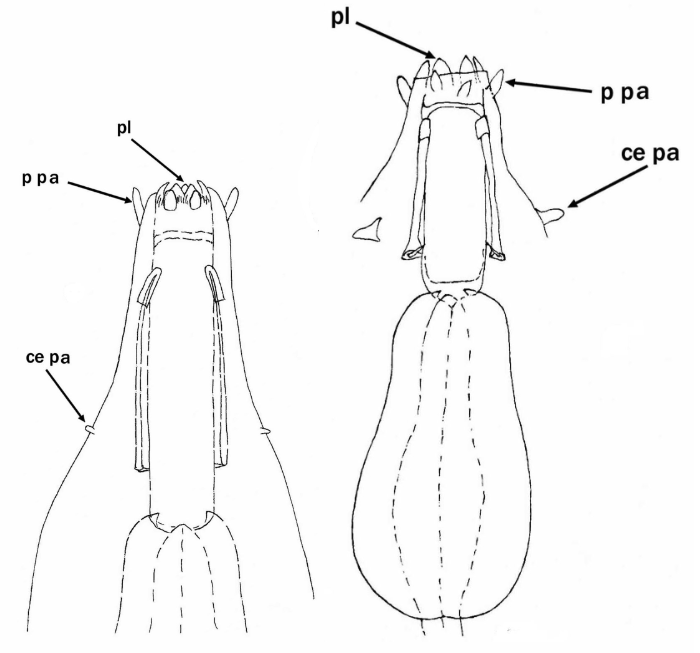
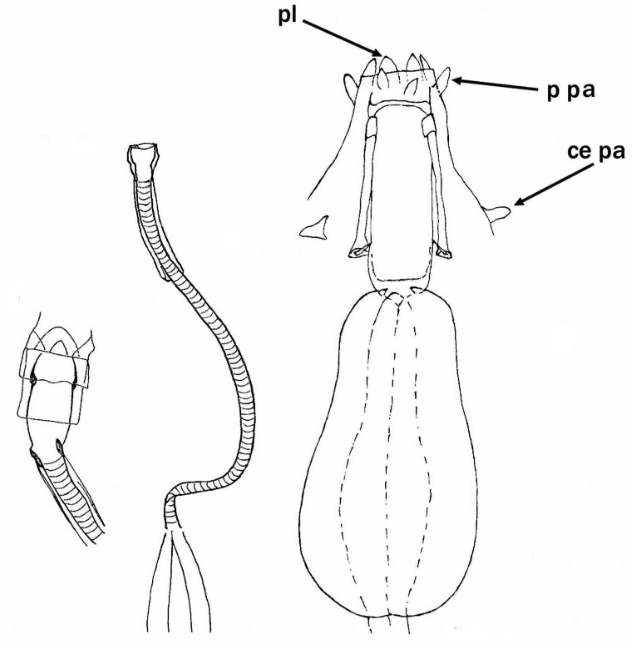
Richtersia from Pilato & Binda 1987: “Macrobiotidae; tubo boccale rigido provvisto di sbarretta di rinforzo ventrale la cui porzione anteriore è rilevata a formare una cresta mediana assai pronunciata recante un vistoso processo ad uncino (*); dorsalmente la porzione anteriore del tubo boccale presenta una cresta mediana molto sviluppata con un processo ad uncino ancor […]
Diaforobiotus

Genus description from Guidetti et al. 2016: “Peribuccal lamellae (ten) and ventral lamina present. A dorsal thickening present in the anterior portion of the buccal tube, in conjunction with a large tooth on the internal surface of the tube. Some strong, scattered round teeth present posterior to the second band of teeth of the buccal […]
Richtersiusidae

Richtersiidae from Guidetti et al. 2016: “Double claws Y-shaped, with the two branches forming an evident common tract of variable length. Large teeth on all lunules. Buccal tube with ventral lamina and a cuticular thick on the anterior, dorsal wall of the buccal tube (which can form a large apophysis). Absence of transverse crests in […]
Paramurrayon

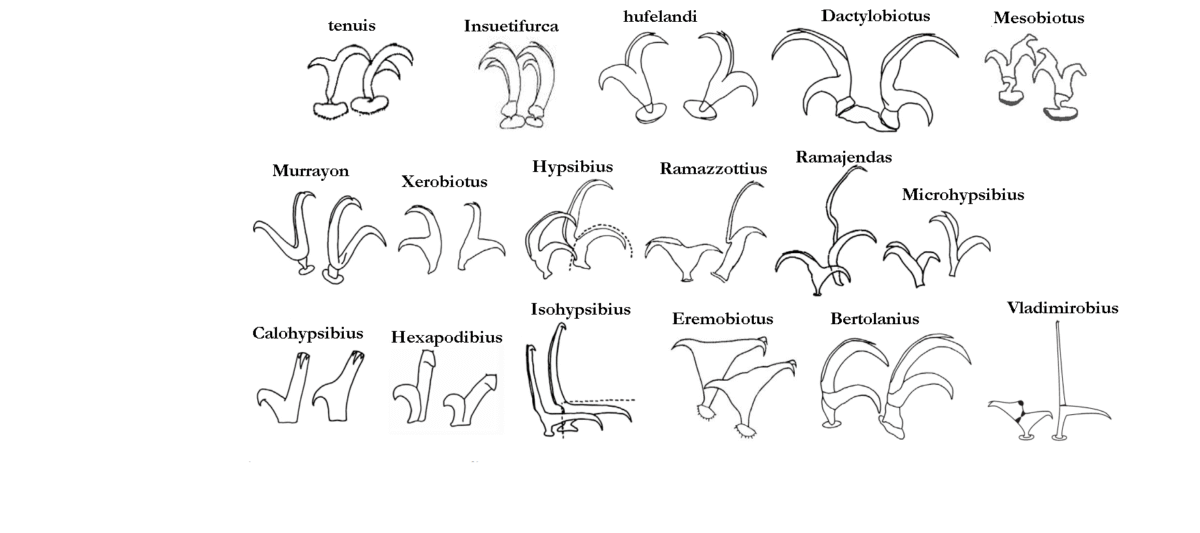
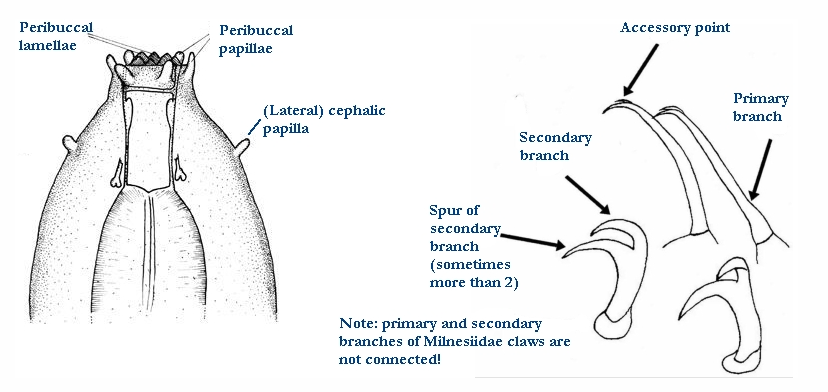
Genus description from Guidetti et al. 2022: “Small claws of the Murrayon type (=pullari type): basal section of the double claw appears as a trapezoidal lamina (in lateral view); primary and secondary branches similar in length and joined to each other for a very short portion, forming an acute angle (V-shaped); lunules present. Three macroplacoids […]
Murrayon

Genus description from Bertolani & Pilato 1988: Macrobiotidae con unghie di tipo pullari, ossia con la porzione basale a laminetta trapezoidale e i due rami divergenti fin dalla base (unghie a V) e formanti un angolo acuto; le basi delle due unghie di ciascuna zampa sono indipendenti, ossia non collegate fra loro da alcun ispessimento […]
Macroversum

Genus description from Pilato & Catanzaro 1988: “In ciascuna diplounghia il ramo principale ed il secondario, saldati rigidamente fra loro come in tutti i Macrobiotidae, divergono l’uno dall’altro fin dalla base. La porzione basale è assottigliata come nelle unghie di tipo hufelandi, a formare un esile peduncolo. Il ramo secondario è più corto del principale […]
Dactylobiotus

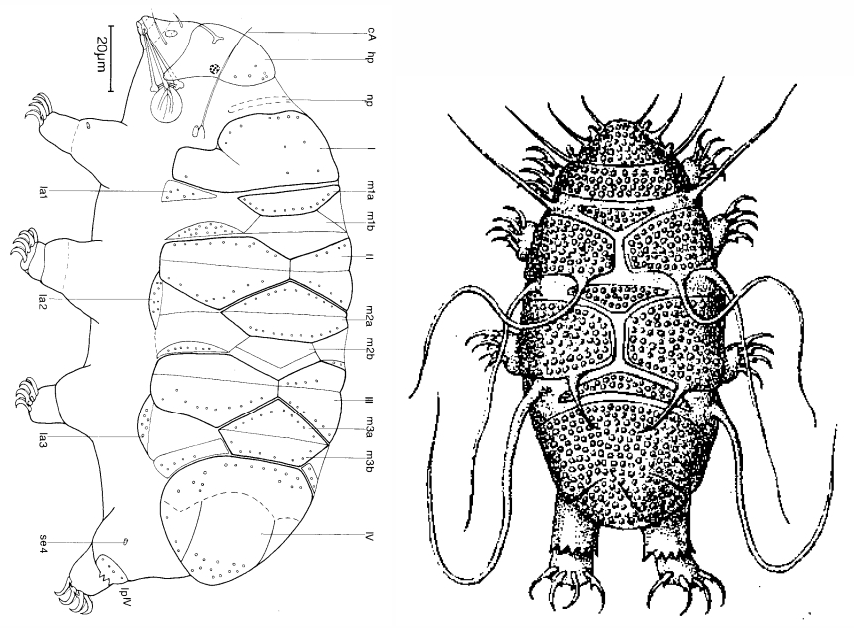
Genus description from Schuster et al. 1980: “Ten buccal lamellae present; without peribuccal papulae. Buccal tube short, rigid, without spiral thickenings. Buccal mucrones and interior buccal baffles present. Pharynx contains apophyses and macroplacoids, but no microplacoids or septulum. Cuticle without pores; two dorso-lateral spines present. Two double claws of each leg of similar size and […]
Murrayidae
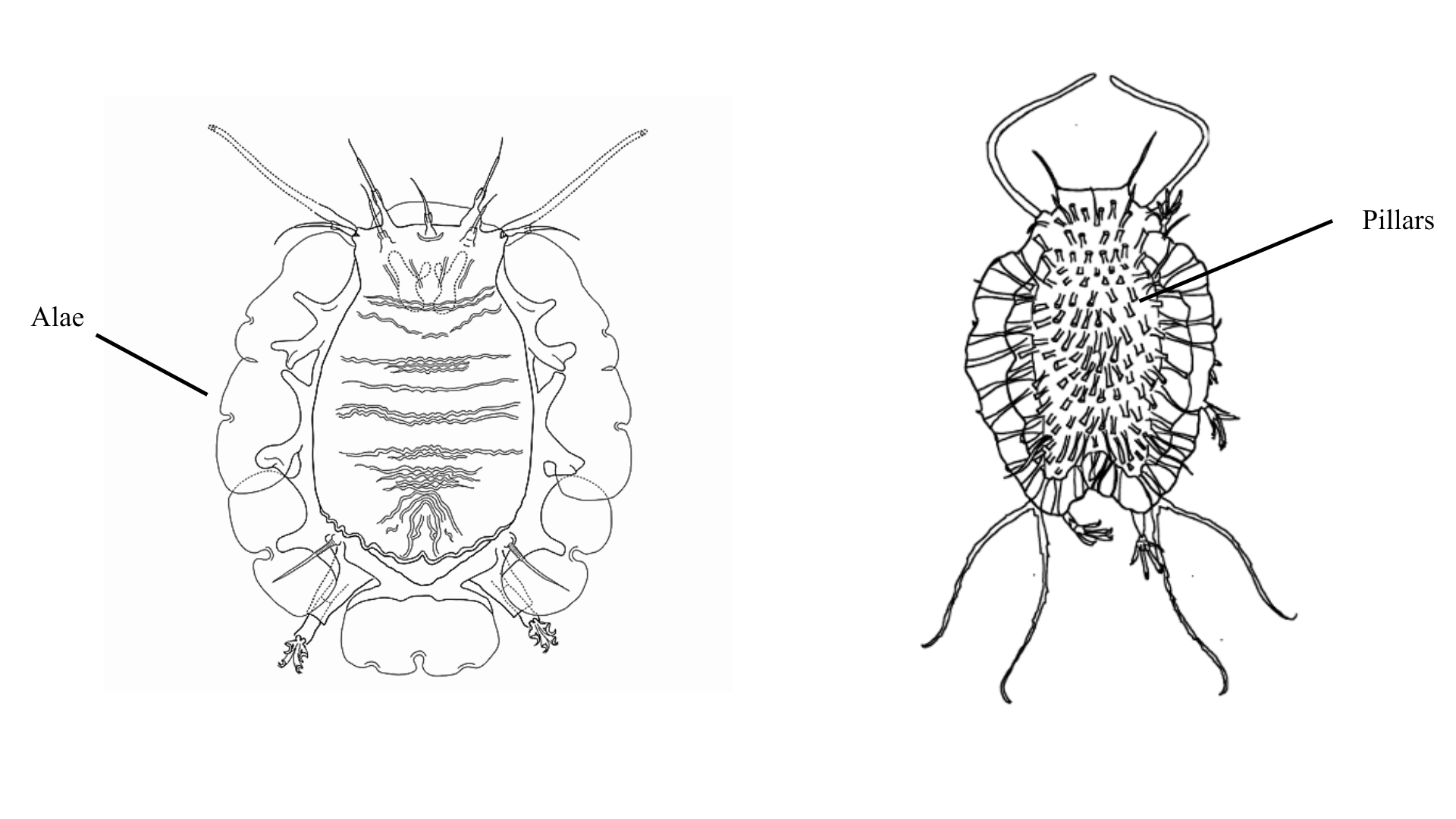
Murrayidae from Bertolani et al. 2014: “Double claws V-shaped or L-shaped, with the two branches diverging immediately after a short common basal section; ventral deep indentation on the ventral lamina; buccal tube completely rigid; epicuticular layer with pillar-like structures, sometime visible only at ultrastructural level.” generic key: Guidetti R, Giovannini I, Del Papa V, Ekrem […]
Xerobiotus

Genus description from Bertolani & Biserov 1996: “Claws of Xerobiotus-type, i.e., with a basal tract small and thin, not separated by a septum from the rest of the claw, and therefore without a distinct basal peduncle, with the secondary branch inserted on the main branch. Bucco-pharyngeal apparatus of Macrobiotus-type, with lamellae around the mouth and […]
Tenuibiotus

Genus description from Pilato & Lisi 2011: “Genus of Macrobiotidae characterised by claws of the tenuis-type, i.e. with a stalk, a long common section in which primary and secondary branches are joined, and distal free sections of both the secondary branch (shorter than the primary) and primary branch forming almost a right angle. The bucco-pharyngeal […]