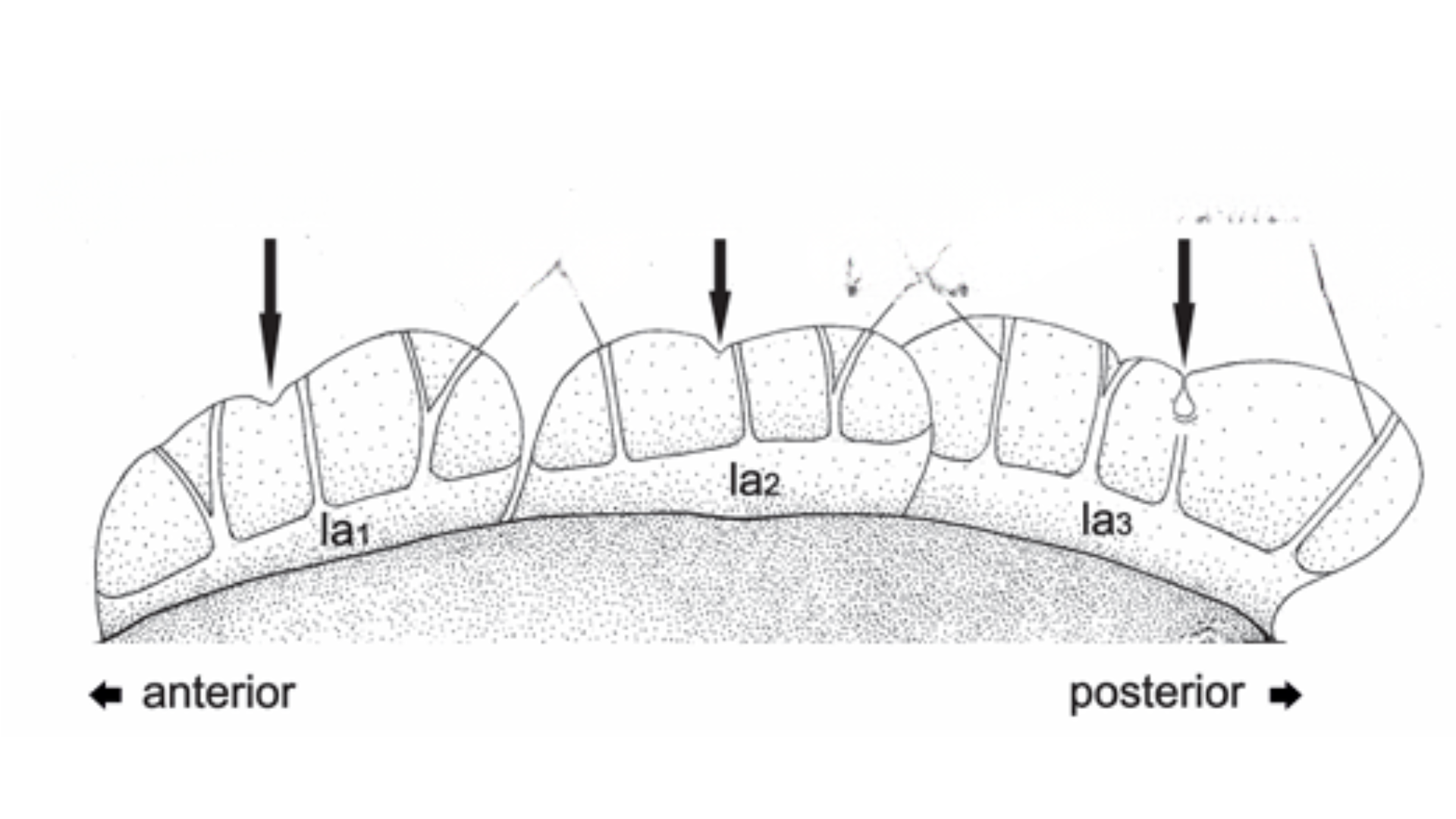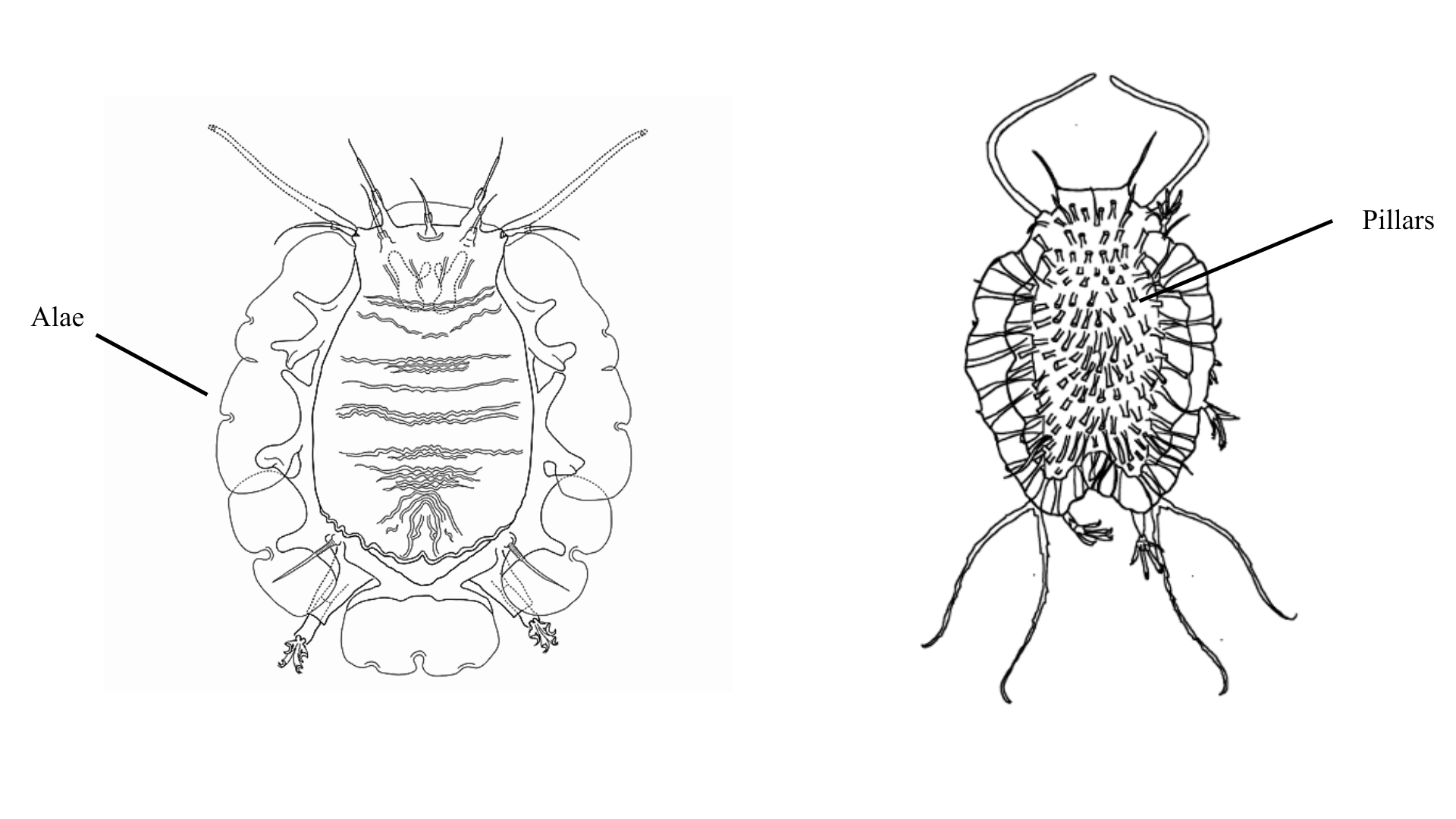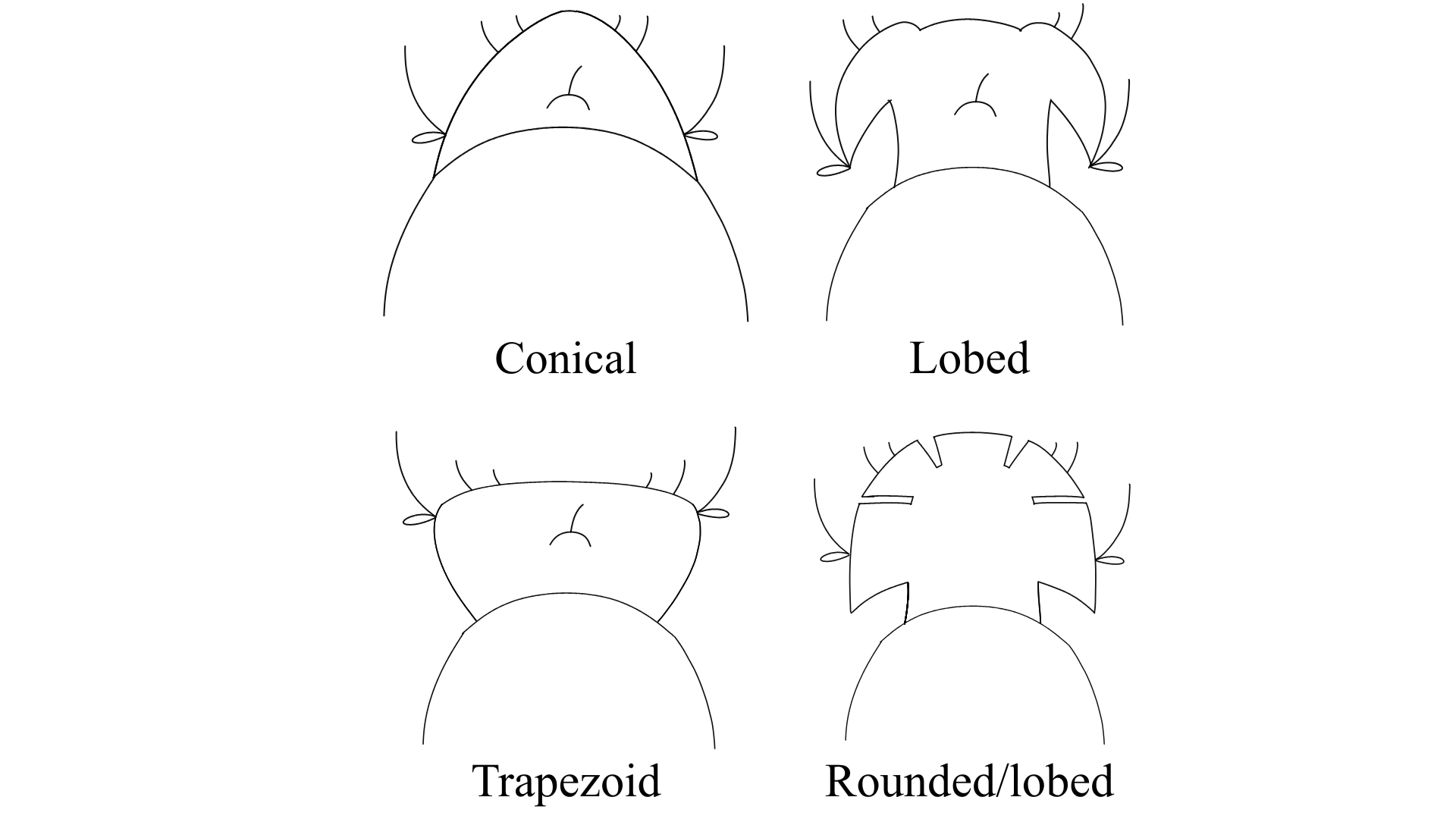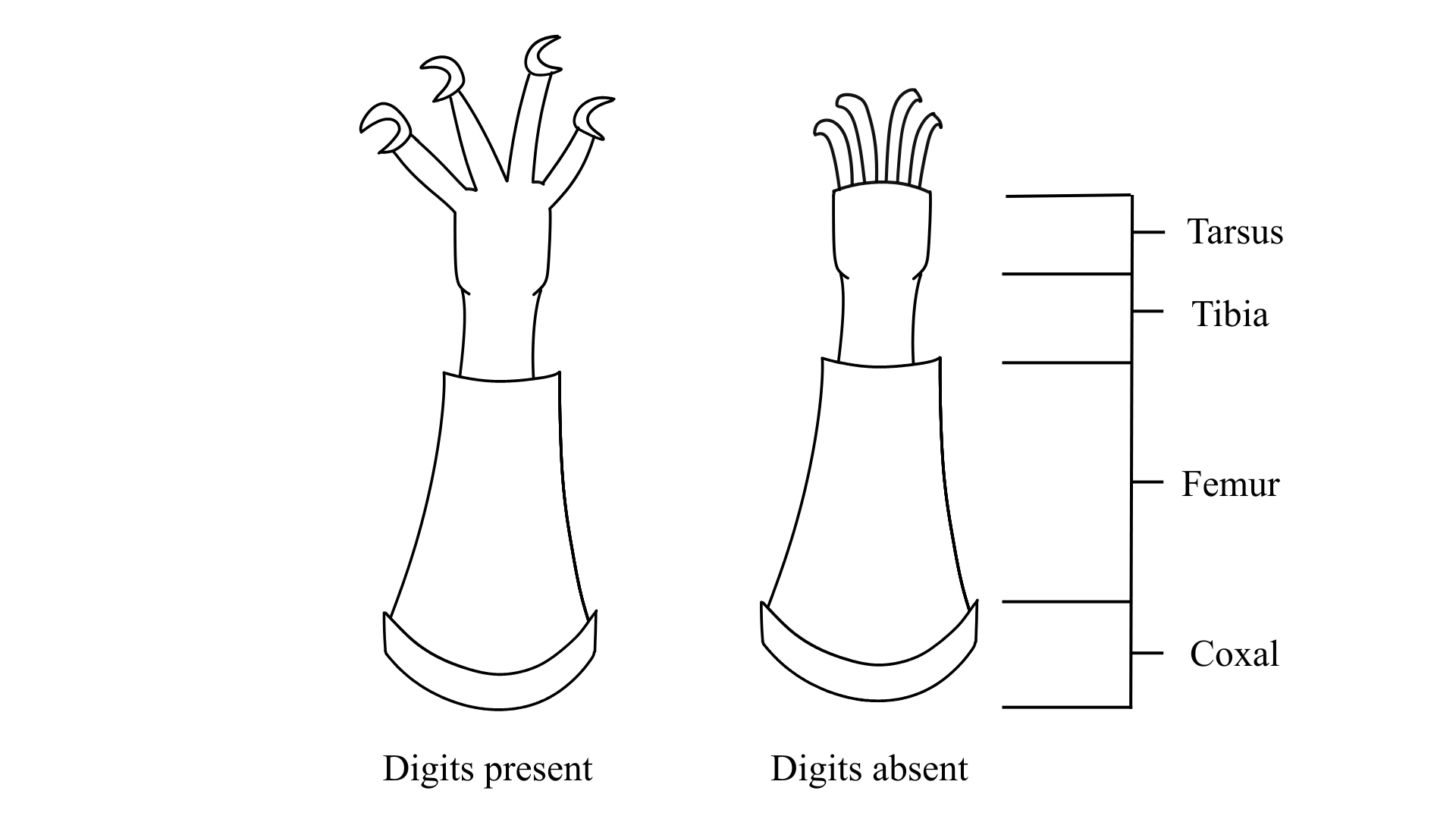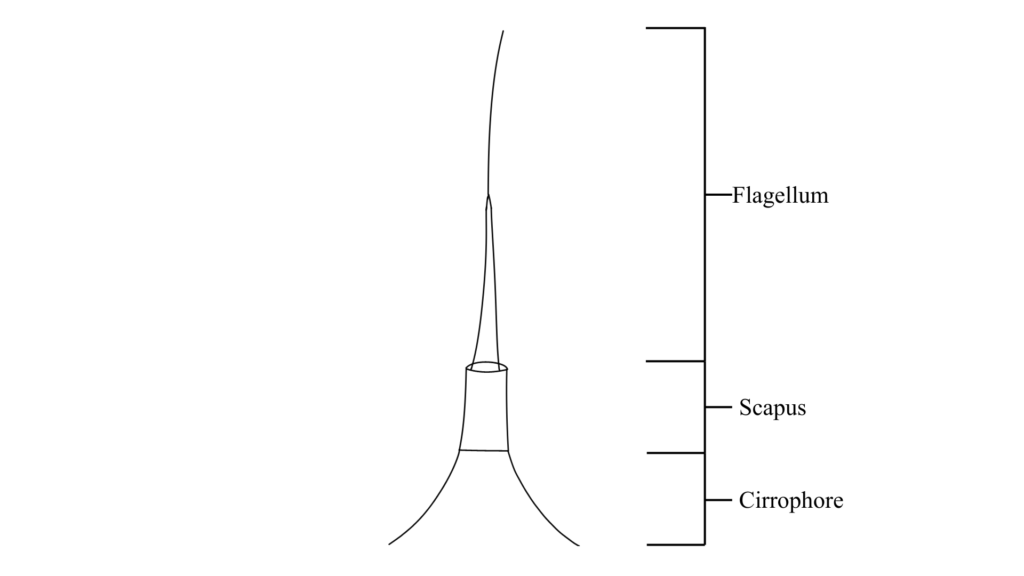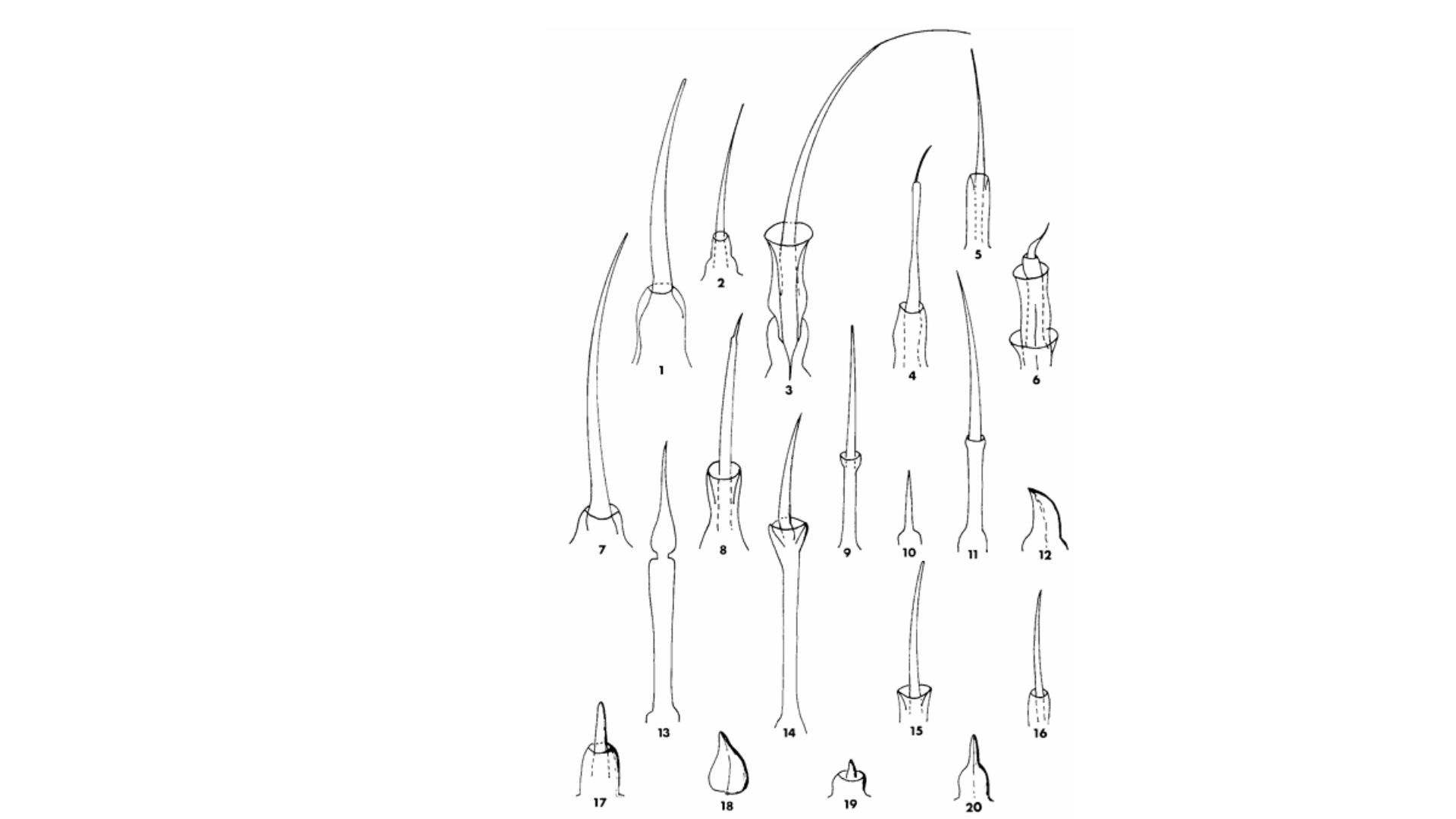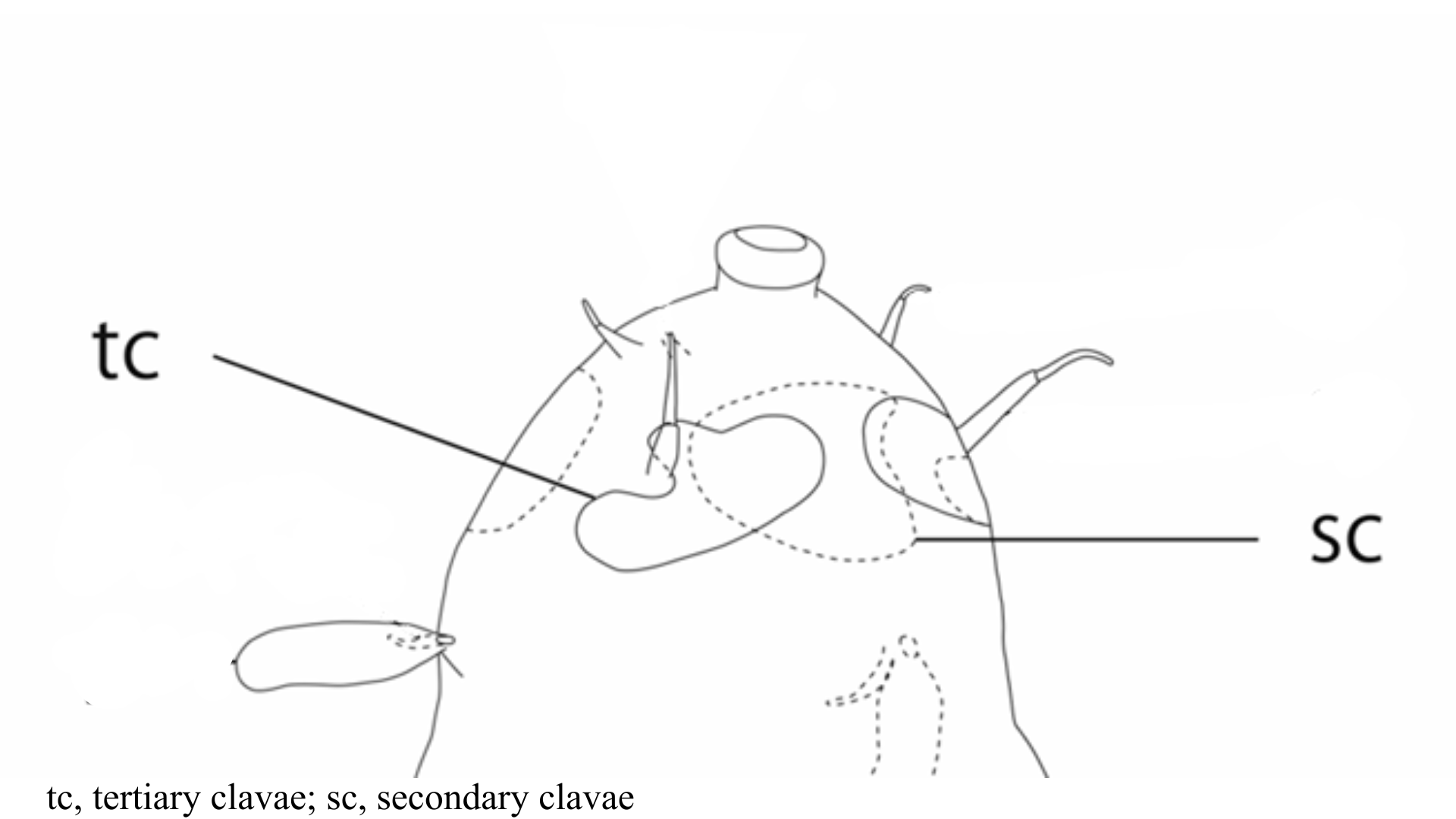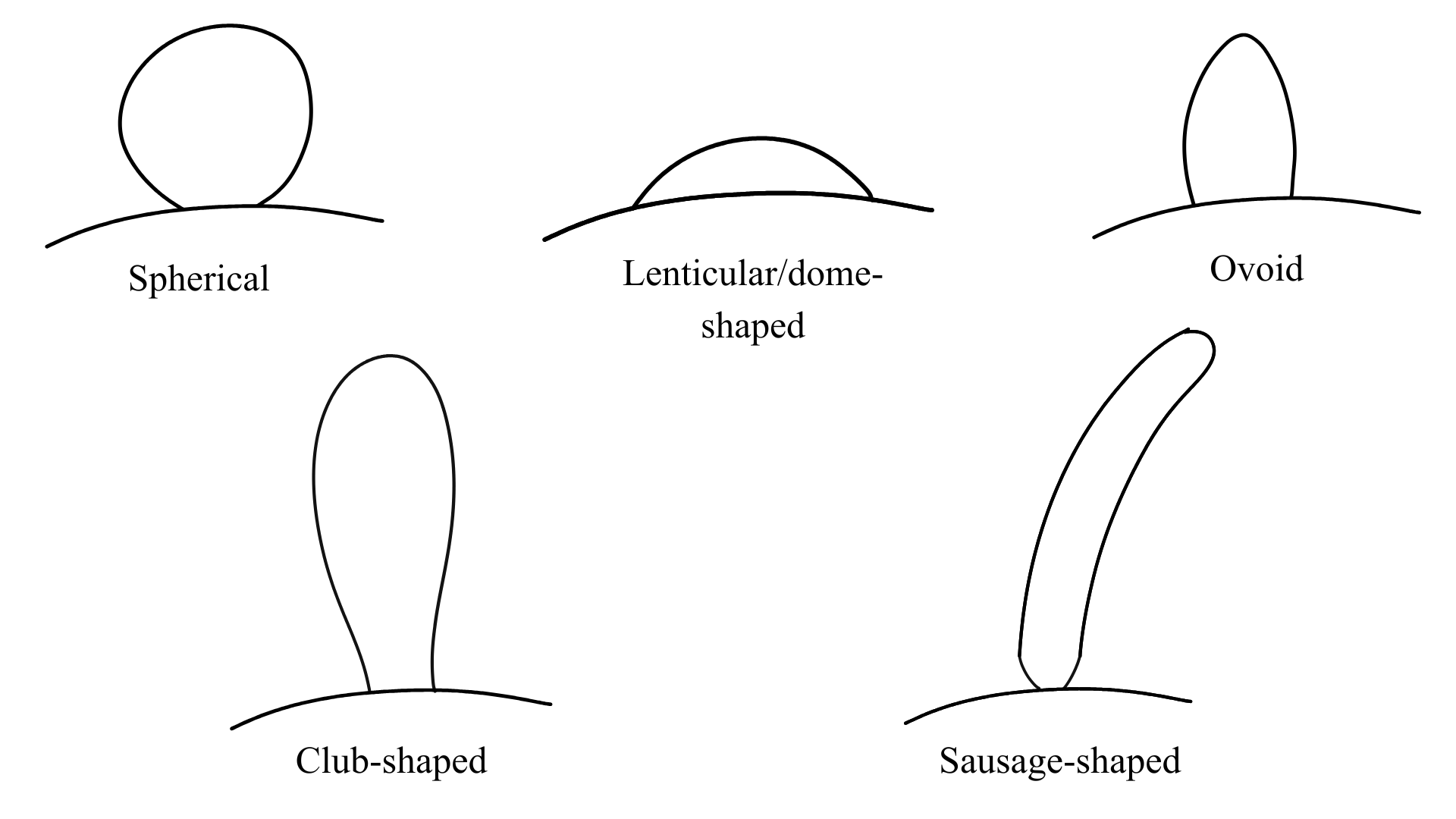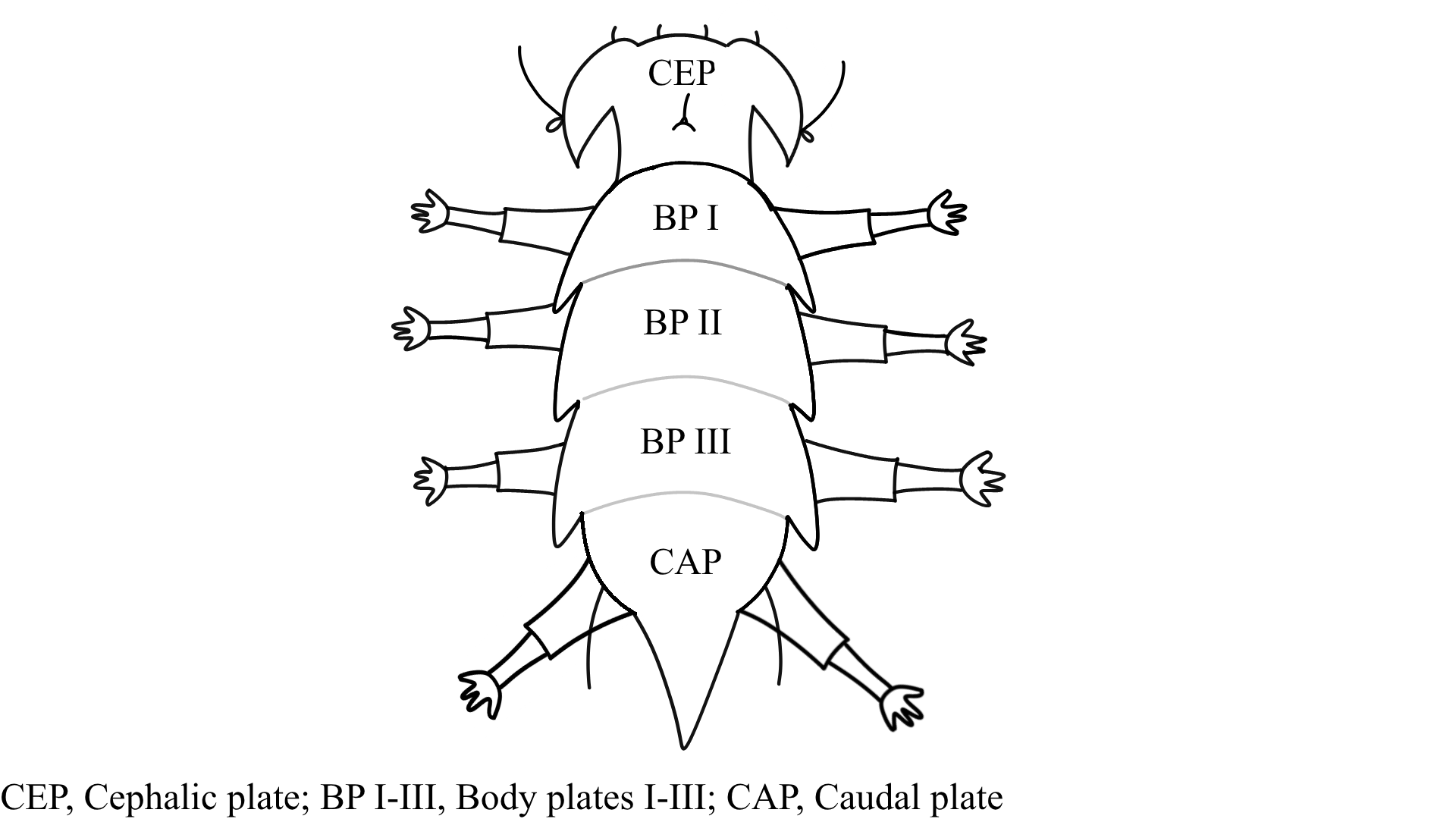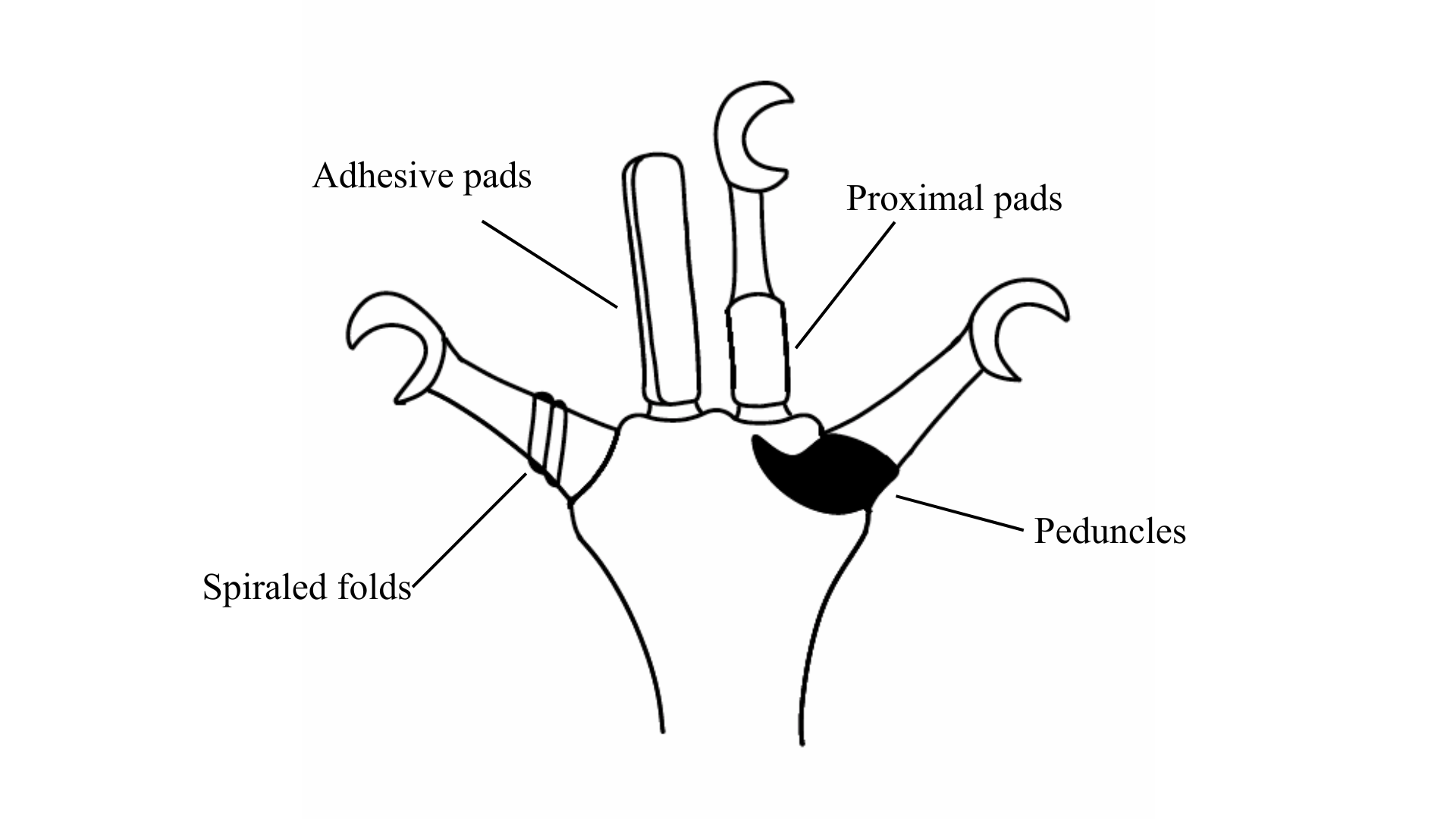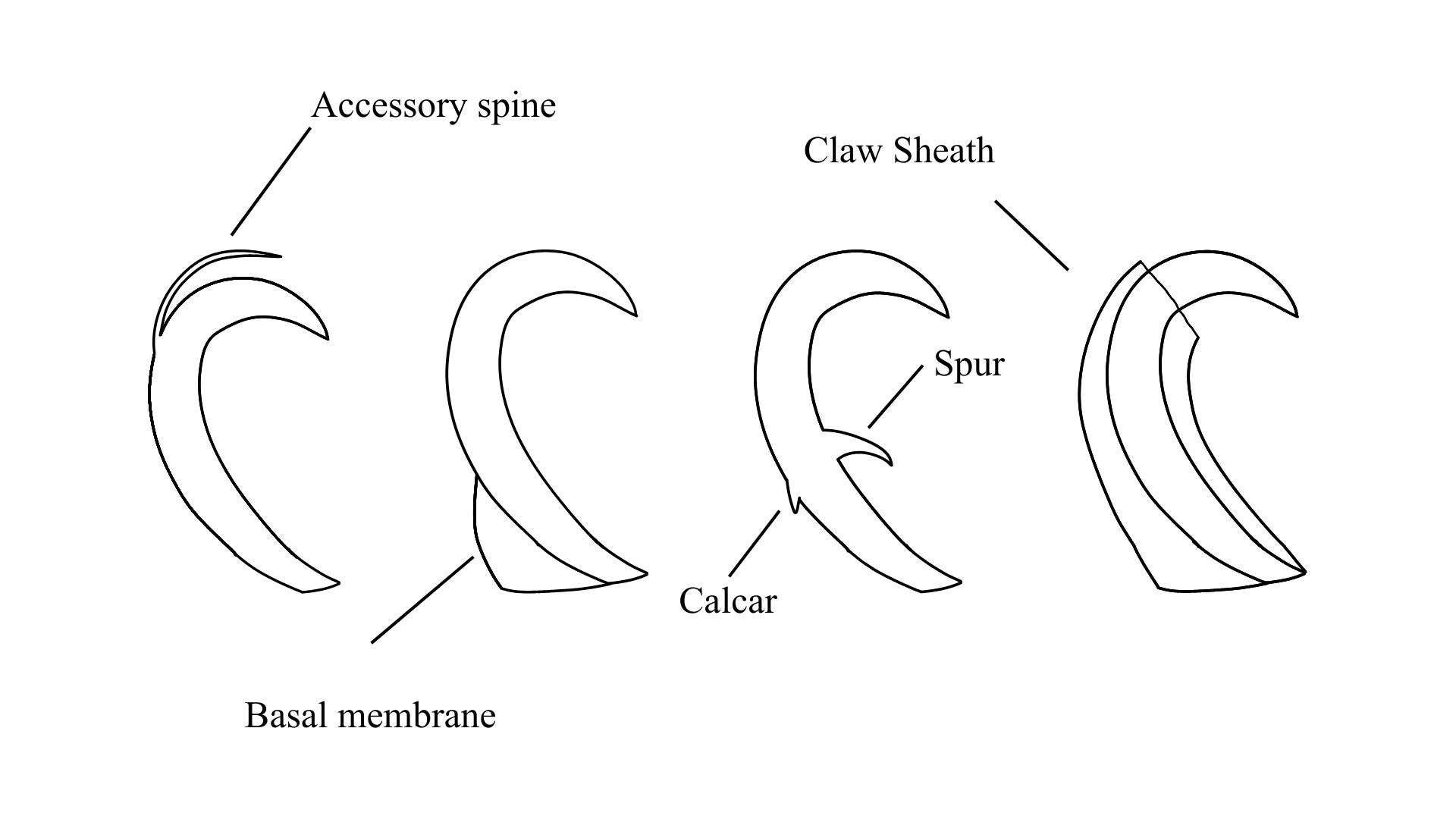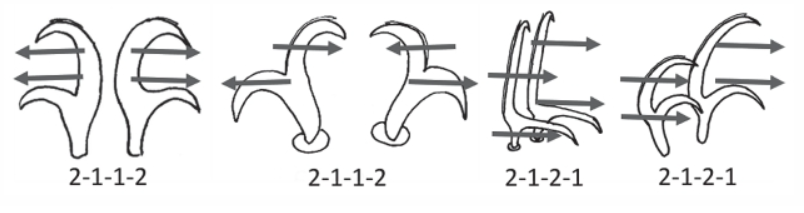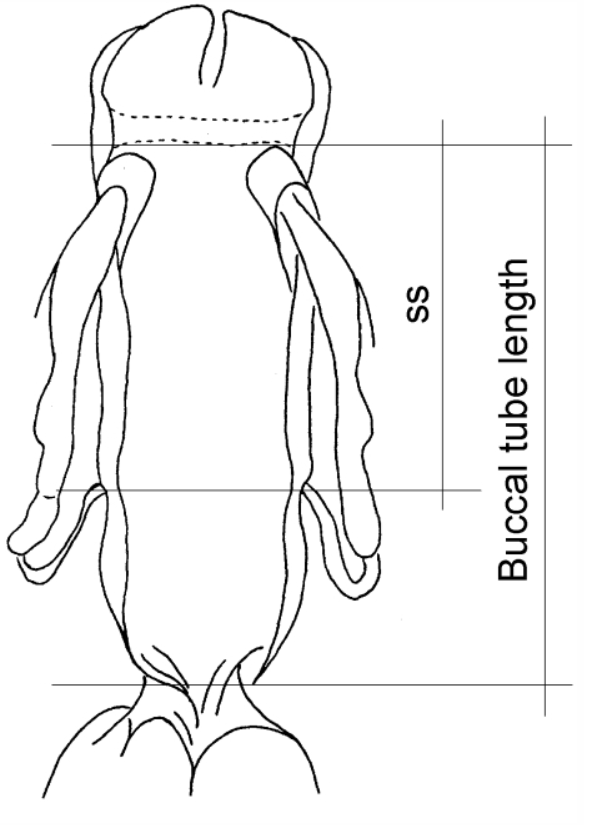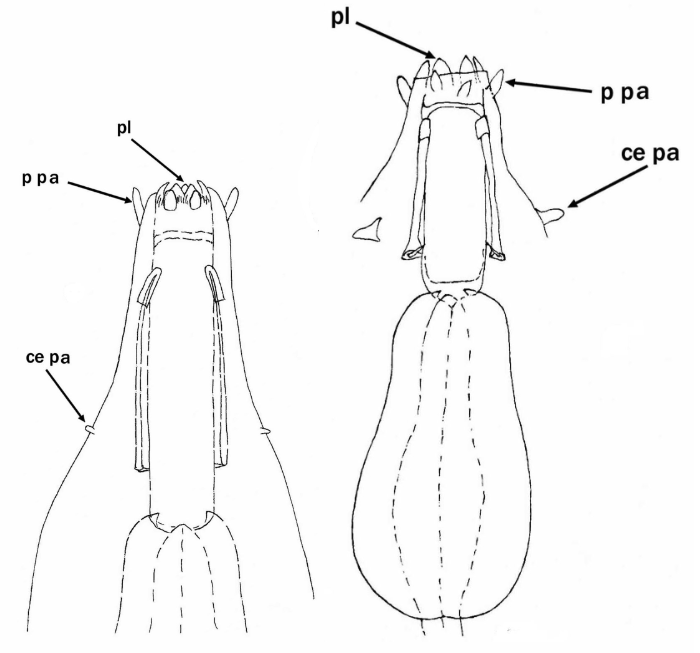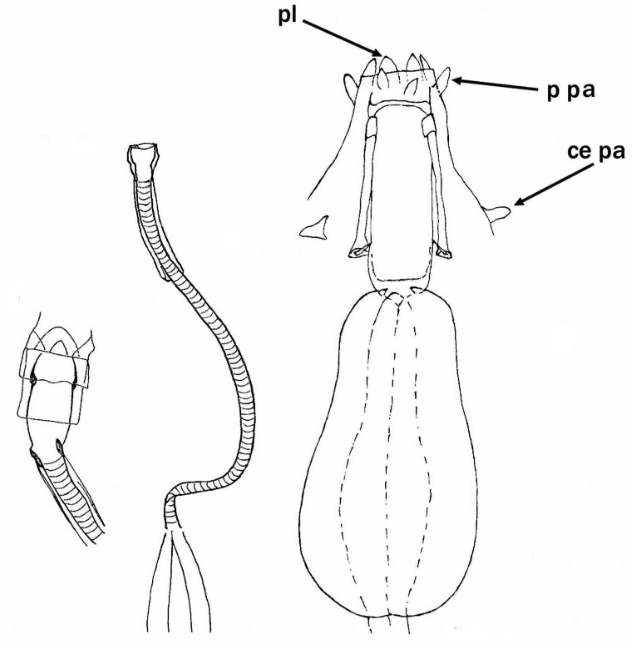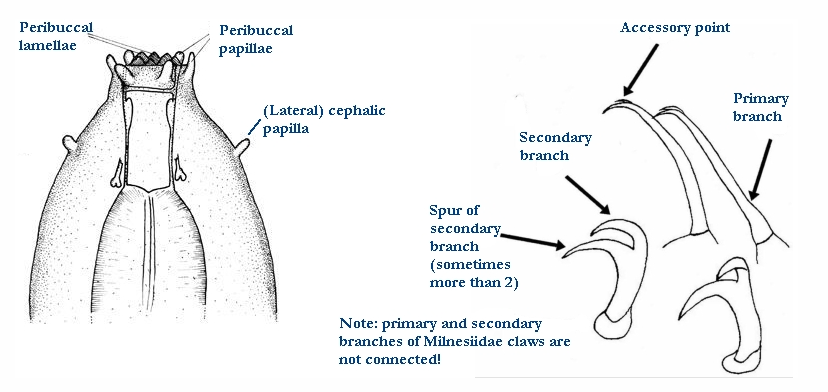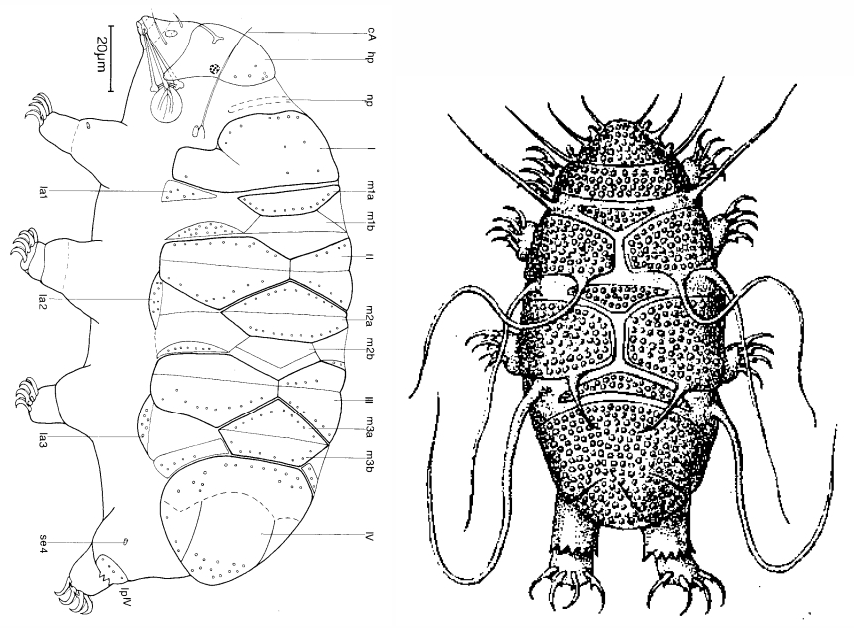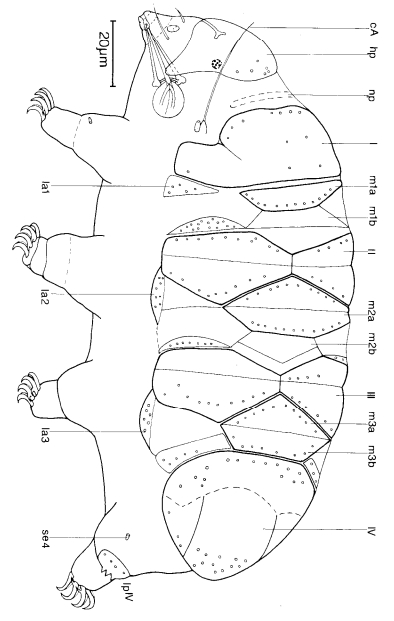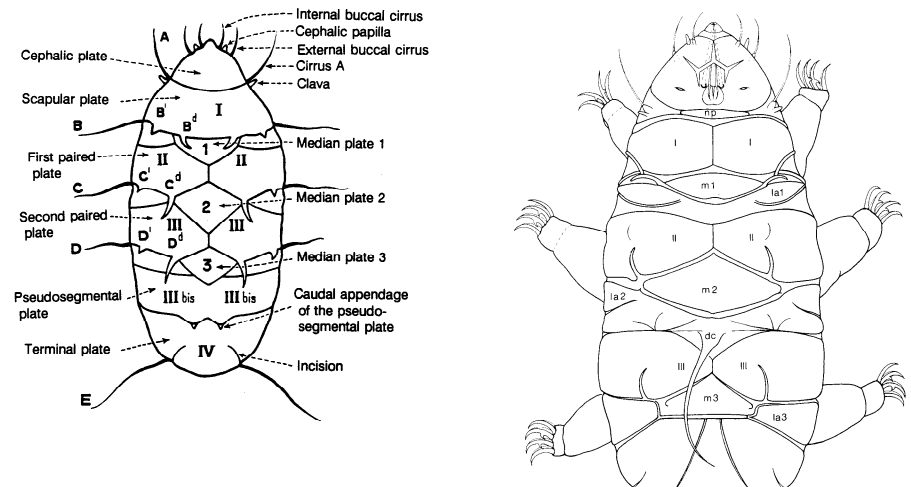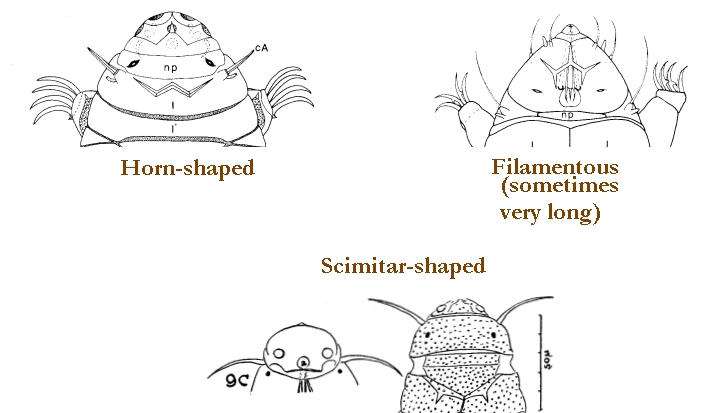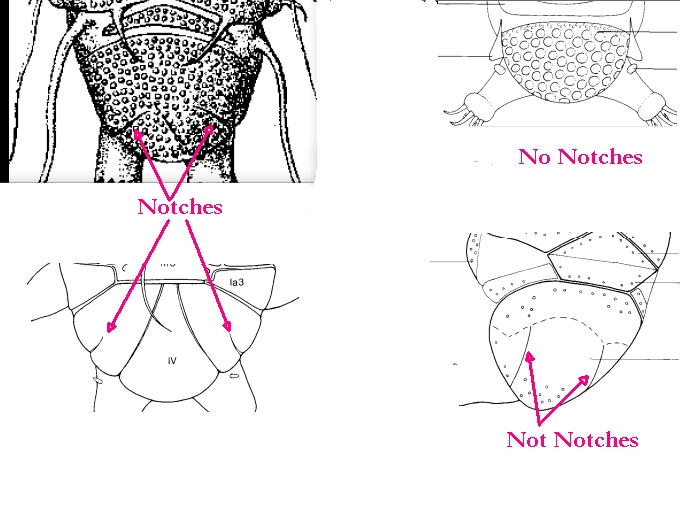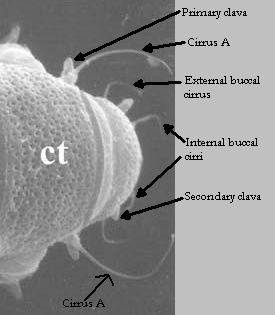

Genus description from Renaud-Mornant 1989 in Fontoura et al. 2017: “Orzeliscinae with cuticular pillars ranging in size from 2–8 µm dorsally and exceeding 10 µm laterally. Ventral cuticle finely punctuated by small pillars. Head with small lateral expansion below the insertion of cirrus A. Complete set of cephalic cirri. Secondary clavae weakly distinct around the buccal cone. Stylets and buccal tube calcified in their distal portion. Sense organs present on all legs; papillae with distal tip on legs IV. Legs with four paddle-shaped digits inserted on a conical tarsus bearing a dorsal lunule and a dorsal triquetrum. Female with claws crescent-shaped on all digits of legs I, internal claws bifid, external claws simple. Digits of legs II to IV always without claws. Male without claws on all legs. Lateral seminal receptacles with spiral genital ducts opening ventral to the papillae of legs IV. Female and male gonopore of the Halechiniscidae type.”

Citations:
Fontoura, P., Bartels, P.J., Jørgensen, A., Kristensen, R.M. & Hansen, J.G. (2017) A dichotomous key to the genera of the marine Heterotardigrades (Tardigrada). Zootaxa, 4294, 1–45.
Renaud-Mornant, J. (1989b) Opydorscus, un nouveau genre d’Orzeliscinae et sa signification phylogénique (Tardigrada, Arthrotardigrada). Bulletin du Muséum National d’Histoire Naturelle, Paris, Série 4e, 11 (Section A, nº 4), 763–771.