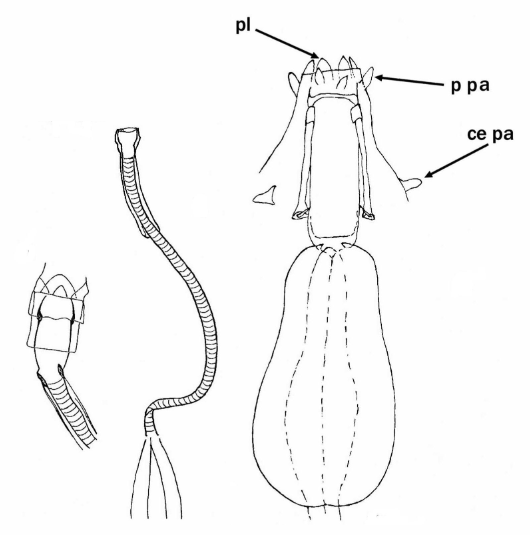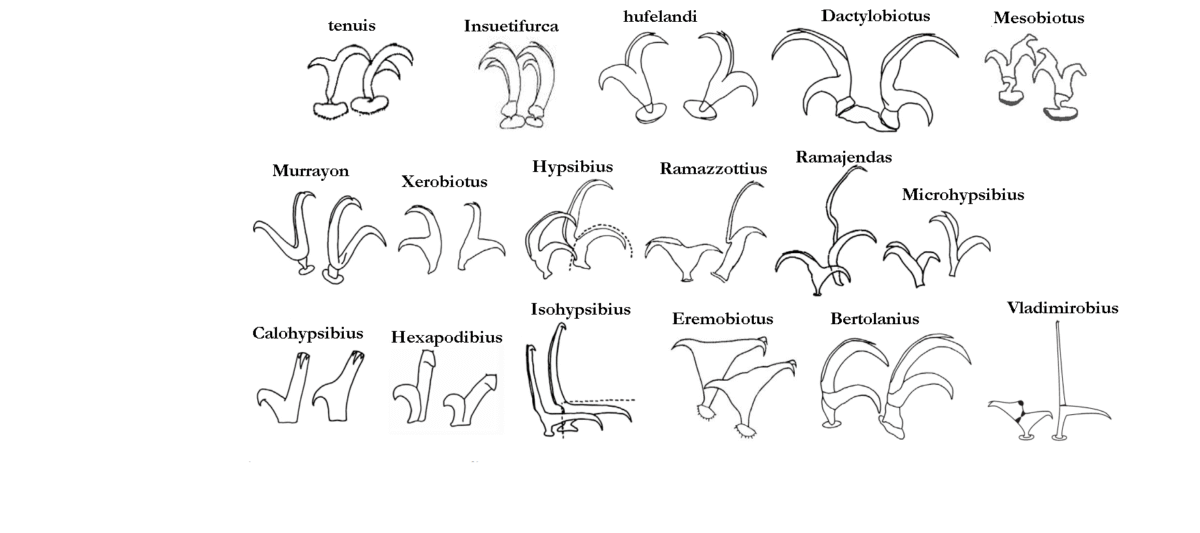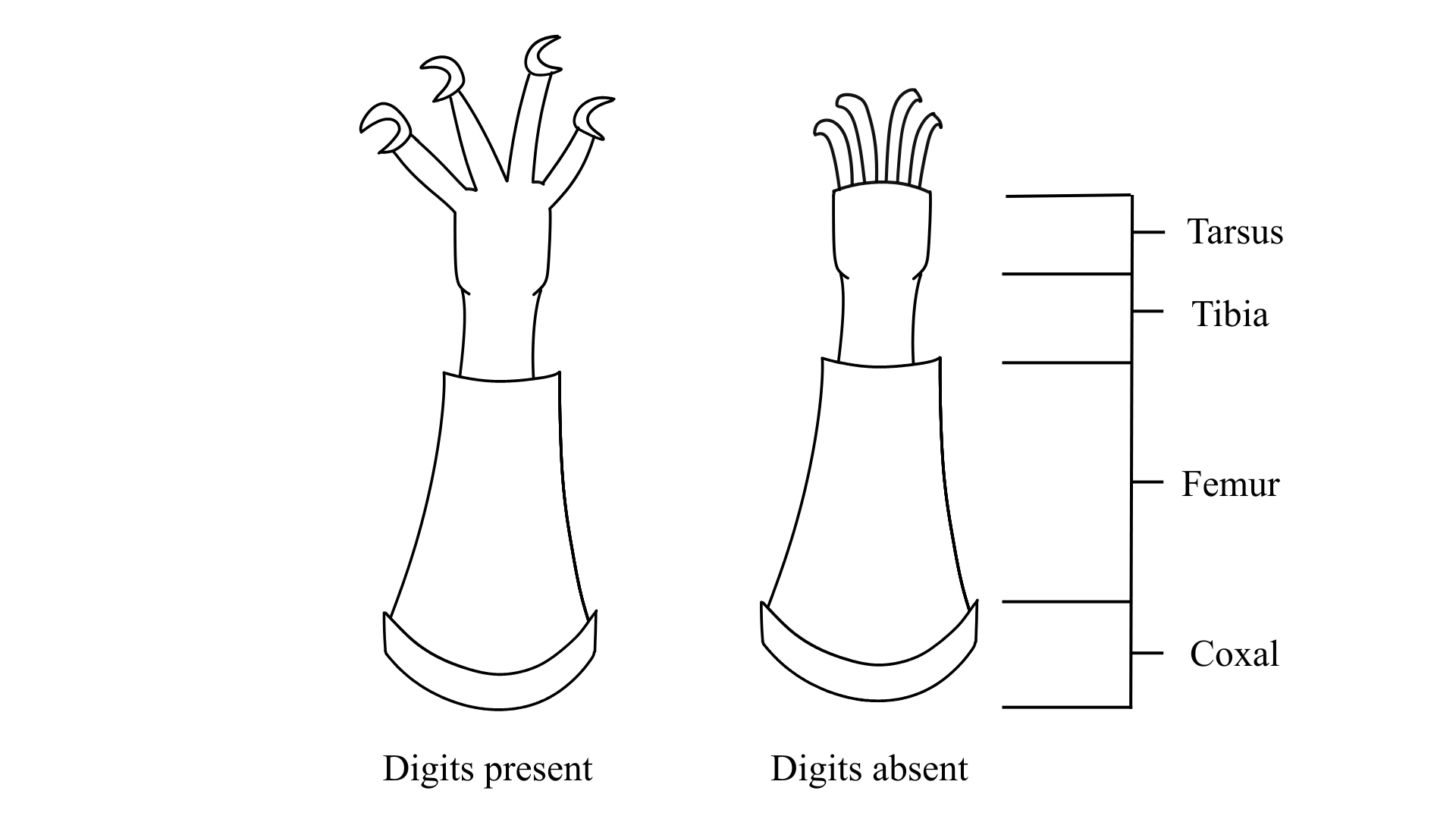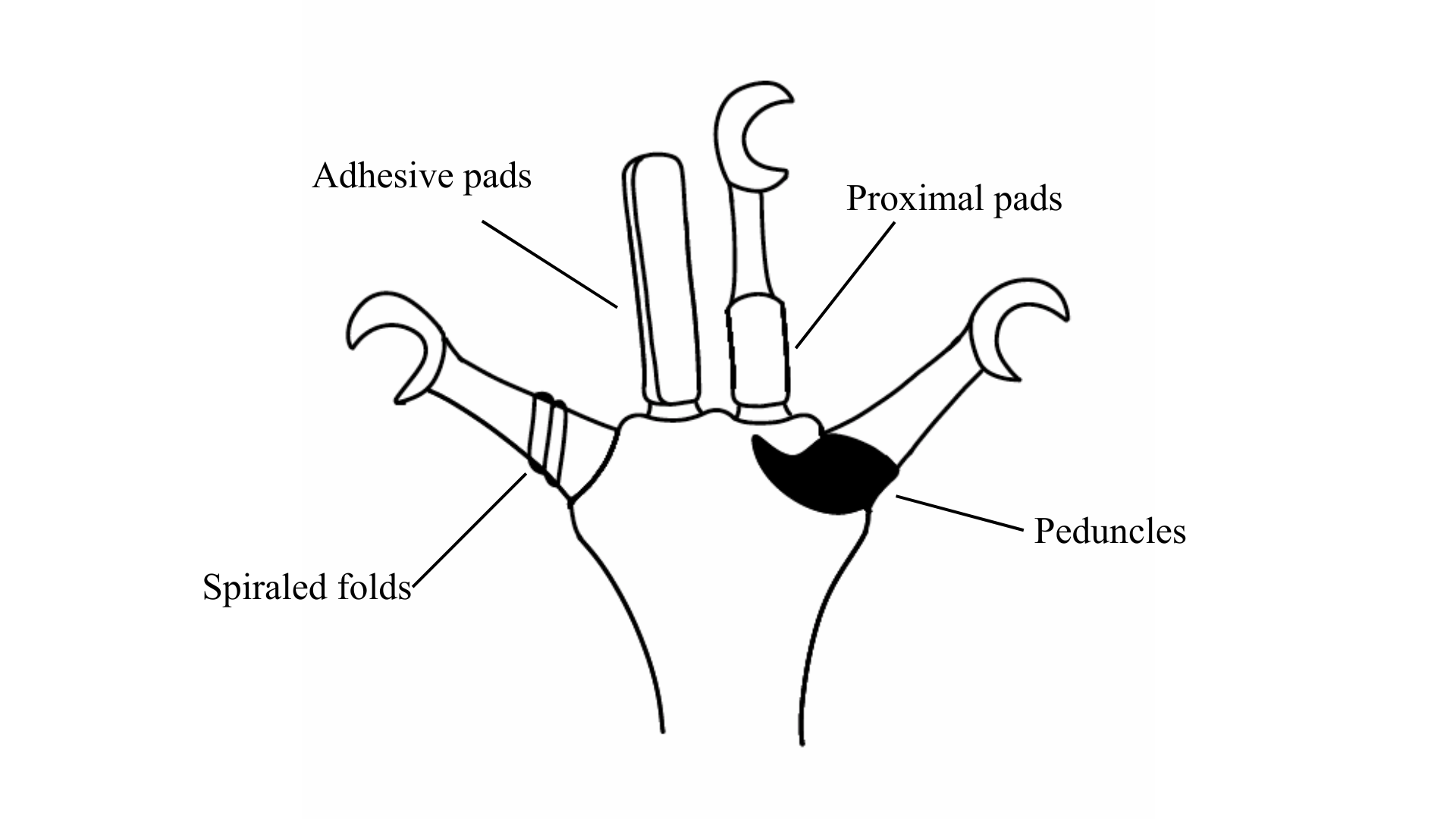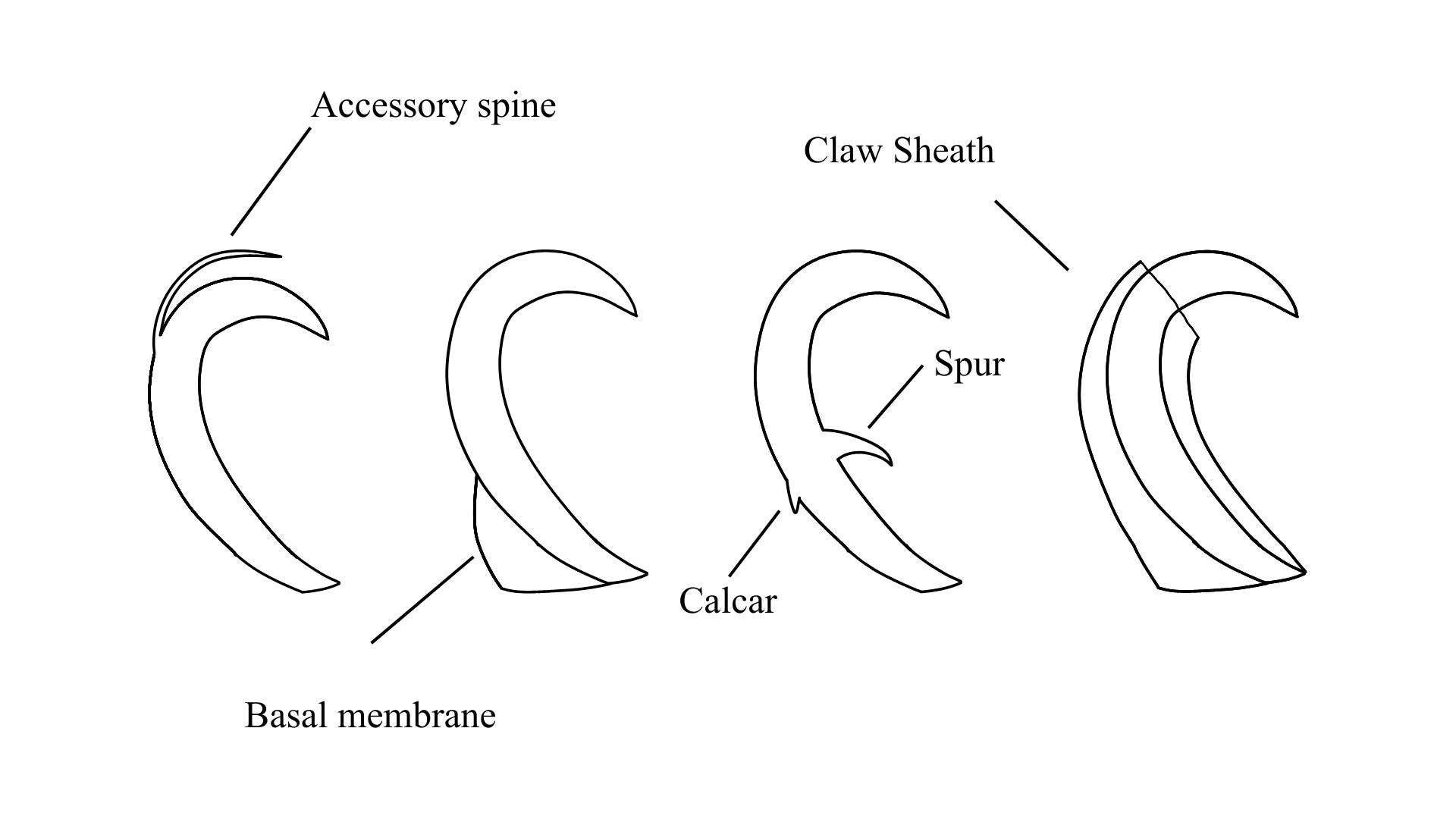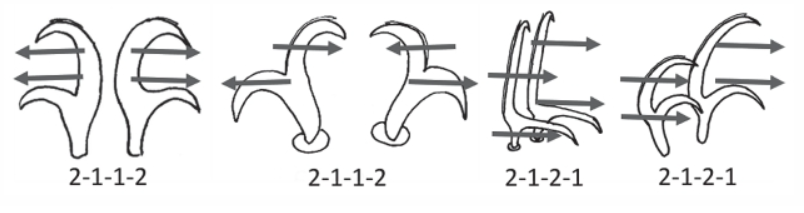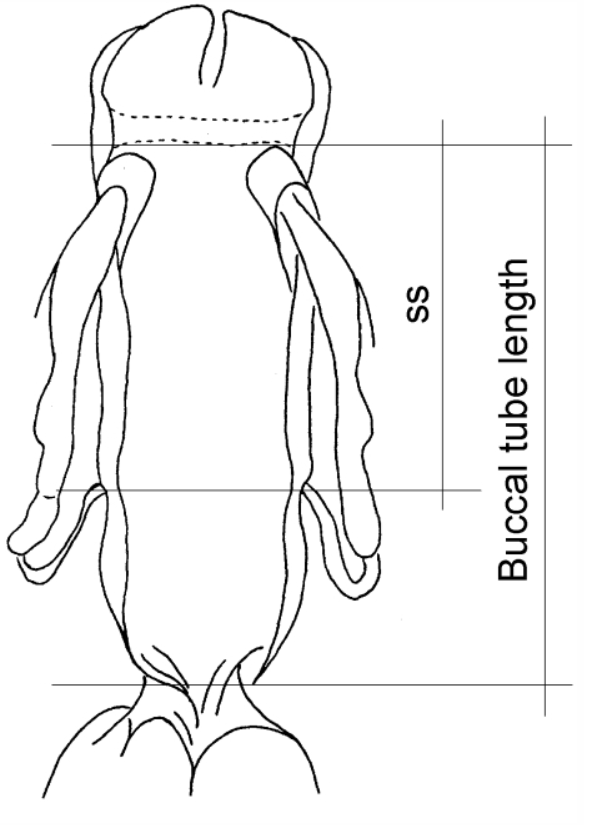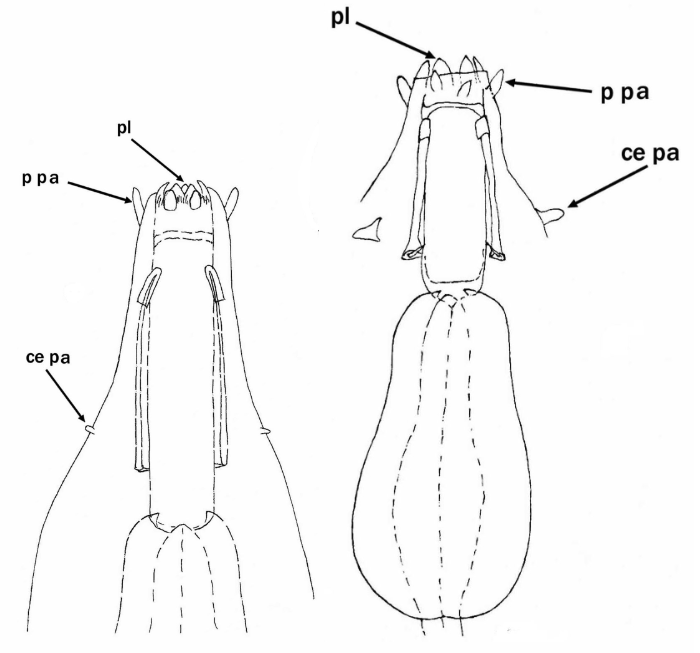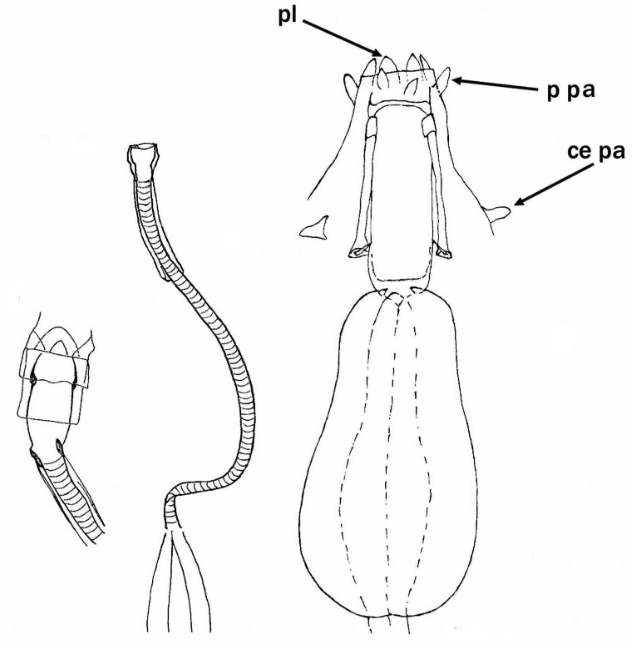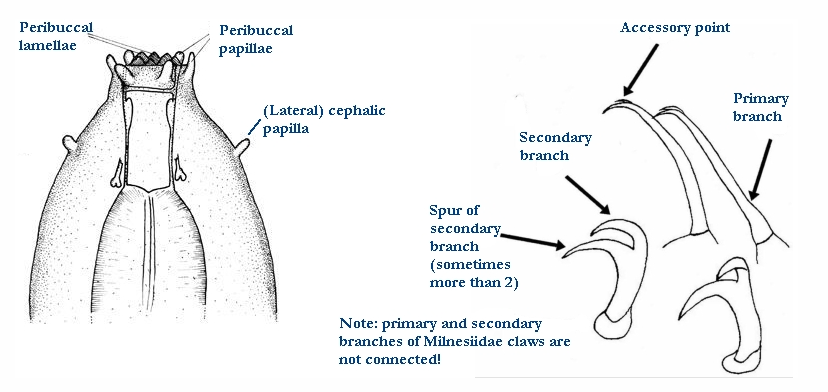

Genus description from Pilato & Catanzaro 1988: “In ciascuna diplounghia il ramo principale ed il secondario, saldati rigidamente fra loro come in tutti i Macrobiotidae, divergono l’uno dall’altro fin dalla base. La porzione basale è assottigliata come nelle unghie di tipo hufelandi, a formare un esile peduncolo. Il ramo secondario è più corto del principale e forma con esso un angolo quasi retto. Alla base di ciascuna unghia è presente una lunula ben distinta; le due lunule di ciascuna zampa sono collegate fra loro da un ispessimento cuticolare. L’apparato bucco-faringeo è di tipo Macrobiotus, cioè con tubo boccale rigido e provvisto di sbarretta di rinforzo ventrale. La bocca è circondata da lamelle periboccali ed il bulbo faringeo è provvito di apofii e di placoidi.”
Translated with help of Google Translate: In each diploclaw the main and secondary branches, rigidly welded together as in all Macrobiotidae, diverge from each other right from the base. The basal portion is thinned as in hufelandi-type claws, to form a slender peduncle. The secondary branch is shorter than the main one and forms an almost right angle with it. At the base of each claw there is a distinct lunule; the two lunulae of each leg are connected to each other by a cuticular thickening. The bucco-pharyngeal apparatus is of the Macrobiotus type, that is, with a rigid buccal tube and provided with a ventral lamina. The mouth is surrounded by peribuccal lamellae and the pharyngeal bulb is provided with apophyses and placoids.


Citations:
Pilato, G. & Catanzaro, R. (1988) Macroversum mirum n. gen. n. sp. Nuovo Eutardigrado (Macrobiotidae) dei Monti Nebrodi (Sicilia). Animalia, 15, 175-180.