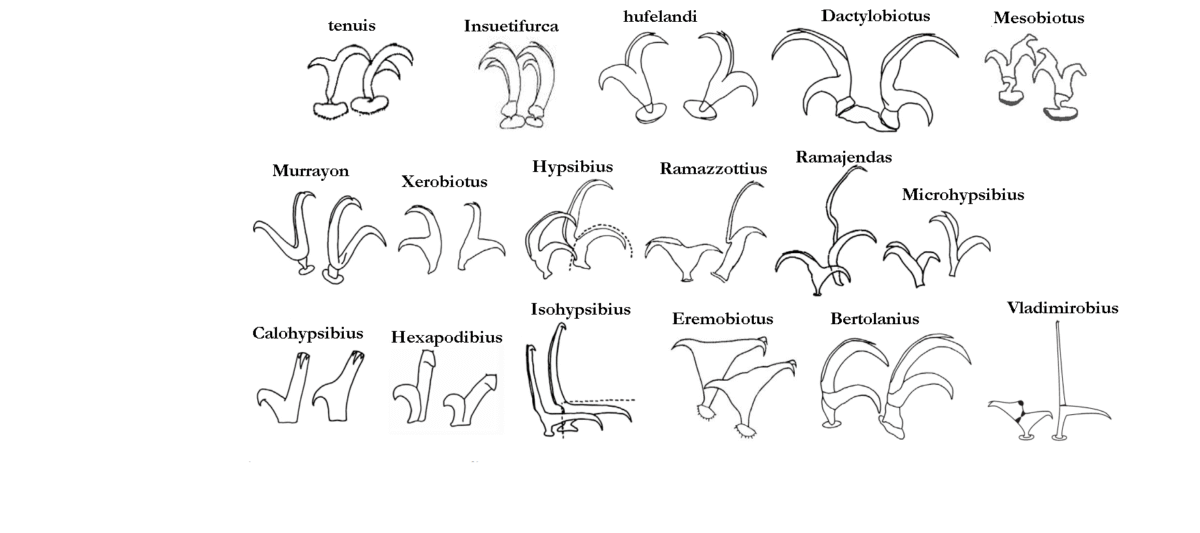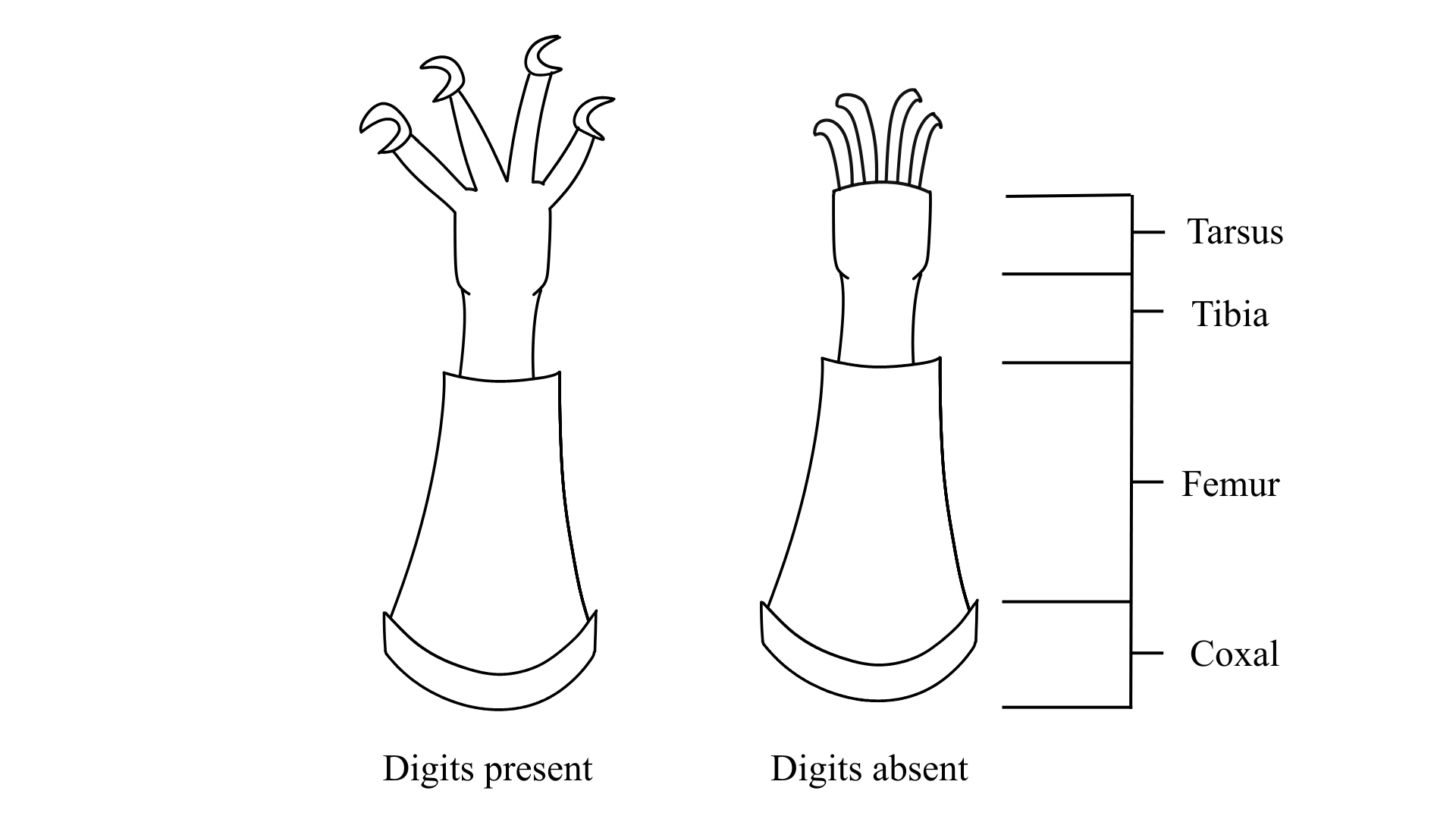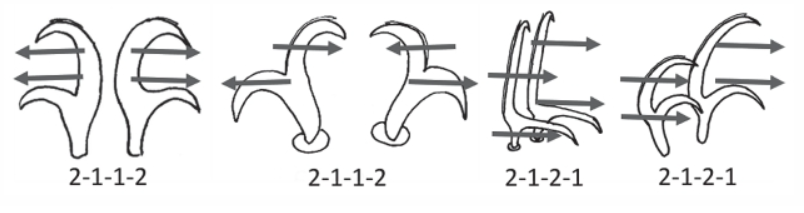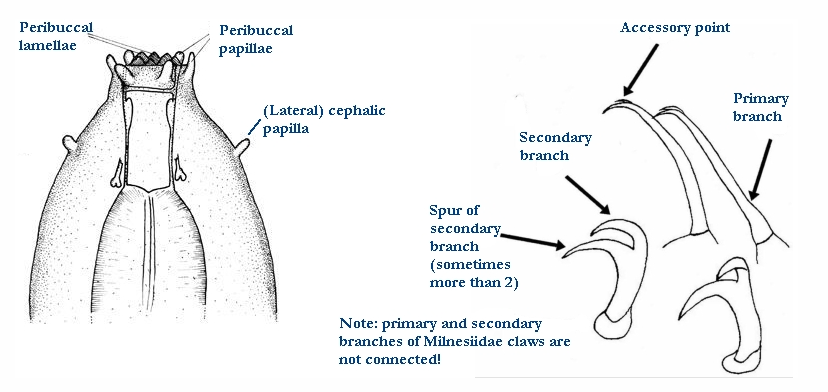
Eohypsibiidae from Marley et al. 2011: Eohypsibiidae-type claws, which are clearly delineated by septa, in linear order, from basal section, secondary branch and primary branch. The angle between basal section, secondary branch and primary branches are different between claws on the same leg and the internal claw can rotate on its base by 180°.
Description from Trygvadóttir & Kristensen: “Claw structure (used to identify the family) is divided into three parts: base, secondary branch and main branch, which are clearly distinguished, sequentially inserted, and separated by septa. Claws of the same leg may be of similar size, but always exhibit different angles between the main and secondary branch. An acute angle (about 45°) is formed by the external claw, and an almost right angle (80°) by the internal claw, which can rotate on its base by 180°. When the claws are of different size the external or posterior claws are larger – especially on the fourth pairs of legs.”
Citations:
Marley NJ, McInnes SJ, Sands CJ. 2011. Phylum Tardigrada: A re-evaluation of the Parachela. Zootaxa. 2819: 51-64.
Trygvadóttir BV, Kristensen RM. 2011. Eohypsibiidae (Eutardigrada, Tardigrada) from the Faroe Islands with the description of a new genus containing three new species. Zootaxa. 2886: 39-62.