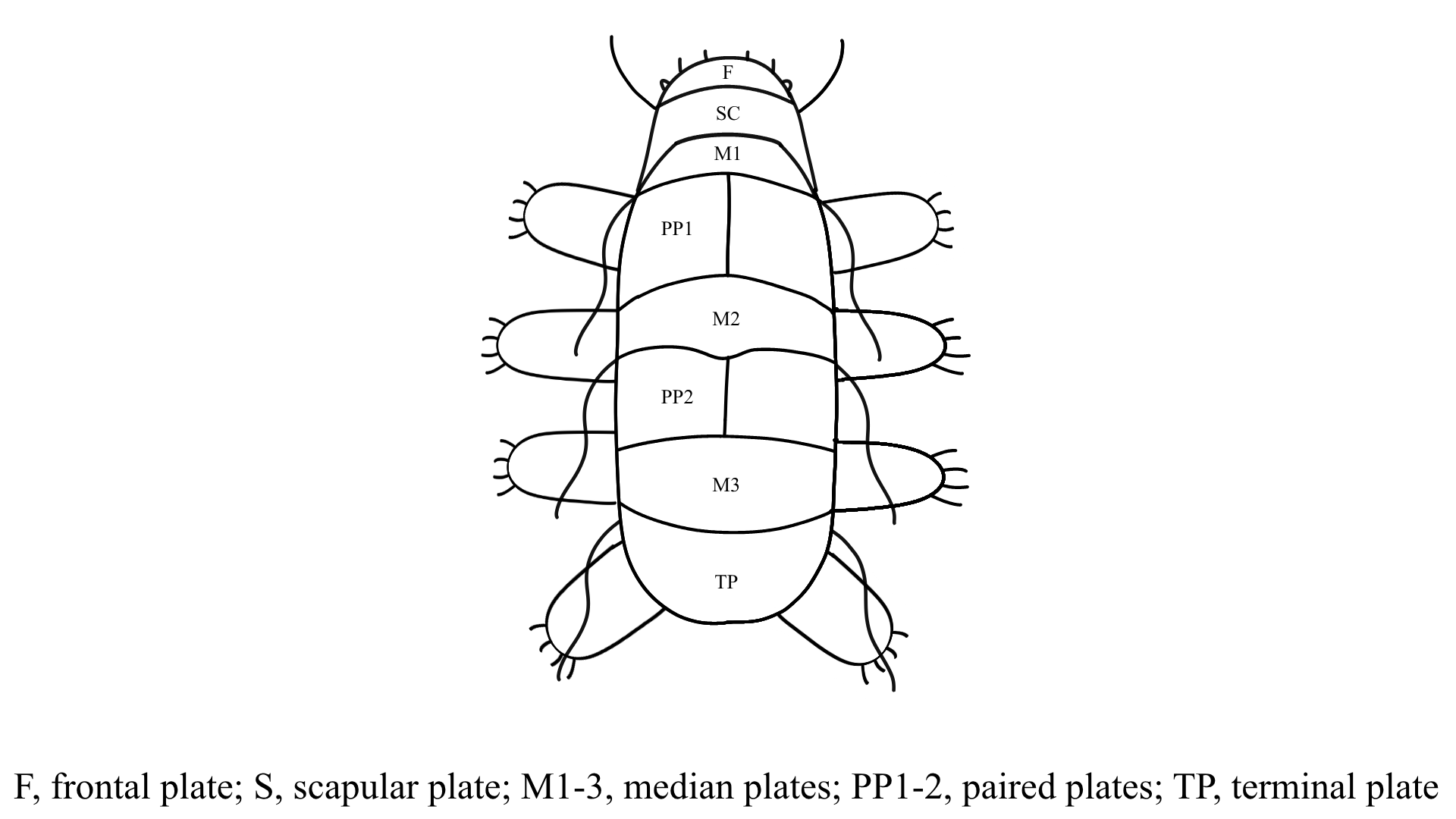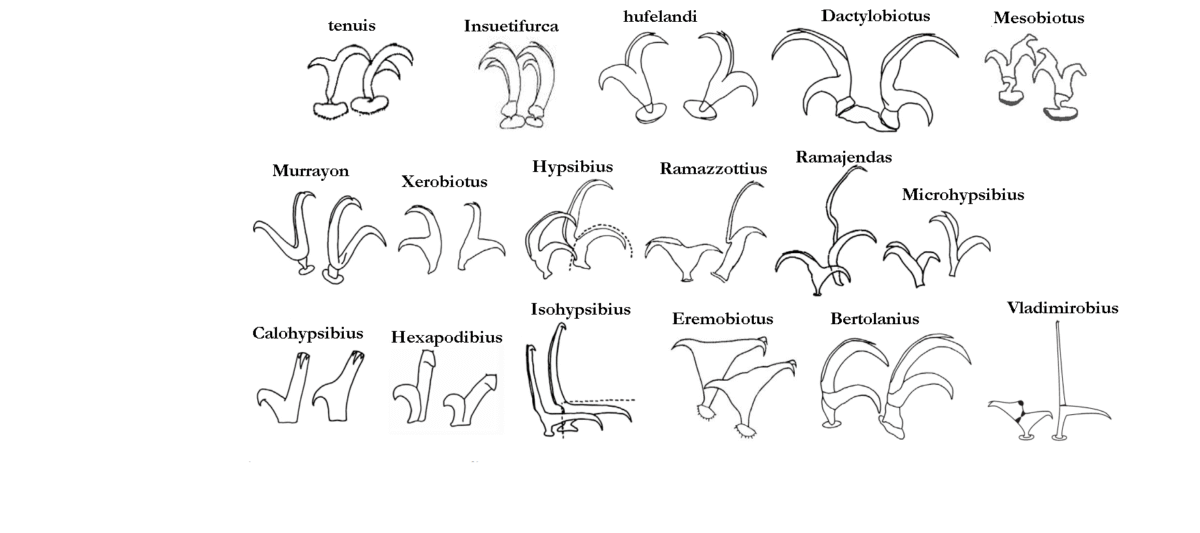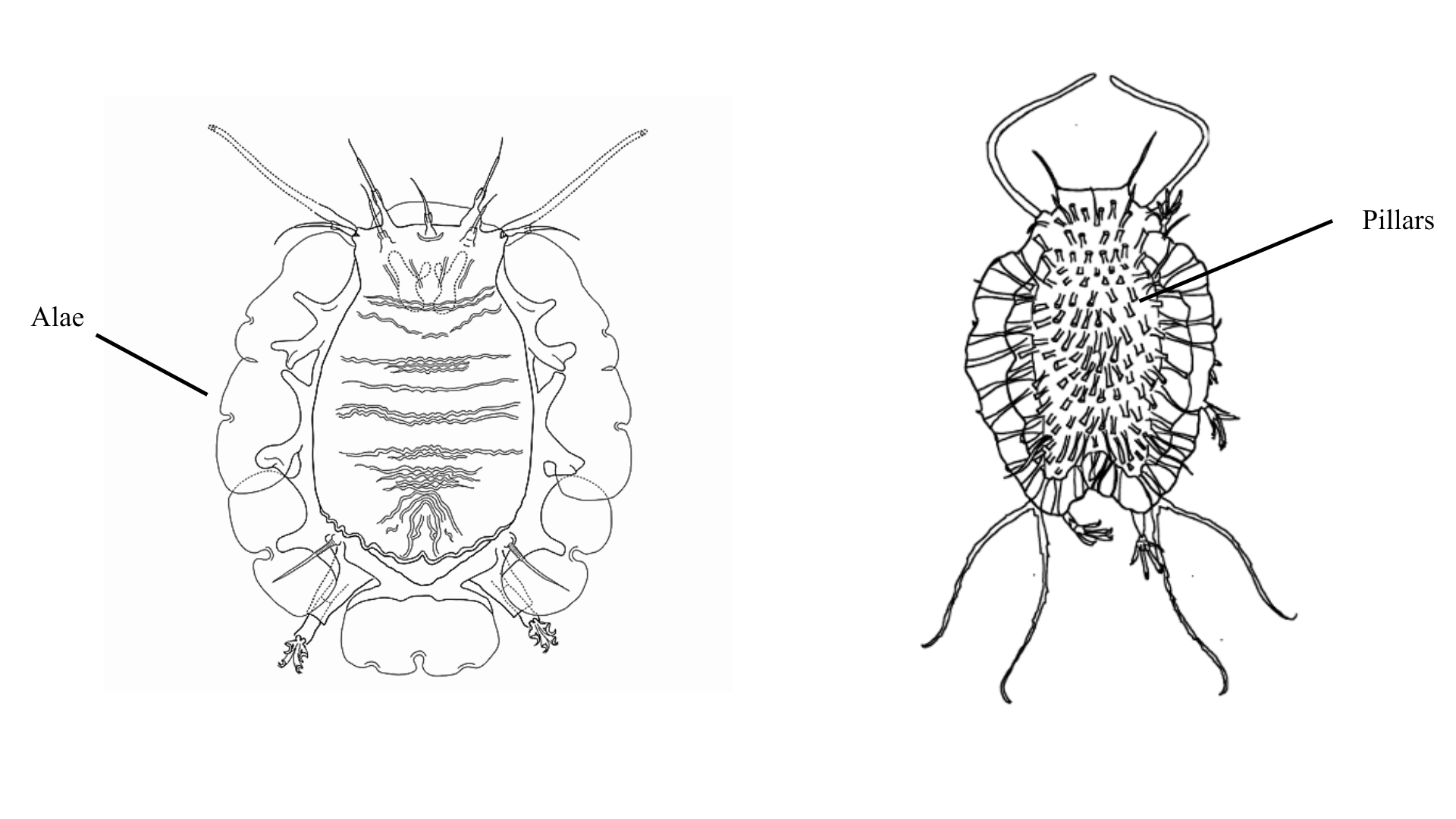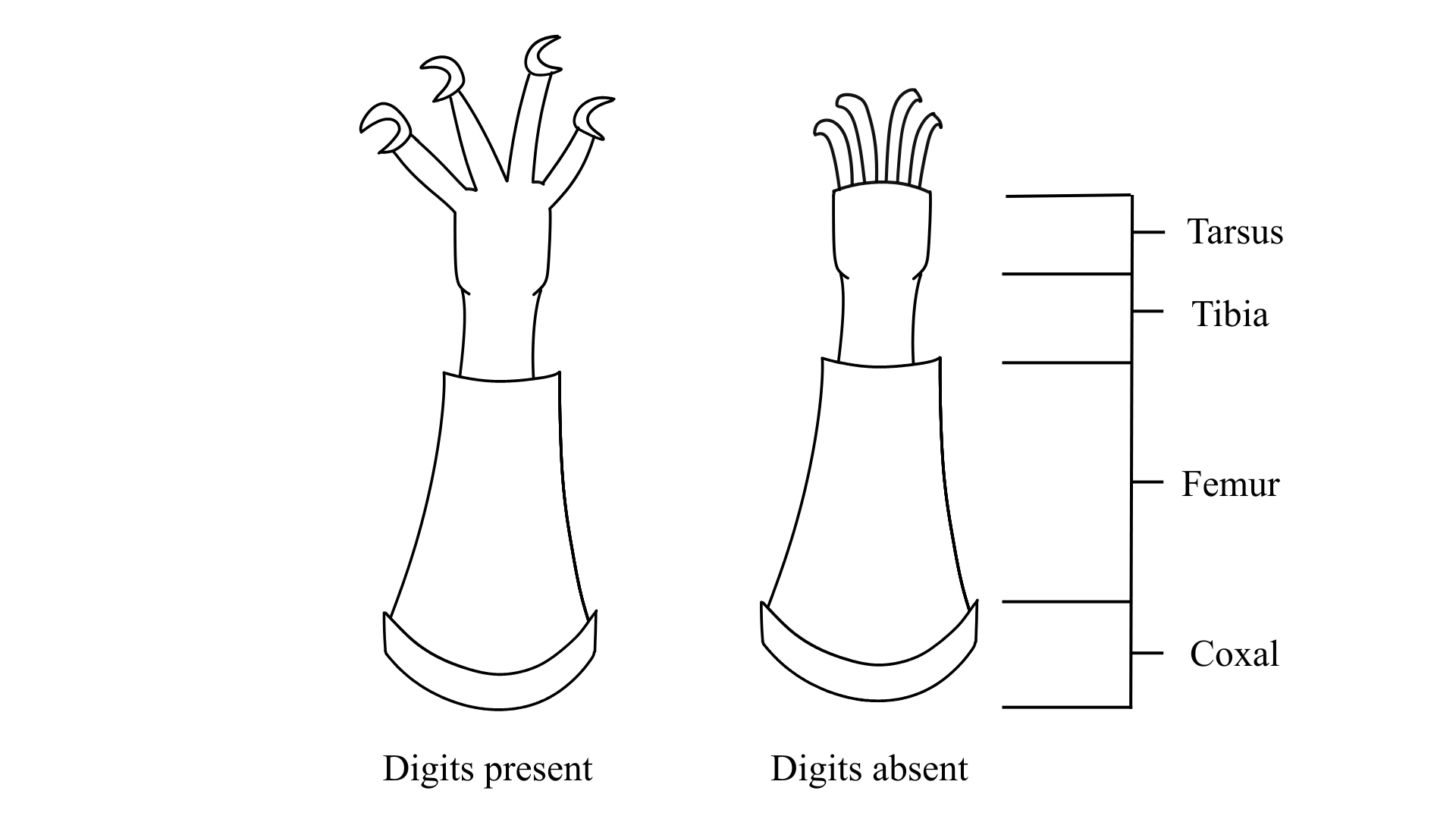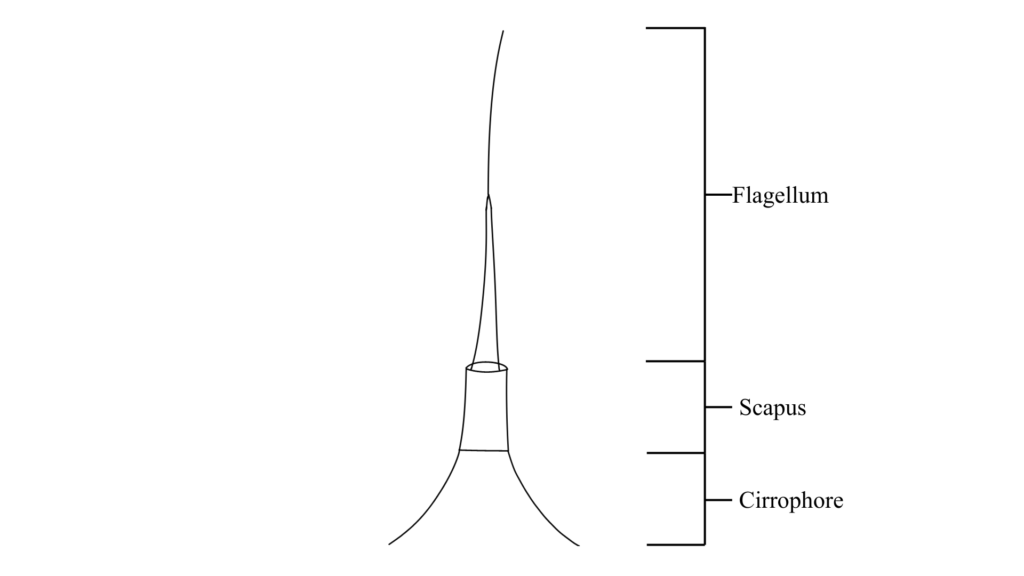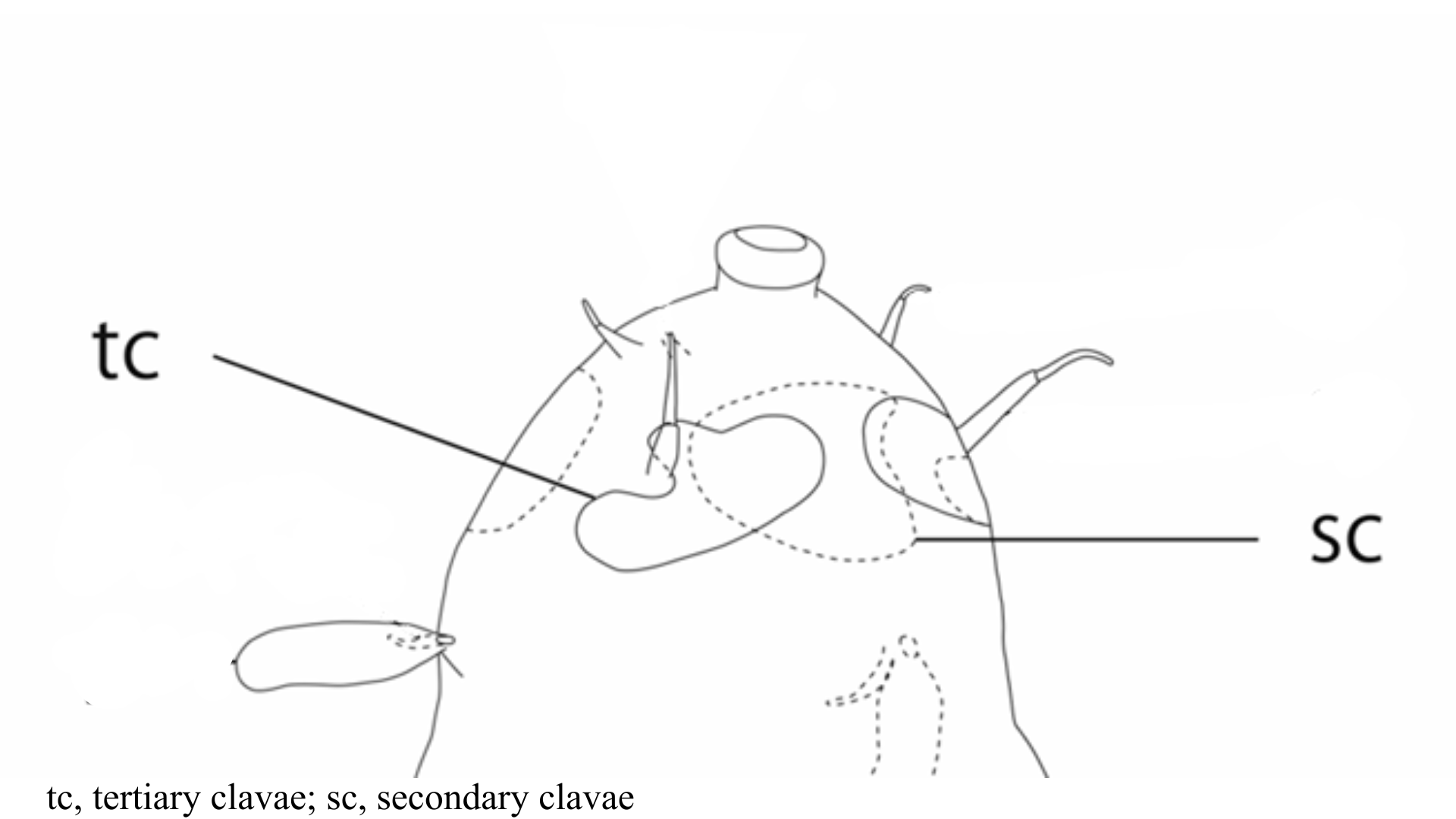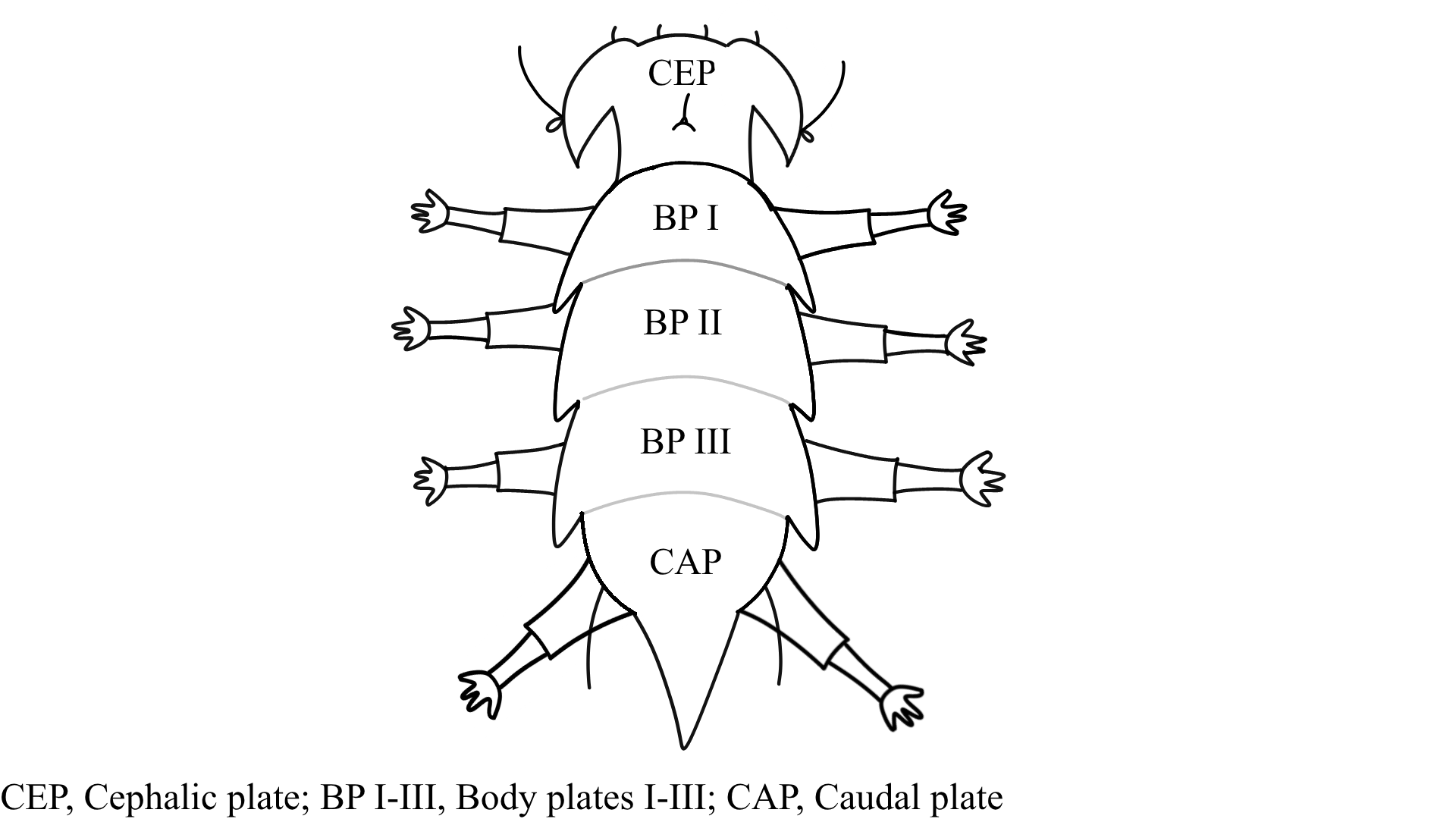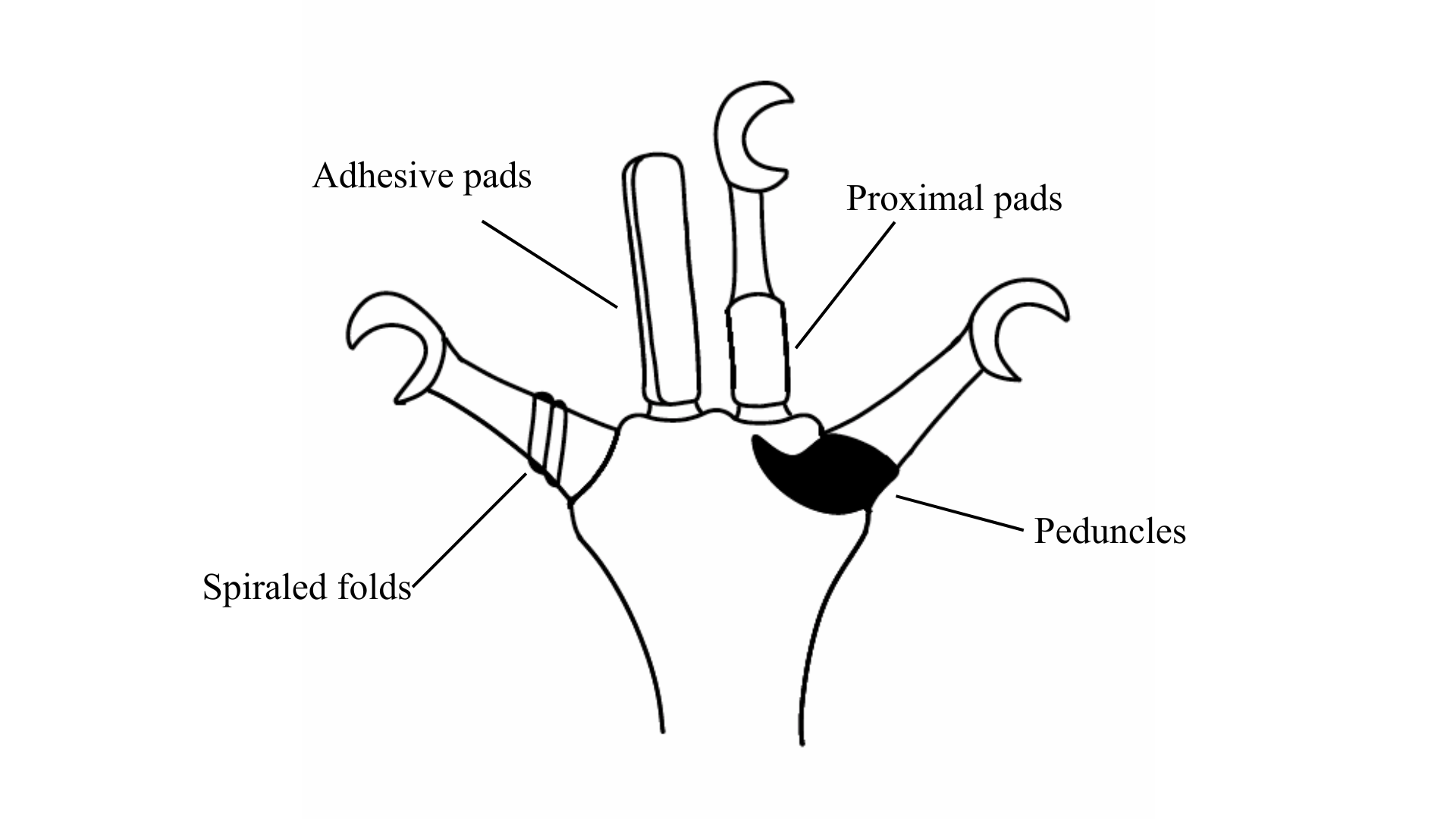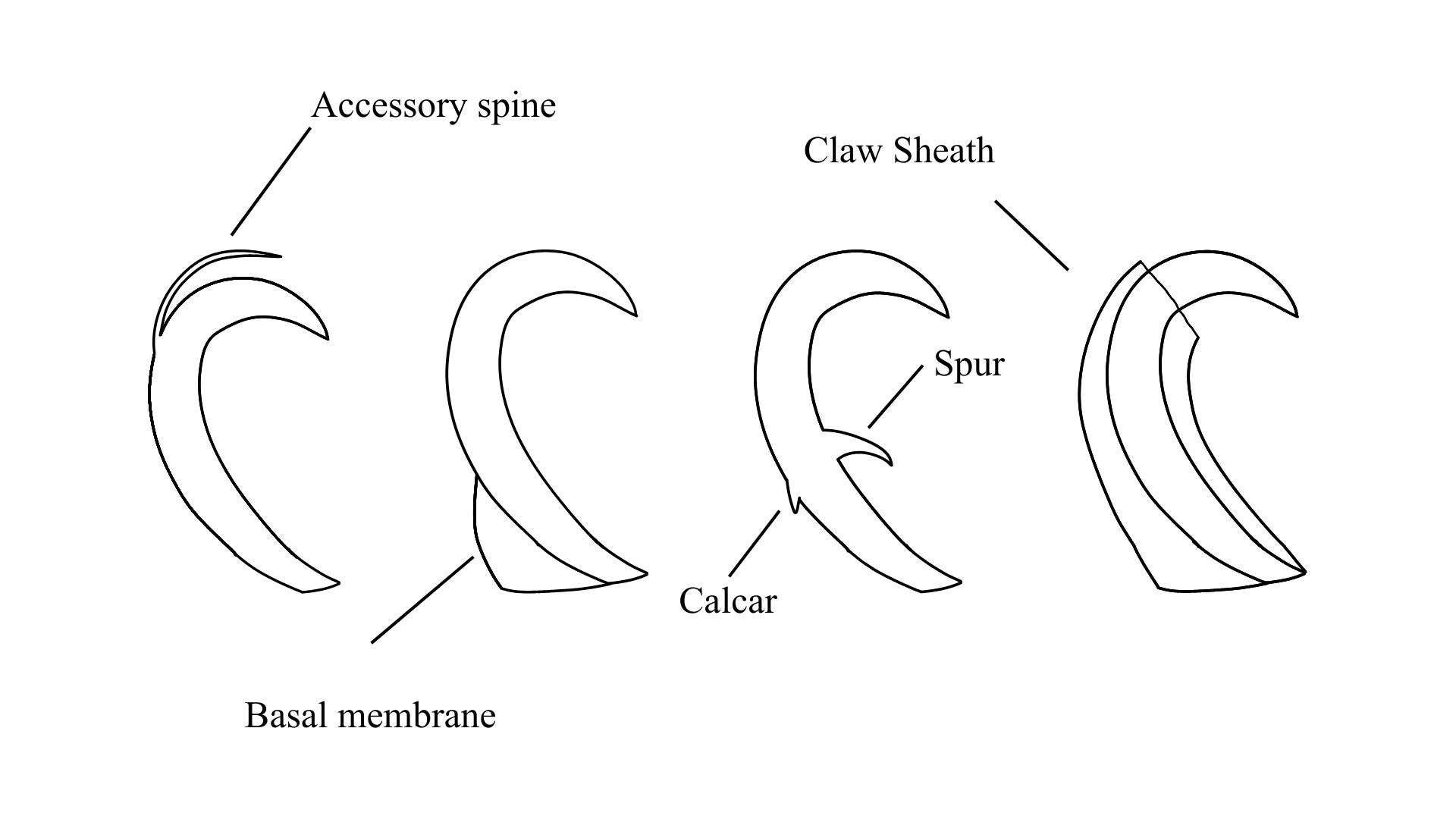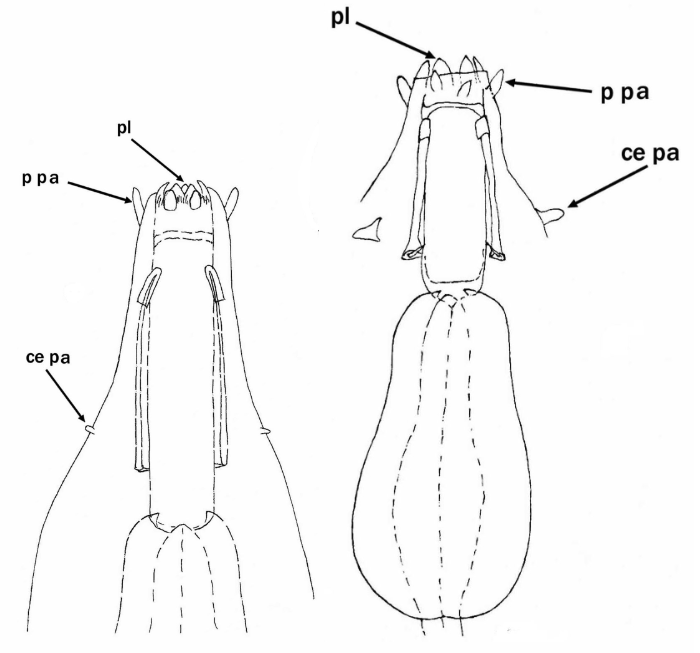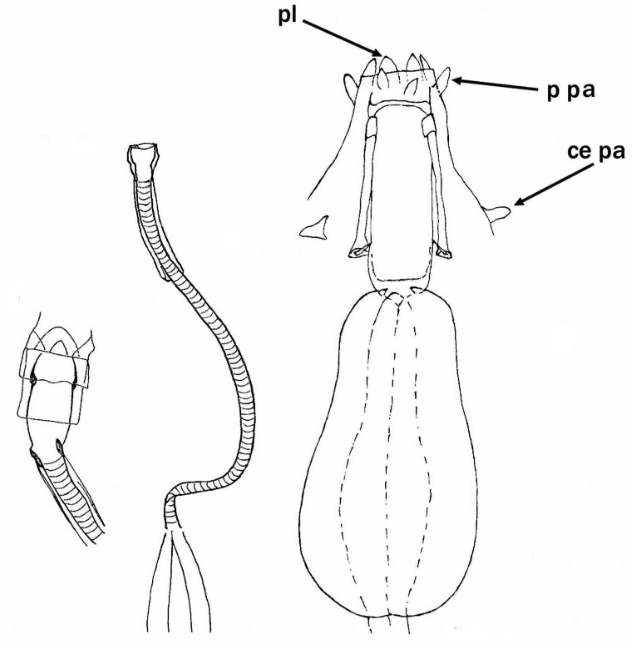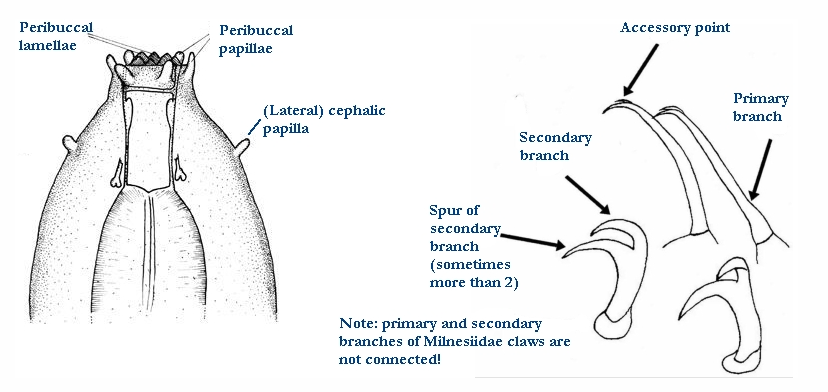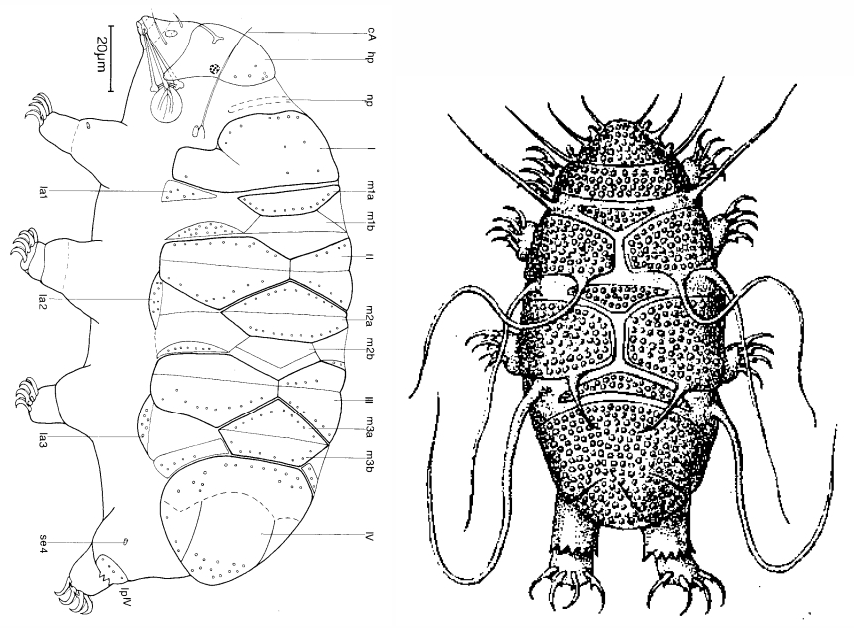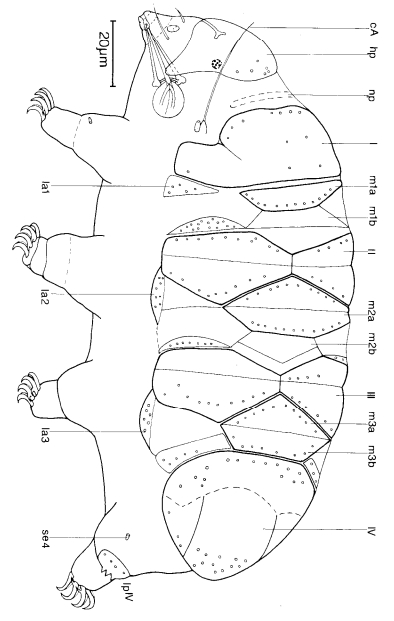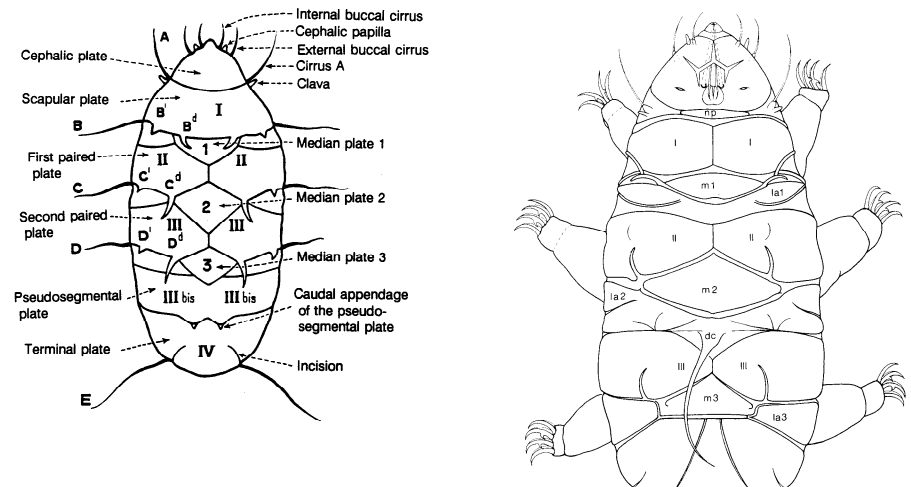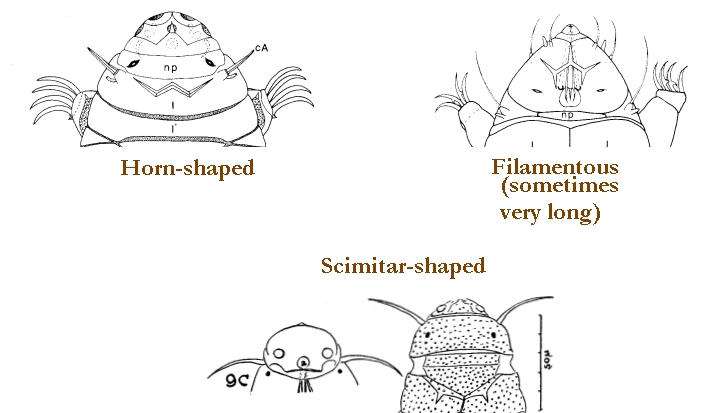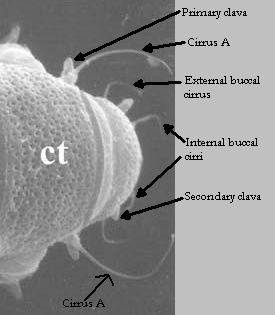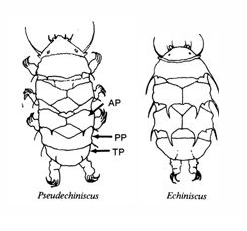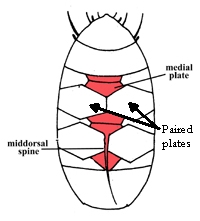
Renaudarctidae from Kristensen & Higgins 1984: “Arthrotardigrades with segmental dorsal plates, both claws and toes present. Two to four accessory claw spines present on each foot. Primary and secondary clavae present along with complete set of cephalic cirri.”
Renaudarctidae from Hansen et al. 2012: “Arthrotardigrades with segmental dorsal and ventral plates, both claws and toes present. Four toes are accompanied by four accessory claw spines on each foot in the adults. Primary and secondary clavae, and complete set of cephalic cirri present.”
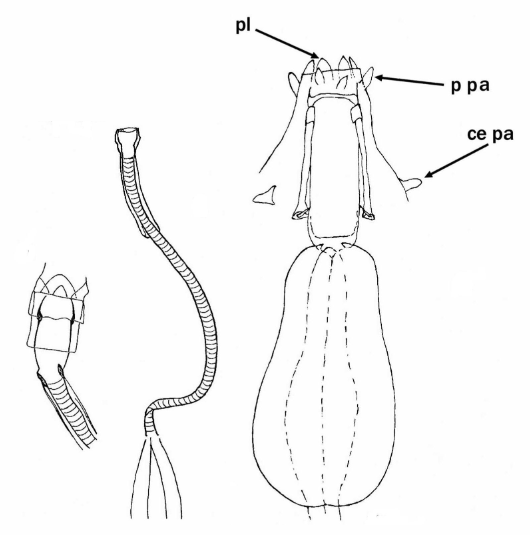
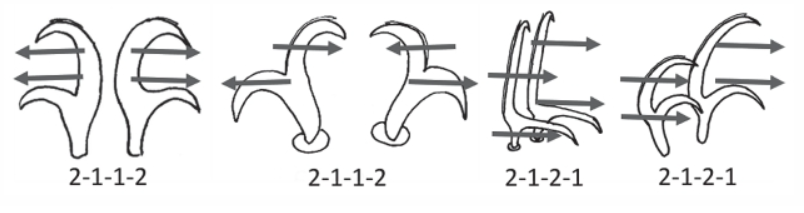
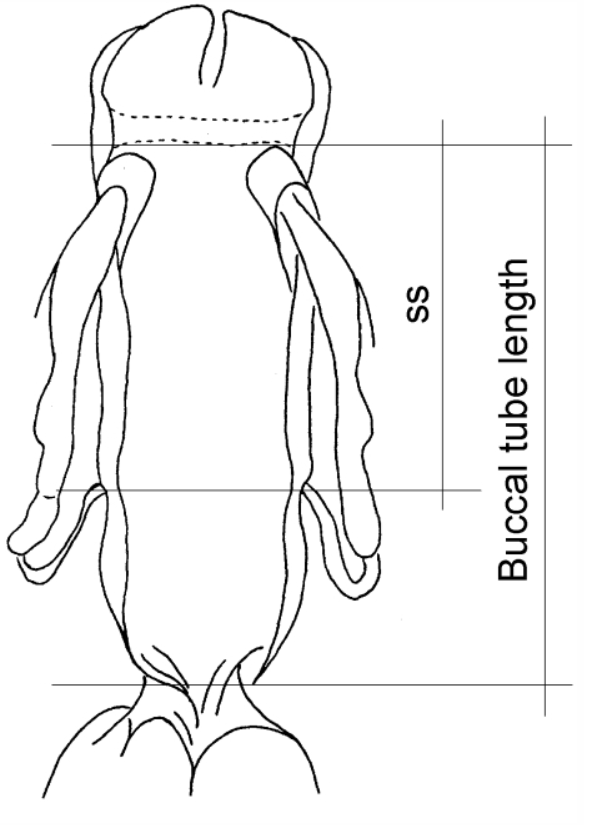
Renaudarctidae from Fujimoto & Yamasaki 2017: “Arthrotardigrada with dorsal and ventral segmental plates; complete set of cephalic sensory organs consist of unpaired median cirrus, paired internal cirri, paired external cirri, paired lateral cirri, paired primary clavae, paired secondary clavae and paired sensory plates; lateral cirri and primary clavae share common cirrophores; buccal pharyngeal apparatus consists of buccal tube, paired stylets and three non-branching placoids inside pharyngeal bulb; legs have wrinkled digits terminating in hook-shaped, single-pointed claws with flexible accessory filaments; leg IV may have two or four digits.”
Citations:
Fujimoto, S. & Yamasaki, H. (2017) A new genus and species of Renaudarctidae (Heterotardigrada: Arthrotardigrada) from Ryukyu Archipelago, Japan. Marine Biology Research, 13(3): 288–299.
Hansen, J.G., Kristensen, R.M. & Jørgensen, A. (2012) The armoured marine tardigrades (Arthrotardigrada, Tardigrada). Scientia Danica, series B Biologica 2, The Royal Danish Academy of Sciences and Letters, pp. 91.
Kristensen, R.M. & Higgins, R.P. (1984) A new family of Arthrotardigrada (Tardigrada: Heterotardigrada) from the Atlantic Coast of Florida, U.S.A. Transactions of the American Microscopical Society, 103(3): 295–311.