Who we are

Suggested text: Our website address is: https://tardigrada.help/.

Comments

Suggested text: When visitors leave comments on the site we collect the data shown in the comments form, and also the visitor’s IP address and browser user agent string to help spam detection.

An anonymized string created from your email address (also called a hash) may be provided to the Gravatar service to see if you are using it. The Gravatar service privacy policy is available here: https://automattic.com/privacy/. After approval of your comment, your profile picture is visible to the public in the context of your comment.

Media

Suggested text: If you upload images to the website, you should avoid uploading images with embedded location data (EXIF GPS) included. Visitors to the website can download and extract any location data from images on the website.

Cookies

Suggested text: If you leave a comment on our site you may opt-in to saving your name, email address and website in cookies. These are for your convenience so that you do not have to fill in your details again when you leave another comment. These cookies will last for one year.

If you visit our login page, we will set a temporary cookie to determine if your browser accepts cookies. This cookie contains no personal data and is discarded when you close your browser.

When you log in, we will also set up several cookies to save your login information and your screen display choices. Login cookies last for two days, and screen options cookies last for a year. If you select "Remember Me", your login will persist for two weeks. If you log out of your account, the login cookies will be removed.

If you edit or publish an article, an additional cookie will be saved in your browser. This cookie includes no personal data and simply indicates the post ID of the article you just edited. It expires after 1 day.

Embedded content from other websites

Suggested text: Articles on this site may include embedded content (e.g. videos, images, articles, etc.). Embedded content from other websites behaves in the exact same way as if the visitor has visited the other website.

These websites may collect data about you, use cookies, embed additional third-party tracking, and monitor your interaction with that embedded content, including tracking your interaction with the embedded content if you have an account and are logged in to that website.

Who we share your data with

Suggested text: If you request a password reset, your IP address will be included in the reset email.

How long we retain your data

Suggested text: If you leave a comment, the comment and its metadata are retained indefinitely. This is so we can recognize and approve any follow-up comments automatically instead of holding them in a moderation queue.

For users that register on our website (if any), we also store the personal information they provide in their user profile. All users can see, edit, or delete their personal information at any time (except they cannot change their username). Website administrators can also see and edit that information.

What rights you have over your data

Suggested text: If you have an account on this site, or have left comments, you can request to receive an exported file of the personal data we hold about you, including any data you have provided to us. You can also request that we erase any personal data we hold about you. This does not include any data we are obliged to keep for administrative, legal, or security purposes.

Where your data is sent

Suggested text: Visitor comments may be checked through an automated spam detection service.
Armoured (dorsal) plates?

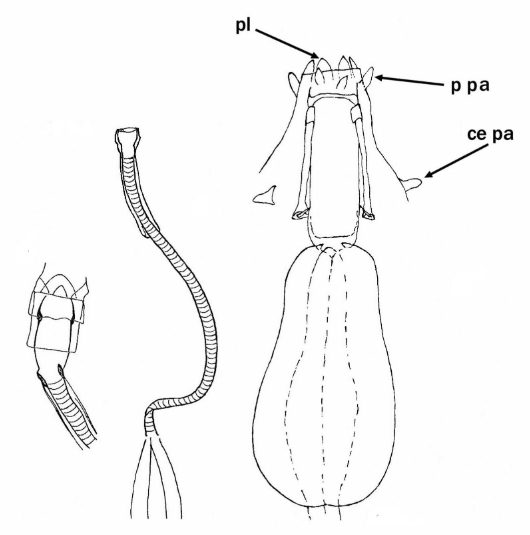
Pharyngeal tube flexible?

Note: in a tardigrade with snout extended, the flex of the pharyngeal tube may not be obvious.


Images from Pilato G, Binda MG. 2010. Definition of families, subfamilies, genera, and subgenera of the Eutardigrada, and keys to their identification. Zootaxa. 2404: 1-54.

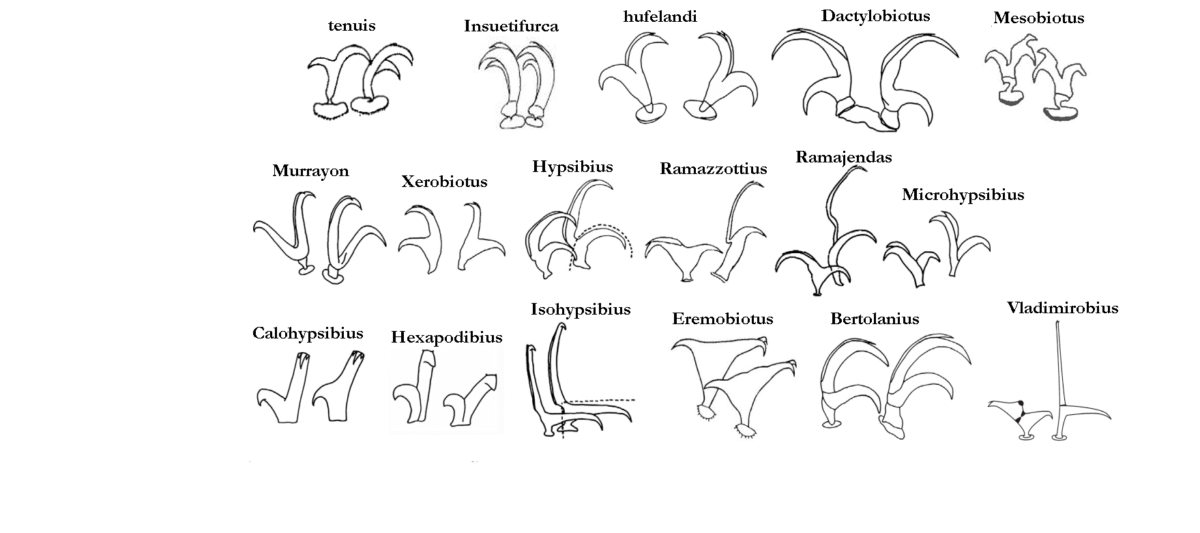
Claw type

tenuis: With stalk, a long common tract formed by the joined primary & secondary branches, and distal sections of both the secondary branch – shorter than the primary – and primary branch forming almost a right angle.
Insuetifurca: Modified hufelandi: Basal section subdivided into a very short stem & a large distal portion.
hufelandi: Primary & secondary branches rigidly joined, forming an acute angle, with variable but long common basal tract and cylindrical stalk.
Dactylobiotus: Basal section a trapezoidal lamina; secondary branch clearly shorter than primary and inserted near the base of the latter; the two branches form an almost right angle.
Mesobiotus: Primary & secondary branches rigidly joined, forming acute angle, with variable but long common basal tract with internal septum defining a distal part, with cylindrical stalk. Often very prominent, strong accessory point on primary.
Murrayon: Basal section a trapezoidal lamina; primary & secondary branches joined to each other for a very short portion and form an acute angle.
Xerobiotus: Whole double claw equally sclerified; basal section not subdivided into a basal stem & distinct distal portion; no separating septa present; primary & secondary branches rigidly joined forming an acute angle.
Hypsibius: Secondary branch forming a continuous curve with its basal tract; in external claws the primary branch connected to the basal tract with a flexible part while the inner claw is rigid.
Ramazzottius: External claws with basal section longer than the secondary branch; primary branch very long and slender and connected to basal tract with an evident, thin, flexible tract; internal claws short & stout, rigid.
Ramajendas: External claws similar to Hypsibius type with extremely long and slender primary branch; internal claw similar to Isohypsibius type.
Microhypsibius: Small, rigid, with an evident thin basal tract continuous with the primary branch; secondary branch rigidly joined to the primary branch at a distance from the base of the claw.
Calohypsibius: Small, rigid, in frontal view with a base as large as the sum of the primary and secondary branch widths, without a suture between the two branches.
Hexapodibius: Very short, without common basal tract, with base as large as the sum of the primary and secondary branches.
Isohypsibius: Secondary branch inserted perpendicularly on the claw basal tract.
Eremobiotus: Isohypsibius-type very modified with two branches of each claw joined to one another for a long portion of their length constituting a large common tract from which the two distal tracts diverge forming an angle of almost 180°.
Bertolanius: Subdivided into three distinct sections: basal section, secondary branch and primary branch (rigidly joined to the secondary branch), one on top of the other and separated by septa; the angles between the main and secondary branch different in external and internal claws – and acute angle (about 45°) is formed by the external claw, and an almost right angle (about 80°) by the internal claw; internal claws can rotate on their base up to 180°.
Vladimirobius: external at least 2x length of internal (measured from base of claw), internal very wide at the junction of primary and secondary branches, short and thin basal part, primary branches with very prominent gibbosity-like projection near the junction of primary and secondary branches; external very thin with long basal part; accessory points of both claws very near to end of primary branch.
Calcarobiotus: Basal section, with or without basal spurs, subdivided into a thin flexible stem & a wide distal section in the shape of an upside-down triangle distally delmited by a septum; primary & secondary branches similar in shape & size.
Macroversum: Basal section subdivided into a thin, flexible, stem and distal portion not very sclerotized; primary & secondary branches connected to each other for a short portion and form an almost right angle.

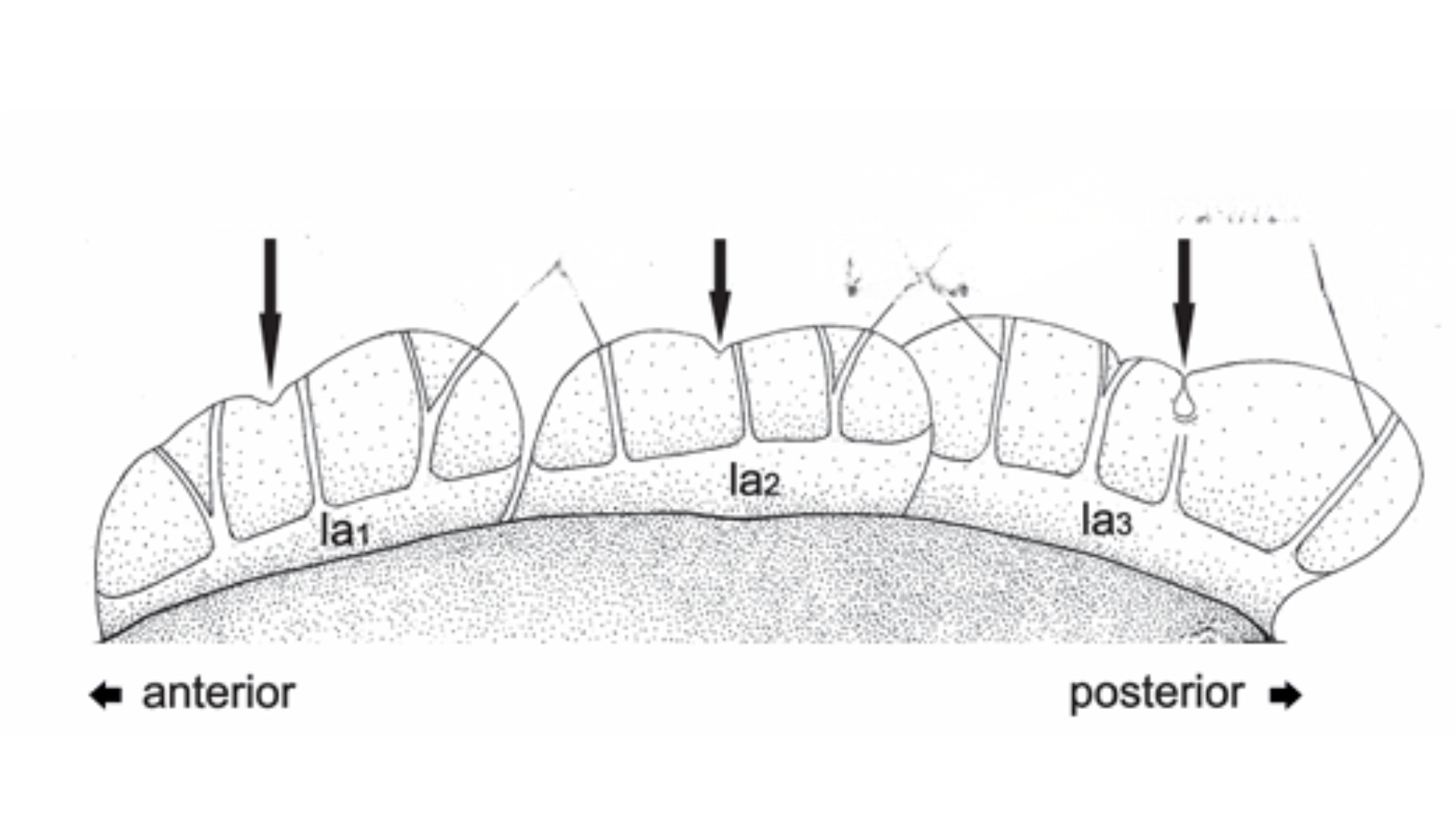
Number of lateral alae

Hansen, J.G. & Kristensen, R.M. (2021) A new genus and five new species of the subfamily Florarctinae (Tardigrada, Arthrotardigrada). European Journal of Taxonomy, 762, 149-184.

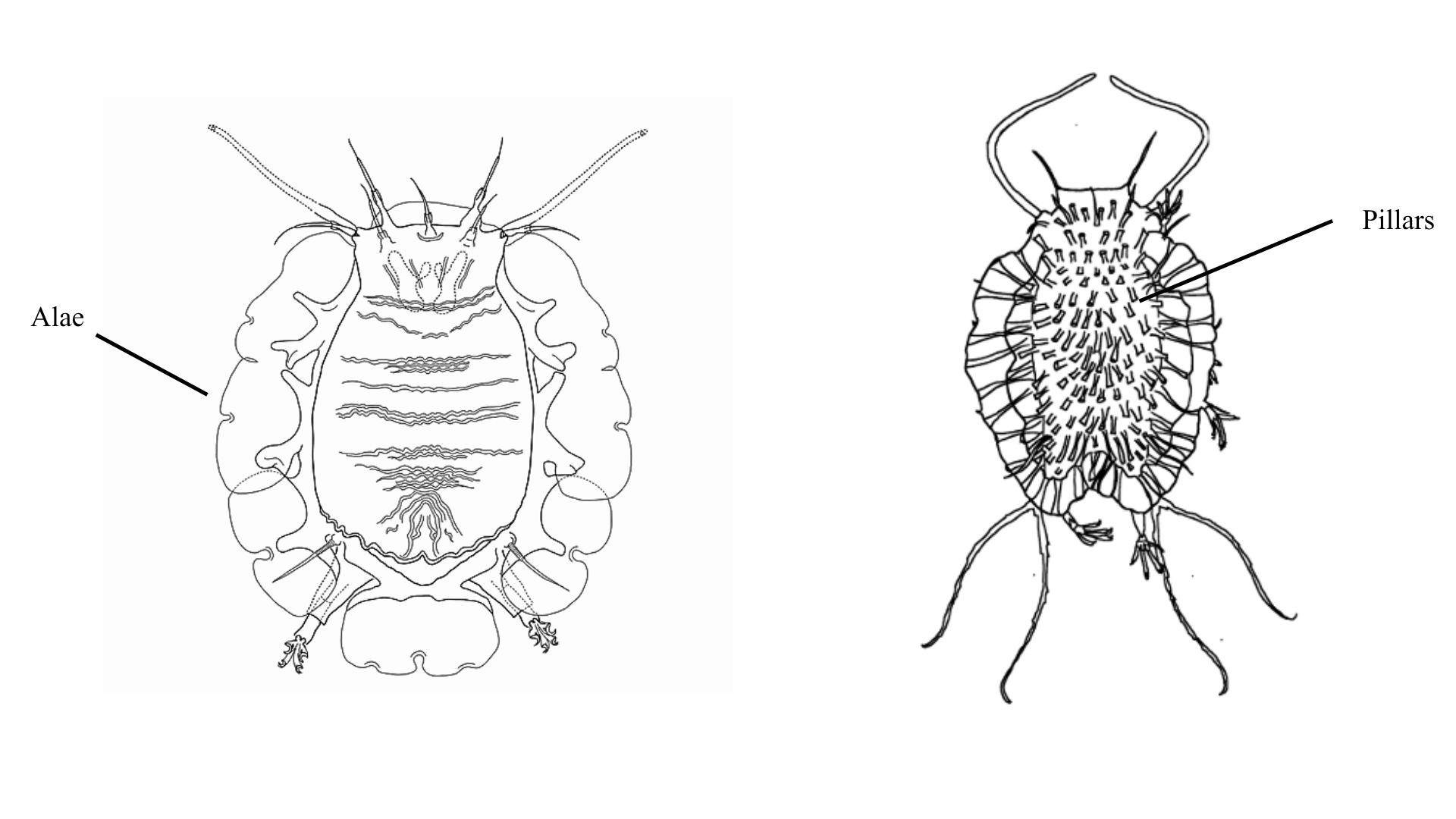
Epicuticle

Left image: Anguas-Escalante, A., De Jesús Navarrete, A., Demilio, E., Pérez-Pech, W.A. & Hansen, J.G. (2020). A new species of Tardigrada from a Caribbean reef lagoon, Florarctus yucatanensis sp. nov. (Halechiniscidae: Florarctinae). Cahiers de Biologie Marine, 62, 377-385.

Right image: Fontoura, P., Bartels, B.J., Jørgensen, A., Kristensen, R.M. & Hansen, J.G. (2017) A dichotomous key to the genera of the marine Heterotardigrades (Tardigrada). Zootaxa, 4294, 1-45.

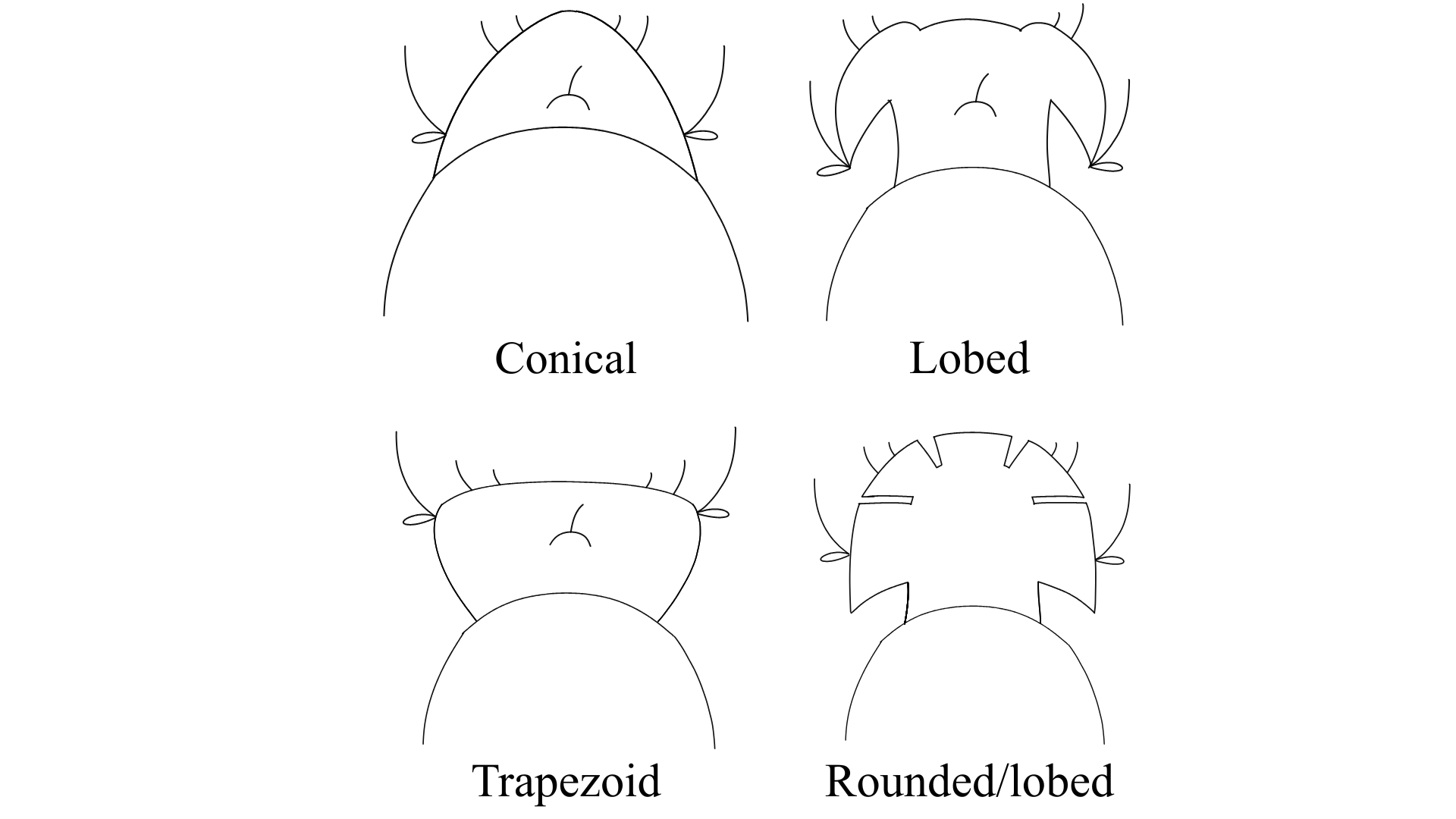
Head Structure

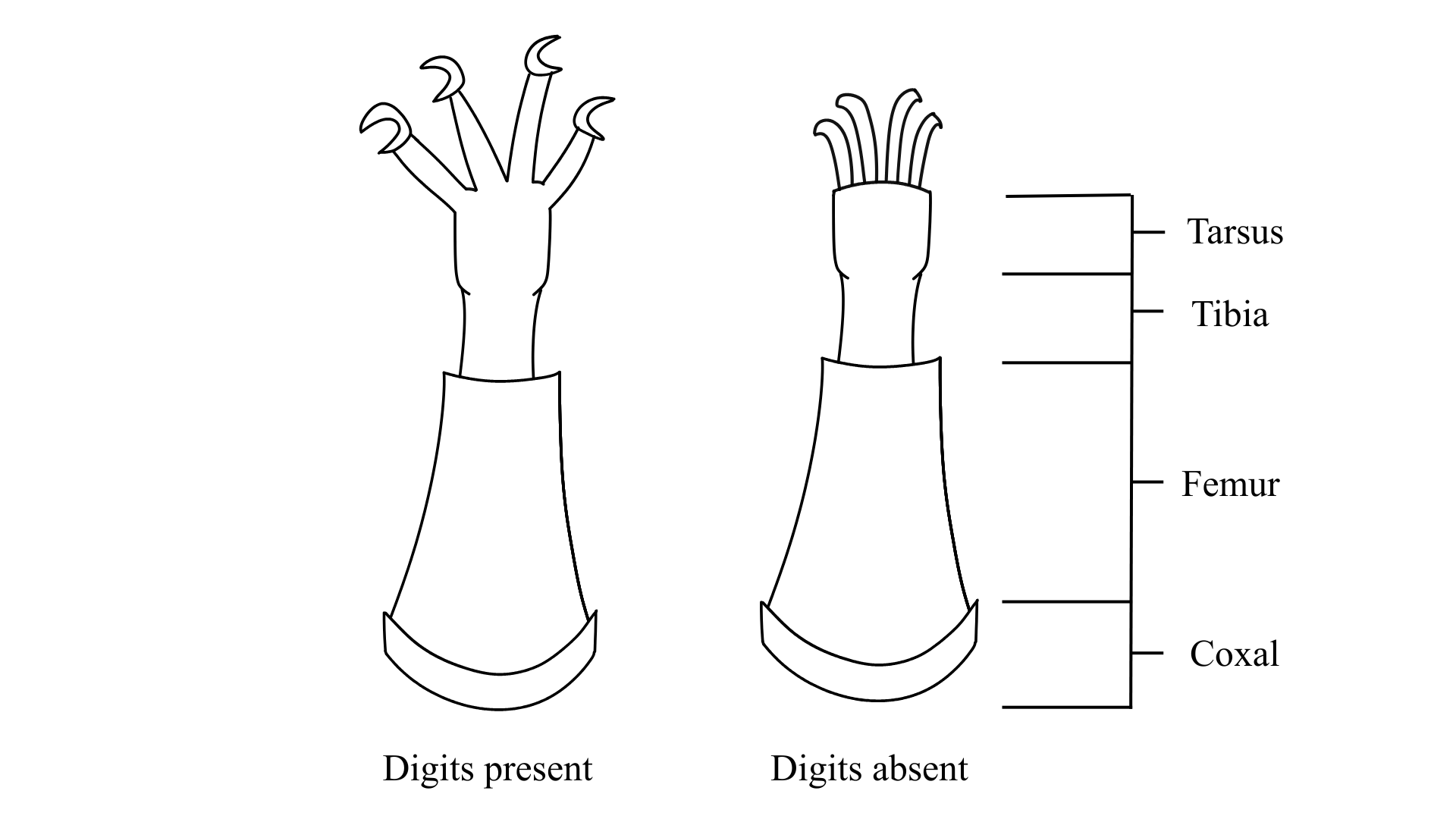
Digits

Note: If specimen has pads instead of digits, select “Pads”

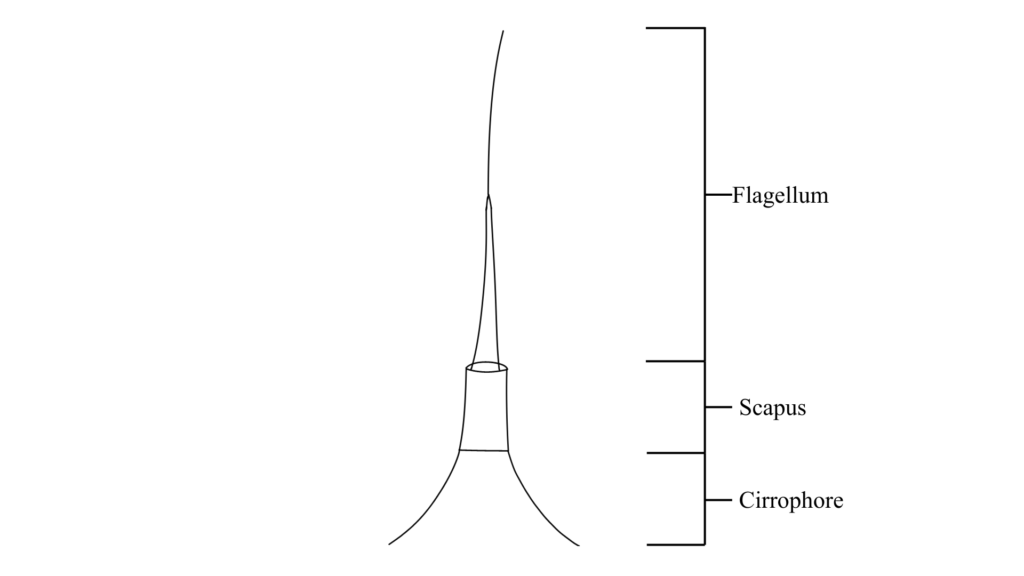
Cephalic cirri flagellum form

Modified image from Renaud-Mornant 1982 0708 Renaud-Mornant J. 1982. Species Diversity in Marine Tardigrada. Proceedings of the Third International Symposium on the Tardigrada. 149-178

Note: If unsure of form, select “Present”

Cephalic cirri scapus form

Modified image from Renaud-Mornant 1982 0708 Renaud-Mornant J. 1982. Species Diversity in Marine Tardigrada. Proceedings of the Third International Symposium on the Tardigrada. 149-178

Note: If unsure of form, select “Present” 

Cephalic cirri cirrophore form

Modified image from Renaud-Mornant 1982 0708 Renaud-Mornant J. 1982. Species Diversity in Marine Tardigrada. Proceedings of the Third International Symposium on the Tardigrada. 149-178

Note: If unsure of form, select “indistinct” for cirrophore

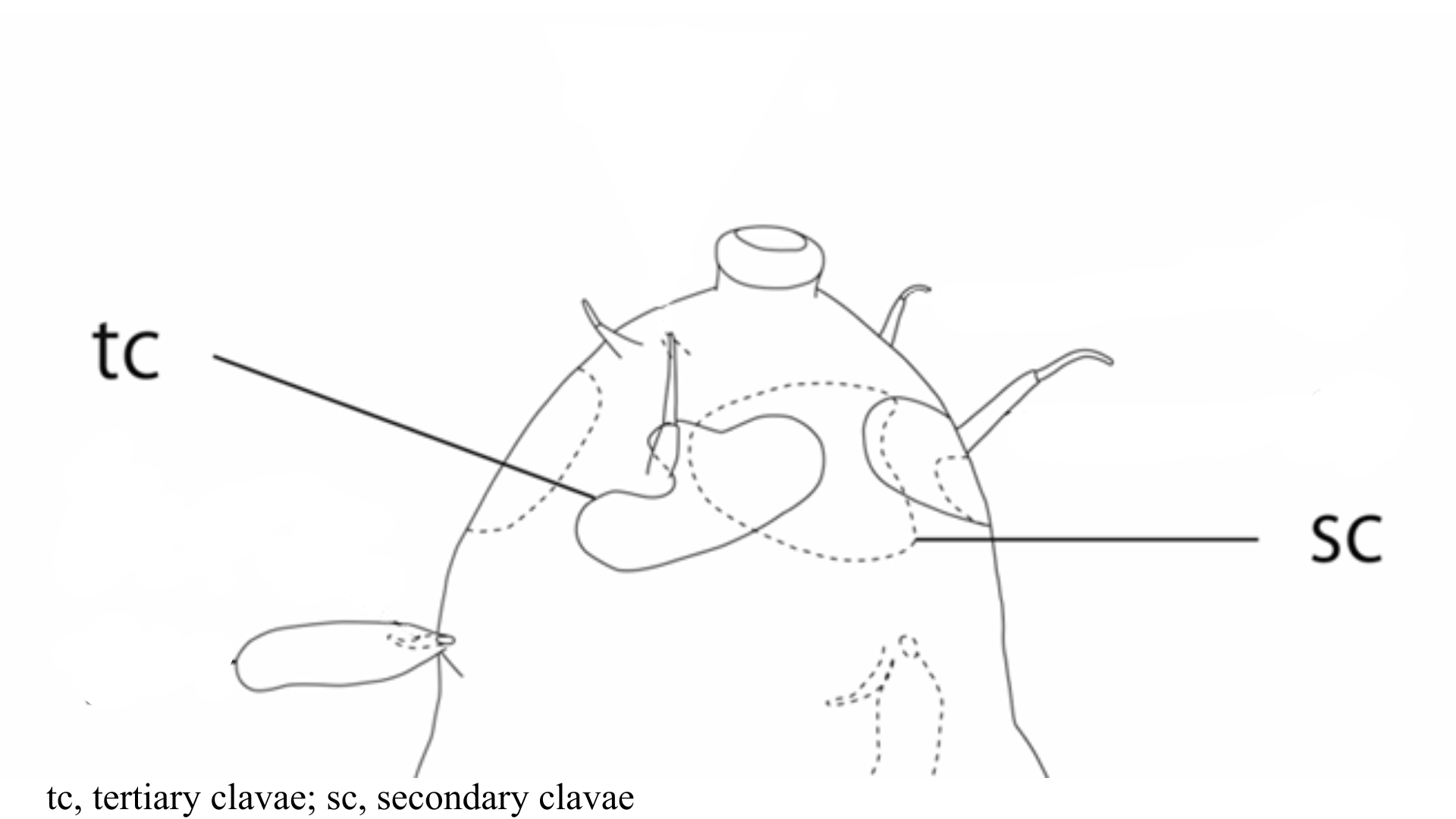
Secondary and tertiary clavae

Image from Fujimoto S, Hansen JG. 2019. Revision of Angursa (Arthrotardigrada: Styraconyxidae) with the description of a new species from Japan. European Journal of Taxonomy. 150: 1-19.

Note: Secondary clavae can have similar forms to primary clavae. However, secondary clavae can be flat structures of varying shapes around the mouth cone area

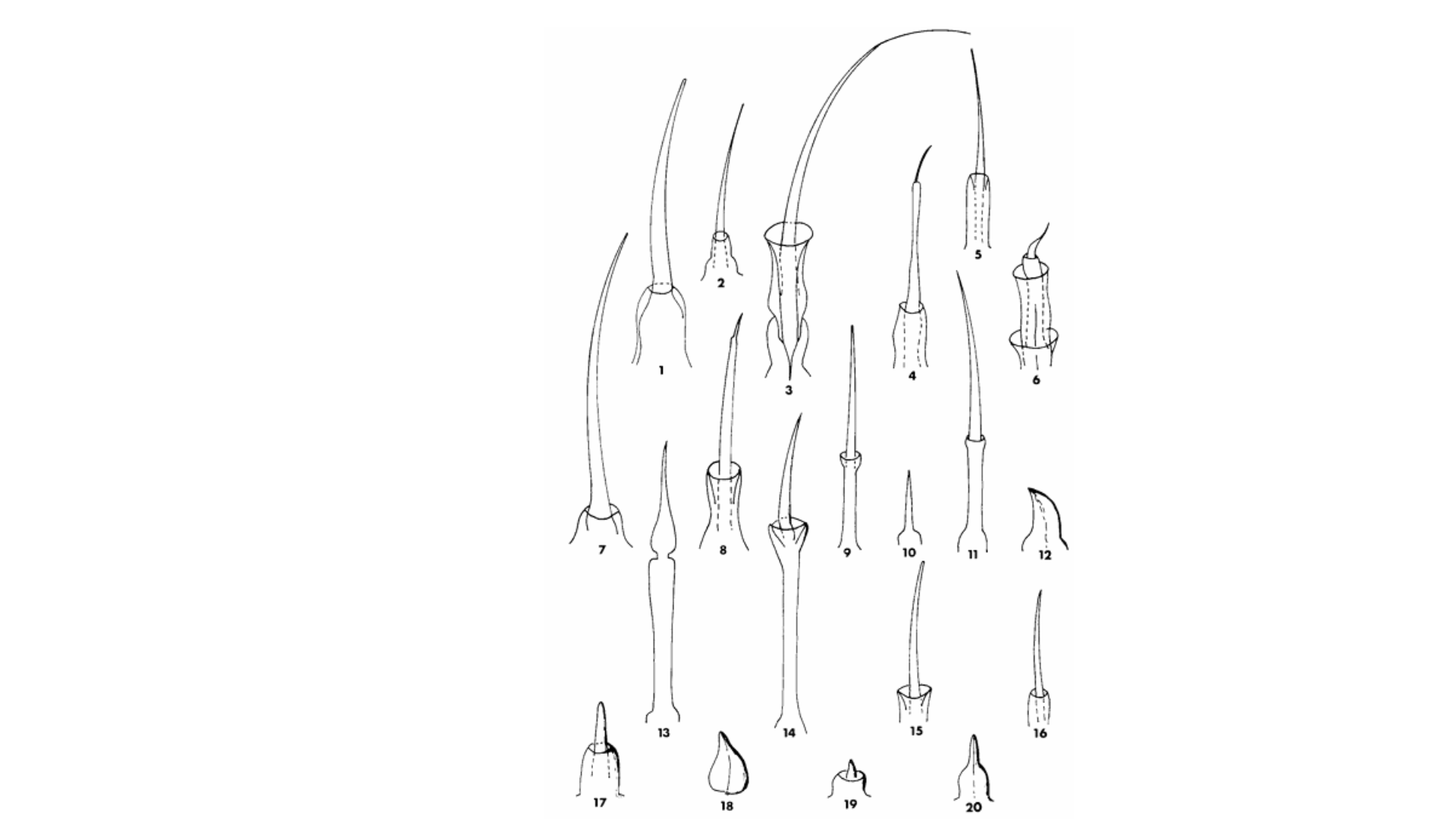
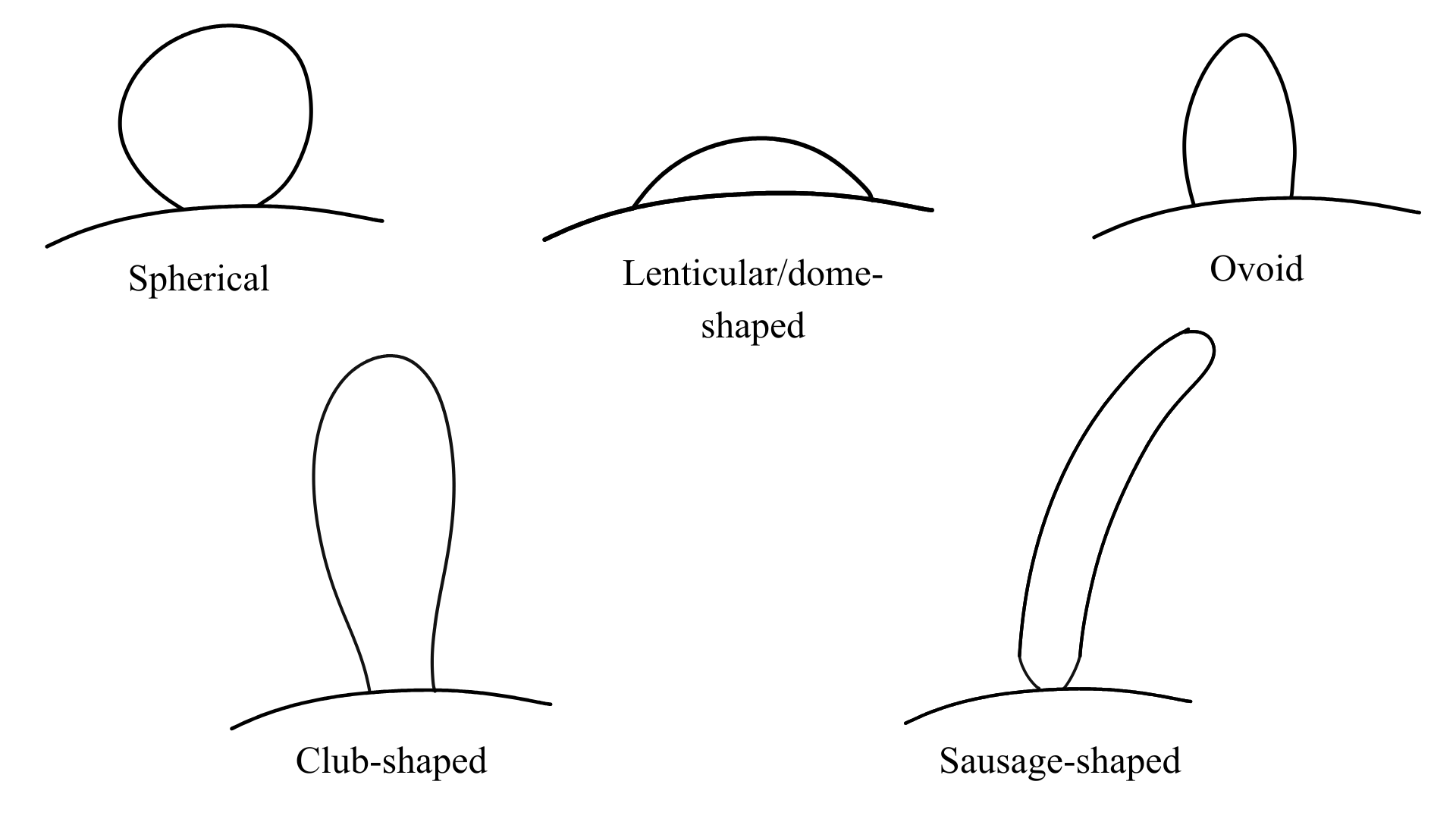
Generalized forms of primary clavae

Arthrotardigrada generalized primary clavae form

Note: Clavae forms can vary between species

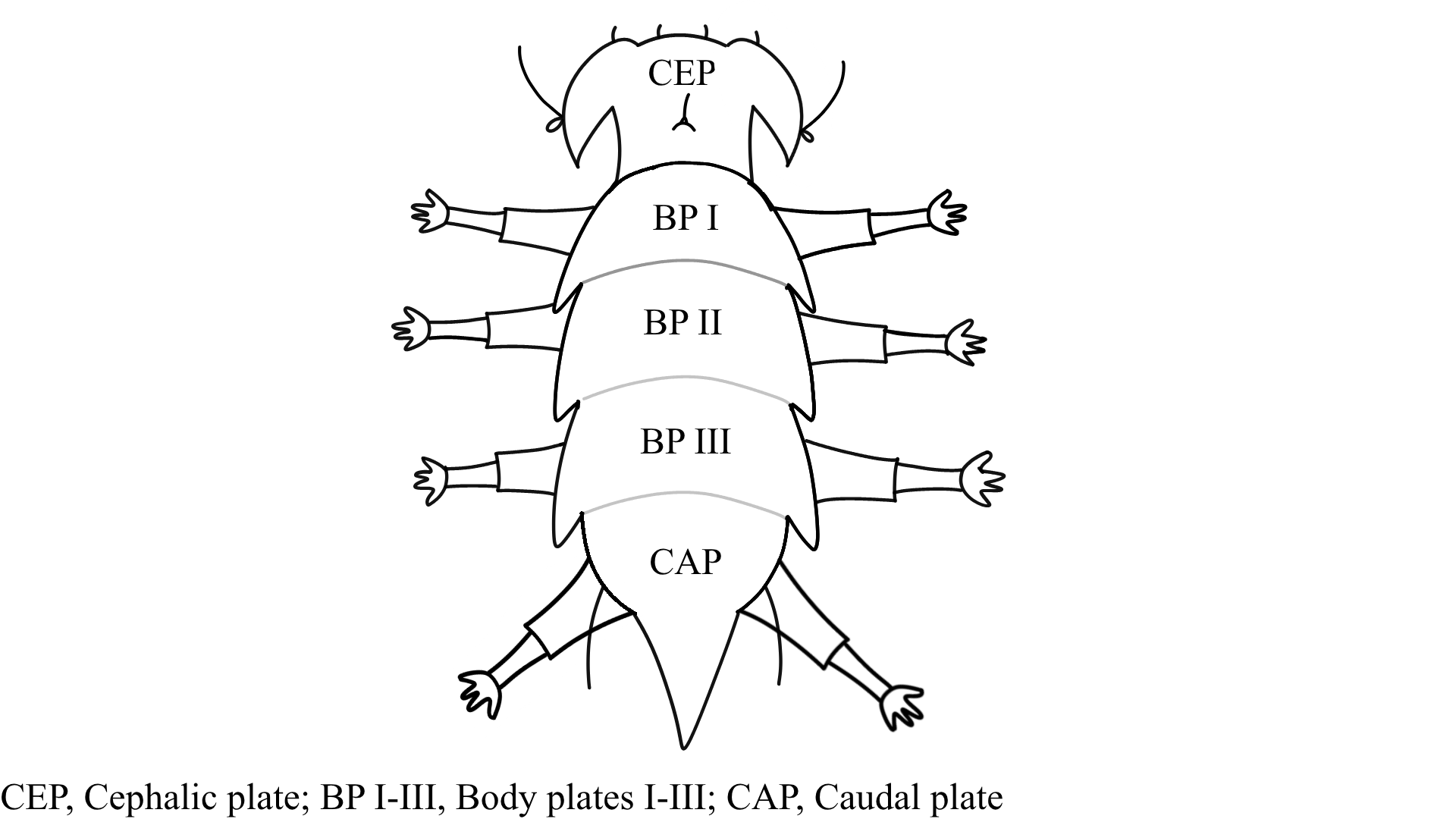
Armoured plates?

Note: Select “Ventral plates” if visible.

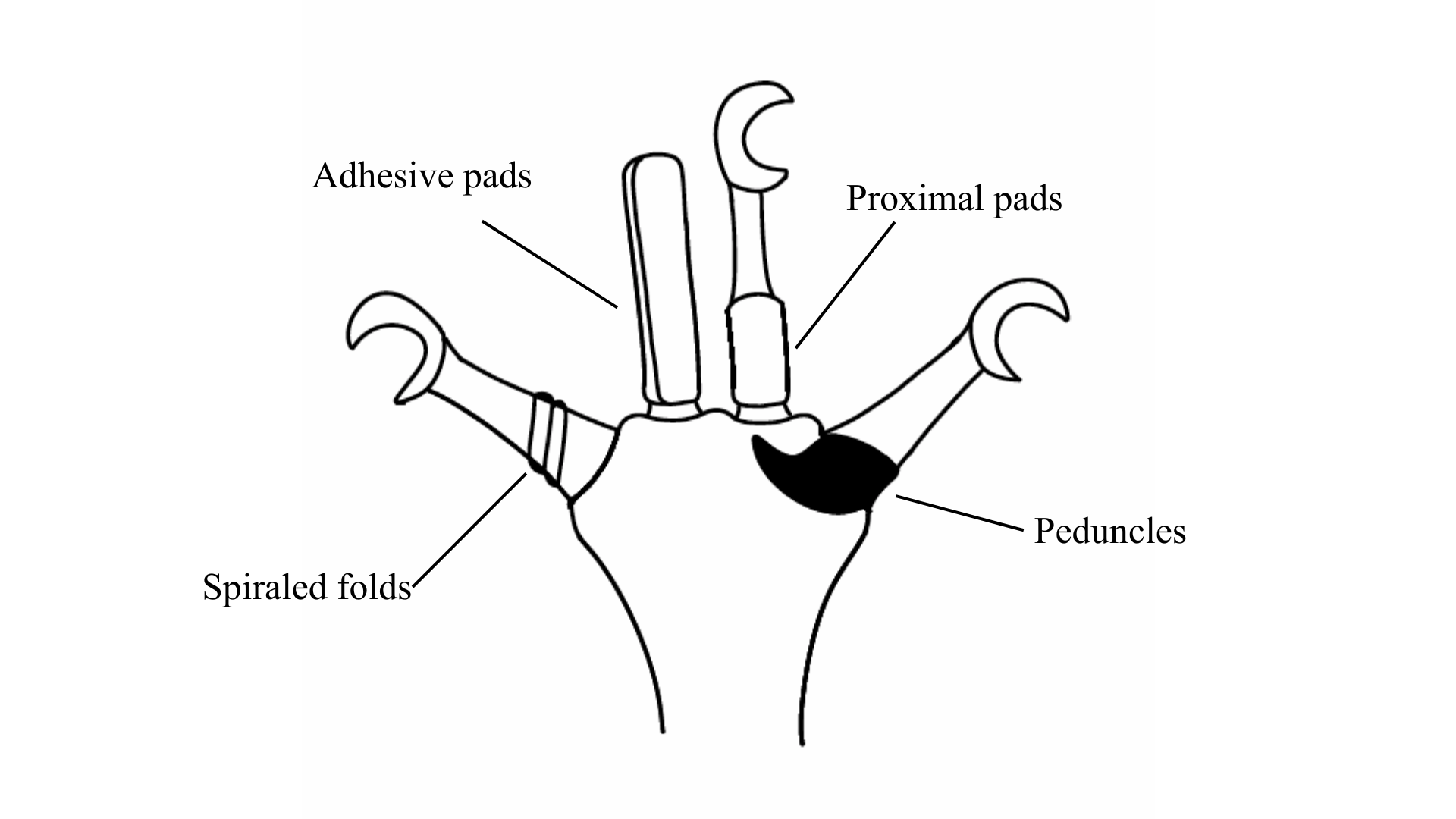
Additional digit accessory structures

Arthrotardigrada digit accessory structures

Note: Specimen can have some or none of these traits. Select those that apply.

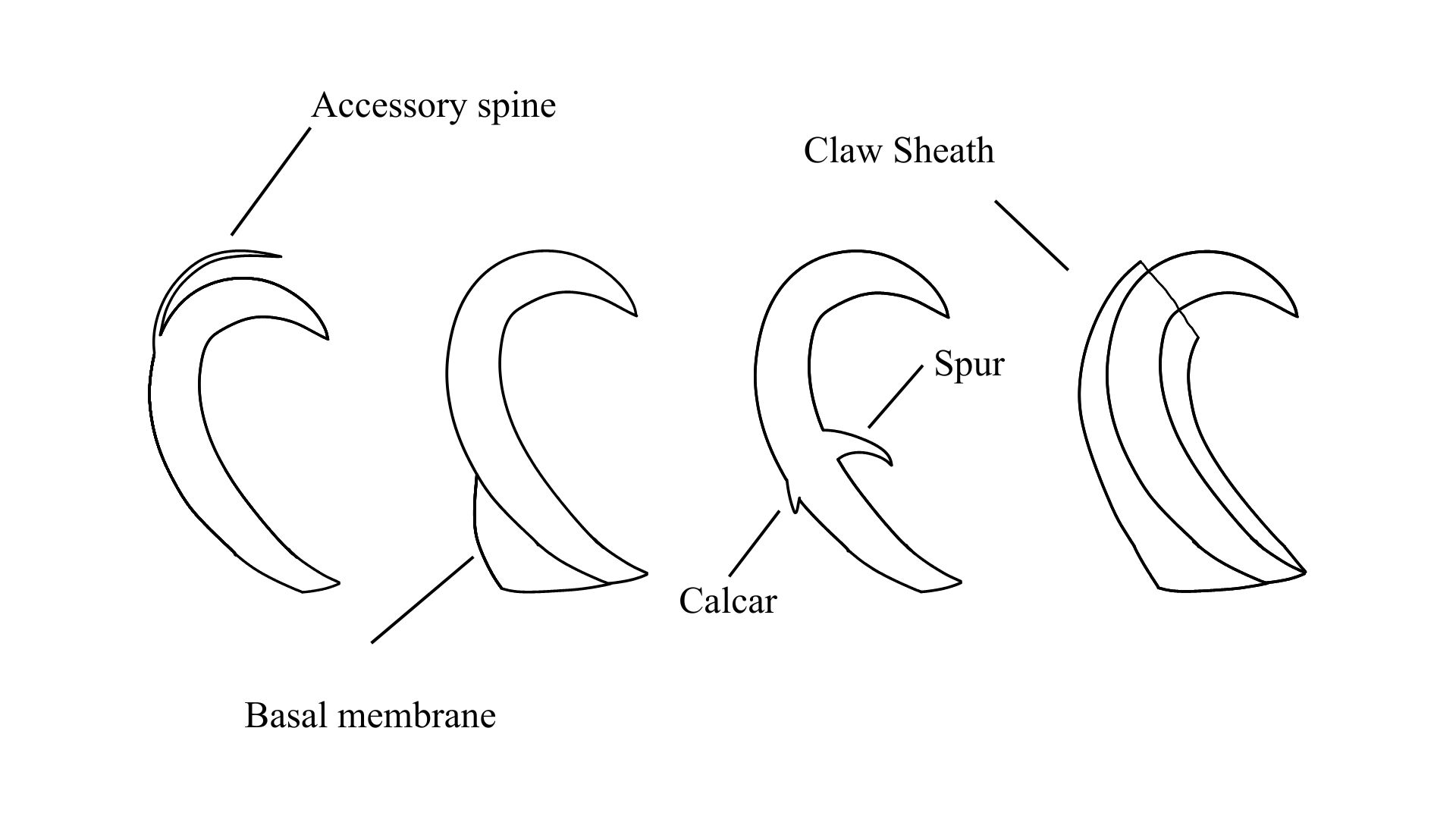
Additional claw accessory structures

Arthrotardigrada claw accessory structures

Note: Specimen can have some or none of these traits. Select those that apply.

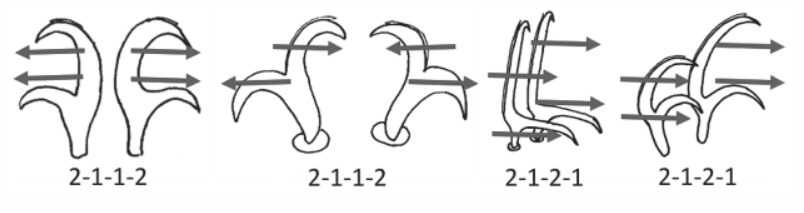
Claw Symmetry Relative To Median Plane Of Leg?

Image from Bingemer J, Hohberg K. 2017. An illustrated identification key to the eutardigrade species (Tardigrada, Eutardigrada) presently known from European soils. Soil Organisms. 89 (3): 127-149.

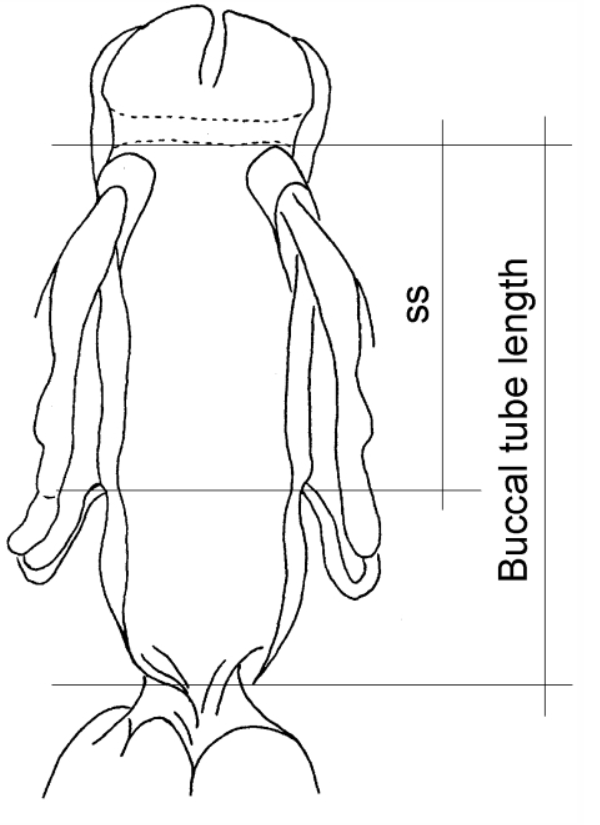
Stylet Support Insertion Point As Percentage Of Buccal Tube Length

Stylet support insertion point = ss divided by Buccal tube length, as %. Note anterior measurements begin at anterior margin of stylet sheaths, ss is centred where stylet supports reach buccal tube (this requires a good dorsal or lateral view for proper measurement)


Image from Tumanov DV. 2006. Five new species of the genus Milnesium (Tardigrada, Eutardigrada, Milnesiidae). Zootaxa. 1122: 1-23.

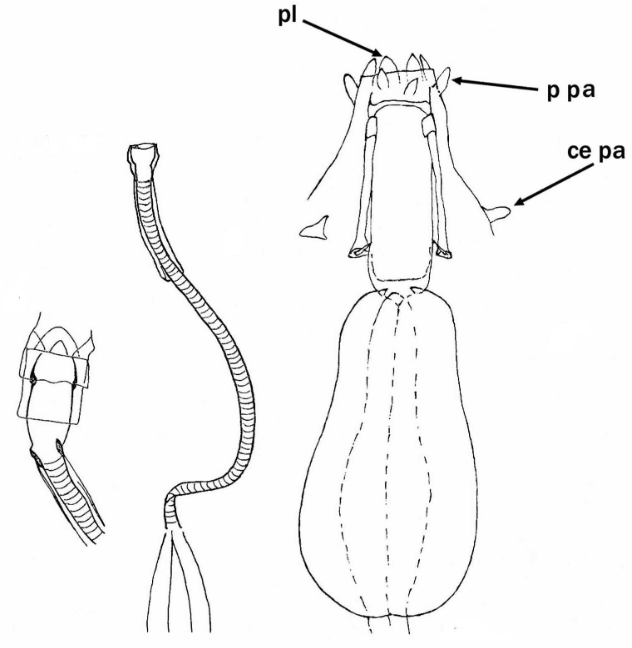
Buccal Tube Long, Mouth At Anterior Of A Protrusible Snout

Images from Pilato G, Binda MG. 2010. Definition of families, subfamilies, genera, and subgenera of the Eutardigrada, and keys to their identification. Zootaxa. 2404: 1-54.

Pharyngeal Tube With Spiral Reinforcement

Images from Pilato G, Binda MG. 2010. Definition of families, subfamilies, genera, and subgenera of the Eutardigrada, and keys to their identification. Zootaxa. 2404: 1-54.

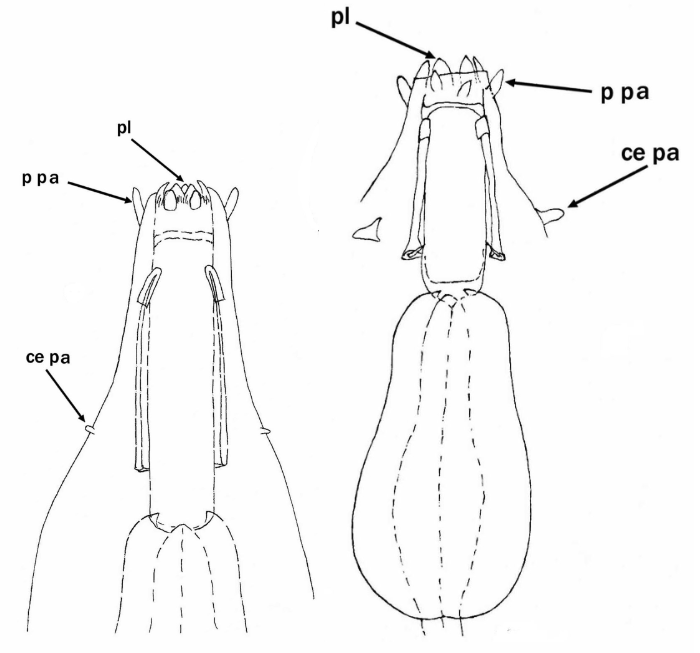
Peribuccal papillae?

Images from Pilato G, Binda MG. 2010. Definition of families, subfamilies, genera, and subgenera of the Eutardigrada, and keys to their identification. Zootaxa. 2404: 1-54.

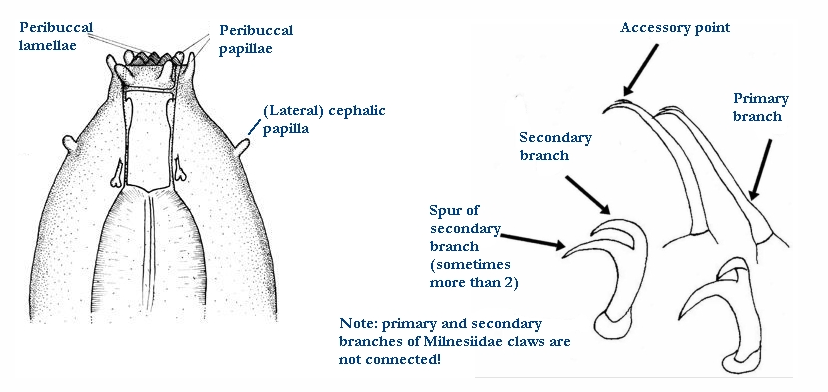
(Lateral) cephalic papillae, peribuccal papillae, Milnesiidae - type claws, exceptionally wide (and usually short) buccal tube?

Cephalic image modified from Nelson DR, Guidetti R, Rebecchi L. 2009. Tardigrada. Ch. 14 in Ecology and Classification of North American Freshwater Invertebrates, Thorp JH, Covich AP (eds.), 3rd ed.

Claw image modified from Pilato G, Binda MG. 2010. Definition of families, subfamilies, genera, and subgenera of the Eutardigrada, and keys to their identification. Zootaxa. 2404: 1-54.

Pharyngeal tube flexible?

Note: in a tardigrade with snout extended, the flex of the pharyngeal tube may not be obvious.


Images from Pilato G, Binda MG. 2010. Definition of families, subfamilies, genera, and subgenera of the Eutardigrada, and keys to their identification. Zootaxa. 2404: 1-54.

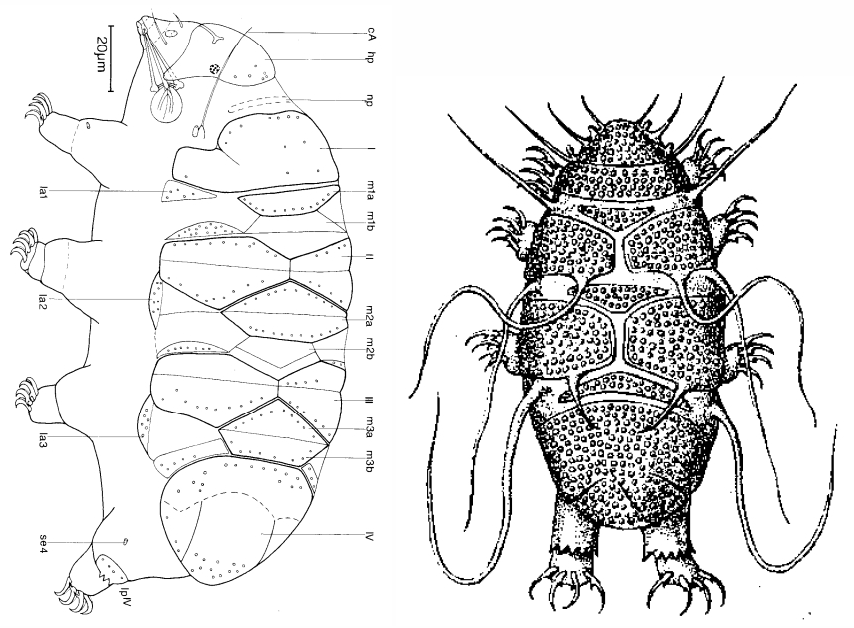
Serrated / dentate cuff / collar on legs IV

Left image from Kristensen RM. 1987. Generic revision of the Echiniscidae (Heterotardigrada), with a discussion of the origin of the family. pp. 261-335 in Bertolani R (ed). Biology of Tardigrades: Selected symposia and monographs.

Right Image from Richters F. 1926. Tardigrada. in Krumbach T. 1927. Handbuch der Zoologie, 3rd band, Walter de Gruyter & Co.

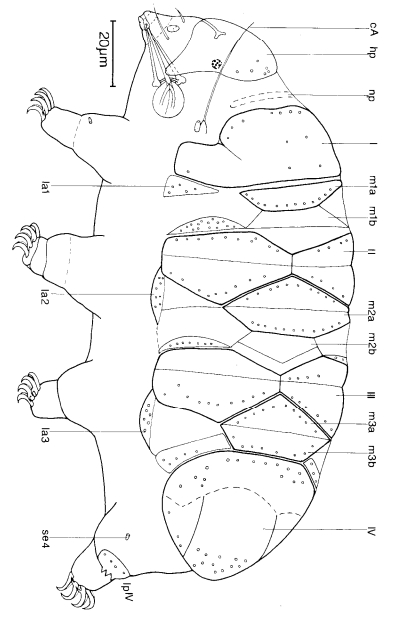
Leg sensory structures

Typically papilla on leg IV (se4 in image) and variable shape on leg I


Image from Kristensen RM. 1987. Generic revision of the Echiniscidae (Heterotardigrada), with a discussion of the origin of the family. pp. 261-335 in Bertolani R (ed). Biology of Tardigrades: Selected symposia and monographs.

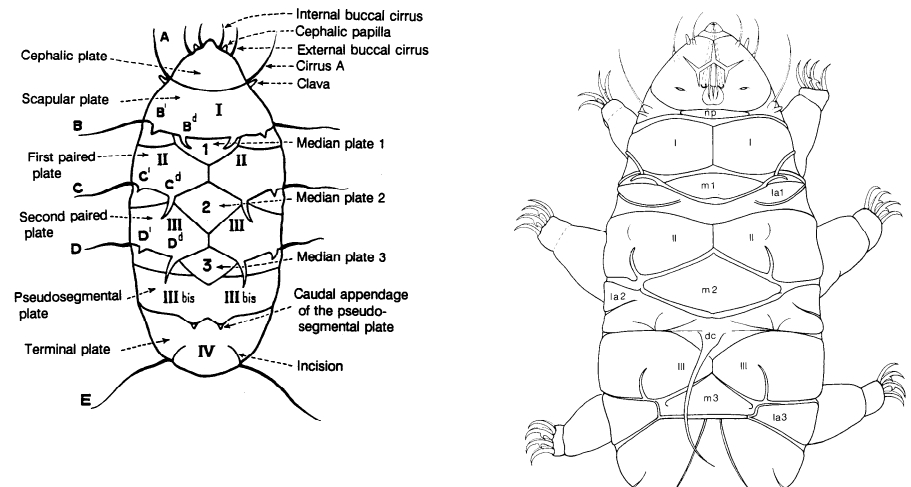
Trunk appendages

Appendages (after Cirrus A) labeled according to plate … B (Scapular plate), C (First segmental plate), D (Second segmental plate), E (terminal plate). “B” is lateral, “Bd” is dorsal

Be careful! There can be great variability within a population, with individuals (especially juveniles) lacking some appendages. When in doubt, focus on other characters first!


Left image from Ramazzotti G, Maucci W. 1983. Il phylum Tardigrada(III edizione riveduta e aggiornata). English translation by C. W. Beasley, 1995. Memorie dell’ Istituto Italiano di Idrobiologia 41: 1-1012.

Right image cropped from Kristensen RM. 1987. Generic revision of the Echiniscidae (Heterotardigrada), with a discussion of the origin of the family. pp. 261-335 in Bertolani R (ed). Biology of Tardigrades: Selected symposia and monographs.

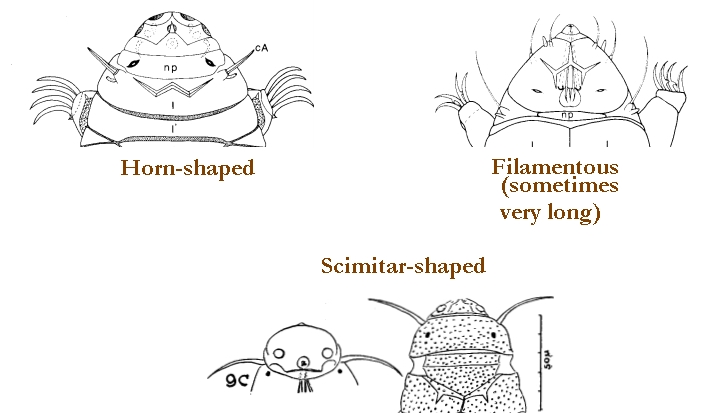
Cirrus A form

Images modified from Kristensen RM. 1987. Generic revision of the Echiniscidae (Heterotardigrada), with a discussion of the origin of the family. pp. 261-335 in Bertolani R (ed). Biology of Tardigrades: Selected symposia and monographs.

Lower image (Mopsechiniscus) modified from du Bois-Reymond Marcus E. 1944. Sobre tardigrados brasileiros. Communicaciones Zoologicas del Museo de Historia Natural de Montevideo. 1(13): 1-19 plus plates.

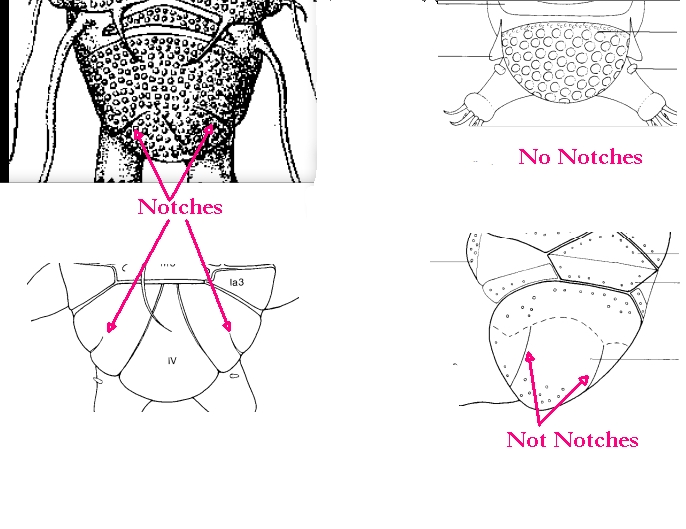
Terminal / caudal plate with two notches?

Images modified from Kristensen RM. 1987. Generic revision of the Echiniscidae (Heterotardigrada), with a discussion of the origin of the family. pp. 261-335 in Bertolani R (ed). Biology of Tardigrades: Selected symposia and monographs.

First image (Echiniscus) modified from Richters F. 1926. Tardigrada. in Krumbach T. 1927. Handbuch der Zoologie, 3rd band, Walter de Gruyter & Co.

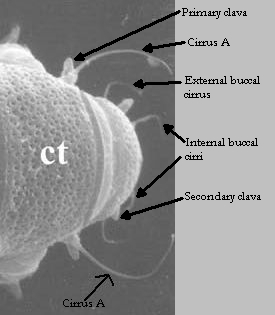
Inner & outer buccal cirri present

Image modified from Nelson DR, Guidetti R, Rebecchi L. 2009. Tardigrada. Ch. 14 in Ecology and Classification of North American Freshwater Invertebrates, Thorp JH, Covich AP (eds.), 3rd ed.

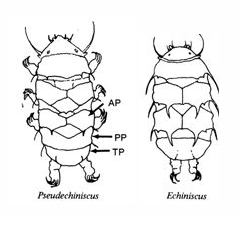
Pseudosegmental plate between last medial plate & terminal plate?

Note on 2nd image, what you see before the terminal plate is either no plate, or a full-width medial plate; don’t confuse the latter with a pseudosegmental plate!
Also, sometimes the pseudosegmental plate is paired, like segmental plates II & III. It’s still pseudosegmental!

Images from Clifford HF. 1991. Aquatic invertebrates of Alberta. University of Alberta Press, Alberta, Canada.

Segmental plates larger than intersegmental?

Image modified from Lindahl & Balser (1999), http://www.iwu.edu/~tardisdp/Keypage35.html

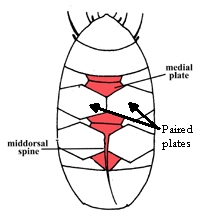
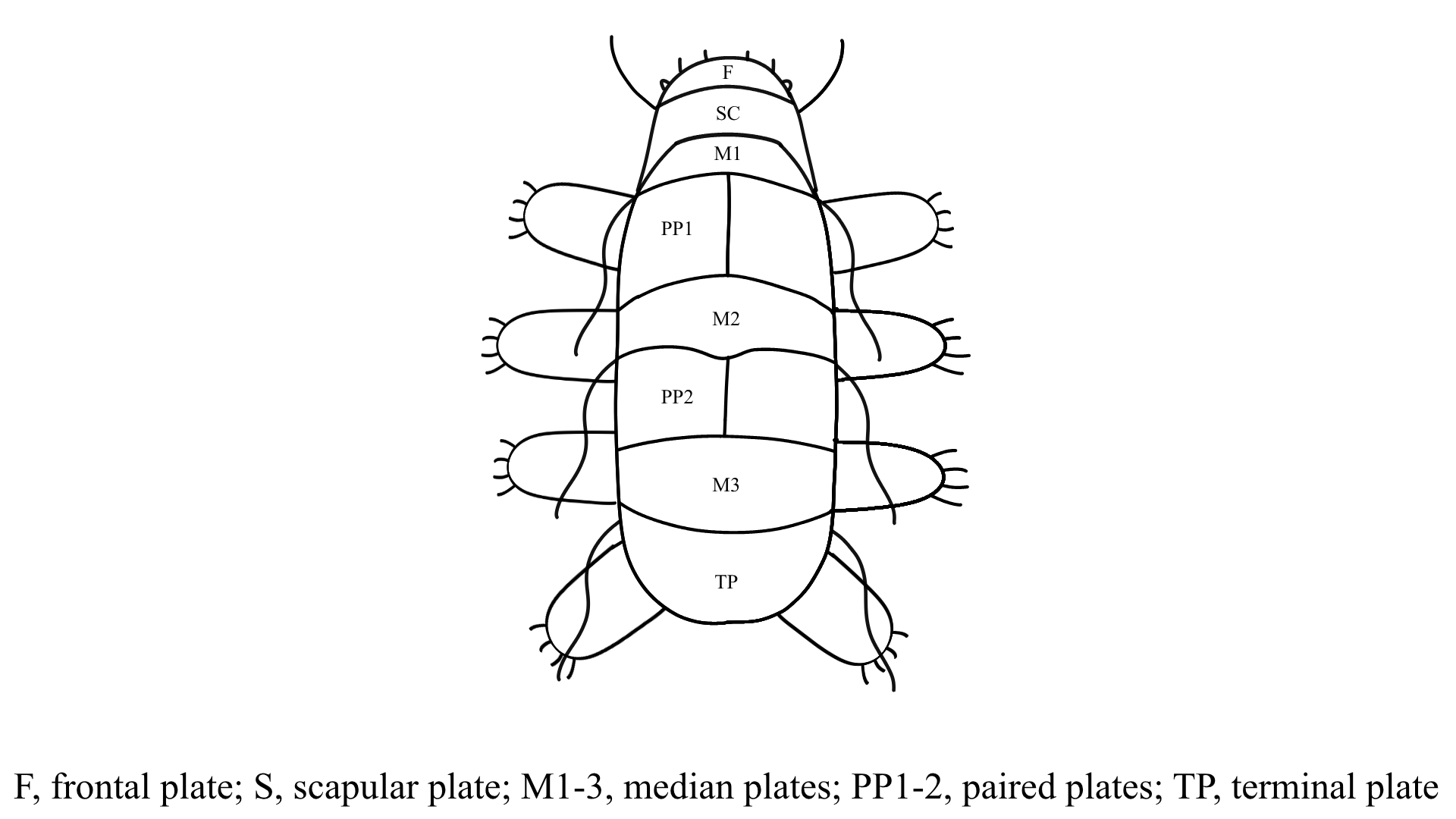
Any Paired Plates?

Modified from Lindahl K, Balser S.  1999. Key to tardigrade genera [Internet]. Available from: https://sun.iwu.edu/~tardisdp/Keypage33.html